
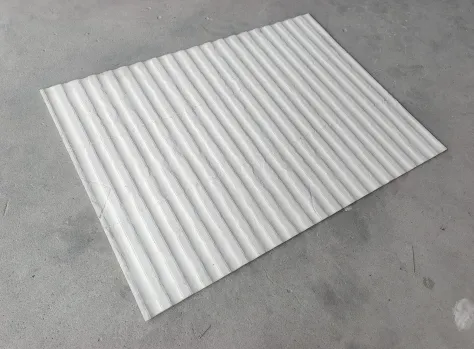
In the world of modern architecture and construction, a quiet but powerful revolution is underway. It's a shift away from the "build-at-all-costs" mentality towards a more conscious, sustainable, and responsible approach. We're talking about green building, a movement that's not just a trend, but a fundamental re-evaluation of how we create the spaces where we live, work, and play. At the heart of this movement is a benchmark for excellence: LEED certification. As architects, developers, and builders increasingly aim for this prestigious standard, a critical question emerges: how do the materials we choose contribute to this goal? This isn't just about ticking boxes; it's about making tangible, positive impacts on our environment and our well-being. This is where forward-thinking companies like COLORIA GROUP are making their mark, not just by supplying materials, but by providing intelligent, sustainable solutions that are reshaping the very fabric of our buildings.
So, what's the big deal about LEED? LEED, which stands for Leadership in Energy and Environmental Design, is the most widely used green building rating system in the world. It provides a framework for healthy, highly efficient, and cost-saving green buildings. But its significance goes far deeper than a simple rating. Achieving LEED certification means a project has successfully reduced its environmental footprint in several key areas. Think about it: traditional construction is one of the most resource-intensive industries on the planet. It consumes vast amounts of raw materials, generates significant waste, and the resulting buildings account for a huge portion of global energy consumption and carbon emissions.
LEED tackles this head-on by evaluating projects across a range of categories. These aren't arbitrary; they are the pillars of what makes a building truly "green":
Gaining points in these categories leads to different levels of certification: Certified, Silver, Gold, and Platinum. For any project aiming for these higher tiers, the choice of materials is not an afterthought—it's a central part of the strategy. The materials form the building's "body," and their embodied carbon, sourcing, lifecycle, and impact on indoor air quality are all under the microscope. This is the challenge that the construction industry faces, and it's also the opportunity for innovation.
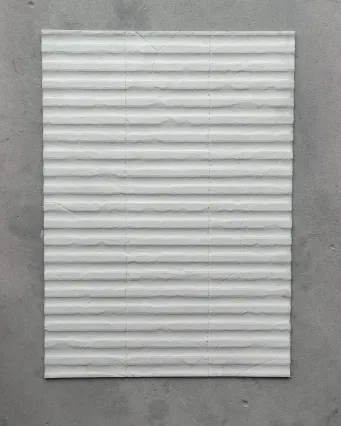
In response to this challenge, a new generation of materials is emerging. These materials are engineered to deliver the beauty and durability of traditional options like quarried stone and fired ceramic, but without the heavy environmental price tag. At the forefront of this innovation is COLORIA GROUP with its groundbreaking MCM (Modified Cementitious Material) technology—what we like to call the "Century Stone."
What exactly is MCM? Let's break it down in a simple way. Imagine taking natural, earthly components—like common soil, stone powder, and other mineral fragments—and using a highly advanced, low-temperature process to transform them. It's not about brute force or extreme heat. It's a sophisticated method of modifying and bonding these materials at a molecular level. The result is a new class of material that is incredibly versatile, surprisingly lightweight, and fundamentally sustainable.
It's a paradigm shift. We're moving from a purely extractive model (digging stone out of mountains, firing clay in kilns) to a creative, transformative one. We're using technology to help nature express itself in new and more efficient ways. This is the core philosophy behind COLORIA GROUP's one-stop solution approach.
The benefits of this MCM technology align perfectly with the goals of LEED-certified projects:
Understanding the technology is one thing, but seeing how it translates into real-world applications is where the magic happens. COLORIA GROUP has developed a diverse portfolio of MCM products, each tailored to specific architectural needs while upholding the core principles of sustainability and design freedom. As a one-stop solutions provider with decades of experience and a global reach, including a dedicated presence in markets like Saudi Arabia, the company understands that a single product doesn't fit all.
This is perhaps the most revolutionary product in the lineup. Think of a material with the rich texture and appearance of natural slate, travertine, or sandstone, but it's only a few millimeters thick and can be bent around curved walls, columns, and complex architectural features. This is where MCM Flexible Stone really shines. For architects, it's a dream come true, liberating them from the rigid constraints of traditional materials.
From a LEED perspective, its contributions are profound. The ability to wrap it around a column means there's virtually no waste from cutting angles. Its featherlight weight has a cascading effect on sustainability, reducing transport emissions and structural requirements. Furthermore, its ease of installation—often just requiring a specialized adhesive—reduces on-site energy use and labor time. It's perfect for both exterior facades that need to follow organic forms and for interior spaces where designers want to create warm, textured, and seamless environments without the weight and expense of real stone.
Modern architectural design often craves a sense of scale and minimalism. This is achieved with large, uninterrupted surfaces that create a powerful visual statement. The MCM Big Slab Board Series is COLORIA GROUP's answer to this demand. These are large-format panels that offer the majestic appearance of massive stone blocks or polished concrete, but again, without the associated logistical and environmental nightmares.
Installing a 3-meter-tall slab of real marble in a hotel lobby is a monumental task requiring cranes, extensive structural support, and a team of specialists. Installing an MCM Big Slab is a far more efficient process. For LEED projects, this translates to faster construction times, less on-site disruption, and fewer resources consumed during the build phase. The large format also means fewer grout or sealant lines, which not only provides a cleaner aesthetic but can also reduce the overall quantity of VOC-containing sealants used in a project, contributing to better indoor air quality.
This is where COLORIA GROUP truly pushes the boundaries of what's possible. The MCM 3D Printing Series leverages additive manufacturing principles to create fully customized surfaces. Forget choosing from a catalog of pre-set textures. Here, architects can design their own unique patterns, embed logos, replicate historical motifs, or create intricate, nature-inspired bas-reliefs.
The sustainability angle here is incredibly compelling. Traditional custom work, like carved stone or wood, is subtractive—you start with a large block and remove material, creating enormous amounts of waste. The MCM 3D printing process is additive; it builds up the design layer by layer, using only the material that is needed. This is the pinnacle of material efficiency. For a LEED project, this ability to create bespoke, artistic features with near-zero waste is a powerful story to tell. It proves that high design and high-performance sustainability are not mutually exclusive. It opens the door for creating buildings that are not only green but also deeply personal and culturally resonant.
While bespoke and large-format products capture the imagination, large-scale commercial and residential projects need a solution that is durable, aesthetically pleasing, and cost-effective. The MCM Project Board Series is designed to be the reliable workhorse for these applications. It offers a wide range of standard textures and colors—from classic brick and stone looks to more contemporary finishes—that can be deployed efficiently across large surface areas. This series makes sustainable materials accessible for a broader range of projects, democratizing green building. For a developer pursuing LEED certification on a multi-family residential building or a commercial complex, this series provides a clear path to achieving material-related credits without compromising on durability or aesthetic appeal.
Let's get practical. How does using COLORIA GROUP's MCM product family translate into actual LEED points? The table below breaks down the connection between the material's features and specific LEED v4.1 credit categories. For architects and sustainability consultants, this provides a clear roadmap for integrating these materials into their certification strategy.
| LEED Credit Category | How COLORIA GROUP's MCM Contributes | Relevant Product Lines |
|---|---|---|
| Materials & Resources (MR) |
Building Product Disclosure and Optimization - Sourcing of Raw Materials:
MCM can utilize recycled content and abundant natural minerals, reducing reliance on virgin resources.
Building Product Disclosure and Optimization - Material Ingredients: Full transparency can be provided, with products formulated to avoid chemicals on the Red List. Construction and Demolition Waste Management: Lightweight, flexible products result in significantly less on-site cutting waste. The MCM 3D Printing Series, being an additive process, is a prime example of waste prevention. |
All MCM Series
contribute, especially:
• MCM Flexible Stone (minimal cutting waste) • MCM 3D Printing Series (additive manufacturing) |
| Indoor Environmental Quality (EQ) |
Low-Emitting Materials:
COLORIA's MCM products are inherently low-VOC (Volatile Organic Compounds) and are manufactured without added formaldehyde. This is crucial for maintaining healthy indoor air quality, a primary concern for building occupants.
Acoustic Performance: The textured surfaces of many MCM products can help to diffuse sound, contributing to better acoustic comfort within a space, which is a key component of occupant well-being. |
All MCM Series
are designed for this. Particularly important for interior applications using:
• MCM Flexible Stone • MCM Big Slab Board Series |
| Energy & Atmosphere (EA) | Building Life-Cycle Impact Reduction: The low-energy manufacturing process of MCM gives it a lower "embodied carbon" compared to high-temperature fired materials like brick and ceramic tiles. This lower initial carbon footprint contributes favorably to a whole-building life-cycle assessment (LCA), a key goal of this credit. | This is a core benefit of the underlying MCM Technology itself, applicable across all product lines. |
| Sustainable Sites (SS) | Heat Island Reduction: For exterior applications, certain MCM products can be produced in light, high-reflectivity colors. Using these on roofs and facades helps to reduce the heat island effect, lowering ambient temperatures and reducing cooling loads on the building. |
Mainly applicable to exterior-grade products like:
• MCM Flexible Stone • MCM Project Board Series |
Achieving a LEED plaque is a commendable goal, but it's not the end of the story. The true spirit of green building is about creating a lasting, positive legacy. It's about designing buildings that are not only less harmful but actively beneficial to the people who use them and the planet we all share. This is where COLORIA GROUP's commitment as a one-stop solution provider truly comes into focus. It's not just about selling a product; it's about partnering with the architectural and construction community to solve complex challenges.
By offering a comprehensive suite of MCM products, from the highly customizable to the eminently practical, the company empowers designers to pursue their creative vision without environmental compromise. It allows developers to meet their sustainability targets while ensuring long-term durability and performance. It gives builders innovative materials that are safer and more efficient to install.
The future of construction lies at the intersection of imagination, technology, and responsibility. The "Century Stone" concept embodied by MCM is more than just a new material; it's a tool for building that future. It's a testament to the idea that we can create structures that are both breathtakingly beautiful and fundamentally sound, both inspiring to the human spirit and gentle on the earth. As we continue to push the boundaries of what a building can be, materials like these will not just be an option; they will be the foundation upon which we build a better, greener world.
Recommend Products












