


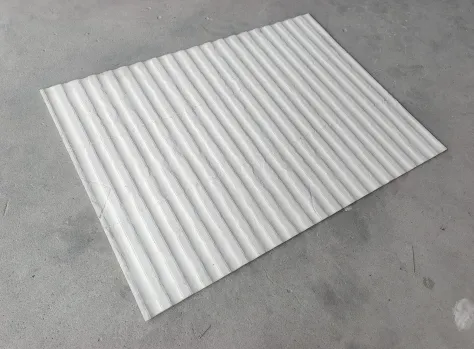
When we gaze up at a magnificent skyscraper or walk through a beautifully designed commercial space, our attention is naturally drawn to the aesthetics—the color, the texture, the form. But beneath that surface lies a silent guardian: the inherent strength of the materials used. True architectural excellence is born from the marriage of beauty and brawn. This brings us to a critical, yet often overlooked, concept: the structural integrity not just of a building's frame, but of its skin. At COLORIA GROUP, we've dedicated decades to perfecting this balance. We call our vision for this new standard "Century Stone"—a testament to materials engineered not just for today's trends, but for a century of performance, powered by our advanced Modified Cementitious Material (MCM) technology.
Rethinking Strength: What Compressive Strength Means for Building Facades
Let's get one thing straight. When we talk about "compressive strength" in the context of building facades and decorative panels, we're not talking about holding up the roof. That's the job of steel beams and reinforced concrete columns. So, why should an architect or a builder care about the compressive strength of a material that's primarily for looks?
The answer is that the "structural integrity" of a building's envelope is a complex dance of resisting various forces. Compressive strength is a material's ability to withstand forces that are trying to squeeze or compress it. For a facade, this isn't about the building's weight. It's about resilience against a host of everyday and environmental aggressors.
The Real-World Pressures on a Building's Skin
Think about what a building's exterior wall goes through over its lifespan. It's a constant battle.
- Impact Resistance: A material with poor compressive strength is brittle. It can't handle shocks well. This could be anything from a hailstorm, to debris carried by high winds, or even accidental bumps from maintenance equipment. A crack or a chip doesn't just mar the appearance; it creates a weak point where water can penetrate, leading to much bigger problems down the line.
- Building Movement: Buildings are not static. They settle over time. They expand and contract with temperature changes. A facade material that is too rigid and lacks adequate compressive strength to handle these minute stresses will inevitably crack. These cracks are not just cosmetic flaws; they are failures in the protective envelope.
- Wind Loads: Wind doesn't just blow against a building; it creates immense pressure and suction forces. Panels on a high-rise tower must be strong enough to resist buckling or deflecting under these loads, transferring that force safely back to the building's structure.
- Freeze-Thaw Cycles: In colder climates, this is a silent destroyer. Water seeps into the pores of a material. When it freezes, it expands, exerting incredible internal pressure. A material with low compressive strength and high water absorption will degrade, flake, and crumble season after season.
The Limitations of Traditional Choices
For centuries, architects relied on a limited palette of materials, each with significant trade-offs when it comes to balancing strength, weight, and workability.
Natural Stone (Granite, Marble): The epitome of luxury and durability, right? Yes, but it comes at a cost. Natural stone is incredibly heavy, which means the building's primary structure needs to be stronger (and more expensive) to support it. It's brittle; a slab can crack from stress during transport or installation. Its sourcing has a significant environmental impact, and its inflexibility makes it a nightmare for curved or complex designs.
Precast Concrete Panels: Strong and durable, but even heavier than stone. The carbon footprint of cement production is massive. Customization is limited and costly, and the sheer weight makes logistics and installation a major, energy-intensive challenge.
Ceramic & Porcelain Tiles: Lighter, yes, but often brittle. The real weakness here is the system itself. A tiled facade is only as strong as its countless grout lines. Each joint is a potential entry point for water and a point of failure. Large-format tiles are prone to cracking from building movement if not installed with highly specialized (and expensive) systems.
The industry has been crying out for a solution—a material that captures the aesthetic soul of natural materials but possesses the engineered performance of a modern composite. This is precisely where COLORIA GROUP's innovations begin.
The "Century Stone" Revolution: Unpacking the Power of MCM
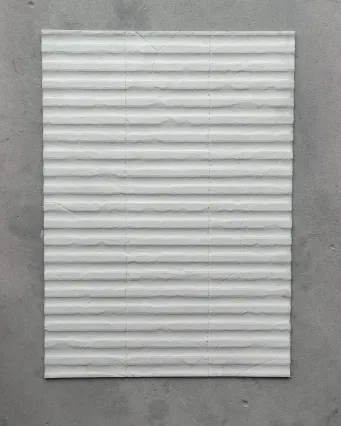
Our vision of "Century Stone" is brought to life through a groundbreaking technology known as Modified Cementitious Material (MCM). This isn't just a single product; it's a platform for creating a new generation of high-performance architectural surfaces. As a one-stop solution provider, COLORIA GROUP has harnessed the power of MCM to develop a diverse portfolio of products, each tailored to solve specific architectural challenges.
The Science Inside: What is Modified Cementitious Material?
At its heart, MCM is an ingenious blend of natural ingredients. It starts with a base of natural inorganic materials like soil, sand, and stone powder, combined with cementitious binders. The magic, however, lies in the "Modified" part of the name. Through a proprietary, low-temperature curing process, we restructure these raw materials at a molecular level. This process doesn't require the high-energy kilns of ceramics or the massive resource extraction of quarrying. The result is a material that is:
- Incredibly Lightweight: Typically 4-8 kg per square meter, which is a fraction of the weight of traditional stone or concrete. This drastically reduces the load on the building's structure, simplifies transportation, and makes installation faster and safer.
- Eco-Friendly: Made from natural and often recycled components with a low-energy production process, MCM is a leader in green building materials.
- Highly Customizable: The technology allows us to replicate virtually any natural texture—from granite to slate to wood—and to create entirely new designs, colors, and forms.
The Best of Both Worlds: Strength Meets Flexibility with MCM Flexible Stone
This is where MCM truly shatters old paradigms. Traditional strong materials are rigid. Flexible materials are typically weak. Our MCM Flexible Stone series defies this logic. It possesses sufficient compressive strength to resist impacts and daily wear and tear, but it also has a remarkable degree of flexibility.
What does this mean for structural integrity? It means the material can be bent, even around significant curves and columns, without breaking. More importantly, it can absorb the small, constant movements of a building. Where a rigid tile or stone panel would build up stress and eventually crack, MCM Flexible Stone flexes and adapts. This elasticity is a form of passive strength, ensuring the facade remains a seamless, unbroken protective layer for decades. It prevents the propagation of micro-cracks, which are the primary culprits of long-term material degradation. This product series is a game-changer for projects that involve organic shapes, arches, or require a finish that can withstand dynamic stresses.
Integrity at Scale: The MCM Big Slab Board Series
Another critical factor in the integrity of a facade is the number of joints. Every seam is a potential weakness. COLORIA GROUP's MCM Big Slab Board Series addresses this head-on by providing large-format panels that can measure up to 1.2 x 2.8 meters.
Using these large boards means drastically fewer joints across a wall surface. This monolithic appearance is not just a design choice; it's a performance upgrade. Fewer seams mean fewer pathways for water ingress, reduced maintenance, and a visually clean, powerful aesthetic. The compressive strength of the MCM Big Slab Board Series ensures that these large, relatively thin panels can be safely transported, handled on-site, and installed without risk of fracture. Once in place, their combination of surface hardness and engineered composition allows them to effectively distribute wind loads and resist a wide range of physical impacts, maintaining the pristine look of the facade.
Performance by Design: MCM Project Board and 3D Printing Series
At COLORIA GROUP, we understand that no two projects are the same. Our identity as a one-stop solution provider goes beyond offering a catalog of products. We collaborate with architects and developers to engineer materials for specific performance needs. The MCM Project Board Series is the embodiment of this philosophy. For a skyscraper in a coastal city like Dubai or a commercial center in a region with high winds like those we encounter with our partners in Saudi Arabia, we can adjust the formulation of the MCM material to enhance specific properties, be it flexural strength, UV resistance, or, indeed, compressive strength.
Taking customization to its ultimate conclusion is our MCM 3D Printing Series . This technology allows us to move beyond flat panels and create intricate, three-dimensional architectural elements. These are not just decorative pieces; they can be designed with internal structures and variable densities to optimize strength-to-weight ratios. We can create bespoke facade elements, grilles, or artistic features that are not only visually stunning but are also structurally efficient, possessing strength precisely where it's needed. This level of customization ensures that the material itself is an active participant in the building's performance.
| Feature | Traditional Natural Stone | Precast Concrete Panel | COLORIA GROUP MCM Materials |
|---|---|---|---|
| Compressive Strength | Very High (but brittle) | High | Optimized (Sufficient for purpose) |
| Flexibility | None | Extremely Low | Excellent (especially MCM Flexible Stone) |
| Weight (kg/m²) | ~50-80 kg | ~90-150 kg | ~4-8 kg |
| Eco-Friendliness | High impact (quarrying, transport) | Very high carbon footprint (cement) | Low energy, uses natural/recycled content |
| Customization | Limited by source block | Limited by molds, costly | Virtually unlimited (texture, color, shape, 3D) |
| Installation | Complex, heavy machinery, slow | Requires cranes, specialized crews | Fast, simple tools, less labor |
| Long-Term Integrity | Prone to cracking from stress/settlement | Prone to cracking, heavy load on structure | Resists cracking via flexibility, fewer joints |
From the Laboratory to the Landmark: A System for Success
A great material is only half the story. Ensuring true, long-term structural integrity requires a holistic approach. That's why being a "one-stop solution provider" is a core part of our identity at COLORIA GROUP. We don't just ship a box of panels; we deliver a complete, performance-guaranteed system.
A Hypothetical Scenario: The Coastal Resort
Imagine a new five-star resort being built on a coastline, exposed to salt spray, high humidity, and strong seasonal winds—a challenging environment like the Red Sea coast in Saudi Arabia. The architect's vision is a stunning, wave-like structure with sweeping curves, clad in a material that looks like natural travertine.
Using real travertine would be a logistical and financial nightmare. The weight would require a massively over-engineered structure. Cutting stone for the curves would be incredibly wasteful and expensive. Most critically, over time, the rigid stone panels would be under constant stress from thermal expansion and the building's micro-movements, leading to a high risk of cracks.
This is where the COLORIA GROUP solution shines. We would propose a system:
- For the large, flat facade sections, our MCM Big Slab Board Series in a custom travertine finish provides the desired aesthetic with minimal joints. Its lightweight nature simplifies installation, saving time and money.
- For the signature curved walls, our MCM Flexible Stone is the perfect choice. It wraps smoothly around the structure, creating a seamless, organic look that would be impossible with traditional materials. Its inherent flexibility ensures it will absorb stresses without cracking.
- Crucially, we provide the entire system—the specific, tested adhesive formulated for coastal environments, the precise installation methodology, and the technical support for the construction crew.
In this scenario, the compressive strength of the MCM panels ensures they resist impacts and wind pressure, while their unique flexibility ensures the long-term integrity of the entire facade system. The result is a building that not only fulfills the architect's vision but is also built to endure its challenging environment.
Conclusion: Building for a New Century
The integrity of a building's facade is not a secondary concern; it is the primary shield that protects the structure and defines its character for its entire life. The pursuit of materials that are strong, durable, and resilient is paramount.
The concept we call "Century Stone" is COLORIA GROUP's promise to the world of architecture. It's a promise to deliver materials that blend the timeless allure of nature with the intelligent performance of 21st-century science. By harnessing the power of Modified Cementitious Material (MCM), we have created a family of products that are light, flexible, sustainable, and endlessly customizable, all while possessing the engineered strength needed to ensure the integrity of the finished project.
From the robust MCM Big Slab Board Series that creates monolithic, powerful facades, to the revolutionary MCM Flexible Stone that brings design freedom to life, our focus is always on providing a complete solution. We are not just material suppliers; we are partners in innovation, helping architects and builders create safer, more durable, and more beautiful environments across the globe. The future of construction is here, and it's built with integrity from the inside out.










