
For centuries, natural stone has been the hallmark of prestige and permanence in architecture. From the marble pillars of ancient Greece to the granite countertops in modern homes, its timeless beauty and raw strength are undeniable. We associate stone with enduring quality. But as our world becomes more conscious of its environmental limits, we're starting to ask tougher questions. What is the true cost of pulling that beautiful marble slab from the earth? What is the hidden environmental story behind every granite facade?
The reality is that our love for natural stone comes with a hefty environmental price tag. The process of quarrying, processing, and transporting this incredibly heavy material is a story of massive energy consumption, ecological disruption, and significant carbon emissions. It's a story that's increasingly at odds with the global push for sustainability. So, what's the alternative? Do we have to sacrifice the aesthetic we love for the planet we need to protect? What if there was a better way? A way to achieve the magnificent look and feel of stone without scarring the earth in the process?
This is where true innovation steps in. Forward-thinking companies are pioneering new materials that offer the best of both worlds. At the forefront of this movement is COLORIA GROUP, a one-stop solution provider for building materials, with its revolutionary "Century Stone" concept. This isn't just another imitation stone; it's a complete reimagining of what a building surface can be. Powered by advanced technology, Century Stone delivers the stunning aesthetics and robust performance we expect from stone, but with a fraction of the environmental footprint. This article explores the profound positive environmental impact of Century Stone, positioning it as the definitive green alternative to its natural counterpart for a new generation of architecture.
Before we can fully appreciate the innovation of an alternative, we must first be honest about the problems with the status quo. The journey of a natural stone slab from a mountainside to a building facade is far more destructive than most people realize. It's a process of brute force that leaves a lasting impact on our planet.
The very first step, quarrying, is arguably the most damaging. To get to the valuable stone veins, entire hillsides are often cleared of trees and topsoil, a process that leads to immediate deforestation and habitat loss for countless species. This isn't a small-scale operation; we're talking about massive open-pit mines that permanently alter the landscape. These scars are visible from space and represent ecosystems that can never be fully restored.
The removal of vegetation and soil also triggers a cascade of other environmental problems. Soil erosion becomes rampant, with loose sediment washing into nearby rivers and streams. This chokes aquatic life, pollutes water sources, and can increase the risk of downstream flooding. The noise, dust, and vibrations from blasting and heavy machinery further disrupt local wildlife and human communities, creating a zone of profound ecological disturbance that extends far beyond the quarry's direct footprint.
Extracting multi-ton blocks of stone from the earth requires an astronomical amount of energy. It involves powerful drills, explosives for blasting, and colossal earth-moving equipment. Once the block is extracted, the energy consumption continues. It must be cut into manageable slabs using diamond-wire saws, a process that is both energy and water-intensive. Water is used in vast quantities, not only for cutting but also for suppressing the immense amount of dust generated.
This water often becomes contaminated with fine mineral particles and any chemicals used in the process, creating a slurry that, if not managed perfectly, can pollute local groundwater and surface water. In many regions where stone is quarried, water is already a scarce resource, making this level of consumption deeply unsustainable. The entire chain, from mountain to polished slab, is a testament to industrial might but also to industrial inefficiency and thirst.
One of the most significant, yet often overlooked, costs of natural stone is its carbon footprint from transportation. Stone is incredibly dense and heavy. A single square meter of 3cm-thick granite can weigh over 80 kilograms. Now, imagine shipping thousands of square meters of this material from a quarry in Brazil or India to a construction site in Europe or North America. The journey involves heavy-duty trucks, freight trains, and massive container ships—all burning fossil fuels every step of the way. This global supply chain for a heavyweight material is a major contributor to greenhouse gas emissions, directly fueling climate change. The "exotic" appeal of a stone from a distant land comes at a direct cost to our atmosphere.
Finally, the natural stone industry is notoriously wasteful. It's estimated that for every ton of finished stone product, several tons of raw material are discarded. This waste occurs at every stage. During extraction, large portions of the rock face may be fractured or of the wrong quality and are simply left as rubble. During cutting and processing, significant amounts of the block are lost as the slabs are squared off and cut to size. Imperfections, cracks, or undesirable color variations in a slab mean it might be rejected and discarded entirely. This inefficiency means we are moving mountains and consuming vast resources only to throw a large percentage of it away.
When you add it all up—the permanent landscape damage, the massive energy and water use, the colossal carbon footprint, and the staggering amount of waste—it becomes clear that the traditional way is simply not sustainable in the long run.
Faced with the stark environmental realities of natural stone, the building industry has been searching for a hero—a material that can deliver on aesthetics and performance without the ecological baggage. This is the space where COLORIA GROUP's Century Stone shines. It's not just a product; it's a solution born from a philosophy of sustainable innovation.
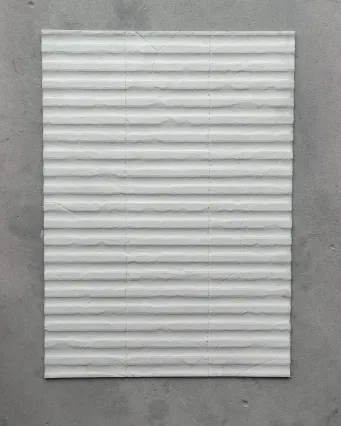
At its core, Century Stone is the brand's premier line of products based on a groundbreaking technology: Modified Cementitious Material (MCM). Forget the old notions of "faux stone." This is something entirely different. MCM technology takes natural ingredients—like common soil, stone powder, sand, and other mineral components—and puts them through a sophisticated, low-energy process. Instead of being quarried from a single location, the raw materials can often be sourced locally and may include recycled content, immediately reducing the impact of extraction and transport.
The magic happens during manufacturing. The raw materials are mixed, shaped in molds, and then cured at a relatively low temperature (typically under 120°C). This is a world away from the energy-intensive high-heat firing required for ceramics (often over 1200°C) or the brute-force extraction of natural stone. The low-temperature curing process consumes drastically less energy, produces virtually zero harmful emissions, and is a key pillar of its green credentials.
Let's contrast the MCM manufacturing process with quarrying point by point:
The benefits of the Modified Cementitious Material technology go far beyond its eco-friendly production. It allows for a level of design freedom that natural stone simply cannot match. COLORIA GROUP has harnessed this potential to create a diverse family of products under the Century Stone umbrella.
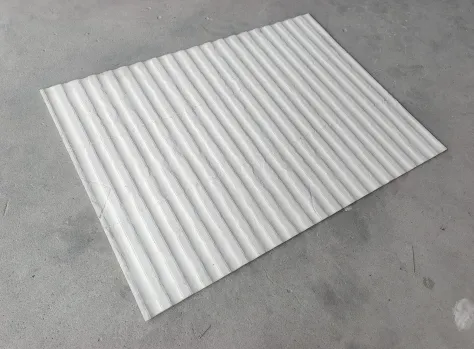
One of the most revolutionary products in this lineup is the MCM Flexible Stone . This material has the stunning visual texture of slate, sandstone, or travertine, but it is thin, lightweight, and—as the name suggests—flexible. It can be bent around curved walls, columns, and arches with ease, opening up a whole new world of design possibilities that were previously complex and expensive, if not impossible, to achieve with rigid stone. Imagine cladding a serpentine feature wall or a winding staircase without a single visible seam or difficult cut. That is the power of flexibility.
For grander statements, there is the MCM Big Slab Board Series . These large-format panels provide a seamless, monolithic look that is highly sought after in contemporary architecture for facades and expansive interior walls. Because they are so much lighter than natural stone slabs of a similar size, they place far less structural load on the building, are easier and safer to install, and significantly reduce transportation costs and emissions. This makes them perfect for both new construction and for retrofitting older buildings to give them a modern, high-performance exterior.
The possibilities extend even further with other series, like the MCM Project Board Series for large-scale commercial applications and the incredible MCM 3D Printing Series, which allows for fully customized textures and patterns, turning a simple wall into a unique work of art. Century Stone is not about mimicking nature; it's about learning from it to create something even more adaptable for the built environment.
When choosing a building material, architects and clients weigh several factors: aesthetics, performance, cost, and, increasingly, environmental impact. Let's put Century Stone (MCM) and natural stone in a head-to-head comparison across these crucial categories. The results are telling.
| Feature | Century Stone (MCM) | Natural Stone (e.g., Granite, Marble) |
|---|---|---|
| Environmental Impact | Low. Made from abundant/recycled materials. Low-energy production process. Minimal waste. | High. Destructive quarrying, habitat loss, high energy and water consumption, significant processing waste. |
| Carbon Footprint | Significantly lower. Lightweight nature drastically reduces transport emissions. Localized production is often possible. | Extremely high. Very heavy material often shipped across continents, resulting in massive CO2 emissions. |
| Weight | Lightweight (typically 5-8 kg/m²). Reduces structural load, simplifies installation, and lowers transport costs. | Very Heavy (can be 60-90 kg/m² or more). Requires significant structural support, heavy machinery for installation, and high transport costs. |
| Flexibility & Form | Excellent. Products like MCM Flexible Stone can wrap around curves and complex shapes. Can be cut on-site with a utility knife. | Zero. Rigid, brittle, and prone to cracking under stress. Complex shapes require difficult and wasteful cutting. |
| Durability & Resistance | High. Class A fire-resistant, waterproof, breathable, freeze-thaw resistant, and impact resistant. Consistent performance. | Varies. Some stones are very durable, but many are porous (requiring sealing), prone to staining, and can be brittle or susceptible to acid etching. |
| Installation | Fast, easy, and safe. Lightweight panels can be carried by one person. Adhered with a simple adhesive, reducing labor time and costs. | Slow, complex, and hazardous. Requires multiple installers, heavy lifting equipment, and mechanical anchoring systems. High labor costs. |
| Consistency & Customization | Highly consistent color, texture, and quality from batch to batch. Can be customized to replicate any stone or create entirely new designs (e.g., MCM 3D Printing). | Inconsistent. Natural variations, veins, and fissures mean no two slabs are alike, which can be a challenge for large projects. Limited to what nature provides. |
| Total Cost of Ownership | Lower. Competitive material cost combined with major savings on transport, structural engineering, installation labor, and long-term maintenance. | Higher. High costs for the material, global shipping, structural reinforcement, complex installation, and ongoing maintenance (sealing, special cleaners). |
The table provides a clear snapshot, but the real-world implications are even more profound. Consider the weight difference. A lighter facade material like Century Stone means the building's entire foundational structure can be designed more efficiently, saving enormous amounts of concrete and steel—materials that also have their own significant carbon footprints. The savings compound at every level.
Now think about creativity. An architect designing a building with a dramatic, curving facade would face immense technical challenges and costs with natural stone. Each piece would need to be custom-carved and meticulously fitted. With MCM Flexible Stone , the material flows with the design, not against it. This empowers architects to be more imaginative, creating more dynamic and organic building forms without breaking the budget or the laws of physics.
Finally, let's talk about performance. Natural stone is often perceived as the ultimate in durability, but it has weaknesses. Porous stones like marble and limestone can easily stain, while others can be damaged by acid rain over time. Century Stone, as an engineered material, is designed to overcome these issues. It has predictable, lab-tested performance characteristics. Its resistance to fire, water, and impact, combined with its colorfastness, means the building will not only look great on day one but for decades to come, with minimal maintenance.
In every meaningful metric—from planetary health to project budget, from installation ease to design freedom—Century Stone proves itself to be not just an alternative, but a superior evolution in building surface technology.
The true measure of any building material is how it performs in the real world, how it transforms spaces, and how it contributes to a better-built environment. Century Stone is already making a significant impact across a wide range of applications, demonstrating its versatility and solidifying its role as a key material for 21st-century architecture.
For building facades, Century Stone is a game-changer. The MCM Big Slab Board Series , for instance, is perfect for creating sleek, modern exteriors on commercial buildings, residential towers, and public institutions. Its large format minimizes grout lines, presenting a clean, monolithic appearance. But its most powerful application might be in retrofitting. Millions of older buildings are inefficient and outdated in appearance. Cladding them with a heavy material like natural stone would require costly and invasive structural reinforcement. With lightweight Century Stone, these buildings can be given a beautiful, modern, and thermally efficient new skin quickly and affordably, extending their lifespan and drastically improving their energy performance.
Inside, the possibilities are just as exciting. Century Stone can be used to create stunning feature walls in lobbies and living rooms, elegant and waterproof surrounds for showers and bathtubs, and durable surfaces in high-traffic commercial spaces. The MCM Flexible Stone is particularly popular for interior applications, allowing designers to wrap columns, create curved reception desks, or add textured details in ways that were previously unimaginable. Because it's so thin, it can be applied over existing surfaces like old tiles, making renovations faster, cleaner, and less wasteful.
COLORIA GROUP's global reach, including its dedicated agency in markets like Saudi Arabia, highlights the adaptability of Century Stone. In a region known for its ambitious architecture and challenging climate, a material that is UV-resistant, fire-resistant, and can withstand temperature extremes is invaluable. Furthermore, by providing a lightweight, high-performance alternative, it helps reduce the region's reliance on importing heavy stone from across the globe, contributing to a lower carbon footprint for its landmark projects. This demonstrates a key part of the vision: providing a globally relevant technology that can be adapted to local needs and aesthetics, promoting more sustainable construction practices everywhere.
The development of Century Stone is a direct reflection of COLORIA GROUP's mission. As a one-stop solution provider, the company isn't just selling products; it's delivering integrated systems that help architects, developers, and contractors build more efficiently, more creatively, and more sustainably. The vision is clear: to lead the industry away from the destructive, resource-intensive practices of the past and toward a future where our buildings are in harmony with our planet. It's about empowering the creators of our built environment with the tools they need to design responsibly without compromising on their artistic vision. Every panel of Century Stone installed is a step toward that future.
The age of choosing between beauty and responsibility is over. For too long, the architectural grandeur of natural stone has forced us to ignore its significant environmental toll. But innovation has provided a new path forward. Century Stone, powered by COLORIA GROUP's advanced Modified Cementitious Material technology, is more than just a green alternative; it is a fundamental improvement.
It offers the aesthetic richness of natural materials with unparalleled design flexibility. It delivers superior performance and durability while being lightweight, easy to install, and cost-effective over its lifecycle. Most importantly, it is born from a process that respects our planet's finite resources, drastically reducing energy consumption, waste, and carbon emissions from cradle to grave.
Choosing Century Stone is not a compromise. It is an upgrade. It is a conscious decision to embrace a future where our buildings are not only beautiful and enduring but are also a positive reflection of our commitment to a healthier, more sustainable world. For the architect, the designer, the builder, and the homeowner, Century Stone is the definitive choice for a new century of responsible creation.
Recommend Products












