
When we envision the buildings of tomorrow, we dream of stunning designs, sustainable materials, and smart technology. But there's one fundamental aspect that underpins everything else, a non-negotiable foundation upon which all other innovations must be built: safety. Specifically, fire safety. In an age of towering skyscrapers, sprawling hospitals, and bustling public spaces, the materials we choose for our walls and facades are not just a matter of aesthetics; they are the first line of defense in protecting lives. This is where the conversation shifts from "what looks good?" to "what keeps us safe?".
Let's be honest. For decades, the construction industry has relied on a portfolio of traditional materials that, while functional in some respects, carry significant hidden risks. We see beautiful facades and interiors, but we don't always see the potential dangers lurking within the material composition. Think about it: a fire event isn't just about the flames. It's a terrifying combination of intense heat, structural failure, and, most lethally, toxic smoke.
Many conventional cladding materials, particularly certain types of metal composite panels or synthetic polymers, can become a fire's best friend. When exposed to high temperatures, they can melt, drip, and rapidly spread flames up the side of a building. Even worse, their combustion can release a thick, black plume of poisonous gases like carbon monoxide and hydrogen cyanide. In a fire, smoke inhalation is often a greater threat than the fire itself, incapacitating occupants long before they can reach an exit. These materials turn a containable incident into a catastrophic event.
On the other end of the spectrum, we have materials that are inherently non-combustible, like solid concrete or thick natural stone. While they certainly won't burn, they come with their own set of serious challenges. Their immense weight places enormous stress on a building's structure, requiring stronger, more expensive foundations and support systems. This weight also makes installation a slow, labor-intensive, and costly process. For architects dreaming of fluid, curved, or complex geometries, these heavy, rigid materials are often a creative dead end. So, the industry has been stuck in a difficult trade-off: choose a lightweight, versatile material that might carry a fire risk, or a safe, non-combustible material that is heavy, expensive, and restrictive.
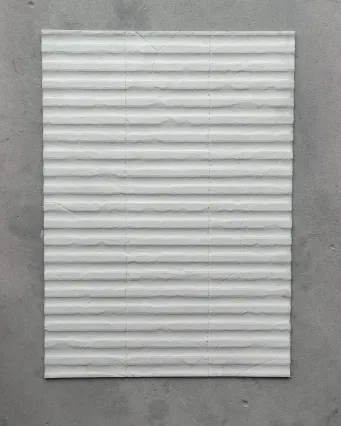
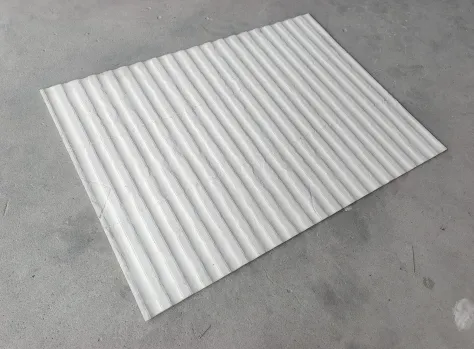
What if that trade-off no longer existed? What if there was a material that offered the robust, non-combustible safety of stone, but with the lightweight, flexible, and aesthetic versatility of modern composites? This is the very question that led the innovators at COLORIA GROUP, a global one-stop solution provider for building materials, to develop their groundbreaking product line. Enter Century Stone , a revolutionary material born from the company's advanced MCM (Modified Cementitious Material) technology.
Century Stone isn't just another product; it's a paradigm shift. It represents the culmination of decades of research and development aimed at creating the perfect building material. At its core, MCM technology takes natural ingredients—like mineral powders, quartz sand, and other inorganic components—and through a unique process of modification and low-temperature baking, transforms them into a material that is both incredibly strong and surprisingly flexible.
As a visionary in the field, COLORIA GROUP has leveraged this core technology to create a diverse family of solutions tailored to every architectural need. Century Stone is the embodiment of this philosophy, providing architects, developers, and builders with a material that excels in every category. It's the safe choice that doesn't compromise on design, the green choice that doesn't compromise on performance, and the smart choice that doesn't compromise on value.
So, what makes Century Stone so exceptionally fire-resistant? It's not magic; it's meticulous science embedded in its very DNA. The secret lies in its fundamental composition and the manufacturing process it undergoes.
Unlike plastic-based or polymer-rich materials, Century Stone is made primarily from inorganic mineral powders and a cementitious base. These are materials that, by their very nature, do not burn. There is no fuel for a fire to consume. This fundamental characteristic is what allows it to achieve the highest possible fire safety classification: Euroclass A1 .
What does a Class A1 rating actually mean in a real-world scenario? It's the gold standard, a declaration that the material is completely non-combustible.
In rigorous laboratory tests, Century Stone panels are subjected to direct flame temperatures exceeding 1000°C for hours on end. The result? They do not ignite. They do not char in the way wood does. They do not melt like plastic. They simply glow red from the intense heat but maintain their structural form and integrity, acting as a formidable barrier against the fire's progression. This performance provides critical, life-saving minutes for occupants to evacuate and for first responders to arrive and control the blaze.
Beyond just not burning, fire resistance is also about how a material behaves under thermal stress. The unique crystalline structure formed during the MCM manufacturing process gives Century Stone exceptional thermal stability. It doesn't expand, warp, or crack erratically when exposed to the extreme temperature gradients of a fire. This stability is crucial for maintaining the integrity of a building's facade or interior wall lining. A cladding system that stays in place during a fire prevents the fire from easily penetrating the building envelope and spreading to other floors. Century Stone essentially forms a protective shield, containing the fire and protecting the building's primary structure.
While its Class A1 fire rating is arguably its most critical feature for high-risk zones, the genius of Century Stone is that its advantages don't stop there. COLORIA GROUP has engineered a holistic material that addresses the key challenges of modern construction.
In an era of increasing environmental awareness, Century Stone stands out as a genuinely green product. Its production process requires significantly less energy than traditional ceramics or cement, as it's cured at low temperatures. It utilizes natural and often recycled materials, reducing the strain on virgin resources. This low carbon footprint makes it an ideal choice for projects seeking LEED certification or simply aiming to build more responsibly.
Here is where Century Stone truly revolutionizes construction. It is up to 80% lighter than traditional stone of the same thickness. This dramatic weight reduction has a cascade of benefits: lower transportation costs, reduced structural load on the building (allowing for lighter and more economical frames), and significantly faster, easier, and safer installation. A product line like the MCM Flexible Stone takes this even further. This material is so pliable it can be wrapped around columns, curved walls, and complex architectural features with ease—a feat impossible for rigid stone or tile. This flexibility unshackles architects from the constraints of flat surfaces and opens up a new world of design possibilities.
Safety and performance should never come at the cost of beauty. Century Stone's advanced technology allows it to replicate the authentic texture and appearance of virtually any material. Whether you desire the timeless elegance of travertine, the rustic charm of slate, the warmth of wood, or the industrial look of concrete, Century Stone can deliver. And for ultimate customization, the MCM 3D Printing Series allows for the creation of bespoke patterns, textures, and artistic reliefs directly onto the material. This means architects can design unique, fire-safe feature walls, branded elements, or intricate decorative panels that are truly one-of-a-kind, all while maintaining that crucial Class A1 fire rating.
The versatility of the Century Stone family of products means there's a perfect solution for every type of high-risk project. As a one-stop solutions provider, COLORIA GROUP works with clients to specify the right product for the right application, ensuring optimal performance and aesthetics. This is particularly relevant in rapidly developing markets like Saudi Arabia, where new giga-projects demand the highest standards of safety and innovation.
For skyscrapers and high-rise commercial towers, facade fire safety is a global concern. The MCM Big Slab Board Series is the ideal solution. These large-format panels create a sleek, seamless look with fewer joints, enhancing the building's modern aesthetic. More importantly, their lightweight nature drastically simplifies the logistics of installation at height, and their non-combustible A1 rating provides the peace of mind that the building's exterior will not contribute to the spread of fire. This is not just a building code requirement; it's a moral imperative.
In environments like hospitals, clinics, schools, and kindergartens, the considerations go beyond just fire. Materials must be non-toxic, free of volatile organic compounds (VOCs), and easy to clean to maintain a hygienic environment. Century Stone excels here. Its inorganic composition means it emits no harmful substances. Its smooth, durable surface resists mould and bacteria and can be easily cleaned. And of course, its top-tier fire safety ensures that these buildings, filled with people who may have limited mobility, have the maximum possible protection.
Airports, train stations, and subway tunnels are high-density, high-risk zones that are often underground. Fire safety is paramount, as is durability. Materials must withstand constant traffic, bumps from luggage, and regular cleaning. The robust nature of Century Stone makes it incredibly impact-resistant and durable. Its application in tunnels is particularly brilliant—the flexible variants can easily conform to the curved tunnel walls, while its A1 rating is essential for enclosed subterranean spaces where fire and smoke are exceptionally dangerous.
When you stack Century Stone (MCM) up against other common building materials, its superior, well-balanced profile becomes crystal clear. It's not just about being the best in one category; it's about excelling in all the categories that matter.
| Feature | Century Stone (MCM) | Traditional Ceramic Tile | Natural Stone (e.g., Granite) | Aluminum Composite Panel (ACP) | Paint / Stucco |
|---|---|---|---|---|---|
| Fire Rating | A1 (Non-combustible) | A1 (Non-combustible) | A1 (Non-combustible) | B to D (Combustible Core) | Varies (Often Combustible) |
| Weight | Very Light (4-6 kg/m²) | Heavy (15-25 kg/m²) | Extremely Heavy (50-80 kg/m²) | Light (5-8 kg/m²) | Negligible |
| Flexibility | High (Can wrap curves) | None (Rigid) | None (Rigid) | Limited Bending | Surface application only |
| Eco-Friendliness | Excellent (Low energy, recycled) | Moderate (High energy kilns) | Poor (Quarrying impact) | Poor (High energy, plastic core) | Varies (VOCs can be an issue) |
| Design Freedom | Excellent (Any texture/color, 3D) | Good (Prints, but flat) | Limited (Natural patterns only) | Limited (Flat colors/finishes) | Limited to color |
| Installation | Fast & Easy (Lightweight) | Moderate (Grouting needed) | Slow & Difficult (Heavy) | Moderate Complexity | Fast |
As the table shows, while materials like ceramic tile and natural stone also offer A1 fire safety, they are severely limited by their weight, rigidity, and environmental impact. On the other hand, lightweight options like ACP often come with a frightening compromise on fire safety. Century Stone, a flagship innovation from COLORIA GROUP, is the only material that sits in the sweet spot, delivering top-tier performance across the board.
The blueprint of the future is being drawn today, and the materials we choose will define the safety and resilience of our built environment for generations to come. In high-risk construction zones—the hospitals where we heal, the schools where we learn, and the tall buildings where we live and work—there can be no compromise.
Century Stone, powered by COLORIA GROUP's advanced MCM technology, rises to this challenge and goes beyond. It is more than just a fire-resistant panel; it is a comprehensive building solution that harmonizes unparalleled safety with architectural freedom, sustainability, and long-term value. By providing a Class A1 non-combustible material that is also lightweight, flexible, and aesthetically limitless, COLORIA GROUP has effectively eliminated the old trade-offs. For developers and architects committed to building a safer, more beautiful, and more sustainable world, Century Stone isn't just a good choice—it's the responsible choice.
Recommend Products












