


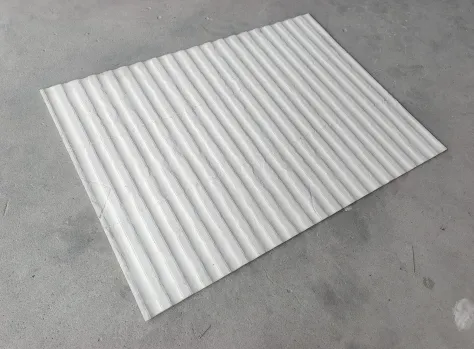
For centuries, natural stone has been the undisputed champion of premium building materials. From the marble columns of ancient Greece to the granite facades of modern skyscrapers, its presence signifies permanence, luxury, and a deep connection to the earth. Architects, builders, and homeowners alike have long been captivated by its unique beauty and enduring strength. But in today's world, where efficiency, sustainability, and creative freedom are paramount, is natural stone still the only choice for a high-end finish?
A new contender has entered the arena, one born not from millions of years of geological pressure, but from decades of material science innovation. We call it Century Stone. This is not just another imitation; it's a fundamental reimagining of what a building surface can be. As a one-stop solution provider with a global footprint, COLORIA GROUP has been at the forefront of this evolution, harnessing advanced technology to create materials that meet the demanding needs of 21st-century construction.
This article will take you on a deep dive, comparing Century Stone—our advanced engineered material—with traditional natural stone. We'll move beyond surface-level impressions to analyze the three critical factors that influence every project: cost, durability, and aesthetics. The choice you make impacts not only your budget and timeline but also the long-term performance and creative potential of your design. Let's see how the timeless classic stacks up against the modern masterpiece.
Chapter 1: The Timeless Appeal and Hidden Truths of Natural Stone
Before we can appreciate the new, we must fully understand the old. What exactly is natural stone? Simply put, it's any rock quarried from the earth, cut into slabs or tiles, and used for construction or decoration. The category is vast and includes familiar names like granite, marble, limestone, slate, travertine, and sandstone. Each type has a unique mineral composition, formation process, and set of characteristics.
The Allure of Authenticity
The primary draw of natural stone is its authenticity. Every single piece is one-of-a-kind. The veining in a slab of Calacatta marble is a geological signature written over millennia; the fossilized fragments in a piece of limestone tell a story of ancient seabeds. This inherent uniqueness gives a project a sense of prestige and a direct link to the natural world that is impossible to replicate with mass-produced materials of the past. It's heavy, it feels substantial, and its history is palpable. For projects aiming for a classic, luxurious feel, natural stone has long been the gold standard. Its proven track record is undeniable—many ancient structures built with stone are still standing today, a testament to its raw durability when used correctly.
The Practical and Environmental Hurdles
However, this raw authenticity comes with a significant set of challenges that are often downplayed. The journey of natural stone from a mountain to a building facade is fraught with costs, logistical complexities, and environmental consequences.
- The Weight Problem: Natural stone is incredibly dense and heavy. A single square meter of 3cm thick granite can weigh over 80 kilograms (175 lbs). This immense weight has a cascading effect on the entire project. It requires more robust structural support for the building, specialized heavy-lifting equipment for installation, and significantly higher transportation costs.
- Quarrying and Inconsistency: The process of extracting stone from a quarry is energy-intensive and disruptive to natural landscapes. Furthermore, a quarry is not a factory. The color, veining, and quality of the stone can vary dramatically from one block to the next. For large projects requiring a consistent look across thousands of square meters, this becomes a logistical nightmare of sourcing, matching, and often, significant wastage.
- Fragility and Porosity: Despite its "rock-solid" reputation, natural stone is brittle. It can crack under structural stress or sharp impact. Many popular stones, like marble and limestone, are also porous. This means they can easily absorb liquids, leading to stubborn stains from wine, oil, or even acidic rain. To combat this, they require frequent and costly sealing, adding to the lifetime maintenance burden.
- Fabrication Limitations: Cutting and shaping a massive, brittle block of stone is a difficult and wasteful process. Intricate designs are time-consuming and astronomically expensive, while curves and complex geometries are often out of the question. Designers are fundamentally limited by the physical properties of the material.
While natural stone's beauty is undeniable, its practical and environmental drawbacks are substantial. It represents a trade-off: unparalleled natural beauty for high costs, logistical headaches, and design constraints. This is the very trade-off that Century Stone was engineered to eliminate.
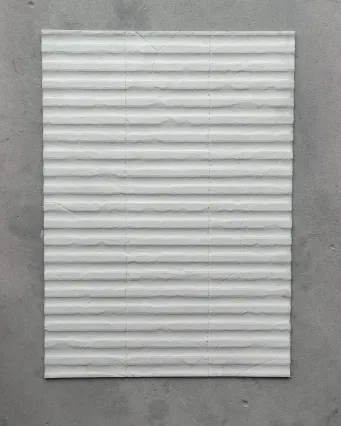
Chapter 2: Century Stone – The Intelligent Evolution of Surface Materials
What if you could capture the soul and aesthetic of natural stone, but fuse it with the performance, flexibility, and sustainability of modern technology? That is the core promise of Century Stone.
Century Stone is the premier brand name for COLORIA GROUP's family of advanced architectural surfaces, rooted in a groundbreaking technology known as **Modified Cementitious Material** (MCM). This isn't concrete, and it isn't a simple composite. It's a technological leap forward. The process involves taking natural, inorganic ingredients—like common soil, sand, and mineral powders—and subjecting them to a proprietary process of spray-drying, molecular modification, and low-temperature curing (400°C). This process reorganizes and bonds the particles in a way that mimics the formation of natural stone, but in a fraction of the time and with precise control over the outcome.
The result is a material that possesses the aesthetic depth of stone but is incredibly lightweight, flexible, and robust. It's a testament to decades of industry experience in material science, allowing us to create surfaces that solve the inherent problems of their natural counterparts. It's not about faking it; it's about making it better, smarter, and more suited to the creative and practical demands of contemporary architecture. A key innovation within this family is our **MCM Flexible Stone**, a product that looks and feels like stone but can be bent and wrapped around curved surfaces, completely upending traditional construction limitations.
Chapter 3: The Cost Comparison – A Project's Bottom Line
For any developer, architect, or homeowner, the budget is a primary concern. The "cost" of a material isn't just its price tag per square meter. It's the total cost of ownership, encompassing acquisition, transportation, installation, and long-term maintenance. When we analyze these factors, the economic advantages of Century Stone become strikingly clear.
Initial Material Cost
The price of natural stone is notoriously volatile. It depends on the type of stone (e.g., common slate vs. rare Italian marble), the quality of the quarry, and global supply and demand. A rare, desirable vein can cause prices to skyrocket. Century Stone, being an engineered product, offers far more predictable and stable pricing. While premium custom designs will have a higher cost, the baseline material cost is generally more accessible than that of mid-to-high-end natural stone, providing budget certainty from the outset.
Transportation and Installation: The Hidden Giant
This is where the most significant savings are realized. As mentioned, natural stone is incredibly heavy. Let's break down the impact:
- Logistics: Transporting tons of natural stone from a quarry, often overseas, to a job site requires heavy-duty trucks, container shipping, and significant fuel consumption. Century Stone is up to 80% lighter. This dramatically reduces shipping costs, fuel usage, and the carbon footprint of transportation. An entire facade's worth of material can often be shipped in a fraction of the loads required for natural stone.
- Structural Requirements: To hang heavy stone slabs on a building, the underlying structure must be engineered to support the massive load. This means thicker steel beams, deeper foundations, and more complex anchoring systems—all adding significant cost and complexity to the core construction. Because Century Stone is so lightweight, it can often be installed on standard structures without additional reinforcement, making it ideal for both new builds and renovations of older buildings that cannot support heavy loads.
- Labor and Equipment: Installing natural stone slabs is a slow, dangerous, and labor-intensive process. It requires cranes, heavy lifting gear, and a large, specialized crew. A single misplaced slab can result in costly breakage. Century Stone panels can be carried by one or two workers and installed using standard adhesives and simpler mechanical fixings. Installation is faster, requires a smaller crew, reduces the risk of on-site injury, and minimizes costly breakage.
Long-Term Maintenance
A building's cost doesn't end when construction is complete. Natural stone, particularly porous varieties like marble and limestone, is a high-maintenance relationship. It requires regular application of expensive chemical sealants to prevent staining. It can be chipped, and repairing it seamlessly is an art form, often requiring a specialist. Cleaning may require pH-neutral cleaners to avoid etching the surface. Century Stone, by contrast, is engineered for low maintenance. Its surface is typically non-porous and highly resistant to common contaminants, weathering, and staining. It can be cleaned with simple soap and water. Its durability also means fewer repairs over the building's lifespan, leading to substantial savings in time and money.
| Cost Factor | Natural Stone | Century Stone (MCM) |
|---|---|---|
| Material Acquisition | High & Volatile. Dependent on rarity, quarry quality, and market demand. | Moderate & Stable. Predictable factory pricing, more accessible for high-end looks. |
| Transportation | Very High. Extreme weight requires heavy freight, high fuel consumption, and complex logistics. | Low. Lightweight nature drastically cuts shipping costs and carbon footprint. |
| Structural Support | High. Requires costly reinforcement of building frames and foundations. | Minimal. Can be installed on standard structures, ideal for renovations and high-rises. |
| Installation Labor & Equipment | High. Requires large, specialized crews, heavy cranes, and is slow and high-risk. | Low. Smaller crews, no heavy equipment needed, faster and safer installation. |
| Wastage | Moderate to High. Breakage during transport/installation is common. Matching patterns leads to waste. | Very Low. Durable and flexible material minimizes breakage. Consistent production means no matching waste. |
| Long-Term Maintenance | Moderate to High. Requires regular, costly sealing. Susceptible to staining and chipping. | Very Low. Non-porous, easy to clean, highly resistant to staining and physical damage. |
| Total Lifecycle Cost | High | Low to Moderate |
Chapter 4: Durability and Performance – Engineered for the Real World
While cost is a gatekeeper, performance is what determines the long-term value and safety of a material. A building is a dynamic entity, subject to weather, temperature fluctuations, and subtle ground movements. Here, the engineered properties of Century Stone give it a decisive advantage in resilience and longevity.
Flexibility vs. Brittleness
This is perhaps the most revolutionary difference. Natural stone is rigid and brittle. When a building settles or is subjected to minor seismic activity or thermal expansion, stress can build up in the stone panels, leading to cracks. An impact from a stray object can cause it to chip or shatter.
Century Stone, particularly our innovative **MCM Flexible Stone**, possesses a degree of elasticity that rigid stone simply cannot match. It can flex and bend, allowing it to accommodate building movement without cracking. This makes it exceptionally durable in earthquake-prone regions or on structures like bridges that experience vibration. It can even be installed on curved walls, columns, and arches without the need for custom-cutting dozens of small, expensive pieces. This impact resistance also means it's far less likely to be damaged during shipping and installation, or by everyday bumps and scrapes.
Weathering the Elements
Exterior cladding faces a constant assault from the environment. Century Stone is specifically engineered to withstand these challenges.
- Freeze-Thaw Resistance: In cold climates, this is a critical failure point for many materials. Water seeps into the pores of natural stone, freezes, expands, and creates micro-cracks. Over many cycles, this "ice-wedging" can cause the surface to spall and delaminate. Century Stone's low porosity and molecular structure make it highly resistant to freeze-thaw damage, ensuring its integrity in even the harshest winters.
- Fire Safety: Safety is non-negotiable. Century Stone boasts a Class A fire rating, meaning it is non-combustible and will not contribute to the spread of flames—a critical specification for public buildings, high-rises, and commercial projects.
- Water and Stain Resistance: Unlike porous marble or limestone, Century Stone has extremely low water absorption. It repels water, preventing moisture from penetrating the building envelope and resisting the growth of mold and mildew. Its dense surface is also highly resistant to staining from acid rain, pollution, and other environmental contaminants.
Consistency and Quality Control
When an architect designs a 50-story tower with a specific granite facade, they expect the 50th floor to look the same as the first. With natural stone, this is a major challenge. A quarry's output can change over the months or years it takes to supply a large project. This leads to frantic efforts to blend and match slabs, which is not always successful.
As a product of advanced manufacturing, Century Stone offers absolute consistency. Every panel from batch 1 will be a perfect match for a panel from batch 100. This is a crucial advantage for large-scale developments, phased projects, or for future repairs and extensions. It guarantees the architect's vision is executed flawlessly, without unwelcome surprises. This level of quality control, a hallmark of COLORIA GROUP's production, ensures that what is designed is what gets built.
Chapter 5: Aesthetics and Design Freedom – Beyond Imitation
For many, the final decision comes down to aesthetics. Can an engineered material truly capture the soul and beauty of natural stone? The answer is not only yes, but it can also transcend its limitations to open up entirely new worlds of creative possibility.
Replicating Nature with Unprecedented Accuracy
Modern MCM technology allows for the faithful recreation of the world's most sought-after stones. Through high-resolution scanning and advanced pigmentation techniques, Century Stone can capture the subtle veining of Carrara marble, the rugged texture of split-face slate, and the warm tones of travertine. But unlike the real thing, you can have that perfect look with none of the associated drawbacks like porosity or brittleness. You can specify a "flawless" marble look without the unpredictable iron deposits that can rust and stain natural marble over time.
Unleashing Architectural Creativity
This is where Century Stone truly distances itself from its natural predecessor. It empowers architects and designers to do things that were previously impossible or prohibitively expensive.
- Grand Scale, Seamless Beauty: Natural stone slabs are limited in size by the block they are cut from and the equipment that can handle them. For vast surfaces, this means numerous joint lines that can disrupt the visual flow. The **MCM Big Slab Board Series** overcomes this by offering large-format panels that are still lightweight and easy to install. This allows for the creation of monolithic, visually seamless walls and facades that convey a sense of grandeur and modernity.
- The Third Dimension of Design: This is the ultimate expression of creative freedom. With the **MCM 3D Printing Series**, the surface is no longer just a flat plane with a printed pattern. This technology allows for the creation of bespoke, three-dimensional textures, patterns, and reliefs directly into the material itself. Imagine a hotel lobby where the company logo is subtly embossed in a stone-like texture across the main wall, or an artistic facade with a custom-designed parametric wave pattern. This level of customization is simply not feasible with natural stone carving. It transforms a wall from a simple surface into a unique piece of art.
- Limitless Applications: Because of its lightweight and flexible properties, Century Stone can go where heavy stone cannot. It can be used as a stunning ceiling finish, as cladding for complex curved reception desks, on elevator interiors, or even to create lightweight "stone" furniture. It opens up a new design language, allowing for a cohesive material palette across a variety of surfaces, both horizontal and vertical, interior and exterior.
Conclusion: The Smart Choice for Modern Architecture
The debate between Century Stone and natural stone is not about fake versus real. It's about evolution. Natural stone will always have a place, its history and raw beauty are timeless. However, for the vast majority of modern construction projects, it represents a path laden with compromises—on budget, on schedule, on performance, and on creative expression.
Century Stone, the result of COLORIA GROUP's commitment to innovation with **Modified Cementitious Material**, offers a more intelligent path forward. It delivers the aesthetic impact and prestige of stone without the crushing weight, logistical burdens, and performance vulnerabilities. It provides a superior solution across the board: it is more economically viable when considering the total project cost, demonstrably more durable and resilient in real-world conditions, and it offers a universe of design possibilities that natural stone simply cannot match.
For architects pushing the boundaries of design, for developers focused on long-term value and sustainability, and for homeowners who want breathtaking beauty without the maintenance headaches, the choice is clear. Century Stone is not an alternative to stone; it is its successor. It is the material that empowers us to build the architectural landmarks of the future, today.










