
When it comes to finishing a home or a commercial space, the choices can be overwhelming. Floors, walls, facades… every surface presents a decision. For decades, one material has been a go-to for its perceived durability and clean look: the porcelain tile. It's familiar, it's widely available, and it's what many people default to without a second thought. But what if there's a better way? What if a new generation of material could offer everything porcelain does, and so much more?
This is where the conversation shifts. We're not just talking about a simple alternative; we're talking about an evolution in building materials. Today, we're putting the classic porcelain tile head-to-head with Century Stone by COLORIA GROUP, a groundbreaking material engineered for the modern world. The real question isn't just "which one looks better?" or "which one is cheaper upfront?". The crucial question for any discerning homeowner, architect, or developer is: which one offers superior long-term value? Long-term value is a blend of durability, maintenance costs, aesthetic longevity, installation efficiency, and environmental responsibility. Let's dive deep and see how these two contenders stack up.
Before we can compare, we need to understand what we're dealing with. On the surface, they might both seem like hard slabs for covering walls and floors, but their DNA is fundamentally different.
Everyone knows porcelain. It's made from a refined mix of clay, sand, and feldspar, pressed into shape and fired in a kiln at extremely high temperatures (often exceeding 1200°C or 2200°F). This process, known as vitrification, makes the tile dense, hard, and non-porous. For years, this hardness has been its main selling point, synonymous with durability. It's a reliable, time-tested product that has served its purpose well. But, as with any established technology, its strengths can also hide its limitations.
Now, let's talk about Century Stone. This isn't just another tile. It's the flagship product of COLORIA GROUP's extensive research and development, built upon a technology known as Modified Cementitious Material (MCM) . Think of it as taking the best raw ingredients from nature—like natural mineral powders, clays, and plant fibers—and using a revolutionary low-temperature process (typically around 100°C) to create a material that is both incredibly strong and surprisingly flexible.
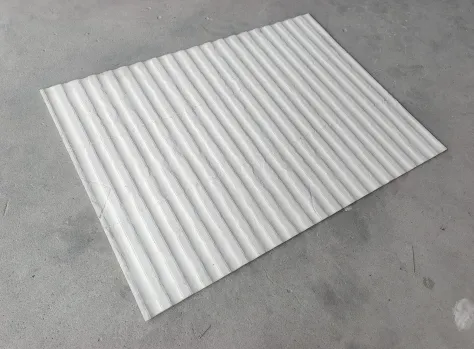
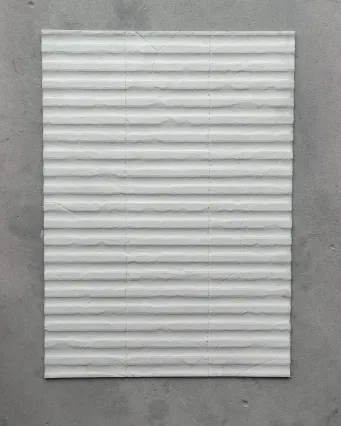
This process is a game-changer. Instead of brute-force heat, it uses a catalytic reaction to shape and cure the material. The result is a product that bypasses the major drawbacks of traditional ceramics. Century Stone isn't just one product; it's a versatile family of materials designed for specific needs, from the vast, seamless look of the MCM Big Slab Board Series to the incredible adaptability of MCM Flexible Stone . It's engineered to be lightweight, breathable, and stunningly realistic in its textures, capable of mimicking everything from natural slate to rare marble, wood, and even leather. This is where the future of surface design is heading.
Let's break down the comparison across the factors that truly define long-term value. This is where the practical differences become crystal clear.
This might be the most surprising part of the comparison. Porcelain is famously hard, but hardness comes with a price: brittleness. Think of glass. It's very hard, but a sharp impact will shatter it. Porcelain behaves similarly. drop a heavy pan in the kitchen, or have a minor impact on a wall corner, and you're likely to get a chip or a crack. And once a porcelain tile is cracked, its integrity is gone. It becomes a weak spot for moisture and a visual eyesore. Furthermore, buildings naturally shift and settle over time. This movement puts stress on rigid tiles, often leading to cracks along grout lines or across the tiles themselves.
Century Stone, on the other hand, is engineered for toughness and flexibility . While still highly durable and resistant to scratches and abrasion, its inherent flexibility allows it to absorb impacts that would shatter porcelain. It can bend and flex, accommodating the minor structural movements of a building without cracking. This resilience is a core component of its long-term value. You're not just installing a surface; you're installing a surface that works *with* your building, not against it. This drastically reduces the likelihood of needing repairs down the line. A wall clad in a beautiful finish from the MCM Project Board Series will maintain its seamless appearance for years, even in high-traffic commercial environments, because it can handle the bumps and knocks of daily life.
Here, the difference is night and day. Porcelain tiles are heavy. A square meter can weigh anywhere from 15 to 30 kg or more. This weight has a domino effect on the entire project.
Century Stone is astonishingly lightweight, often weighing just 4-8 kg per square meter. This is a fraction of porcelain's weight, and it completely changes the installation game. The MCM Flexible Stone , for example, is so light and pliable it can be carried in rolls. The benefits are enormous. Structural load is no longer a major concern, even for retrofitting older buildings. Transportation costs are slashed. Installation is faster, cleaner, and can often be done by a single person. Cutting can be done with a simple utility knife, eliminating the dust, noise, and water of a saw. This efficiency doesn't just save money on labor and logistics; it dramatically shortens project timelines, which is invaluable for both commercial and residential projects.
Porcelain has come a long way with inkjet printing technology, but it's still bound by its rigid, repetitive nature. Patterns on printed tiles repeat every few pieces, which can be noticeable on large surfaces. Grout lines, no matter how thin, are always present, creating a grid that breaks up the visual flow. And, most importantly, porcelain is flat and rigid. It cannot conform to curved walls, columns, or complex architectural features.
This is where Century Stone truly shines as a superior design tool. The possibilities are virtually limitless.
Aesthetic value is a huge part of long-term value. A design that is unique, sophisticated, and free from the constraints of traditional materials will retain its appeal and add significant worth to a property for decades to come.
The weak link in any tiled surface is the grout. Grout is porous. It absorbs dirt, grease, and moisture, leading to staining and the growth of mold and mildew. It requires regular, tedious scrubbing and periodic re-sealing or even complete removal and replacement. When a porcelain tile does crack, replacing it is a major chore. The old tile must be carefully chipped out, creating dust and risking damage to adjacent tiles, and then a new tile must be set and grouted, with the new grout often not perfectly matching the old.
Century Stone largely eliminates these issues. Because it can be installed in large formats, grout lines are minimized or even completely absent. The material itself is breathable, which helps prevent moisture from being trapped behind it, reducing the risk of mold. It's also incredibly easy to clean with standard, non-abrasive cleaners. In the unlikely event of damage, repairs are far simpler. A small area can be cut out and replaced seamlessly, often without the need for a specialist. This low-maintenance-by-design approach saves time, money, and hassle over the lifespan of the building.
In today's world, the environmental impact of our choices is a critical component of value. The production of porcelain is an energy-intensive process. The high-temperature kilns consume vast amounts of natural gas, contributing to a significant carbon footprint. Quarrying for the raw clay and feldspar can also have a substantial environmental impact.
The production of Century Stone is fundamentally greener. The low-temperature curing process uses up to 80% less energy than a traditional ceramic kiln. The raw materials often include recycled components and abundant natural mineral powders, reducing the strain on virgin resources. Its lightweight nature means less fuel is used in transportation. For projects aiming for green building certifications like LEED, or for any client who values sustainability, Century Stone is the clear winner. This isn't just a "feel-good" benefit; it can have tangible financial advantages in the form of tax incentives and increased property value.
To make the comparison even clearer, let's summarize the key points in a table.
| Feature | Century Stone (MCM) | Porcelain Tiles |
|---|---|---|
| Durability | Century Stone (MCM)"> Tough & flexible; high impact resistance; absorbs minor structural movement without cracking. | Hard but brittle; prone to chipping and cracking on impact; can crack due to building settlement. |
| Weight | Century Stone (MCM)"> Extremely lightweight (approx. 4-8 kg/m²). | Heavy (approx. 15-30+ kg/m²). |
| Installation | Century Stone (MCM)"> Fast, easy, and clean. Can be cut with a utility knife. Lower labor costs. Ideal for high-rises and renovations. | Slow, labor-intensive, and messy. Requires wet saws for cutting. Higher labor and structural costs. |
| Design Freedom | Century Stone (MCM)"> Virtually limitless. Bends to curves, available in large seamless formats, and allows for 3D printing of custom designs. | Limited to flat, rigid formats. Patterns are repetitive. Grout lines are unavoidable. Cannot be used on curved surfaces. |
| Maintenance | Century Stone (MCM)"> Minimal grout lines mean less cleaning and no mold issues. Easy to clean and simple to repair if needed. | Grout requires constant cleaning and maintenance. Replacing a single cracked tile is a difficult and messy job. |
| Environmental Impact | Century Stone (MCM)"> Low-energy production process. Uses recycled materials. Lightweight for lower transport emissions. Low VOC. | High-energy production (high-temp kilns). Heavy reliance on quarried virgin materials. Higher transport emissions. |
| Long-Term Value | Century Stone (MCM)"> High. Lower total cost of ownership due to savings in installation, maintenance, and repairs. Superior aesthetic and sustainable value. | Moderate. Potentially lower upfront material cost but higher associated costs over the building's lifespan. |
Porcelain tile has been a reliable workhorse for many years, and its place in the history of construction is secure. But when we evaluate materials based on true long-term value, the landscape has clearly changed. The initial price tag on a box of tiles is just one tiny piece of a much larger puzzle.
Long-term value is found in the savings on installation and structural engineering. It's found in the decades of low maintenance, free from the headache of scrubbing grout or worrying about cracks. It's found in the enduring beauty of a seamless, custom-designed surface that elevates a space from ordinary to extraordinary. And it's found in making a responsible choice for the environment.
In every one of these crucial aspects, Century Stone by COLORIA GROUP proves to be the superior investment. It represents a smarter, more efficient, more beautiful, and more sustainable way to build. From global commercial projects, like those supported by our partners in Saudi Arabia, to the most intimate residential renovations, it offers a level of performance and design freedom that traditional materials simply cannot match. The choice between Century Stone and porcelain tiles isn't just a choice between two products; it's a choice between the past and the future. For those who prioritize quality, innovation, and genuine long-term value, the choice is clear.
Recommend Products












