


For centuries, the way we dress our buildings has spoken volumes. From the imposing granite of ancient monuments to the charming brick of historic townhouses, cladding materials have defined architectural styles and stood as testaments to their eras. These traditional materials are familiar, trusted, and carry a certain romantic weight. But as we push the boundaries of architecture, demanding more from our buildings in terms of performance, sustainability, and creative expression, a question arises: are these age-old methods still the best we can do?
The world of construction is in the midst of a quiet revolution, driven by material science. Architects, builders, and clients are looking for materials that are not just beautiful, but also smarter, lighter, and kinder to our planet. This search has led to the rise of a new generation of cladding solutions. Today, we're diving deep into this evolution, pitting the titans of tradition against a groundbreaking challenger we'll call "Century Stone"—a material born from Modified Cementitious Material (MCM) technology, masterfully advanced by industry pioneers like the COLORIA GROUP . Let's explore how this innovation is changing the game.
Chapter 1: The Enduring Legacy of Traditional Cladding
Before we can appreciate the new, we must understand the old. Traditional cladding materials have earned their place in the architectural hall of fame for good reason. They possess a raw, authentic beauty and have proven their longevity over decades, even centuries.
Natural Stone (Granite, Marble, Sandstone)
There's something undeniably majestic about a building clad in natural stone. Each panel is a unique piece of geological history, offering unparalleled visual depth and a sense of permanence. It's incredibly durable, resistant to fire, and weathers gracefully over time.
However, this majesty comes at a significant cost. Stone is monumentally heavy. Cladding a high-rise requires immense structural reinforcement from the foundation up, adding substantial complexity and expense to a project. The logistics are daunting—quarrying, cutting massive blocks, transporting them to the site, and hoisting them into place with heavy machinery. This process is not only costly and labor-intensive but also has a considerable environmental footprint, leaving scars on the landscape and consuming vast amounts of energy.
Brick and Masonry
Brick is the humble workhorse of the cladding world. It offers a warm, timeless aesthetic, excellent fire resistance, and great thermal mass. It's a look that feels both classic and comforting, at home in both residential and commercial settings.
The downside? Installation is a slow, meticulous craft. Laying bricks one by one is highly dependent on skilled labor, which is becoming increasingly scarce and expensive. The process is also sensitive to weather conditions. While durable, the mortar joints can be a weak point over time, requiring repointing to prevent water ingress. In terms of design, you're largely limited to rectilinear forms and a standard palette of earthy colors.
Wood Cladding
Wood brings a natural warmth and organic beauty that few other materials can match. It can create facades that feel connected to their environment, from rustic cabins to sleek, modern Scandinavian designs.
The trade-off is maintenance. Wood is susceptible to rot, pests, and fire (unless treated). To keep it looking its best and performing well, it requires regular sealing, staining, or painting. This ongoing commitment of time and money is a significant factor for many building owners. Furthermore, sourcing sustainable timber is crucial, and not all wood cladding options are created equal in this regard.
These traditional materials are not without their merits, but they all share common limitations: they are heavy, labor-intensive to install, limited in their design flexibility, and often come with a heavy environmental or financial toll. This is the context into which a new challenger has emerged.
Chapter 2: The Arrival of Century Stone - The MCM Revolution
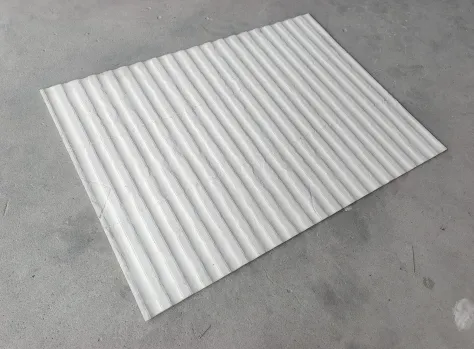
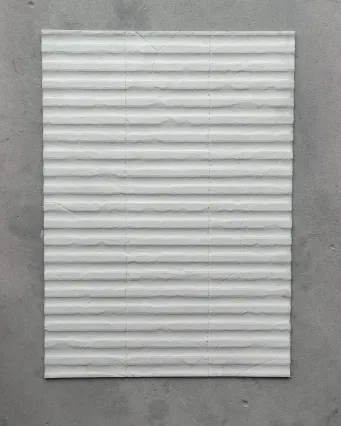
Imagine a material that captures the aesthetic essence of natural stone, wood, or brick, but is incredibly lightweight, flexible, and produced with a fraction of the environmental impact. That's the promise of Century Stone, the colloquial term for products derived from Modified Cementitious Material (MCM) technology.
Spearheaded by innovators like the COLORIA GROUP , MCM isn't a synthetic imitation. It's a clever re-engineering of nature itself. The primary ingredients are natural soil, sand, and other mineral powders. Through a proprietary process of molecular modification and low-temperature firing (a stark contrast to the high-energy kilns used for bricks and ceramics), these raw materials are transformed. The result is a material that is both familiar in its composition and revolutionary in its properties.
The key characteristics that set MCM apart are truly game-changing:
- Incredibly Lightweight: Typically only 4-8 kg per square meter, MCM is about one-sixth the weight of traditional ceramic tiles and a fraction of the weight of stone slabs.
- Remarkably Flexible: Unlike rigid stone or brick, some MCM products can be bent to wrap around curved walls, columns, and corners without cracking. This opens up entirely new avenues for architectural design.
- Highly Durable: It boasts Class A fire resistance, is waterproof, breathable, and resists freeze-thaw cycles, making it suitable for any climate.
- Eco-Friendly: The low-temperature production process consumes significantly less energy. Its lightweight nature reduces transportation emissions, and it often incorporates recycled materials.
This technology has given rise to a diverse family of products, each tailored for specific architectural applications. One of the most talked-about is MCM Flexible Stone , which embodies the core advantages of this technology, allowing architects to create fluid, organic forms that were previously impossible or prohibitively expensive.
Chapter 3: The Ultimate Showdown - A Head-to-Head Comparison
So, how does Century Stone (MCM) really stack up against traditional cladding when put to the test? Let's break it down across the criteria that matter most to architects, builders, and clients.
| Feature | Traditional Cladding (Stone, Brick, etc.) | Century Stone (MCM Technology) |
|---|---|---|
| Aesthetics & Design Freedom | Authentic but limited by material source and form. Heavy look and feel. Difficult to create complex curves or custom patterns. | Century Stone"> Virtually limitless. Can replicate stone, wood, leather, and woven textures. Can be bent, custom-colored, and even 3D printed for unique designs. |
| Weight & Structural Load | Extremely heavy. Requires significant, costly structural reinforcement and robust foundations. Not suitable for many retrofit projects. | Century Stone"> Ultra-lightweight. Minimal load on the building structure. Ideal for high-rises, retrofits, and structures with weight limitations. |
| Installation & Labor | Slow, labor-intensive, and requires specialized, expensive skilled trades. Generates significant on-site cutting waste and dust. | Century Stone"> Fast and simple. Can be cut with a utility knife and applied with a simple adhesive. Drastically reduces labor time, costs, and project duration. |
| Durability & Maintenance | Generally durable, but stone can chip, brick mortar can fail, and wood requires constant upkeep. | Century Stone"> Excellent performance. Class A fire-rated, waterproof, breathable, freeze-thaw resistant, and UV stable. Low maintenance over its long lifespan. |
| Sustainability | High environmental impact. Destructive quarrying, high-energy manufacturing (brick kilns), and heavy transportation logistics. | Century Stone"> Far superior. Low-energy production, use of natural and recycled soils, minimal transport emissions due to light weight, and recyclable. |
| Total Cost of Ownership | High upfront material cost (stone) or labor cost (brick). High associated costs for structure, transport, and long-term maintenance (wood). | Century Stone"> Lower total cost. Competitive material price with massive savings on structural engineering, transportation, and labor. Minimal long-term maintenance costs. |
Deep Dive: Design Freedom Unleashed
This is where MCM technology truly shines and leaves tradition behind. While a stone facade is beautiful, you are fundamentally limited by what you can cut from a block. With Century Stone, the material is the canvas. Imagine an architect wants to create a facade that mimics the texture of woven fabric or the intricate patterns of a leaf. With traditional materials, this is an artisanal, prohibitively expensive fantasy. With MCM technology, it's a reality.
This is perfectly exemplified by the MCM 3D Printing Series . This isn't just about printing a building; it's about printing the *skin* of the building with unprecedented detail. COLORIA GROUP leverages this to create bespoke panels with custom logos, artistic reliefs, and unique textures that turn a building's exterior into a work of art. This level of customization allows for a unique brand identity or an artistic statement that is physically integrated into the architecture.
The Practical Magic of Lightweight Installation
Let's talk logistics. A typical construction project is a complex ballet of timing, equipment, and labor. Traditional cladding is a slow, heavy dance. It requires cranes, extensive scaffolding, and teams of masons. The site is noisy, dusty, and progress is slow.
Now, picture the installation of Century Stone. The material arrives on site in simple boxes, easily carried by one or two workers. It can be cut to size on the spot with a simple knife, eliminating dust and noise. It is then applied directly to the substrate using a specialized adhesive, almost like tiling. The speed is phenomenal. A team can cover vast areas in a fraction of the time it would take to lay brick or hang stone. This acceleration of the construction timeline is not a small benefit—it translates directly into massive cost savings on labor, equipment rental, and financing. For retrofitting older buildings, it's a miracle material, adding a fresh, modern look without overloading the existing structure.
Chapter 4: The Diverse Family of MCM Products
Century Stone isn't a single product; it's a platform technology. As a one-stop solution provider, COLORIA GROUP has developed a comprehensive suite of MCM products to meet any architectural vision. Understanding this portfolio reveals the true versatility of the material.
MCM Flexible Stone Series
This is the star of the show when it comes to design flexibility. The MCM Flexible Stone is the product that can genuinely wrap around a curved reception desk, a sinuous feature wall, or an entire circular column seamlessly. It shatters the rigid, planar constraints of traditional materials. It allows architects to think in curves and fluid lines, creating buildings that feel more organic and dynamic. It can mimic travertine, sandstone, or slate, but with a flexibility that stone could never achieve.
MCM Big Slab Board Series
For those who love the grand, monolithic look of large-format stone, the MCM Big Slab Board Series is the answer. These large panels create sleek, modern facades with minimal grout lines, delivering a powerful and clean aesthetic. Unlike massive stone slabs that are a logistical nightmare, these big boards are still lightweight and relatively easy to handle. They are perfect for premium commercial projects, hotel lobbies, and high-end residential exteriors where a sense of scale and luxury is paramount. This series directly competes with, and often surpasses, the visual impact of quarried stone panels but without the associated weight and cost.
MCM Project Board & 3D Printing Series
The Project Board series is the versatile workhorse, offering an incredible balance of performance, aesthetics, and value for large-scale developments. It provides the durability and ease of installation of MCM in a cost-effective package. When combined with the MCM 3D Printing Series , the possibilities become endless. A developer can use the Project Board for the main body of a facade and then commission custom 3D printed panels for entryways, feature walls, or branding elements, creating a high-end, customized look within a sensible budget.
Chapter 5: The Verdict - A New Century for Construction
The choice of cladding is no longer just an aesthetic decision. It's an economic, environmental, and engineering decision. Traditional materials will always have a place, their legacy is undeniable. But they represent the past.
Century Stone, powered by MCM technology, represents the future. It is not a compromise; it is an upgrade across nearly every metric. It offers the beauty of nature without the destructive impact of extraction. It provides the durability of stone without the weight. It allows for the creativity of an artist with the efficiency of a modern manufacturing process.
By solving the core problems of weight, cost, labor, and design limitation, companies like COLORIA GROUP are not just selling a new product. They are providing a new toolbox for architects and builders. They are making it possible to build taller, more expressive, and more sustainable buildings, faster and more affordably than ever before.
As we look to the skylines of tomorrow, they will be shaped by these innovations. The revolution in construction materials is here. It's light, it's flexible, it's sustainable, and it's beautiful. It's the dawn of a new century for building design.










