
When we talk about buildings, we often focus on their height, design, or the stories they hold. But have you ever stopped to think about what makes those buildings stand out—literally? The materials that clothe their exteriors, shape their interiors, and bridge function with beauty. In the world of construction, where every project demands something unique, finding materials that balance durability, aesthetics, and sustainability can feel like searching for a needle in a haystack. That's where Century Stone Works steps in. As a one-stop solution provider in the building materials industry, they've built their reputation on something game-changing: MCM (Modified Cementitious Material) products. These aren't your average construction boards—they're a blend of innovation, customization, and eco-friendliness, designed to turn architectural dreams into tangible structures. Today, let's dive into the stars of their lineup: the MCM Project Board Series, MCM 3D Printing Series, MCM Flexible Stone, and MCM Big Slab Board Series. Whether you're building a soaring commercial complex, a cozy residential community, or a landmark cultural center, these materials might just be the missing piece your project needs.
Let's start with the workhorse of large-scale projects: the MCM Project Board Series. If you've ever walked through a bustling airport terminal or marveled at the sleek facade of a modern shopping mall, chances are you've encountered materials that need to withstand heavy foot traffic, harsh weather, and the test of time. Traditional materials often fall short here—either too heavy to install efficiently, too prone to cracking under stress, or too limited in design options. But the MCM Project Board Series? It's engineered to tackle these challenges head-on.
What makes these boards ideal for big projects? For starters, they're built with modified cementitious material, a blend that boosts strength without adding unnecessary weight. Think of it as a supercharged version of traditional cement—resistant to fire, water, and even extreme temperatures, making it perfect for regions like the Middle East, where scorching sun and occasional sandstorms are part of the daily grind. But strength doesn't mean sacrificing style. The Project Board Series comes in a range of textures and finishes that can mimic natural stone, concrete, or even custom designs, giving architects the freedom to get creative without compromising on performance.
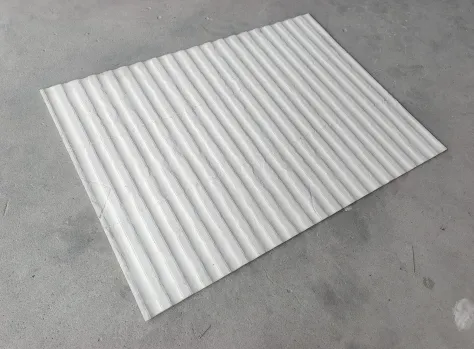
Take the Wave Panel, for example. Imagine a commercial building's exterior wrapped in panels that ripple like a frozen wave—each curve soft yet defined, catching the light as the sun moves across the sky. That's the effect of the Wave Panel from the Project Board Series. Its undulating texture adds movement to static walls, turning a plain facade into a visual story. Or consider Travertine (Starry Green), a standout finish in this series. With its deep green base dotted with flecks of silver and gold, it looks like someone sprinkled stardust over a forest floor. Installed on a hotel lobby's accent wall, it instantly elevates the space, blending nature's calm with a touch of luxury.
But it's not just about looks. These boards are designed for efficiency, too. Large-scale construction projects often struggle with tight deadlines, and every delay adds costs. The MCM Project Board Series cuts down installation time thanks to its lightweight design—contractors can handle larger panels with fewer workers, reducing labor hours. Plus, since the material is pre-finished, there's no need for on-site painting or sealing, trimming down the project timeline even further. For a recent airport expansion in Riyadh, the Project Board Series was chosen specifically for this reason: it allowed the construction team to meet their 18-month deadline without cutting corners on quality.
If the Project Board Series is the reliable workhorse, the MCM 3D Printing Series is the innovative artist of the lineup. 3D printing has revolutionized industries from healthcare to automotive, and now it's making waves in construction—and Century Stone Works is leading the charge with their MCM 3D Printing Series. This isn't just about printing small trinkets; we're talking about full-scale building components that push the boundaries of what's possible in architectural design.
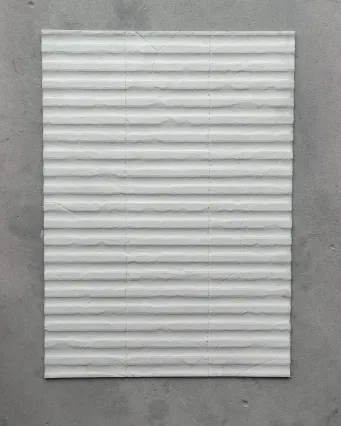
Traditional construction methods often limit creativity. If an architect dreams up a wall with intricate, overlapping semicircles or a facade covered in tiny, raised star-shaped bumps, the process to create those shapes would typically involve custom molds, which are expensive and time-consuming. And if the design needs tweaking mid-project? You're back to square one with a new mold. But 3D printing changes all that. With the MCM 3D Printing Series, designs are digital—adjustments can be made with a few clicks, and the printer brings the updated design to life without any extra tooling. It's like having a magic wand for construction, where the only limit is the architect's imagination.
Let's zoom in on the Semicircle Board, a popular choice in this series. Picture a museum dedicated to modern art, with a feature wall that curves and dips in a series of interconnected semicircles. Each semicircle is slightly different in size, creating a rhythm that draws the eye across the space. With traditional methods, creating those varying semicircles would require dozens of molds, but with 3D printing, the printer lays down layer upon layer of MCM material, building each curve with precision. The result? A wall that feels organic, almost alive, as if it grew into that shape naturally.
Then there's Star Gravel, a finish that's as playful as it is sophisticated. Imagine a children's hospital where the exterior walls are covered in small, raised gravel-like bumps, each one rounded and smooth to the touch. But these aren't just any bumps—they're arranged in constellations, turning the building into a giant night sky map. Kids passing by can trace the stars with their fingers, turning a scary hospital visit into a moment of wonder. That's the power of 3D printing: it lets designers infuse personality into every inch of a building, making spaces feel more human and less clinical.
Beyond customization, the 3D Printing Series also shines in sustainability. Traditional construction generates a lot of waste—off-cuts from stone or concrete that end up in landfills. But 3D printing is additive, meaning it only uses the material needed for the design, minimizing waste. The MCM material itself is already eco-friendly (more on that later), so combining it with 3D printing's efficiency makes this series a favorite among green-building advocates. A recent university campus project in Dubai used the 3D Printing Series for their new arts center, and the result was a 30% reduction in construction waste compared to using traditional materials. Plus, the unique, 3D-printed facade became a landmark, drawing visitors and boosting the campus's reputation as a hub for innovation.
Now, let's talk about a problem that has stumped architects for decades: how to cover curved or irregular surfaces with stone-like materials. Traditional stone is rigid—beautiful, but unforgiving. Try to wrap it around a rounded column or a wavy wall, and you'll end up with gaps, cracks, or a patchwork of small pieces that ruin the aesthetic. Enter MCM Flexible Stone, the rebel of the MCM lineup. It looks and feels like natural stone, but here's the twist: it bends. Not just a little flex, either—we're talking about material that can curve around a 20-inch radius without cracking. It's like if stone and fabric had a baby, and that baby was a construction material genius.
The secret lies in the modified cementitious material's composition. Century Stone Works engineers have tweaked the formula to include fibers and polymers that add flexibility without weakening the material's strength. The result is a product that weighs up to 70% less than traditional stone, making it easy to handle, and can conform to almost any shape. For architects designing buildings with organic, flowing lines—think of a concert hall with a dome that curves gently from floor to ceiling, or a boutique hotel with a facade that undulates like a sand dune—the Flexible Stone is a game-changer.
Take the Rust Square Line Stone, a finish that's equal parts rugged and refined. With its deep rust color and geometric line patterns, it's the perfect blend of industrial chic and vintage charm. Now, imagine that finish wrapped around a curved restaurant exterior. The lines follow the curve seamlessly, no breaks, no awkward seams. From the street, the building looks like a giant, rusted sculpture—bold yet inviting. Inside, the same material might line the bar's curved front, creating a cohesive look that flows from outside in. Because the Flexible Stone is so lightweight, the restaurant's structure didn't need extra reinforcement to support it, saving the owner money on structural upgrades.
Another standout in the Flexible Stone series is the Granite Portoro, a sleek black finish with gold veining that mimics the look of rare Portoro marble. Traditionally, using real Portoro marble on a curved surface would be cost-prohibitive and risky—one wrong move during installation, and the slab cracks, costing thousands to replace. But with Flexible Stone, designers can achieve that same luxury look at a fraction of the cost, and with zero risk of breakage. A high-end jewelry store in Milan used Granite Portoro Flexible Stone for their spiral staircase's walls, and the result is breathtaking: the black and gold veins twist with the stairs, creating the illusion of a marble ribbon coiling upward.
Installation is a breeze, too. Unlike rigid stone slabs that require cranes and specialized equipment, Flexible Stone comes in lightweight sheets that can be cut with standard tools. Contractors can apply it using adhesive, eliminating the need for mortar and heavy lifting. This not only speeds up installation but also makes it safer—fewer workers are needed, and there's less risk of injury from lifting heavy materials. For a residential project in Spain with a curved pool house, the Flexible Stone was installed in just two days, compared to the week it would have taken with traditional stone. The homeowner was thrilled: "It looks like real stone, but it went up so fast I could barely keep up with the contractors!"
There's something inherently satisfying about a smooth, uninterrupted surface. Whether it's a perfectly made bed with crisp sheets or a clean, white wall with no visible nails, minimalism has a way of calming the mind. In architecture, that same principle applies—and the MCM Big Slab Board Series is all about embracing that "less is more" philosophy. These are large-format panels, some as big as 12 feet by 5 feet, designed to cover walls with minimal seams, creating a sleek, modern look that's hard to achieve with smaller tiles or boards.
Traditional building materials often come in small sizes, leading to walls covered in grout lines or seams that break up the visual flow. Over time, these seams can collect dirt, fade, or crack, making the building look worn even if it's new. The Big Slab Board Series solves that problem by reducing the number of joints by up to 80% compared to standard-sized panels. The result? A facade that looks like a single, continuous piece of material—clean, polished, and undeniably modern.
Let's take Lunar Peak Silvery, a finish that's as ethereal as its name suggests. Imagine a corporate headquarters with a facade clad in these big slabs—each panel a soft, silvery gray that shimmers like moonlight on water. From a distance, the building looks like it's wrapped in a cloud, smooth and seamless. Up close, you notice the subtle texture, like the surface of the moon—pitted and imperfect in the most beautiful way. The lack of seams makes the building feel larger, more imposing, yet somehow approachable. It's a statement piece without being loud.
Then there's the Fair-Faced Concrete finish, a nod to the beauty of raw, unadorned materials. In the Big Slab Board Series, this finish isn't just plain gray—it has depth, with subtle variations in tone that mimic the look of hand-poured concrete, but without the inconsistencies of traditional methods. Installed on a museum's exterior, these large slabs create a backdrop that lets the art inside take center stage. The lack of seams ensures the focus stays on the building's form, not its materials, making it the perfect canvas for architectural expression.
But big slabs aren't just about aesthetics—they're practical, too. Fewer seams mean fewer places for water to seep in, reducing the risk of mold and water damage. In rainy climates or coastal areas, this is a huge advantage. The Big Slab Board Series also offers better insulation than smaller panels, thanks to the continuous surface, which helps keep buildings cooler in summer and warmer in winter, lowering energy costs. A school in Canada used the Big Slab Board Series for their new wing, and they reported a 15% reduction in heating bills the first year—proof that beauty and efficiency can go hand in hand.
Installation might sound intimidating—after all, moving a 12-foot slab sounds like a job for superheroes. But the MCM material's lightweight nature makes it manageable. The slabs weigh about 30% less than comparable stone slabs, so contractors can use standard lifting equipment instead of cranes. Plus, the panels are precision-cut at the factory, ensuring a perfect fit every time. For a luxury resort in the Maldives, the Big Slab Board Series was chosen for their beachfront villas' exteriors. The large, seamless panels withstand the salty air and strong winds, and their smooth surface is easy to clean—important for a resort that prides itself on immaculate grounds.
By now, you might be thinking, "These products sound great, but what makes MCM materials different from other construction materials on the market?" The answer lies in three key pillars: sustainability, customization, and global support. Century Stone Works doesn't just sell boards and panels—they sell solutions that align with the future of construction, where buildings are not just structures, but partners in sustainability and creativity.
Let's start with sustainability. In an era where climate change is top of mind, green building practices are no longer optional—they're essential. MCM materials are made from modified cementitious material, which includes recycled aggregates and low-VOC (volatile organic compound) binders. This means they release fewer harmful chemicals into the air during production and installation, making them better for both the planet and the people who live and work in the buildings. Plus, since MCM products are durable and long-lasting, they reduce the need for frequent replacements, cutting down on waste over time. The company also prioritizes energy-efficient manufacturing processes, using solar power at their production facilities and recycling water used in manufacturing. For LEED-certified projects, MCM materials are a go-to choice, helping developers earn points toward their sustainability certifications.
Customization is another area where MCM shines. Every building is unique, and cookie-cutter materials can make even the most innovative design feel generic. Century Stone Works understands this, which is why they offer endless customization options across all their series. Want a specific color that matches your brand's logo? They can create it. Need a texture that mimics a rare stone found only in the Italian countryside? Their team of designers can replicate it. Even the size and shape of the panels can be tailored to fit your project's needs. For a tech company's headquarters that wanted to stand out, the design team worked with Century Stone Works to create a custom finish: a blend of Lunar Peak Golden and Star Gravel, with gold flecks embedded in a golden base, mimicking the look of a galaxy. The result? A building that's instantly recognizable and perfectly aligned with the company's innovative brand.
Finally, global support sets Century Stone Works apart. Building materials are only as good as the support behind them, and with a presence in key markets like Saudi Arabia, the company offers localized service that's hard to find with international suppliers. Their Saudi Arabian (agency) provides on-the-ground support, from helping with material selection to coordinating logistics and installation training. This local touch is invaluable for large-scale projects, where language barriers, shipping delays, or unfamiliar regulations can derail timelines. For a recent mixed-use development in Jeddah, the project manager praised the Saudi agency: "They understood our local building codes, recommended materials that could handle the heat, and even sent a technician to train our installers. It felt like working with a partner, not just a supplier."
At the end of the day, buildings are more than just walls and roofs—they're stories. They tell the story of the people who designed them, the communities that use them, and the values of the companies that build them. Century Stone Works' MCM products don't just build buildings; they help tell those stories. Whether it's the Project Board Series ensuring a hospital stands strong for decades, the 3D Printing Series turning a school into a work of art, the Flexible Stone wrapping a museum in curves that invite exploration, or the Big Slab Board Series giving a corporate headquarters a sleek, modern edge—each panel is a chapter in the story of what's possible when innovation meets purpose.
As the construction industry continues to evolve, one thing is clear: the demand for materials that are strong, sustainable, and beautiful will only grow. Century Stone Works is ready to meet that demand, with MCM products that push boundaries, solve problems, and inspire creativity. So the next time you walk past a building that makes you stop and stare—whether it's because of its shimmering facade, its flowing curves, or its seamless design—chances are, it's wrapped in MCM materials. And behind that material? A team of experts who believe that great buildings start with great materials.
In the end, Century Stone Works isn't just in the business of selling construction boards. They're in the business of building legacies—one panel, one project, one story at a time.
| Product Series | Key Features | Best For | Standout Finishes |
|---|---|---|---|
| MCM Project Board Series | High strength, (weather resistance), lightweight, efficient installation | Airports, commercial complexes, large-scale infrastructure | Wave Panel, Travertine (Starry Green) |
| MCM 3D Printing Series | Custom 3D designs, no molds needed, complex shapes, minimal waste | Art museums, cultural centers, (signature buildings) | Semicircle Board, Star Gravel |
| MCM Flexible Stone | Flexible, lightweight, conforms to curves, easy installation | Curved facades, spiral staircases, boutique hotels | Rust Square Line Stone, Granite Portoro |
| MCM Big Slab Board Series | Large format, minimal seams, sleek aesthetic, energy-efficient | Corporate headquarters, luxury resorts, modern residences | Lunar Peak Silvery, Fair-Faced Concrete |
Recommend Products












