
When we think about safety-critical spaces—hospitals where lives hang in the balance, schools bustling with children, airports managing thousands of daily travelers, or high-rise commercial hubs—what lies beneath their polished exteriors often goes unnoticed. Yet the building materials chosen for these environments are silent guardians, standing between everyday functionality and potential disaster. In a world where a single spark can escalate into tragedy, the demand for materials that marry fire resistance, durability, and aesthetic appeal has never been higher. This is where Century Stone Works steps in, redefining safety with their innovative MCM (Modified Cementitious Material) solutions. Let's dive into how their fire-retardant flexible stone and advanced MCM series are transforming the way we build for safety.
Traditional building materials have long forced a trade-off: you could have fire safety, but at the cost of weight or design flexibility; you could get durability, but often with a heavy environmental footprint. MCM materials, however, flip that script. Born from decades of research in construction chemistry, MCM (Modified Cementitious Material) is a hybrid of cement, natural minerals, and advanced polymers—think of it as the "superfood" of building materials, packing strength, lightness, and resilience into one package.
What truly sets MCM apart in safety-critical spaces? Three non-negotiable traits: uncompromising fire resistance (tested to withstand extreme temperatures without releasing toxic fumes), featherlight composition (up to 80% lighter than natural stone, reducing structural strain), and chameleon-like adaptability (molding to curves, mimicking rare textures, and integrating seamlessly into any design vision). Let's break down the star players in Century Stone Works' MCM lineup that make these promises a reality.
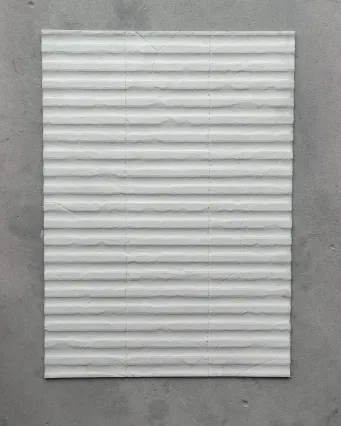
Imagine a material that feels like natural stone but bends like leather—meet MCM Flexible Stone, the problem-solver for architects working with curved walls, uneven surfaces, or tight spaces. Designed to wrap around pillars, hug stairwells, or line hospital corridors, this isn't just about looks; its flexibility translates to safer installations, too.
Take the travertine (starry green) variant, for example. With its subtle shimmer and organic veining, it adds warmth to pediatric clinics without sacrificing safety. But here's the kicker: it's rated A1 for non-combustibility, meaning even in a 1000°C fire, it won't ignite, melt, or release toxic smoke. "We used it in a children's hospital last year," says a senior architect at a Dubai-based firm. "Parents love the calming green tones, and we love that it's easy to clean—no grout lines to trap germs—and if a kid bumps into it? No chips, no scratches, just wipe and go."
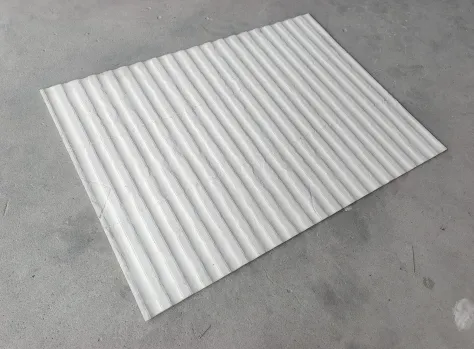
3D printing isn't just for prototypes anymore—Century Stone Works' MCM 3D Printing Series is revolutionizing how we build for safety by turning complex designs into fire-retardant reality. Whether it's a wave panel ceiling in a subway station (to reduce echo and prevent dust buildup) or a geometric facade for a government building, this technology lets engineers prioritize both form and function.
Consider a recent project in Riyadh: a busy metro hub needed a ceiling that was both visually striking and fire-safe. The solution? 3D-printed MCM wave panels in a matte finish. "Traditional wave designs require overlapping materials, which create fire hazards in gaps," explains the project's structural engineer. "With 3D printing, we got seamless, single-piece panels that lock together tightly—no gaps, no weak points. And since MCM is inherently fire-resistant, we hit all safety codes without adding extra layers."
The bonus? 3D printing cuts material waste by up to 60% compared to traditional cutting methods, aligning with LEED and BREEAM green building standards. It's safety with a conscience.
When you're building a stadium, a convention center, or a hospital wing that spans acres, you need materials that keep up with scale—enter MCM Project Board Series. Engineered for large-scale installations, these boards are the workhorses of safety-critical construction, offering consistency, speed, and unbeatable fire performance.
Take fair-faced concrete , a fan favorite in this series. With its raw, industrial charm, it's become a staple in modern school designs—think exposed ceilings and accent walls that feel open and airy. But don't let the minimalist look fool you: each board undergoes rigorous testing to ensure it can withstand impact, moisture, and extreme heat. "We used 5,000 sqm of Project Board fair-faced concrete in a Riyadh university campus," says a construction manager. "Installation took half the time of traditional concrete panels, and during fire drills, the material kept temperatures on the other side of the wall below 50°C for over two hours—enough time to evacuate 2,000 students safely."
| Feature | MCM Project Board | Traditional Concrete |
|---|---|---|
| Weight (per sqm) | 15-20kg | 50-60kg |
| Fire Resistance | 2+ hours at 1000°C | 1 hour at 800°C |
| Installation Time | 30% faster | Standard timeline |
| Environmental Impact | Low carbon footprint | High CO2 emissions |
For spaces where even a tiny gap could spell disaster—like data centers, clean rooms, or high-security facilities—MCM Big Slab Board Series delivers seamless protection. These extra-large panels (up to 3m x 1.5m) minimize joints, reducing weak points for fire, water, or dust to sneak through.
A recent project in Jeddah's financial district used these slabs for an entire office tower's exterior. "With traditional cladding, you're looking at hundreds of seams that need sealing and re-sealing," explains the project's engineer. "Big Slab Boards cut that number by 70%. Plus, their high-strength core means they resist wind loads up to 200km/h—critical for coastal areas prone to storms. And yes, they're fire-rated too—A2, so they won't contribute to flame spread."
The aesthetic payoff? A sleek, monolithic look that makes buildings stand out—proving safety doesn't have to be boring.
Fire resistance is table stakes, but Century Stone Works' MCM materials go further, addressing the hidden challenges of running safe, efficient spaces:
All MCM products are low-VOC, contain 30% recycled materials, and are 100% recyclable at the end of their lifecycle. That's a big deal for LEED-certified hospitals or universities aiming for carbon neutrality.
While upfront costs might be slightly higher than standard materials, MCM's durability (50+ year lifespan) and low maintenance (no repainting, sealing, or replacement) slash long-term expenses. A school district in Riyadh reported saving 40% on wall maintenance over five years after switching to MCM Flexible Stone.
From star gravel textures that mimic desert landscapes to semicircle board accents that soften institutional vibes, MCM lets designers create spaces that feel human, not sterile. "Safety shouldn't mean boring," says a lead designer at a Kuwaiti architecture firm. "MCM lets us have both."
In safety-critical spaces, every choice matters. Century Stone Works' MCM materials don't just meet codes—they redefine what's possible, proving that fire-retardant, durable, and beautiful can coexist. Whether it's a hospital corridor lined with travertine (starry green) Flexible Stone, a school gym wrapped in Project Board fair-faced concrete, or an airport ceiling printed with 3D wave panels, these materials are more than building blocks—they're partners in keeping people safe.
As we build the next generation of hospitals, schools, and commercial hubs, the question isn't "Can we make it safe?"—it's "Can we make it safe, stunning, and sustainable?" With MCM, the answer is a resounding yes.
Recommend Products












