
Let's be real – building materials are the unsung heroes of architecture. They don't just hold up walls; they shape how we experience spaces, how buildings tell stories, and even how we feel when we walk into a room. But for years, architects and builders have been stuck in a loop: choose heavy, durable stone that's a nightmare to install, or go lightweight but sacrifice strength. That is, until COLORIA GROUP came along with their game-changing MCM series. Today, we're diving into why their Century Stone Works line, especially the flexible stone MCM, is turning heads – it's lightweight, yes, but don't let that fool you; this stuff can handle high loads like a champ. Let's break it down.
First off, MCM stands for Modified Cementitious Material – a fancy term for "we took traditional cement and gave it a tech upgrade." Imagine taking the best parts of concrete (strength, durability) and stone (natural beauty) and blending them with modern engineering to fix their biggest flaws. The result? A material that's 70% lighter than natural stone but just as tough, if not tougher. And get this – it's eco-friendly too. No heavy mining, low VOC emissions, and fully recyclable. That's a win-win for both your building and the planet, right?
But here's the kicker: MCM isn't just one thing. COLORIA GROUP has built a whole family of products under this umbrella, each designed to solve specific problems. Whether you're cladding a skyscraper's exterior, creating a curved feature wall in a hotel lobby, or printing a custom 3D art piece for a museum, there's an MCM solution. Today, we're zeroing in on three stars of the lineup: the flexible stone that bends without breaking, the big slab boards that make installation a breeze, and the 3D printing series that's letting architects dream bigger than ever.
If there's one product that makes builders and designers go "wow," it's MCM Flexible Stone. Picture this: a stone-like material that's so flexible, you can roll it up like a rug or wrap it around a curved column – no cracks, no stress. Traditional stone? Try doing that, and you'll end up with a pile of rubble. But MCM Flexible Stone? It's made with a proprietary mix of modified cement and fibers that give it that "flex" without losing strength. Let me tell you, this changes everything for curved surfaces.
Take, for example, the travertine (starry green) variant. It's got this stunning, almost cosmic pattern – deep greens swirled with hints of gold, like a starry night sky trapped in stone. Now, imagine using that on a rounded museum facade. With traditional travertine, you'd have to cut tiny, wedge-shaped pieces to fit the curve, leaving ugly seams. But with MCM Flexible Stone? You unroll the sheet, stick it on, and boom – a seamless, starry green curve that looks like it was carved by nature itself. And since it's lightweight, you don't need massive support structures. That saves time, money, and headaches.
Real-World Win: A luxury hotel in Dubai recently used MCM Flexible Stone for their lobby's curved feature wall. The designer wanted a "flowing river" effect, and they chose the stream limestone (claybank) finish – soft, earthy tones that mimic the look of riverbed stone. The installers were shocked: instead of spending weeks cutting and fitting natural limestone, they had the entire wall done in 3 days. "It felt like working with fabric," one installer joked. "And six months later, it still looks brand new – no chips, no fading, even with all the foot traffic."
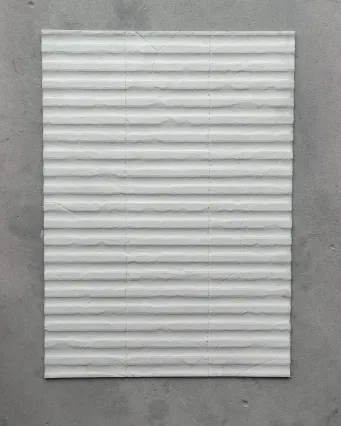
Let's talk about scale. When you're working on a large commercial project – think shopping malls, office towers, or airport terminals – small tiles just won't cut it. Seams everywhere, uneven patterns, and a install process that drags on forever. That's where the MCM Big Slab Board Series steps in. These aren't your average 12x12 tiles; we're talking slabs up to 3m x 1.5m . That's a lot of surface area with minimal joints, and trust me, the difference in aesthetics is night and day.
What I love about these big slabs is how they let the material's natural beauty shine. Take the lunar peak silvery design – it's got this sleek, metallic sheen with subtle texture, like moonlight reflecting off a mountain peak. Imagine an entire office building facade clad in these slabs: no messy grout lines, just a smooth, continuous surface that catches the light differently throughout the day. It's modern, it's bold, and it makes the building feel larger than life.
But it's not just about looks. Big slabs mean fewer cuts, fewer workers on-site, and faster installation. A team that would take 2 weeks to tile a 500m² wall with standard stone tiles? They can knock out the same area in 3-4 days with MCM Big Slabs. And since the slabs are lightweight, you don't need extra cranes or support beams. It's a huge time-saver, which, in construction, means big cost savings too.
| Feature | MCM Big Slab Board | Traditional Natural Stone Slabs |
|---|---|---|
| Weight per m² | 15-20 kg | 50-80 kg |
| Max Slab Size | 3m x 1.5m | Typically 1.2m x 0.6m (larger sizes are rare/expensive) |
| Installation Time (500m² wall) | 3-4 days | 10-14 days |
| Seam Count | Up to 70% fewer seams | Many visible seams |
And here's a fun fact: these big slabs aren't just for exteriors. Interior designers are loving them too. A recent project in Shanghai used the fair-faced concrete finish for a restaurant's ceiling. The client wanted an industrial, raw look without the weight of real concrete. The MCM slabs were installed in sections, and now the ceiling looks like it was poured in place – but it's so light, the building's structure didn't need any reinforcement. Cool, right?
Okay, let's get futuristic. 3D printing isn't just for small trinkets or prototypes anymore – COLORIA GROUP is using it to print building materials, and the results are mind-blowing. Their MCM 3D Printing Series lets architects create shapes that were once impossible with traditional materials. Want a wall that looks like it was sculpted by wind? Or a facade with intricate, repeating patterns that no human could carve evenly? 3D printing makes it happen – and it's all done with MCM, so you get that same lightweight strength we've been talking about.
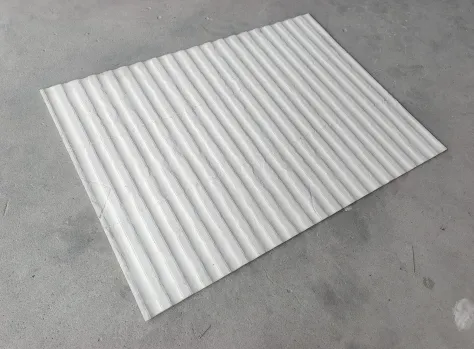
One of their most popular 3D-printed designs is the wave panel . Imagine a series of interconnected, flowing waves that wrap around a building's exterior. With traditional methods, you'd need custom molds, which are expensive and time-consuming. With 3D printing, COLORIA can print these panels on-demand, in any size or finish. A recent arts center in Berlin used the wave panel in lunar peak black – a deep, matte black that absorbs light, making the waves look like they're moving when the sun sets. "It's like the building is breathing," the architect said. "We never could have pulled that off with stone or concrete."
But 3D printing isn't just about looks – it's about efficiency. Since you're only printing the material you need, there's no waste. And because the MCM mixture is extruded layer by layer, the final product is surprisingly strong. Tests show these 3D-printed panels can withstand up to 15 MPa of pressure – that's more than enough for most exterior cladding needs. Plus, they're customizable down to the millimeter. Want a panel with integrated drainage channels? Or a texture that matches a historical building's facade? Just upload the design, and the printer does the rest.
"The 3D printing series changed how I approach design. I used to have to limit my ideas to what could be built with standard materials. Now? If I can draw it, COLORIA can print it. Their semicircle board design was perfect for a community center I worked on – soft, organic curves that make the building feel welcoming. And the best part? It was cheaper than I expected. No custom molds, no extra labor – just pure creativity, brought to life." – Maria Gonzalez, Lead Architect at Urban Designs Studio
Let's take a moment to talk about aesthetics, because let's face it – even the strongest material won't cut it if it doesn't look good. COLORIA's lunar peak line is where luxury meets performance, and it's quickly becoming a favorite among high-end projects. With finishes like silvery, golden, and black, these MCM panels mimic the look of rare, high-end stones but without the eye-watering price tag or the weight.
Lunar Peak Silvery is a standout. It's got a cool, metallic sheen with subtle gray undertones, like moonlight on wet stone. It's been used in everything from boutique hotels to corporate headquarters, and it's easy to see why. It pairs beautifully with glass and steel, adding warmth without overwhelming the design. And since it's MCM, you don't have to worry about fingerprints or smudges – a quick wipe with a damp cloth, and it's back to shining like new.
Then there's Lunar Peak Golden – think rich, honeyed tones with hints of amber. A resort in the Maldives used this for their beachfront bungalows, and guests can't stop taking photos. "It looks like real gold stone," one guest posted on Instagram, "but the staff told me it's actually MCM. I was shocked – it's so lightweight, they carried the panels by hand to avoid damaging the sand!" And here's the kicker: saltwater and humidity usually wreak havoc on natural stone, but Lunar Peak Golden? Six months in the Maldivian sun and sea, and it still looks brand new. That's the power of MCM's weather resistance.
At the end of the day, it all comes down to trust. Builders don't switch materials unless they're sure the new stuff won't let them down. So why are so many making the jump to MCM? Let's sum it up:
COLORIA GROUP's Century Stone Works line, with its flexible stone MCM, big slabs, and 3D printing series, isn't just changing building materials – it's changing how we think about construction. It's proof that you don't have to choose between beauty and strength, between innovation and sustainability. Whether you're building a small home or a skyscraper, MCM gives you the tools to create something that's not just built to last, but built to inspire.
So, if you're tired of compromising on your projects – if you want lightweight materials that can handle high loads, or unique designs that stand out without breaking the bank – it might be time to give MCM a closer look. Trust me, once you see what it can do, you'll wonder how you ever built without it. Here's to stronger, lighter, and infinitely more creative buildings – thanks to COLORIA GROUP's MCM series.
Recommend Products












