
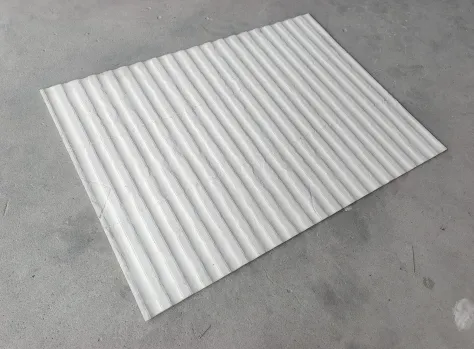
Redefining Building Design with Innovation, Flexibility, and Artistry
In the world of architecture, there's a quiet battle being fought every day—the struggle between ambition and limitation. An architect sketches a museum with walls that flow like rivers, only to be told traditional stone is too heavy to curve. A designer imagines a hotel lobby wrapped in a mosaic of starry textures, but standard panels can't capture that celestial detail. A developer dreams of a sustainable office complex with zero waste, yet conventional materials leave a massive carbon footprint. For decades, these gaps between vision and reality have lingered. But what if there was a material that didn't just fill those gaps, but erased them entirely? Enter COLORIA GROUP's MCM (Modified Cementitious Material) series—a collection of building materials that's not just changing how buildings are built, but how they're imagined.
For over 30 years, COLORIA GROUP has stood at the intersection of construction and creativity. As a one-stop solution provider in building materials, the team has watched architects and designers grapple with the same old problems: heavy materials limiting design freedom, generic textures stifling uniqueness, and rigid production processes killing custom ideas. "We realized the industry didn't need another stone supplier—it needed a partner that spoke the language of design," says a senior product developer at COLORIA. That's when the MCM series was born—a line of modified cementitious materials engineered to be lightweight, flexible, and infinitely customizable, without sacrificing the durability and aesthetic depth of natural stone.
Today, with a global footprint spanning markets like Saudi Arabia and beyond, COLORIA's MCM products are quietly transforming skylines. From residential facades that mimic the warmth of ancient villages to commercial projects that look like they belong in a sci-fi film, these materials are proving that "impossible" is just a temporary label—especially when you reimagine what a building material can be.
Not all building materials are created equal. While some focus on strength, others on beauty—but the MCM series? It's the rare breed that refuses to choose. Let's dive into five standout products that are making curved, custom, and sustainable design not just possible, but effortless.
Imagine a material that looks and feels like natural stone—rough to the touch, rich in texture, with the depth of centuries-old rock—but bends like a sheet of paper. That's MCM Flexible Stone in a nutshell. Engineered to be 70% lighter than traditional stone panels, this product is a love letter to curved architecture. "We tested it on a project in Dubai last year—a boutique hotel with a facade that curves 120 degrees around the lobby," recalls an architect who worked on the design. "With traditional stone, we would've needed steel supports every meter, adding cost and cluttering the aesthetic. With MCM Flexible Stone? We glued it directly to the substrate, and the curve flows so smoothly, guests swear it's a single piece of rock."
But it's not just about curves. The flexibility also means easier installation in tight spaces—think spiral staircases, rounded columns, or even ceiling accents that wrap overhead like a cloud. And with finishes ranging from the earthy warmth of travertine (starry green) (yes, that's a real texture—imagine green stone flecked with tiny "stars" of mineral deposits) to the industrial chic of rusty red, it's like having a palette of nature's best work, but on your terms.
3D printing has revolutionized everything from medical devices to fashion—but in construction? It's often been limited to small-scale models. Not anymore. The MCM 3D Printing Series takes additive manufacturing to new heights, letting architects print entire wall panels with textures so complex, they'd make a sculptor weep. "We once printed a wave panel for a coastal museum in Oman," says COLORIA's 3D design lead. "The client wanted the exterior to look like the ocean frozen in time—swells, crests, even tiny droplets. With traditional carving, that would've taken 6 months and cost a fortune. With our 3D printers? We had the first panel ready in 3 days, and the texture was so precise, you can run your hand over it and feel every ripple."
What makes this series truly groundbreaking is its marriage of technology and sustainability. Unlike plastic-based 3D printing, MCM's 3D materials are made from recycled cement and natural minerals, so that ocean-inspired facade? It's as eco-friendly as it is beautiful. And since panels are printed on-demand, there's zero waste—no more leftover stone chunks or scrapped prototypes. It's design freedom, with a conscience.
There's something inherently striking about large, uninterrupted surfaces. A wall of stone that stretches from floor to ceiling, with no visible seams, feels grand, cohesive, and modern. But traditional big slabs? They're a logistical nightmare—heavy, fragile, and impossible to transport without cracking. Enter the MCM Big Slab Board Series : panels up to 3 meters long and 1.5 meters wide, but light enough for two people to carry. "We used them on a corporate headquarters in Riyadh," says a project manager. "The client wanted the lobby to feel like a canyon—tall, imposing, but warm. With MCM Big Slabs in lunar peak silvery (a shimmering gray that looks like moonlight on rock), we covered 200 square meters in 2 days. No seams, no gaps, just this continuous expanse that takes your breath away."
And for projects where "big" needs to meet "bold," the series offers options like the boulder slab (vintage black)—a finish that mimics the raw, rugged look of giant river stones, but in a lightweight panel that won't require structural overhauls. It's efficiency without compromise, for when time and impact matter most.
If MCM Flexible Stone is the workhorse of curved design, then travertine (starry green) is its artistic soul. This specific finish takes the classic beauty of travertine—a stone beloved for its porous, organic texture—and infuses it with a celestial twist. "We start with a base of soft green cement, then add mineral particles that catch the light like distant stars," explains a COLORIA materials specialist. "The result? A panel that looks like someone took a piece of the night sky and pressed it into stone. It's ethereal, but grounded—perfect for spaces that need to feel both grand and intimate."
One memorable application? A luxury spa in Bali, where the walls of the relaxation room are clad in starry green travertine. "The client wanted guests to feel like they're meditating under a forest canopy at night," says the spa's designer. "With the starry green panels, paired with warm lighting, you look up and it's like the trees have parted to show the stars. People spend extra time there just staring at the walls—that's the power of a material that tells a story."
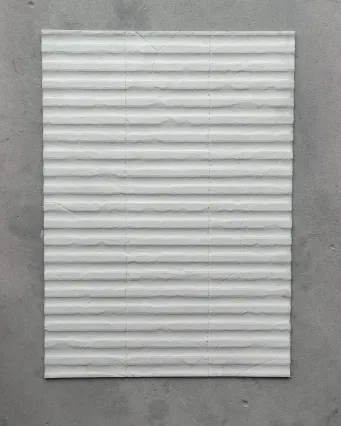
Last but never least, the wave panel —a MCM 3D Printing Series standout that proves building materials can be art. These panels aren't just textured; they're sculptural. Designed to mimic the movement of water, wind, or even sound waves, they add dynamic energy to any surface. "We used wave panels in a music venue in Kuwait," shares an interior designer. "The main hall has a wall behind the stage covered in gray wave panels, and when the lights hit them, they look like sound waves rippling out from the performers. It's not just a wall anymore—it's part of the show."
What's most impressive? The wave panel's versatility. Want subtle, gentle ripples for a hotel lobby? Done. Bold, crashing waves for a beachfront restaurant? No problem. And because they're 3D printed, you can tweak the pattern, size, and depth to match your vision exactly. It's customization without the hassle—because your building shouldn't just house art; it should be art.
Still on the fence? Let's get practical. Here's how these MCM products tackle the issues architects and developers face daily—no jargon, just real solutions.
| Problem | MCM Solution | Real-World Impact |
|---|---|---|
| Heavy materials requiring costly structural support | MCM Flexible Stone (70% lighter than traditional stone) | A residential tower in Jeddah reduced steel reinforcement costs by 40% using flexible stone cladding. |
| Custom textures taking months to produce | MCM 3D Printing Series (3-day turnaround for complex designs) | A boutique retail store in Dubai launched its new facade 2 months early with 3D-printed wave panels. |
| Large surfaces looking choppy with small panels | MCM Big Slab Board Series (3m x 1.5m seamless panels) | An airport terminal in Riyadh cut installation time by 50% using big slabs for its main hall walls. |
| Bland, generic exteriors blending into the crowd | Travertine (Starry Green) & Wave Panels (unique, eye-catching textures) | A hotel in Oman saw a 25% increase in social media mentions due to its starry green facade. |
| High carbon footprint from traditional stone mining | All MCM products (recycled materials, low-energy production) | A commercial complex in Abu Dhabi achieved LEED Gold certification using MCM's green materials. |
At the end of the day, MCM isn't just about panels and textures. It's about a shift in mindset—one that says buildings don't have to be boxed in by what's been done before. They can be fluid, unique, sustainable, and human-centric. "We once had an architect tell us, 'Your materials don't just build walls—they build stories,'" says COLORIA's CEO. "That's the heart of it. Every project has a story, and MCM gives designers the tools to tell it without compromise."
Whether you're dreaming of a home with walls that curve like a hug, a commercial space that stands out like a piece of art, or a public building that leaves a smaller environmental footprint, the MCM series is there to turn those dreams into blueprints—then into reality. Because in the world of architecture, the only limit should be your imagination. And with COLORIA GROUP's MCM products, even that limit is starting to look pretty small.
Recommend Products












