
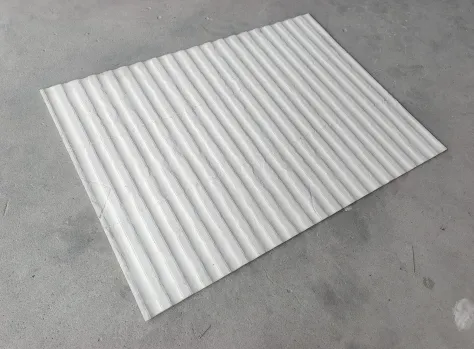
Where Architectural Dreams Meet Material Innovation—Crafting Unique Spaces with MCM Technology
Imagine standing in front of a building that doesn't just serve a purpose, but tells a story. Its walls curve like natural landscapes, its textures shift with the light, and every detail feels intentional—like a piece of art you can walk through. For architects and designers, this vision of "living architecture" has long been hindered by one challenge: finding materials that can keep up with creativity. Enter Century Stone Works, the innovative arm of COLORIA GROUP, where MCM (Modified Cementitious Material) technology is redefining what's possible in construction. Today, we're diving into how their MCM 3D Printing Services, paired with game-changing materials like flexible stone and big slab boards, are turning bold design ideas into tangible, breathtaking structures.
Gone are the days when buildings were just boxes with windows. Today's clients want spaces that reflect their brand, culture, or personal style. A boutique hotel might dream of a facade that mimics ocean waves; a tech company headquarters could desire a wall that looks like a digital circuit board; a historic renovation project might need materials that honor the past while meeting modern standards. The problem? Traditional construction materials—heavy, rigid, and limited in design flexibility—often can't deliver on these unique requests.
"We used to spend hours compromising," says Maria Gonzalez, a senior architect at a leading global firm. "You fall in love with a curved design, then realize stone can't bend. You want a massive, seamless wall, but standard slabs are too small. It's like trying to paint a masterpiece with a limited palette."
That's where Century Stone Works steps in. By leveraging MCM technology—a blend of modified cement, natural minerals, and advanced composites—they've created a family of materials that's strong, lightweight, and surprisingly adaptable. And at the heart of this innovation is their MCM 3D Printing Series, a service that's changing the game for custom construction details.
3D printing has revolutionized industries from healthcare to aerospace, but in construction, its impact is just beginning to unfold. Century Stone Works' MCM 3D Printing Series takes this technology to new heights, allowing designers to create complex, one-of-a-kind structures that were once impossible with traditional methods.
What makes this technology stand out? For starters, precision. The 3D printers can lay down layers of MCM material as thin as 0.5mm, meaning even the most intricate patterns—think geometric mosaics, organic textures, or custom logos—come out crisp and consistent. And unlike plastic 3D printing, MCM 3D printed elements are built to last: weather-resistant, fire-retardant, and strong enough for exterior use.
Take the "Wave Panel" project, for example. A luxury beachfront resort wanted its lobby wall to evoke the motion of the nearby ocean. Using MCM 3D Printing, Century Stone Works created 12-foot-tall panels with undulating curves and textured surfaces that catch the light just like water. The best part? Because the panels were printed in sections and assembled on-site, the installation took half the time of traditional stone carving, and the result was exactly what the designer envisioned—no compromises.
But it's not just about aesthetics. MCM 3D Printing is also a sustainability win. Traditional construction often generates massive waste from cutting and shaping materials; with 3D printing, you only use what you need. Plus, the MCM base material is low in VOCs and made from recycled minerals, aligning with global green building standards like LEED and BREEAM.
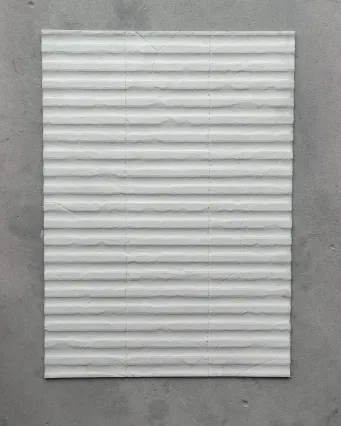
While 3D printing handles the "complexity" side of design, another MCM star is solving a different problem: flexibility. Meet MCM Flexible Stone—a material so revolutionary, it's like stone with a yoga membership. Thin, lightweight, and able to bend up to 90 degrees without cracking, it's changing how architects approach curved surfaces, retrofits, and unconventional structures.
Traditional natural stone is heavy—often 20-30 kg per square meter—and rigid. Installing it on curved walls or older buildings with weak structures? Almost impossible. Flexible stone, by contrast, weighs just 4-6 kg per square meter and can conform to radii as tight as 30cm. Suddenly, that curved museum facade or spiral staircase cladding isn't a pipe dream anymore.
Consider the case of a 1920s theater renovation in Paris. The architects wanted to restore the building's historic charm while adding a modern twist: a sweeping, curved lobby wall that would contrast with the theater's ornate, angular interior. Traditional stone was out of the question—the building's structure couldn't support the weight. Enter MCM Flexible Stone in "travertine (starry green)"—a stunning, marble-like texture with subtle green veining that shimmers like starlight. The material was applied directly to the curved drywall, cutting installation time by 60% and preserving the building's original structure. Today, that lobby wall is the theater's most Instagrammed spot.
But flexible stone isn't just for show. Its durability matches its beauty. Resistant to moisture, UV rays, and temperature fluctuations, it's ideal for both interior and exterior use. And because it's pre-finished at the factory, there's no on-site cutting or sealing—meaning less mess, faster projects, and happier contractors.
| Feature | Traditional Natural Stone | MCM Flexible Stone |
|---|---|---|
| Weight per sq.m | 20-30 kg | 4-6 kg |
| Bending Capacity | Rigid (no bending) | Up to 90° radius |
| Installation Time | 3-5 days per 100 sq.m | 1-2 days per 100 sq.m |
| Sustainability | High carbon footprint (quarrying, transport) | Low VOC, recycled materials, energy-efficient production |
Sometimes, the most powerful design statement is simplicity—done right. That's where the MCM Big Slab Board Series comes in. These oversized panels, available in sizes up to 3m x 1.5m, create a sense of grandeur and continuity that smaller tiles just can't match. Imagine a hotel lobby with walls that stretch floor to ceiling without a single visible seam, or a corporate headquarters where the exterior looks like a single, monolithic sculpture. That's the impact of big slab boards.
"Clients often tell us they want their buildings to feel 'unbroken'—like they were carved from a single piece of stone," explains Alex Wong, design consultant at Century Stone Works. "With standard 60x60cm tiles, you end up with hundreds of grout lines that disrupt the flow. Big slabs eliminate that. They turn walls into canvases."
One standout project is the Azure Tower, a luxury residential complex in Dubai. The developers wanted the exterior to evoke the calm of the ocean, so they chose MCM Big Slab Boards in "lunar peak silvery"—a sleek, metallic finish that reflects the sky and sea. The 3m-tall panels were installed with minimal joints, creating the illusion of a building wrapped in liquid silver. Residents now call it "the mirror to the sky."
Beyond aesthetics, big slab boards offer practical benefits. Fewer seams mean less maintenance—no more cracked grout or water seepage. And because they're made with MCM technology, they're lighter than traditional large-format tiles, making transportation and installation easier. For commercial projects, this translates to faster build times and lower labor costs—a win-win for both designers and developers.
In an era where "green building" is no longer a trend but a responsibility, Century Stone Works' commitment to sustainability sets them apart. All MCM materials are designed with the planet in mind, from their low-carbon production process to their long lifespan (up to 50 years, compared to 20-30 for traditional synthetic cladding).
The secret lies in the MCM formula: a blend of recycled cementitious materials, natural minerals, and plant-based binders that reduces reliance on virgin resources. Even better, the manufacturing process uses 30% less energy than traditional stone production, and waste is recycled back into the material cycle. For clients aiming for green building certifications, this is a game-changer—points towards LEED, BREEAM, or WELL certification are built right into the material.
"Sustainability isn't just a checkbox for us," says Elena Patel, sustainability director at COLORIA GROUP. "It's about creating buildings that don't just last, but leave a positive legacy. When a school uses our MCM materials, they're not just getting a beautiful facade—they're teaching kids that buildings can be both strong and kind to the planet."
What truly makes Century Stone Works stand out isn't just their materials—it's their approach to partnership. From the first sketch to the final installation, their team works alongside architects, contractors, and clients to turn ideas into reality. Need a custom texture that mimics ancient rock formations? Their 3D design team can scan real stone and replicate it digitally. Unsure if flexible stone will work for your project? They'll send samples and even mock up a small section for testing. It's this "no detail too small" mindset that turns clients into lifelong partners.
As we look ahead, one thing is clear: the demand for unique, sustainable, and functional buildings will only grow. Century Stone Works, with its MCM 3D Printing Services, flexible stone, and big slab boards, is leading the charge—proving that construction materials don't have to be boring or restrictive. They can be tools of creativity, enabling architects to build not just structures, but experiences.
So whether you're designing a skyscraper that reaches for the clouds, a cozy café that feels like home, or a public space that brings a community together, remember this: the right material can turn a good design into an unforgettable one. And with Century Stone Works, that material is just a conversation away.
After all, architecture is about more than bricks and mortar. It's about creating spaces that make us feel something. And in that mission, MCM technology isn't just a material—it's a storyteller.
Recommend Products












