
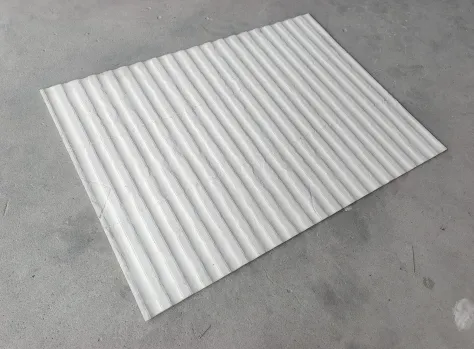
For decades, architects and builders have danced with a timeless partner: natural stone. From the marble columns of ancient Rome to the granite facades of modern skyscrapers, stone has long symbolized durability, luxury, and a connection to the earth. But as construction evolves, so do the demands. Heavy slabs strain structural limits, quarrying disrupts ecosystems, and custom designs too often get watered down to fit what's commercially available. Enter MCM 3D Printing Series – a technology that doesn't just challenge the status quo, but reimagines what building materials can be. Let's dive into how this innovation, paired with complementary MCM solutions, is reshaping the future of architecture.
Natural stone is undeniably beautiful, but beauty comes with trade-offs. Consider travertine, that porous, elegant stone favored for its warm tones and unique veining. A single square meter of traditional travertine can weigh up to 30 kilograms – a burden that adds up quickly on large projects. Structural engineers often have to overdesign foundations just to support the load, driving up costs and carbon footprints. Then there's customization: if an architect dreams of a curved wall with a starry pattern (like the stunning travertine (starry green) ), traditional stone requires painstaking, wasteful cutting that rarely matches the original vision.
Environmental concerns loom large too. Quarrying extracts massive amounts of raw material, leaving scars on landscapes and depleting finite resources. Transportation amplifies the impact – shipping heavy stone across continents burns fossil fuels, undoing the "natural" appeal many clients seek. And let's not forget installation: lifting those heavy slabs requires cranes and specialized labor, slowing down projects and increasing the risk of accidents. For all its charm, traditional stone often feels like a relic in a world craving efficiency, sustainability, and creativity.
Did you know? The global construction industry is responsible for 39% of energy-related carbon emissions. Choosing lightweight, low-impact materials like MCM can cut a project's carbon footprint by up to 40% compared to traditional stone solutions.
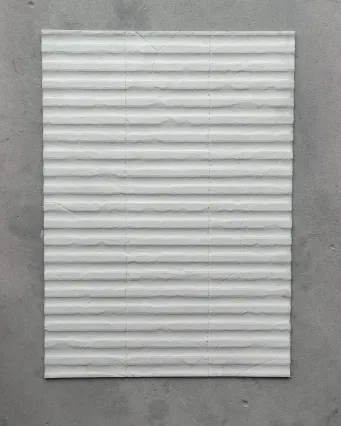
MCM – Modified Cementitious Material – isn't just a product; it's a philosophy. Born from decades of material science innovation, MCM blends cement with advanced polymers and mineral reinforcements to create something entirely new: a material that's lighter than stone, stronger than concrete, and infinitely customizable. Think of it as stone's smarter, more adaptable cousin – one that inherits the aesthetic appeal but leaves the baggage behind.
At the heart of this revolution are four core series, each designed to solve specific construction challenges. There's the MCM Big Slab Board Series for expansive, seamless surfaces; MCM Project Board Series tailored for large-scale commercial builds; MCM Flexible Stone that bends to curved walls and intricate designs; and the star of our story: MCM 3D Printing Series . Together, they form a toolkit that empowers architects to stop compromising between vision and practicality.
Imagine designing a facade that mimics the undulating waves of the ocean, or a lobby wall embedded with geometric patterns that shift with light. With traditional stone, these ideas might never leave the sketchbook. But MCM 3D Printing Series turns "what if" into "what is." Using modified cementitious inks, the technology builds layers upon layers of material, creating complex shapes with pinpoint precision – no molds, no waste, no limits.
Take the wave panel , a popular 3D-printed design. Traditional stone would require carving each wave individually, a process that's slow, expensive, and prone to inconsistencies. MCM 3D printing? It produces identical, lightweight panels in a fraction of the time, each with the texture and depth of hand-carved stone. And because the material is 70% lighter than natural stone, installation becomes a breeze – crews can mount panels with basic tools, reducing labor costs and project timelines.
Sustainability is baked into the process. Unlike quarrying, which extracts far more material than needed, 3D printing uses exactly what's required, slashing waste. The MCM formula itself is eco-friendly too: it incorporates recycled materials and emits minimal CO₂ during production. Even better, the finished product is durable enough to withstand harsh weather, from desert heat to coastal salt spray, ensuring buildings look stunning for decades without frequent replacements.
Spotlight: Lunar Peak Silvery – A 3D-Printed Masterpiece
One standout from the MCM 3D Printing lineup is lunar peak silvery . Inspired by the moon's cratered surface, this design features a matte silver finish with subtle texture variations that catch light like stardust. Architects in Dubai recently used it for a luxury hotel facade, creating a building that glows softly at dusk. Because it's 3D-printed, the panels were customized to fit the building's unique angles, eliminating the need for on-site cutting. The result? A structure that looks otherworldly, yet sits lightly on the planet.
While 3D printing steals the spotlight, MCM's other series deserve equal acclaim. Take MCM Flexible Stone – a game-changer for curved surfaces. Traditional stone cracks under bending stress, but this material bends like a sheet of thick paper, conforming to arches, columns, and even spherical designs. Imagine wrapping a retail store's interior in rust square line stone – a rich, weathered texture that feels like it's been shaped by centuries of wind – without a single crack or compromise. Flexible stone weighs just 6-8 kg/m², making it ideal for retrofits where structural weight is a concern.
Then there's the MCM Big Slab Board Series , designed for grand, uninterrupted surfaces. Traditional stone slabs max out around 1.2m x 2.4m; MCM big slabs go up to 3m x 1.5m, reducing joint lines and creating a sleek, modern look. Projects like airports and convention centers love these for their clean aesthetic and fast installation. Pair them with boulder slab (vintage silver) – a bold, metallic finish that mimics quarried stone but at a fraction of the weight – and you've got a facade that commands attention without the environmental guilt.
Still on the fence? Let's compare. Below is a breakdown of how MCM 3D Printing and its siblings outperform traditional stone in key categories:
| Category | Traditional Stone (e.g., Granite) | MCM 3D Printing Series | MCM Flexible Stone |
|---|---|---|---|
| Weight (per m²) | 25-35 kg | 8-12 kg | 6-8 kg |
| Customization | Limited by cutting tools; high waste | Virtually unlimited (3D modeling); 5% waste max | Flexible for curves; pre-designed textures |
| Installation Time | 2-3 days per 100 m² (requires cranes) | 0.5-1 day per 100 m² (hand-installable) | 0.3-0.7 days per 100 m² (lightweight) |
| Carbon Footprint | High (quarrying + heavy transport) | 40-50% lower (recycled materials + local production) | 35-45% lower (minimal processing) |
| Durability | High (but prone to cracking under stress) | High (impact-resistant; UV-stable) | High (flexible, resists cracking) |
Numbers are powerful, but stories resonate deeper. Let's look at two projects where MCM made all the difference.
The Green Star Hotel, Riyadh : This 20-story luxury hotel wanted a facade that reflected Saudi Arabia's desert landscape while meeting strict sustainability goals. The design called for undulating curves and a gobi panel texture – rough, earthy, and reminiscent of desert winds. Traditional stone was out of the question due to weight and cost. Instead, the team used MCM 3D Printing Series to create custom curved panels with the gobi texture, paired with lunar peak golden accents for warmth. The result? A building that blends into its environment, uses 30% less energy to heat and cool (thanks to MCM's insulating properties), and was completed 2 months ahead of schedule.
Harmony Mall, Singapore : Shopping malls thrive on uniqueness, and Harmony Mall wanted an interior that felt like a walk through a forest. The architect envisioned tree-inspired columns wrapped in a material that looked like bark but was lightweight and easy to maintain. Enter MCM Flexible Stone in pine bark board finish. The flexible panels curved seamlessly around the columns, creating organic, lifelike textures. Not only did it reduce the mall's structural load by 50% compared to wood or stone, but the material's resistance to moisture and pests ensured it would stay beautiful for years – no need for frequent replacements.
MCM 3D Printing Series and its counterparts aren't just materials – they're a response to a world that demands more. More creativity, more sustainability, more efficiency. As cities grow, as clients prioritize ESG goals, and as architects push for designs that inspire, MCM stands ready to deliver. It's not about replacing natural stone entirely; it's about offering a better alternative for the projects where stone falls short.
Looking forward, the possibilities are thrilling. Imagine 3D-printed MCM panels embedded with sensors that monitor air quality, or flexible stone that changes color with temperature. COLORIA GROUP, with its decades of experience and global reach (including a strong presence in Saudi Arabia), is already exploring these frontiers. The future of building materials isn't just about being strong or beautiful – it's about being smart, kind to the planet, and endlessly adaptable.
So, to the architects, builders, and dreamers out there: the next time you sketch a design, don't let "but can we build it?" be the question. With MCM 3D Printing Series, MCM Flexible Stone, and the entire MCM family, the answer is almost always "yes – and we can build it better."
Recommend Products












