
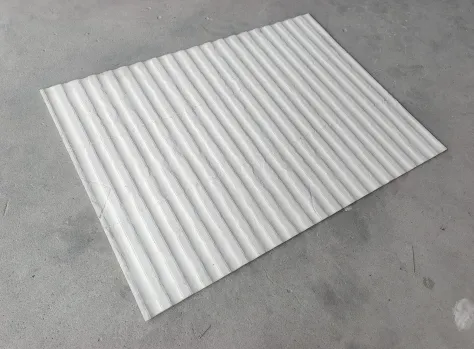
Modern architecture is undergoing a quiet revolution, and at the heart of this transformation lies a material innovation that's redefining what's possible in construction: Modified Cementitious Material, or MCM. At the forefront of this movement is COLORIA GROUP, a global leader in providing one-stop building material solutions that blend cutting-edge technology with sustainable design. For decades, the company has been bridging the gap between architectural ambition and practical construction, and nowhere is this more evident than in their game-changing MCM 3D Printing Technology. In this deep dive, we'll explore how this technology is unlocking complex geometric designs, why it's becoming the go-to choice for architects worldwide, and how COLORIA's broader MCM product lineup—from flexible stone to large-format slabs—complements this innovation to create truly iconic structures.
Founded on the principle that building materials should empower creativity rather than limit it, COLORIA GROUP has spent years refining its role as a (one-stop solution provider) for both residential and commercial projects. With a presence spanning global markets—including a strategic (agency) in Saudi Arabia—the company brings decades of industry experience to every partnership. What sets COLORIA apart isn't just its reach, but its unwavering focus on pushing material science forward. Enter MCM: Modified Cementitious Material, a proprietary blend that marries the strength of traditional cement with the flexibility of modern composites. This material forms the backbone of COLORIA's product lineup, and its applications are as diverse as the architects who use it.
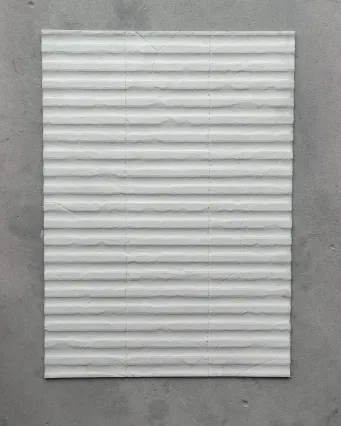
At first glance, 3D printing in construction might sound like something out of a sci-fi novel, but for COLORIA, it's a daily reality—one that's transforming how buildings are designed and built. The MCM 3D Printing Series leverages advanced robotics and precision extrusion to layer MCM material into complex shapes, curves, and patterns that would be nearly impossible with traditional casting or cutting methods. Unlike plastic-based 3D printing, MCM 3D printing uses COLORIA's modified cementitious blend, ensuring the final product is lightweight yet durable enough for exterior cladding, interior feature walls, and even structural elements.
Take, for example, the wave panel—a signature offering in the 3D Printing Series. These panels mimic the organic flow of ocean waves, with undulating surfaces that catch light and shadow in dynamic ways. Traditional manufacturing would require expensive molds or labor-intensive hand-carving, but with 3D printing, COLORIA can produce wave panels in custom sizes and textures, all while maintaining consistent quality. It's this combination of artistry and efficiency that makes MCM 3D printing a game-changer for architects aiming to create statement pieces.
Another key advantage? Speed. 3D printing eliminates many of the bottlenecks in traditional construction, from mold setup to material waste. A complex geometric facade that might take weeks to fabricate with conventional methods can be printed in days, allowing projects to stay on schedule and under budget. And because MCM is inherently lightweight, the finished structures place less stress on a building's foundation—a critical factor for high-rise projects or retrofits where weight is a concern.
While MCM 3D printing steals the spotlight for its innovation, it's just one piece of COLORIA's broader MCM ecosystem. Let's explore how other key series—including MCM Big Slab Board, MCM Flexible Stone, and more—work alongside 3D printing to offer comprehensive solutions.
For projects that demand grandeur, the MCM Big Slab Board Series delivers. These large-format panels—often spanning up to 3 meters in length—minimize visible seams, creating a sleek, monolithic look that's perfect for modern commercial buildings, luxury hotels, or statement-making residential facades. Imagine a corporate headquarters with a facade clad in 2-meter-wide slabs of travertine (starry green), its surface shimmering with subtle mineral deposits that catch the sun. With Big Slab Boards, COLORIA eliminates the need for multiple small tiles, reducing installation time and giving architects a blank canvas for bold, uninterrupted designs.
Flexibility is often the missing piece in traditional stone cladding—but not with MCM Flexible Stone. This series reimagines stone as a pliable material that can wrap around curves, columns, and irregular surfaces without cracking or compromising durability. Made by reinforcing MCM with fiber mesh, flexible stone sheets are thin (often less than 5mm thick) and lightweight, making them ideal for retrofitting older buildings or adding texture to interior walls. Picture a boutique hotel lobby where a curved reception desk is wrapped in flexible stone with the warm, earthy tones of lime stone (beige), or a residential fireplace surround that follows the contour of the wall with seamless precision. Unlike rigid stone, MCM Flexible Stone can even be cut on-site, giving contractors the freedom to adapt to last-minute design changes.
While 3D printing and flexible stone cater to creativity, the MCM Project Board Series is all about reliability. Designed specifically for large-scale commercial and infrastructure projects, these boards prioritize strength, weather resistance, and ease of installation. Think hospitals, airports, or educational campuses where durability and low maintenance are non-negotiable. The Project Board Series includes options like rough granite stone (medium grey) and concrete board (dark grey), materials that stand up to heavy foot traffic, extreme temperatures, and moisture—all while maintaining a polished, professional aesthetic. And because they're part of the MCM family, they share the same eco-friendly credentials as their more decorative counterparts.
| Product Series | Key Strengths | Best For | Sustainability Features |
|---|---|---|---|
| MCM 3D Printing Series | Complex geometries, custom patterns (e.g., wave panel) | Statement facades, artistic installations | Minimal waste, energy-efficient production |
| MCM Big Slab Board Series | Large format, seamless appearance | Modern commercial buildings, luxury residential | Reduced material usage (fewer seams = less waste) |
| MCM Flexible Stone | Pliability, lightweight, adaptable to curves | Curved surfaces, retrofits, interior feature walls | Recyclable materials, low VOC emissions |
| MCM Project Board Series | High durability, weather resistance | Large-scale commercial, infrastructure, high-traffic areas | Long lifespan reduces replacement needs |
In an era where green building practices are no longer optional, COLORIA's MCM materials stand out for their commitment to sustainability. From the production process to the end of a building's life, every aspect of MCM is designed with the planet in mind. Let's break down what makes MCM a responsible choice for eco-conscious projects.
First, the material itself: MCM is made from a blend of recycled industrial byproducts (like fly ash and slag) and natural minerals, reducing the need for virgin resources. Traditional stone mining, for example, can be destructive to ecosystems, but MCM production has a fraction of the environmental footprint. Additionally, MCM's lightweight nature means less energy is required for transportation—trucks can carry more panels per load, cutting down on carbon emissions during delivery.
Then there's longevity. MCM materials are engineered to last decades, resisting fading, cracking, and weathering. This durability means fewer replacements over a building's lifetime, reducing waste and the environmental impact of constant repairs. Take the MCM Flexible Stone, for instance: its resistance to moisture and mold makes it ideal for humid climates, ensuring it stays looking new for years without the need for harsh chemical treatments.
Even the 3D printing process aligns with sustainability goals. By layering material only where it's needed, 3D printing minimizes waste—unlike traditional cutting methods, which often produce excess scraps. COLORIA estimates that 3D printing reduces material waste by up to 30% compared to conventional fabrication, a significant number for large projects. And because MCM is non-toxic and free from harmful VOCs (volatile organic compounds), it contributes to healthier indoor air quality, a key factor in green building certifications like LEED or BREEAM.
One of the most common frustrations architects face is finding materials that match their exact vision—whether it's a specific shade of lunar peak golden, a texture inspired by gobi desert landscapes, or a pattern that echoes a client's brand identity. COLORIA built its reputation on solving this problem, offering customization options that turn abstract ideas into tangible materials.
Take color, for example. The MCM lineup includes a spectrum of hues, from the subtle elegance of travertine (beige) to the bold statement of rusty red. But if none of these fit, COLORIA's color-matching service can replicate almost any shade, using pigment blends that are UV-stable and fade-resistant. Imagine a boutique hotel chain wanting to match its facade to its signature brand color—a soft coral pink. With COLORIA's custom color service, that vision becomes possible, even for large-scale projects.
Texture is another area where customization shines. The 3D Printing Series, in particular, allows for infinite texture possibilities: from the smooth, polished finish of marble interstellar gray to the rough, organic feel of pine bark board. Clients can even provide samples—like a piece of driftwood, a fragment of ancient stone, or a digital render of a custom pattern—and COLORIA will replicate that texture using 3D scanning and printing technology. It's this level of detail that turns a building from "nice" to "unforgettable."
Size isn't a limitation either. The MCM Big Slab Board Series can be produced in custom dimensions, up to the maximum size allowed by transportation and installation constraints. For a recent museum project in Dubai, COLORIA fabricated 4-meter-tall slabs with a custom starmoon stone texture, creating a facade that resembles a starry night sky. The result? A building that's not just a structure, but a piece of art.
Great materials deserve a global stage, and COLORIA GROUP has strategically positioned itself to serve architects and builders worldwide. With a headquarters in China and a growing network of partners, the company combines local expertise with international standards, ensuring its MCM products meet the unique needs of diverse markets.
The Middle East, for example, is a key focus area, with a dedicated (agency) in Saudi Arabia. This region's extreme temperatures—scorching summers and cool winters—demand materials that can withstand thermal expansion and contraction. COLORIA's MCM products, with their low thermal conductivity and high durability, are ideally suited for this environment. Projects like a luxury resort in Bahrain used MCM Flexible Stone for its exterior cladding, choosing a custom gradient color rammed earth board that blends with the desert landscape while staying cool to the touch in 45°C heat.
Europe, on the other hand, often prioritizes heritage preservation and sustainability. COLORIA has worked on several renovation projects in Italy, where historic buildings require materials that match the original architecture but offer modern performance. For a 17th-century villa restoration in Tuscany, the team used MCM Big Slab Board Series with a travertino (white) finish, replicating the look of traditional Italian travertine but with the lightweight benefits of MCM—critical for preserving the villa's centuries-old structure.
North America's focus on innovation and large-scale commercial projects has also made it a strong market for COLORIA's 3D Printing Series. A recent tech campus in California features a 3D-printed wave panel facade that serves as both an architectural statement and a functional sunshade, reducing solar heat gain and lowering energy costs. The project's architects praised the technology for allowing them to create a design that "feels alive, like the building is breathing."
To truly understand the impact of MCM 3D Printing Technology, let's look at a real-world example: the Azure Tower, a 25-story office building in downtown Singapore. Completed in 2024, the tower's facade was designed to reflect Singapore's identity as a "City in a Garden," with organic, leaf-inspired patterns that change appearance with the time of day.
The challenge? Traditional materials couldn't achieve the complex, overlapping curves the architects envisioned. Casting concrete would require expensive, one-off molds, while stone cladding would be too heavy for the building's structure. Enter COLORIA's MCM 3D Printing Series. The solution: 3D-printed panels with a custom "leaf vein" texture, made using MCM material in a soft lunar peak silvery shade that shimmers in sunlight.
Over 5,000 square meters of 3D-printed panels were produced for the project, each printed in sections that locked together like a puzzle, reducing installation time by 40% compared to traditional cladding. The panels were also engineered to be self-cleaning, thanks to a nano-coating added during the printing process, ensuring the facade stays bright even in Singapore's humid climate.
The result? The Azure Tower has become an iconic part of the skyline, winning multiple design awards and boosting tenant interest by 30% before construction even finished. "Working with COLORIA's 3D printing technology wasn't just about solving a technical problem—it was about realizing a vision we thought might be impossible," said the project's lead architect. "The panels don't just cover the building; they tell a story."
As technology evolves, so too does the potential of MCM materials. COLORIA's R&D team is already exploring new frontiers, from integrating smart sensors into 3D-printed panels (to monitor structural health in real time) to developing self-healing MCM blends that repair small cracks automatically. Imagine a facade that can "feel" when it's damaged and trigger a repair process, reducing maintenance costs and extending a building's lifespan even further.
Another area of focus is circularity—designing materials that can be recycled or repurposed at the end of their life. COLORIA is currently testing a process to break down old MCM panels into raw material for new products, creating a closed-loop system that minimizes waste. Early results are promising, with recycled MCM showing comparable strength and durability to virgin material.
And as 3D printing technology advances, the possibilities for scale and speed will only grow. COLORIA is experimenting with larger printers capable of producing full-wall sections in a single print, potentially reducing construction timelines for high-rise buildings by months. "We're not just building materials—we're building the future of construction," says COLORIA's CEO. "And that future is flexible, sustainable, and limited only by imagination."
In a world where architecture is increasingly defined by boldness and sustainability, COLORIA GROUP's MCM materials—led by the innovative 3D Printing Series—are more than just building products. They're tools for creativity, enablers of vision, and proof that construction can be both beautiful and responsible.
Whether it's a 3D-printed wave panel facade that captures the essence of movement, a flexible stone wall that wraps a curved lobby in warmth, or a big slab board that turns a commercial building into a monolithic masterpiece, COLORIA's MCM lineup delivers on the promise of "your vision, your material." And with a commitment to customization, sustainability, and global support, the company is poised to remain at the forefront of the construction revolution for decades to come.
So the next time you look at a building and wonder, "How did they do that?" there's a good chance the answer is MCM—and the team at COLORIA GROUP, turning impossible designs into possible realities, one panel at a time.
Recommend Products












