
There's a certain weight to religious buildings, and it isn't just physical. It's a weight of history, of community, of faith. Churches, mosques, temples, and synagogues are more than mere structures; they are landmarks of the spirit, architectural testaments to belief, designed to inspire awe and stand for centuries. When the time comes for restoration or renovation, the task carries a profound responsibility. How do you preserve the soul of a place while fortifying its body? How do you honor ancient aesthetics with modern means, ensuring the structure not only looks the part but is also prepared to endure for generations to come?
For decades, the answer involved a series of difficult compromises. Restorers often faced a choice between astronomically expensive and logistically nightmarish natural stone, or cheaper, less authentic-looking alternatives that might compromise the building's historical integrity. This challenge is precisely where the story of modern material science offers a new, compelling chapter. We're talking about a solution that respects the past while embracing the future, a way to create "century stone works" without the century-old problems. This is the world of COLORIA GROUP and their groundbreaking MCM technology, a solution poised to redefine how we approach these sacred projects.
Let's get real for a moment about renovating a historic facade. Imagine the task of replacing the weathered stone on a cathedral spire or the intricate cladding of a grand mosque. The traditional approach is fraught with challenges that go far beyond the budget.
Natural stone, for all its timeless beauty, is incredibly heavy. A single square meter of 3cm thick granite can weigh around 80-90 kilograms. Now, multiply that across an entire facade. This immense weight puts enormous stress on the building's original structure, which, in a historic building, may already be fragile. It often necessitates costly and invasive structural reinforcements, fundamentally altering the original building just to support its new skin. Then there's the logistics: quarrying (which has its own environmental impact), transporting tons of rock, and the sheer power of the cranes and machinery needed to hoist each piece into place. It's a slow, dangerous, and incredibly expensive process.
What about achieving the intricate details? The sweeping arches, the curved colonnades, the delicate carvings that give these buildings their character? With solid stone, every curve must be painstakingly cut from a massive block, a process that generates enormous waste and requires master artisans whose skills are both rare and costly. Any mistake can mean scrapping a whole, expensive piece of stone. This makes complex designs and historical replications a financial and logistical hurdle that many projects simply can't overcome.
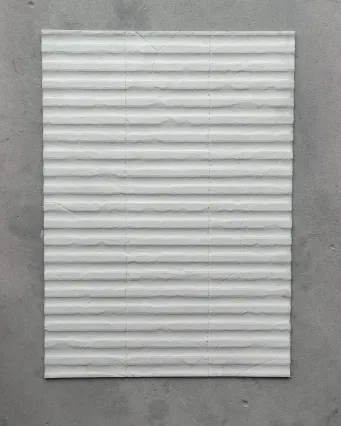
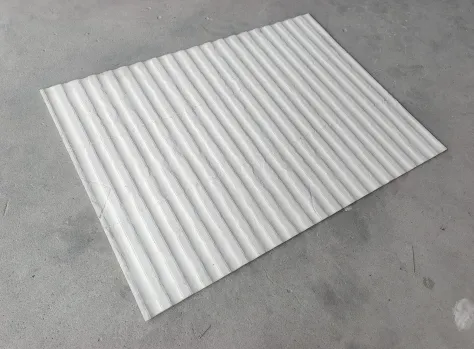
What if you could have the majestic beauty of stone, the warmth of wood, or the texture of aged brick, but in a material that was lightweight, flexible, and far more sustainable? This isn't science fiction; it's the reality of Modified Cementitious Material (MCM), the core innovation from COLORIA GROUP.
Think of MCM as a form of "recomposed nature." The process, at its heart, is beautifully simple yet technologically advanced. It starts with natural ingredients—common soil, sand, and other mineral components. Through a patented process of molecular modification and low-temperature firing (a stark contrast to the high-energy firing of ceramics or the smelting of metals), these raw materials are transformed. The resulting material is a class of its own. It's not quite stone, not quite ceramic, not quite plastic. It's a new category that takes the best attributes of many materials and combines them.
COLORIA GROUP has spent decades perfecting this technology, creating an entire ecosystem of products designed for every architectural need. Among these, the MCM Project Board series stands out as a game-changer, especially for large-scale Building Renovations . These boards are specifically engineered for facade cladding, offering a perfect blend of aesthetic versatility and high-performance engineering.
So, why is this material such a breakthrough for religious building renovations? The advantages aren't just minor improvements; they represent a fundamental shift in what's possible.
This is the first and most impactful benefit. MCM Project Boards weigh a mere fraction of traditional stone—typically only about 4-6 kg per square meter. That's more than 90% lighter than equivalent granite slabs. The implications are enormous. Suddenly, the need for heavy-duty structural reinforcement disappears. The original building's integrity is preserved. Installation can be done on existing substrates without adding dangerous load. Transportation costs plummet, and the need for massive cranes is often eliminated, making the worksite safer and less disruptive, a crucial factor when working on a building that may still be in partial use by its community.
Here is where MCM truly defies expectations. Unlike rigid stone or tiles, MCM products, including a popular variant known as Flexible Stone , have a degree of pliability. The MCM Project Boards can be gently bent to conform to curved walls, wrap seamlessly around massive columns, and fit perfectly into arched window frames without cracking or requiring complex relief cuts. Imagine trying to clad a dome or a minaret with solid marble versus a material that can follow its contours like a fabric. This flexibility not only saves an immense amount of time and money in fabrication and installation but also opens up a world of design freedom that was previously impractical.
A religious building's facade is its face to the world, and it must look right. This is where COLORIA GROUP's technology truly shines. Using natural mineral colors and advanced techniques like 3D printing, MCM can replicate the appearance and texture of virtually any material with stunning realism.
This means restorers are no longer limited by what they can source from a quarry. They can perfectly match the original material's look and feel, or even enhance it, ensuring the renovated building is a faithful tribute to its heritage. This makes it an ideal solution for exterior wall decoration that requires both beauty and authenticity.
Beauty is nothing without longevity. MCM Project Boards are engineered to withstand the harshest elements. They are Class A fire-resistant, providing a vital layer of safety. They are waterproof and non-porous, preventing damage from moisture, mold, and mildew. They are exceptionally resistant to freeze-thaw cycles, a common cause of cracking and spalling in traditional materials. Furthermore, the colors are integrated throughout the material, not just a surface coating, so they are incredibly UV-resistant and won't fade over time, even in the intense sun of a region like Saudi Arabia, where COLORIA GROUP has a strong presence. This translates to a facade that will look pristine for decades with minimal maintenance.
Religious institutions are often pillars of their communities, and part of that role is being a good steward of the environment. The production of MCM is fundamentally green. The low-temperature manufacturing process consumes a fraction of the energy of traditional kilns. Its primary components are abundant natural soils and recycled materials, dramatically reducing the need for destructive quarrying and preserving natural landscapes. The lightweight nature of the product further reduces its carbon footprint during transportation. Choosing MCM is a statement that the renovation values not just the building's past but also the planet's future.
To truly grasp the revolutionary nature of the MCM Project Board, let's put it side-by-side with its traditional counterparts. The differences are not just in degree, but in kind.
| Feature | COLORIA GROUP MCM Project Board | Natural Stone (e.g., Granite, Marble) | Traditional Stucco / EIFS |
|---|---|---|---|
| Weight | Extremely Low (4-6 kg/m²) | Extremely High (80-100 kg/m²) | Low to Medium (10-20 kg/m²) |
| Flexibility | High (Can bend for curves/arches) | None (Rigid, cracks under stress) | Low (Prone to cracking over time) |
| Installation | Fast, simple adhesive application; less labor | Slow, complex, requires heavy machinery and structural anchors | Multi-step process, weather-dependent |
| Cost (Total Project) | Moderate (Significant savings on labor, transport, structure) | Very High | Low to Moderate |
| Aesthetic Versatility | Nearly unlimited (replicates stone, wood, brick; custom 3D textures) | Limited to what can be quarried and cut | Limited to painted finishes and simple textures |
| Durability | Excellent (Waterproof, fire-resistant, freeze-thaw proof, UV-stable) | Good (but can be porous, stain, or spall) | Fair (Susceptible to impact damage, moisture intrusion) |
| Maintenance | Very Low | Moderate (Requires regular sealing, can stain) | Moderate (Requires regular inspection for cracks and repainting) |
| Environmental Impact | Low (Low-energy production, recycled content, no quarrying) | High (Destructive quarrying, high transport emissions) | Moderate (Petroleum-based components in EIFS) |
Let's paint a picture. Imagine a beautiful, historic mosque in the heart of Saudi Arabia. Its facade, once a brilliant sandstone, has been battered by decades of harsh desert sun and abrasive sandstorms. The intricate Mashrabiya-style patterns are eroded, and the surface is stained and pitted. The community wishes to restore it to its former glory, a project of immense cultural and religious importance.
The traditional path would be a monumental undertaking. Sourcing new sandstone to match the original would be difficult and expensive. The weight of the new stone would require a thorough and costly structural analysis, likely leading to invasive reinforcements. The cost of labor and machinery in the intense heat would be substantial.
Now, consider the COLORIA GROUP approach. As a one-stop solution provider with an established presence in the region, they could manage the entire material aspect of the project. Their team would first analyze the original sandstone and patterns. Using their advanced technology, they would create an MCM Project Board that is a perfect replica—not just in color, but in the subtle texture and feel of the original stone. The eroded intricate patterns could be flawlessly recreated using their 3D series.
The lightweight panels would be shipped to the site at a fraction of the cost of stone. A smaller, local crew could perform the installation, applying the boards directly over the prepared existing substrate with a specialized adhesive. The flexible nature of the material would allow them to effortlessly clad the arched entryways and domes. The entire exterior wall decoration process would be faster, safer, and significantly less expensive. The result? The mosque is restored to its breathtaking original beauty, but with a new skin that is UV-resistant, waterproof, and built to withstand the desert climate for another century. The heritage is honored, the community's funds are respected, and the building stands as a proud symbol of faith, renewed through a marriage of tradition and innovation.
The renovation of a religious building is a delicate dance between the tangible and the intangible. It's about protecting stone and mortar, yes, but it's also about preserving a feeling, a history, a legacy. The old ways of building forced a choice: authenticity at a crippling cost, or compromise for the sake of feasibility.
COLORIA GROUP's MCM technology dissolves that dilemma. It offers a third way—a path of smarter, more responsible, and more creative restoration. It allows architects and preservationists to say "yes" more often. Yes to historical accuracy. Yes to intricate designs. Yes to structural integrity. Yes to environmental responsibility. And yes to completing these vital projects within a realistic budget.
By providing a material that is at once ancient in its appearance and futuristic in its performance, COLORIA GROUP is not just selling a building material. They are offering a tool for legacy-building. They are enabling communities around the world to protect their most sacred spaces, ensuring that these century-old works of art and faith can continue to inspire for centuries more. The future of preservation is not about finding more old stone; it's about creating new materials that honor it perfectly.
Recommend Products












