
When you think of a modern sports stadium, what comes to mind? Is it the sheer scale, the towering structures that kiss the skyline? Or perhaps the sweeping, fluid curves that seem to defy the very laws of gravity? These architectural titans are more than just venues for sport; they are icons of a city, beacons of community pride, and complex engineering marvels. Building these modern coliseums presents a set of challenges that push the boundaries of design and construction. How do you create something so monumentally massive that is also incredibly safe, environmentally sustainable, and breathtakingly beautiful? The answer, more often than not, lies not in traditional methods, but in the very fabric of the building itself—the materials. This is where COLORIA GROUP, a global pioneer in innovative building solutions, steps onto the field with a true game-changer: their revolutionary MCM Project Board series. This article explores how these advanced materials are setting a new gold standard for sports stadium construction around the world.
The journey of stadium design has been a long and fascinating one. From the simple, open-air arenas of ancient Greece and Rome to the concrete bowls of the 20th century, the primary function was simple: provide a space for spectators to watch an event. Today, however, a stadium is a multi-functional, high-tech entertainment hub that operates year-round. This evolution has brought with it a host of new and demanding architectural requirements that traditional materials often struggle to meet. Let's break down these modern-day hurdles.
Modern stadiums are defined by their expansive roofs, cantilevered stands, and complex, often non-linear, geometries. Every kilogram of material used in the facade or cladding adds to the overall dead load, which must be supported by the primary steel or concrete structure. Heavier materials like traditional stone panels or precast concrete require a more robust, and therefore more expensive and carbon-intensive, support system. The quest for lightweight yet durable materials is not just a matter of convenience; it's a fundamental economic and engineering necessity in modern sports stadium construction . Reducing weight opens up new design possibilities, allowing for longer spans and more daring architectural expressions without compromising structural integrity.
A stadium can hold a population equivalent to a small city. The safety of every single person within its walls is non-negotiable. This places an immense focus on the performance of every component, especially the vast surfaces of the interior and exterior walls. Fire safety is chief among these concerns. Materials used must have a high fire-resistance rating, ensuring they do not contribute to the spread of flames or release toxic smoke in an emergency. Beyond fire, impact resistance is crucial in high-traffic concourses and public areas, while the material's composition must be free from harmful volatile organic compounds (VOCs) and other hazardous substances.
Today's stadiums are powerful statements of identity for a club, a city, or even a nation. They are often the first image people see and are broadcast to billions around the globe. A bland, utilitarian exterior is no longer acceptable. Architects and clients demand materials that offer a rich palette of colors, textures, and finishes. The ability to customize a facade to mimic natural stone, create futuristic metallic sheens, or even incorporate intricate patterns and team logos is a massive advantage. The material must not only perform well but also serve as a canvas for architectural artistry, creating a visually stunning and memorable landmark.
A stadium facade is perpetually at war with the elements. It's battered by rain, baked by UV radiation, subjected to freeze-thaw cycles, and exposed to atmospheric pollutants. The chosen material must be able to withstand this constant assault for decades without fading, cracking, or degrading. Furthermore, the sheer scale of a stadium makes maintenance a costly and logistically complex operation. Materials that are self-cleaning or easy to clean, resist staining, and require minimal long-term upkeep provide significant operational savings over the building's lifespan.
The construction industry is one of the world's largest consumers of energy and resources. There is a powerful and growing global movement towards green building practices. For stadium projects, which have a massive physical and carbon footprint, sustainability is no longer a "nice-to-have" but a core requirement. This involves scrutinizing the entire lifecycle of a material: from the energy consumed during its production and transportation to its potential for recycling at the end of its life. Choosing green building materials is a crucial step in creating stadiums that are not only beautiful and functional but also responsible.
Confronted with this daunting list of requirements, where can architects and builders turn? COLORIA GROUP provides the answer with its pioneering work in the field of Modified Cementitious Material (MCM). This might sound like a complex scientific term, but the core idea is elegantly simple and profoundly impactful.
Picture this: you take natural, raw ingredients like common soil, sand, and stone powder—the very earth beneath our feet. Through a proprietary, low-temperature transformation process, you modify the molecular structure of these materials, breaking them down and re-bonding them into something entirely new. The result is a material that possesses the soul of stone but with a host of enhanced properties. It's not just another cladding panel; it represents a fundamental leap forward in material science, a perfect synergy of nature and technology.
COLORIA GROUP has spent decades perfecting this process, emerging as a global leader in this technology. Their MCM products are not simply manufactured; they are engineered to solve the most pressing challenges of modern construction. Let's explore the inherent advantages of this remarkable material.
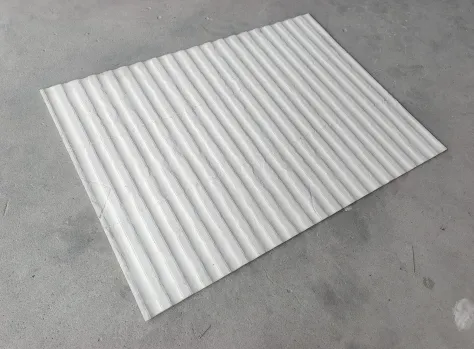
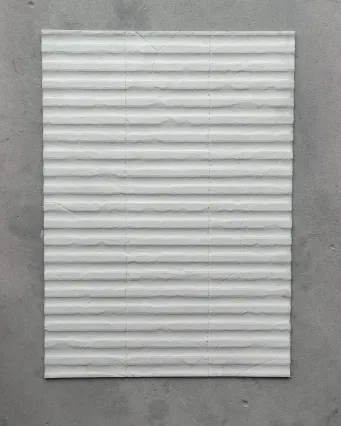
While the core MCM technology is impressive, its application in the MCM Project Board series is what makes it a superstar for stadium construction. COLORIA GROUP has specifically engineered this product line to meet the demands of large-scale, high-performance projects. These boards are not just a surface finish; they are an integrated cladding system designed for performance, aesthetics, and efficiency.
The MCM Project Board directly addresses the challenges we outlined earlier. Its lightweight nature is a massive boon for the vast facades of a stadium. The installation is faster, requires less heavy lifting equipment, and can often be done with smaller crews, directly translating to reduced project timelines and labor costs. This efficiency is a critical factor in the complex scheduling of stadium builds.
Stadiums demand a sense of grandeur. Small, busy patterns can look fussy and diminish the building's scale. This is where COLORIA GROUP's offerings, including the MCM Big Slab Board Series, truly shine. By providing large-format boards, they allow architects to design facades with fewer joint lines, creating a more monolithic, clean, and powerful aesthetic that befits the structure's monumental scale. But it's the customization that truly sets these boards apart. The possibilities are nearly limitless.
Do you want the facade to have the timeless look of travertine, the rugged texture of granite, or the sleek finish of polished metal? The MCM Project Board can replicate these and countless other textures with stunning realism. The color can be matched to a team's brand, and with advanced techniques like the MCM 3D Printing Series, even complex graphics, logos, and artistic murals can be permanently integrated into the panels themselves. This transforms the building's skin from a simple protective layer into a dynamic storytelling canvas.
To truly appreciate the advantage of the MCM Project Board, a direct comparison is illuminating. Let's see how it stacks up against some of the most common materials used in large-scale construction. The table below provides a clear, at-a-glance summary of why MCM is the superior choice for forward-thinking projects.
| Feature | COLORIA MCM Project Board | Traditional Stone (e.g., Granite) | Aluminum Composite Panel (ACP) | Ceramic Tile / Terracotta |
|---|---|---|---|---|
| Weight (Approx.) | 4-8 kg/m² | 50-80 kg/m² | 5-8 kg/m² | 20-40 kg/m² |
| Flexibility | High (Can wrap curved surfaces) | None (Rigid, cracks under stress) | Moderate (Can be bent/folded) | None (Brittle) |
| Fire Rating | A1 (Non-combustible) | A1 (Non-combustible) | B1/A2 (Depends on core material) | A1 (Non-combustible) |
| Eco-Friendliness | Excellent (Low-energy production, natural materials, recyclable) | Poor (High-energy quarrying/transport, resource depletion) | Fair (Aluminum is energy-intensive, plastic core issues) | Fair (High-temperature firing, high energy use) |
| Design Freedom | Very High (Unlimited colors, textures, 3D printing) | Limited (Restricted by natural variations) | High (Wide range of colors and finishes) | Moderate (Limited by size and glazing options) |
| Installation Speed & Cost | Fast & Low (Lightweight, easy to cut and handle) | Slow & High (Heavy, requires specialized equipment) | Fast & Moderate | Slow & Moderate (Requires wet fixing, skilled labor) |
| Durability & Weathering | Excellent (UV stable, freeze-thaw resistant) | Excellent (Can be prone to staining/efflorescence) | Good (Finish can fade/delaminate over time) | Good (Grout is a weak point, can crack) |
While the exterior facade is the most visible application, the versatility of COLORIA GROUP's MCM products extends deep into the heart of the stadium. This is where the concept of a "one-stop solution provider" truly comes to life. Using a consistent family of building materials throughout a project ensures aesthetic cohesion, simplified procurement, and consistent performance.
The high-traffic concourses, hallways, and public restrooms of a stadium are punishing environments. They need surfaces that can stand up to constant wear and tear, are easy to clean, and maintain a high-quality appearance. MCM Project Boards are an ideal solution for these interior walls. They are impact-resistant, graffiti-resistant, and their seamless application makes them more hygienic than tiled surfaces with grout lines. In premium spaces like VIP lounges and corporate boxes, MCM can be used to create sophisticated and durable feature walls, bar fronts, and decorative elements that elevate the visitor experience.
For applications requiring the ultimate in flexibility and intricate detailing, COLORIA GROUP offers another star product: the MCM Flexible Stone series. Think of it as a thin, lightweight, and pliable "skin" of stone. It can be effortlessly wrapped around massive circular columns, applied to complex curved reception desks, or used to create stunning interior details that would be prohibitively expensive or physically impossible with solid stone. The MCM Flexible Stone is a designer's dream, offering the authentic look and feel of stone with the application ease of a high-performance fabric. It's perfect for both new builds and for retrofitting older venues, allowing for a dramatic aesthetic upgrade without adding significant weight or requiring structural modifications.
Choosing a material is only one part of the equation. A successful project requires a partner who understands the bigger picture. With decades of experience, COLORIA GROUP is more than just a manufacturer; they are a comprehensive solution provider. Their business model is built on partnership, providing expert consultation from the earliest design stages through to installation and beyond.
Their global presence, including a dedicated agency in markets like Saudi Arabia, demonstrates a commitment to understanding local conditions, climates, and construction practices. This global reach combined with local expertise ensures that projects receive the right products and the right support, no matter where they are in the world. As a specialist in high-performance building materials , the company's team provides invaluable technical support, logistical coordination, and quality assurance, ensuring that the architect's vision is realized perfectly and efficiently on site.
The modern sports stadium is a testament to human ambition and ingenuity. It is a place of passion, community, and architectural grandeur. Creating these structures requires a forward-thinking approach and materials that are equal to the challenge. Traditional methods and materials are no longer enough to satisfy the complex demands for performance, safety, sustainability, and aesthetic freedom.
COLORIA GROUP's MCM Project Boards and the broader family of Modified Cementitious Material products represent the future of construction. By offering a solution that is lightweight, flexible, durable, safe, beautiful, and genuinely sustainable, they provide architects and builders with the tools they need to push the boundaries of what's possible. For any visionary sports stadium construction project, the choice is clear. It's about building not just for today, but for a century of awe-inspired moments. It's about choosing materials that perform under pressure and create a lasting legacy. It's about partnering with COLORIA GROUP to build the icons of tomorrow.
Recommend Products












