
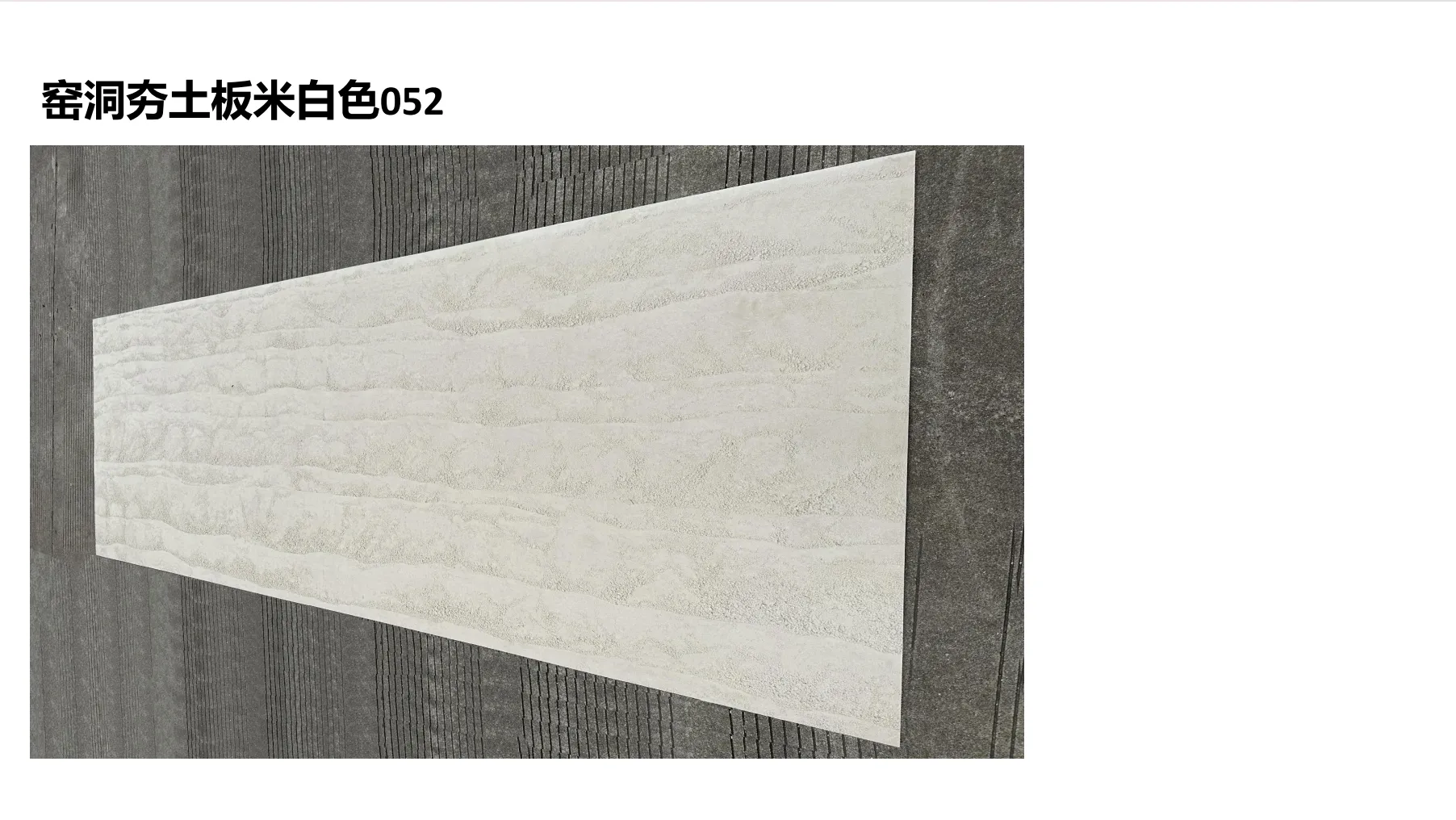
In the quiet corners of a sunlit studio in Barcelona, an architect runs her hand along a wall. It's not cold marble, nor sleek concrete—but something warmer, more alive. The surface shifts from soft terracotta to muted sage, as if the earth itself decided to paint a sunset. This is the magic of gradient color rammed earth boards —a material that marries the wisdom of ancient building techniques with the precision of modern engineering. In an era where "sustainability" and "authenticity" are often buzzwords, these boards stand out as a tangible story: of soil, skill, and the slow art of creating spaces that breathe.
Rammed earth isn't new. For millennia, civilizations from China to Africa built homes and forts by compressing layers of soil, sand, and gravel. The result? Structures that withstood time, their walls bearing the fingerprints of the hands that shaped them. But traditional rammed earth had limits: its color was tied to local soil, and gradients—those seamless shifts from one hue to another—were nearly impossible to achieve with hand tools and natural variation.
Enter the 21st century. As architects and designers craved materials that felt less industrial and more human, innovators revisited rammed earth. They asked: What if we could control the color? What if we could make the earth flow from one shade to the next, like a watercolor painting? The answer was gradient color rammed earth boards —a modern take on an ancient craft, where technology amplifies tradition rather than replacing it.
Creating a gradient rammed earth board is part chemistry, part poetry. It starts with soil—specifically, a blend of clay (for cohesion), sand (for strength), and silt (for workability). Sourcing matters: many manufacturers use local soil to reduce carbon footprints, turning regional landscapes into part of the design. Then come the pigments: iron oxides for reds and oranges, copper compounds for blues and greens, all natural and non-toxic. These pigments aren't just mixed into the soil; they're layered, like brushstrokes on a canvas.
The layering process is where skill takes center stage. A worker might spread a thin layer of terracotta-colored soil, then a slightly lighter layer, then one with a hint of gold—each just millimeters thick. A hydraulic press, calibrated to exact pressure (usually 10–15 MPa), compresses these layers into a dense, solid board. The key? Ensuring the pigments bleed into each other just enough to create a gradient, but not so much that the colors muddy. It's a dance of precision: too much pressure, and the layers mix unevenly; too little, and the board risks cracking. Master craftsmen often spend years perfecting this balance, their eyes trained to spot the subtle shifts that make a gradient feel "natural."
The result is a board that's as durable as it is beautiful. Modern rammed earth boards can withstand extreme temperatures, resist moisture (when sealed properly), and even regulate indoor humidity—thanks to the soil's natural breathability. And the gradient? It's not just for show. In a living room, a wall with a soft gradient can make a space feel larger; in a hotel lobby, a bold shift from rust to amber can evoke warmth and welcome. It's color with purpose, not just decoration.
For architects and builders, beauty alone isn't enough. A material must perform—and prove it. That's where certifications come in. gradient color rammed earth boards aren't just "green" by default; they're rigorously tested to meet global standards, giving professionals the confidence to specify them in projects big and small.
Take LEED (Leadership in Energy and Environmental Design) certification, for example. LEED rewards materials with low embodied carbon, and gradient rammed earth boards deliver: local sourcing cuts transportation emissions, natural pigments avoid harmful VOCs, and the production process uses minimal energy compared to firing bricks or quarrying stone. Many manufacturers also hold certifications from the Green Building Council, with some boards meeting criteria for "Healthy Material" labels, ensuring they don't off-gas chemicals into indoor air.
Durability is another benchmark. International standards like ASTM C1303 (for compressive strength) and ASTM E119 (for fire resistance) put these boards through their paces. A quality gradient rammed earth board can handle 15–20 MPa of pressure (stronger than some concrete blocks) and resist fire for over an hour—critical for commercial and residential buildings alike. Water resistance, too, is tested: while rammed earth is porous by nature, modern sealants (often plant-based) allow the boards to withstand rain and humidity without warping or staining.
Why does this matter? For an architect designing a school, certifications mean peace of mind that the walls will protect children. For a hotelier, they mean marketing a space as truly sustainable, not just "eco-friendly." Certifications turn a beautiful material into a reliable one—and reliability is what turns trends into traditions.
In the world of modern cladding materials, gradient color rammed earth boards aren't alone. Take MCM flexible stone , for example—a popular choice for its lightweight, bendable design. MCM (Modified Composite Material) is made by bonding stone veneers to a flexible backing, allowing it to wrap around curves and corners. It's durable, water-resistant, and comes in a range of colors. But where MCM shines in versatility, gradient rammed earth wins in soul.
| Feature | Gradient Color Rammed Earth Boards | MCM Flexible Stone |
|---|---|---|
| Texture & Feel | Warm, tactile, with visible layer lines and organic variation. Feels like "living earth." | Smooth, consistent, with the look of stone but a more uniform surface. |
| Sustainability | High: Local soil, natural pigments, low energy production, fully recyclable. | Moderate: Stone veneers may require quarrying; backing materials vary in eco-friendliness. |
| Thermal Performance | Excellent: High thermal mass regulates indoor temperatures, reducing heating/cooling needs. | Good: Lightweight, so less thermal mass; best paired with insulation. |
| Design Flexibility | Best for flat or gently curved surfaces; gradients add depth to large walls. | Superior for complex shapes (arches, columns); flexible backing allows for tight bends. |
| Emotional Impact | Evokes warmth, heritage, and connection to nature; feels "handmade." | Modern, sleek, and reliable; ideal for contemporary, minimalist designs. |
The takeaway? It's not about one material being "better"—it's about intention. A museum wing might use MCM for its curved facade, then pair it with gradient rammed earth walls in the lobby to ground visitors in history. A restaurant could line its outdoor patio with MCM for durability, then use gradient boards indoors to create a cozy, earthy dining room. Together, they prove that modern design thrives when materials complement, not compete.
What does gradient rammed earth look like in real life? Let's step into a boutique hotel in Marrakech. The lobby features a 20-foot wall of gradient color rammed earth boards , shifting from deep ochre at the base to pale gold at the ceiling—mirroring the desert sun rising over the Atlas Mountains. Nearby, a reception desk is clad in travertine (starry blue) , its subtle sparkle echoing the gradient's organic flow. The effect? Guests don't just see the space—they feel transported, as if the building itself is telling a story of place.
Or consider a home in Portland, Oregon. The owner wanted a living room that felt "rooted" but not rustic. The solution: a feature wall of gradient rammed earth, blending soft greys and muted greens (inspired by the Pacific Northwest forests). Paired with lunar peak golden accents—sleek, metallic tiles that catch the light—the space balances earth and sky, tradition and modernity. "It's like having a piece of the outdoors inside," the homeowner says. "On rainy days, the wall feels warm and cozy. On sunny days, the colors glow."
Gradient rammed earth boards are surprisingly versatile. Indoors, they're often used for feature walls, fireplaces, or backsplashes—spaces where texture and color can take center stage. Their thermal mass makes them ideal for bedrooms and living rooms, where they absorb heat during the day and release it at night, reducing energy use. Outdoors, they work as cladding for facades, garden walls, or patio floors, though they do require proper sealing to withstand rain and frost.
One of the most exciting trends? Mixing gradients with other natural materials. A winery in Napa Valley combined gradient rammed earth with reclaimed wood beams and rough granite real pictures (large slabs of unpolished granite) to create a tasting room that feels both rustic and refined. The gradient walls, shifting from grape-purple to earth-brown, nod to the vineyards outside, while the granite adds a sense of permanence. It's design that's not just aesthetic—it's narrative.
In a world grappling with climate change, the materials we build with matter. gradient color rammed earth boards aren't just "sustainable" as a marketing point—they're part of a larger movement to heal the planet. Let's break it down: local soil reduces transportation emissions (no shipping stone from quarries thousands of miles away); natural pigments mean no toxic runoff into waterways; and the production process uses minimal energy (hydraulic presses are far less carbon-intensive than firing bricks or melting metal).
But sustainability isn't just about the environment—it's about people, too. Many manufacturers partner with local communities, training workers in traditional rammed earth techniques and creating jobs. In regions where soil is abundant but industry is scarce, gradient rammed earth production becomes a source of pride, turning "dirt" into a high-value export. It's a circular economy: the earth feeds the material, the material feeds the community, and the community cares for the earth.
Compare this to synthetic materials, which often rely on fossil fuels and leave behind mountains of waste. Gradient rammed earth boards, by contrast, are fully recyclable. At the end of a building's life, the boards can be broken down and returned to the soil—no landfill, no pollution. It's a closed loop, a material that respects the planet's limits.
As we look ahead, gradient color rammed earth boards are poised to become more than a niche choice—they're a glimpse of the future of building. Why? Because they answer two of design's biggest demands: authenticity and innovation. Younger architects, in particular, are rejecting cookie-cutter materials in favor of ones with "soul." They want spaces that tell stories, that feel human, and gradient rammed earth delivers.
Technological advances will only expand possibilities. Imagine 3D scanning to map soil composition, ensuring perfect gradients every time. Or AI tools that help designers visualize how a gradient will shift with light throughout the day. These tools won't replace the craftsmen—they'll empower them, letting them focus on the art while technology handles the precision.
There's also the rise of "biophilic design"—the idea that humans thrive when connected to nature. Gradient rammed earth boards are biophilic by design: they're made of earth, they breathe like earth, and their colors mimic the natural world. In a time when screen time dominates our lives, materials that ground us in the physical world are more valuable than ever.
In the end, gradient color rammed earth boards are more than a building material. They're a reminder that the best innovation often lies in looking back—in honoring the wisdom of those who came before, then asking, "How can we make it better?" They're a bridge between past and future, between the earth and the sky, between the hands that build and the hearts that live in the spaces they create.
So the next time you walk into a room and feel an sense of calm, or find yourself staring at a wall that seems to glow from within, pause. It might just be gradient rammed earth—quietly, beautifully, telling the story of where we come from, and where we're going. And in that story, there's room for all of us: the architects, the craftsmen, the homeowners, and the earth itself, finally getting to show off its colors.
Recommend Products












