
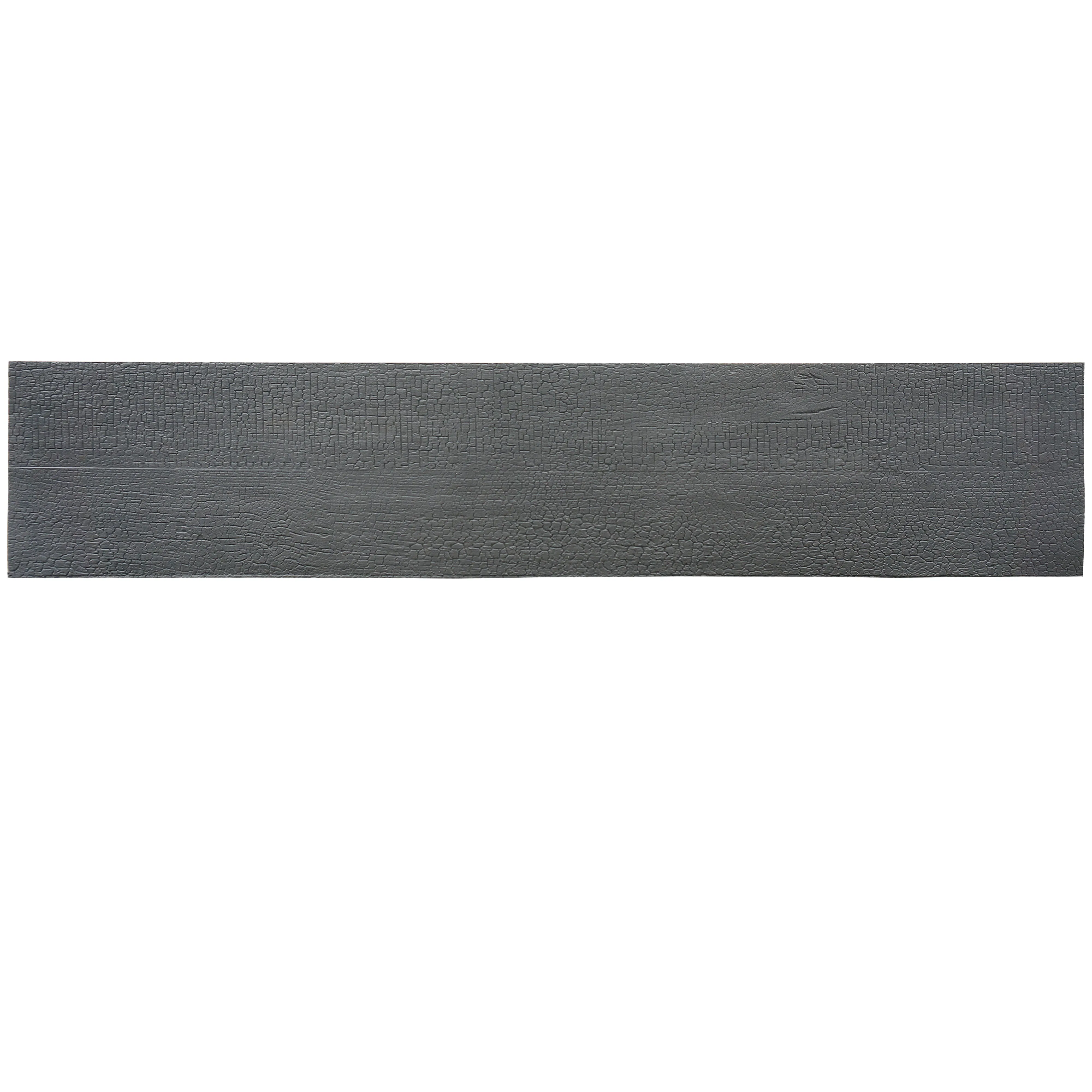
How sustainable materials are reshaping architecture—one low-VOC, pH-balanced panel at a time
In the quiet hum of a design studio in Copenhagen, an architect sketches a community center. Her lines are bold, but her mind lingers on a quieter detail: the materials. "It's not just about how it looks," she mutters, tapping her pencil. "It's about how it lives—with the people inside, with the earth outside." This moment, repeated in offices from New York to Tokyo, captures the shift defining modern architecture: green building isn't a trend anymore. It's a promise. A promise that the spaces we create won't just serve us, but sustain us. And at the heart of that promise? Materials. Not the cold, industrial slabs of yesteryear, but innovative, living materials that balance beauty with responsibility. Enter MCM Flexible Stone and its star player: the Charcoal Burnt Wood Board. More than just a pretty face, this material is a case study in how pH balance, sustainability, and design can converge to earn LEED points—and change the way we build.
LEED, or Leadership in Energy and Environmental Design, isn't just a certification; it's a language. It speaks in points—credits earned for everything from water efficiency to indoor air quality. For architects and developers, those points aren't just badges. They're proof that a building is doing its part. But here's the thing: LEED doesn't reward materials for being "green" in a vacuum. It rewards them for working together to create healthier, more efficient spaces. And that's where pH comes in. The pH level of building materials—whether they're acidic, neutral, or alkaline—plays a quiet but critical role. It affects everything from off-gassing (those harmful volatile organic compounds, or VOCs, that seep into the air) to long-term durability. A material with a balanced pH isn't just "safer"; it's a partner in earning those all-important LEED credits. Today, we're diving into how Charcoal Burnt Wood Board, a standout in the MCM Flexible Stone lineup, is leading this charge—alongside peers like fair-faced concrete and foamed aluminium alloy boards—proving that sustainability and beauty don't have to be trade-offs.
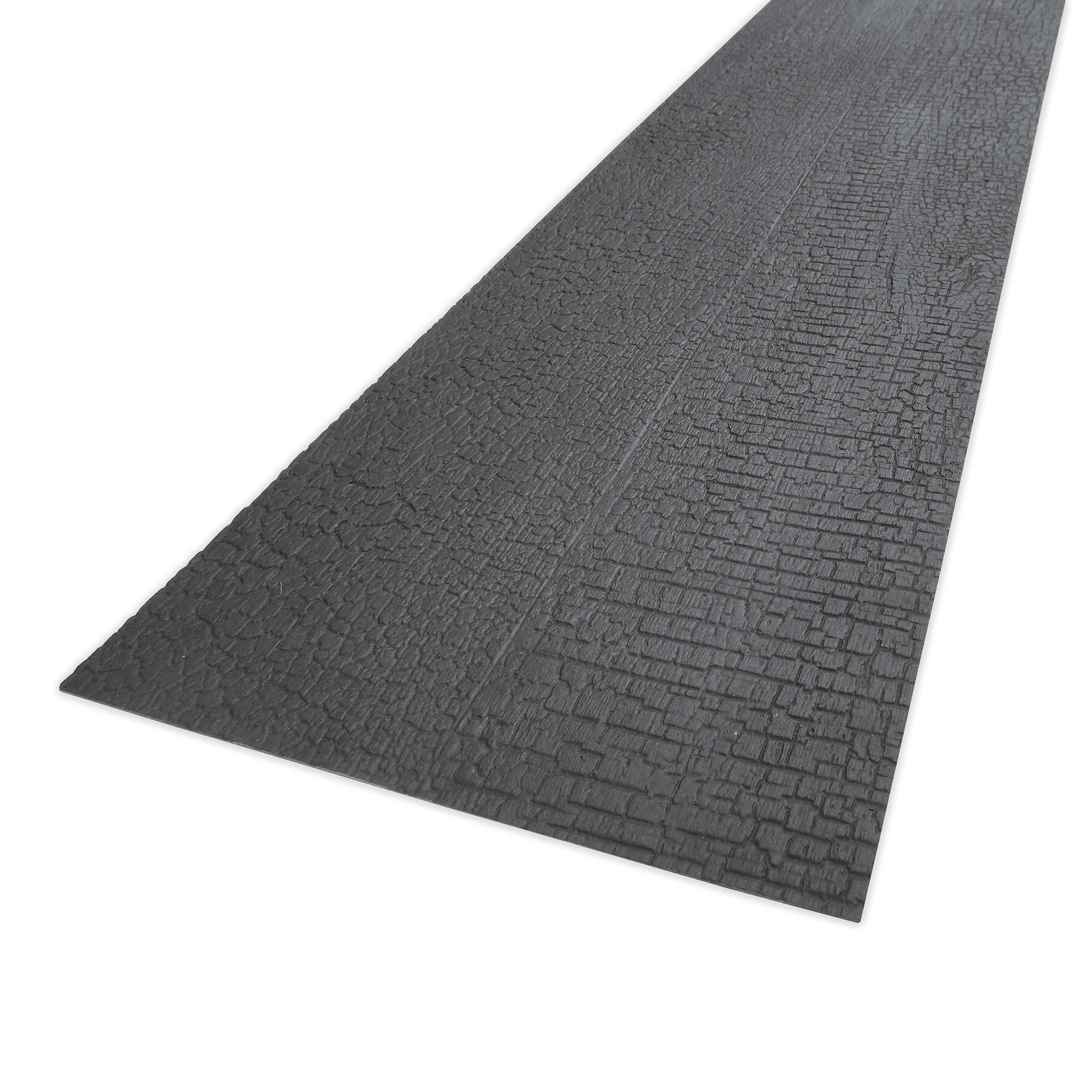
Let's start with the basics: What is Charcoal Burnt Wood Board? Picture this: a panel that looks like it was carved from ancient timber, its surface kissed by flame—warm, textured, with depth that draws the eye. Now, forget the image of a logger felling old-growth trees. This isn't your grandfather's wood panel. Charcoal Burnt Wood Board is born from a marriage of traditional Japanese shou sugi ban techniques and modern MCM (Modified Composite Material) technology. The process is almost poetic: sustainably sourced wood fibers are treated with controlled heat, charring the surface to create a natural barrier against rot, pests, and moisture. No harsh chemicals, no toxic sealants—just fire, time, and a little science. The result? A board that's not just durable, but deeply sustainable. "We wanted to honor the past while protecting the future," says a materials engineer at MCM, who helped develop the line. "Shou sugi ban has been around for centuries for a reason. We just gave it a 21st-century upgrade."
But what does this have to do with pH? Let's get technical—gently. Most conventional wood products rely on chemical treatments to achieve longevity. These treatments often leave behind residues with unbalanced pH levels, leaning acidic or overly alkaline, which can off-gas VOCs into indoor air. Over time, this affects air quality, triggering allergies or respiratory issues. Charcoal Burnt Wood Board, by contrast, owes its resilience to that charred surface. The heat treatment alters the wood's molecular structure, locking in a neutral pH (around 7 on the scale, for the science curious). No off-gassing, no irritants—just clean, stable material. "Think of it like a well-tuned instrument," explains an indoor air quality specialist. "A neutral pH material doesn't 'singe' the air. It harmonizes with it." For LEED, this is gold. The certification's Indoor Environmental Quality (IEQ) category rewards materials that low-VOC and non-toxic, and Charcoal Burnt Wood Board checks that box with ease. In fact, projects using it often see boosts in IEQ credits, particularly under "Low-Emitting Materials" (EQc2) and "Indoor Air Quality Assessment" (EQc3).
Then there's the Materials and Resources (MR) category—LEED's way of rewarding smart, sustainable sourcing. Charcoal Burnt Wood Board scores here, too. The wood fibers are sourced from FSC-certified forests, ensuring responsible harvesting. The MCM production process itself is water-efficient, using 30% less water than traditional panel manufacturing. And because the boards are lightweight (thanks to their composite core), transporting them cuts down on carbon emissions. "It's a chain reaction," notes a sustainability consultant who specializes in LEED projects. "You choose a material that's locally sourced, has recycled content, and is durable enough to last decades—suddenly, you're racking up points under MRc1 (Building Product Disclosure and Optimization) and MRc2 (Construction Waste Management)." For developers eyeing LEED Silver, Gold, or Platinum, these points add up fast. But it's not just about the numbers. "Clients tell us they feel better specifying it," the consultant adds. "They're not just meeting a certification—they're building spaces that people breathe easier in."
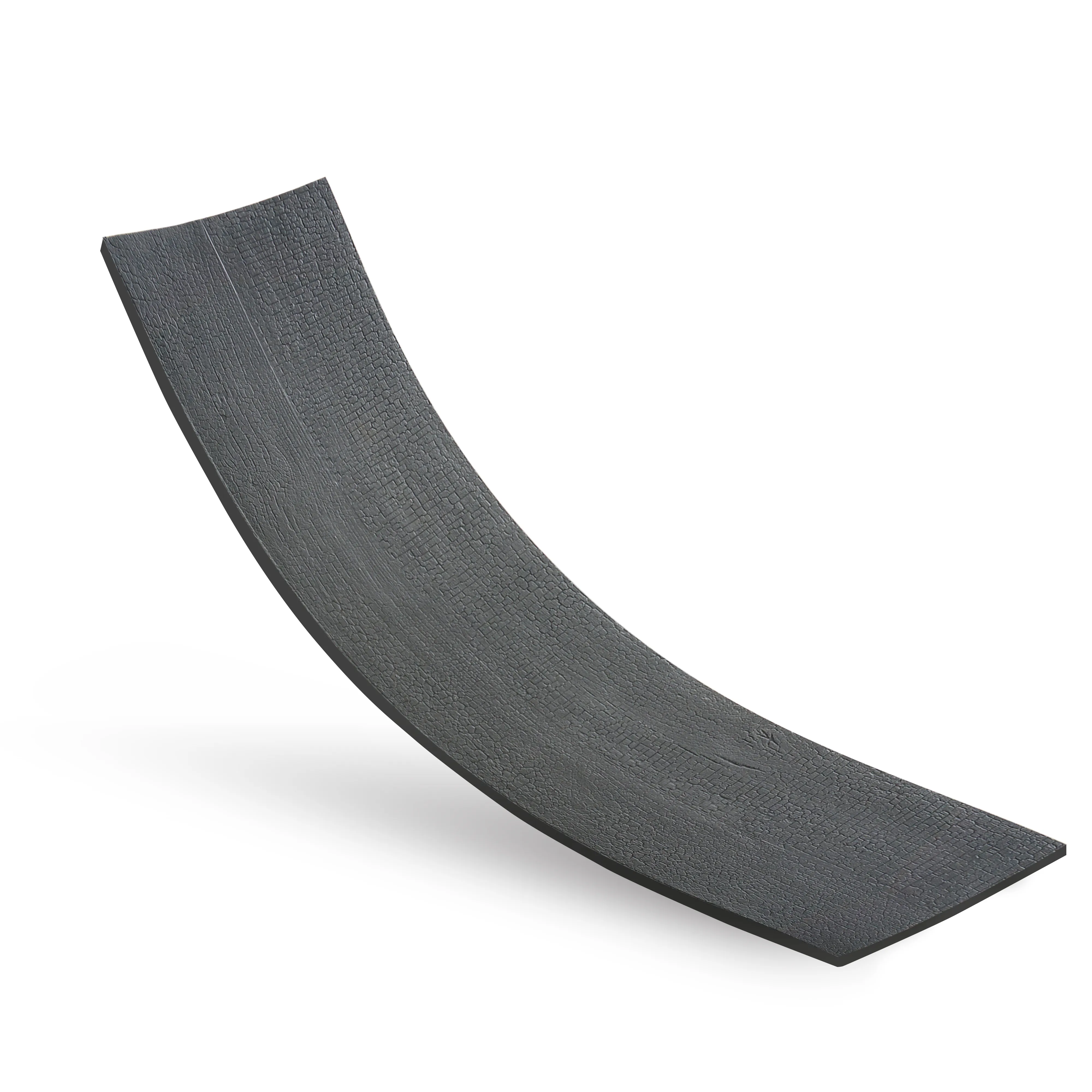
Charcoal Burnt Wood Board isn't alone in this mission. It's part of MCM Flexible Stone, a lineup of materials designed to rethink what building panels can be. MCM Flexible Stone products—from sleek fair-faced concrete to the industrial-chic foamed aluminium alloy board in vintage silver—share a common DNA: flexibility (they bend without breaking, ideal for curved surfaces), durability, and a commitment to sustainability. "We started with the question: Why can't beautiful materials also be kind to the planet?" says the head of MCM's product development team. "Flexible stone was the answer. It's thin, lightweight, and uses up to 60% recycled content, which slashes embodied carbon." For context, embodied carbon is the total CO2 emitted during a material's lifecycle—from extraction to manufacturing to disposal. Traditional stone slabs, for example, have high embodied carbon due to heavy mining and transportation. MCM Flexible Stone, by contrast, is made with a mix of recycled minerals, resins, and natural aggregates, cutting that carbon footprint by half. "It's like swapping a gas-guzzler for an electric car—same function, fraction of the impact," the team lead jokes.
Take fair-faced concrete, a staple in modernist design. MCM's version retains that raw, industrial beauty but with a twist: it's pH-neutral and free of added pigments or sealants that can off-gas. Architects love it for its versatility—use it for walls, floors, even countertops—and for how it pairs with Charcoal Burnt Wood Board. "They're like siblings," says an interior designer who used both in a tech startup office. "The concrete adds cool, calm structure; the wood brings warmth. Together, they make the space feel grounded, but not heavy." And yes, it contributes to LEED points too—specifically under MRc5 (Regional Materials), since MCM sources aggregates locally whenever possible, reducing transportation emissions. Then there's the foamed aluminium alloy board in vintage silver, a newer addition to the lineup. Lightweight and fire-resistant, it's a favorite for facades and accent walls. "Aluminium is infinitely recyclable," explains a materials scientist. "Our vintage silver finish uses a water-based coating with zero VOCs, so it's pH-stable and kind to the air. It's LEED catnip—clients get the industrial look they want without the environmental guilt."
| Material | Sustainability Features | pH Level | Key LEED Credits | Aesthetic Vibe |
|---|---|---|---|---|
| Charcoal Burnt Wood Board | FSC-certified wood, 30% less water in production, zero VOCs | Neutral (pH 7) | IEQc2 (Low-Emitting Materials), MRc1 (Product Disclosure) | Warm, rustic, organic texture |
| MCM Flexible Stone (General Line) | 60% recycled content, 50% lower embodied carbon than natural stone | Neutral to slightly alkaline (pH 7-8) | MRc2 (Construction Waste), MRc5 (Regional Materials) | Versatile—mimics stone, concrete, or wood |
| Fair-faced Concrete (MCM) | Locally sourced aggregates, no added pigments/sealants | Neutral (pH 7) | MRc5 (Regional Materials), EQc3 (Indoor Air Quality) | Raw, industrial, minimalist |
| Foamed Aluminium Alloy Board (Vintage Silver) | 100% recyclable aluminium, water-based coating | Neutral (pH 7) | MRc3 (Material Reuse), IEQc2 (Low-Emitting Materials) | Industrial-chic, metallic sheen |
In 2023, the Willow Street Community Center in Portland, Oregon, set out to be more than just a gathering space. It wanted to be a LEED Platinum beacon. The design team, led by architect Maya Chen, had a vision: a building that felt "rooted in the Pacific Northwest"—warm, earthy, and unapologetically green. Enter Charcoal Burnt Wood Board and MCM Flexible Stone. "We needed materials that told a story," Chen recalls. "Portland's all about sustainability, but it's also about craft. The charred wood felt like a nod to our logging history, but with a modern, responsible twist."
The center's exterior features Charcoal Burnt Wood Board cladding, paired with MCM Flexible Stone in "Lunar Peak Silvery" for accent walls. Inside, fair-faced concrete floors flow into a lobby lined with Foamed Aluminium Alloy Board (Vintage Silver), creating a space that's both industrial and inviting. But the real win? LEED points. The project earned 8 out of 10 possible IEQ credits, thanks in part to the low-VOC, pH-neutral materials. "We tested the air quality pre-occupancy, and the results were staggering," says Chen. "VOC levels were 70% lower than the LEED benchmark. Parents even told us their kids with allergies were breathing easier during after-school programs." The center also scored big in MR credits, with 40% of materials sourced locally and 25% recycled content. In the end, Willow Street hit LEED Platinum—a first for community centers in the region. "It wasn't easy," Chen admits. "But when a grandmother told me, 'This place feels good to be in,' that's when I knew the materials mattered. More than points, more than certifications—it's about how it makes people feel."
Let's circle back to pH—because it's not just a buzzword. In green building, pH balance in materials is like a silent guardian of indoor health. When materials have extreme pH levels (too high or too low), they can react with humidity in the air, releasing gases or particles that degrade air quality. For example, some cheap laminates or adhesives are highly acidic, off-gassing formaldehyde—a known carcinogen. Over time, this can lead to "sick building syndrome," where occupants experience headaches, fatigue, or irritation. Neutral pH materials, like Charcoal Burnt Wood Board, avoid this. They're stable, un reactive, and gentle on the air we breathe. "It's the difference between a room that 'wears' on you and one that 'nurtures' you," says a public health researcher who studies indoor environments. "We spend 90% of our lives indoors—why wouldn't we prioritize materials that support, not harm, our health?"
LEED recognizes this, which is why IEQ credits are so valuable. For developers, choosing pH-balanced materials isn't just about altruism—it's about ROI. Healthier spaces mean happier tenants, lower turnover, and even higher resale values. "A LEED Platinum office building in Chicago saw a 15% increase in lease rates after renovation," notes a commercial real estate agent. "Tenants were willing to pay more for spaces that felt 'clean'—and not just in the tidy sense. They could feel the difference in the air." Charcoal Burnt Wood Board, with its neutral pH and low-VOC profile, is a key player here. It's not just a wall panel; it's a health investment.
As the sun sets on the Copenhagen design studio, the architect finally sets down her pencil. Her community center sketch now includes notes: "Charcoal Burnt Wood Board—south facade. MCM Flexible Stone—east wall. Fair-faced concrete—floor." She smiles, thinking of the families who'll gather there, the children who'll laugh on those floors, the seniors who'll sit in the sun streaming through those walls. "It's not just a building," she writes in the margin. "It's a promise." That's the future of green building materials: not just products, but promises. Promises to honor design, to protect health, to respect the planet. Charcoal Burnt Wood Board and its MCM siblings are leading that charge—one pH-balanced, LEED-point-earning panel at a time.
So the next time you walk into a space that feels "right"—warm, clean, alive—take a closer look at the walls. Chances are, you're standing in the presence of materials that care as much about the people inside as they do about the world outside. And that, perhaps, is the greatest LEED credit of all: building spaces that don't just exist, but thrive —with us, and for us.
Recommend Products












