
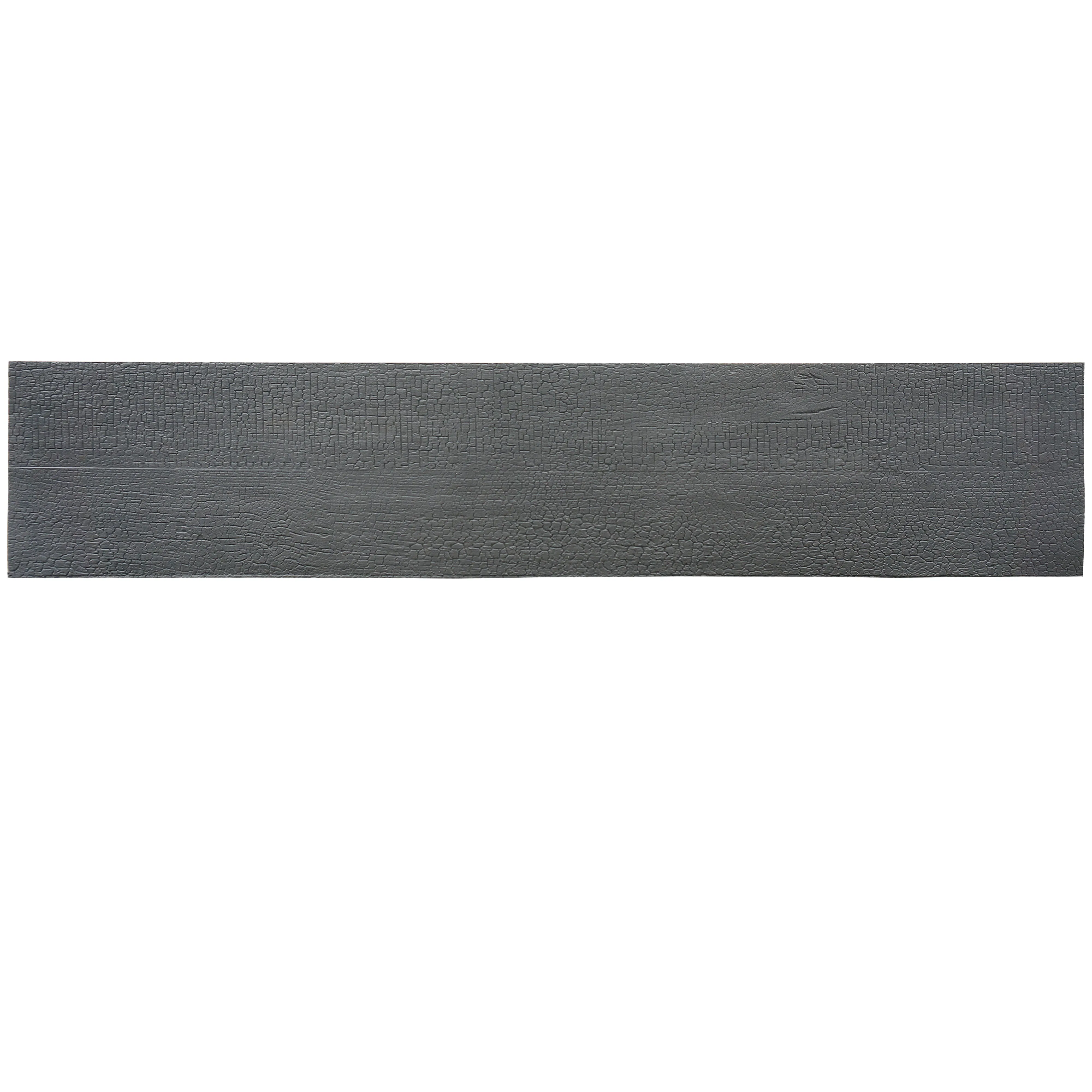
A few years back, I met with a friend—let's call her Mia—who runs a small café in Portland. She'd just renovated the space with these stunning charcoal burnt wood panels along the walls. "They're supposed to look this rich, moody black forever," she told me, running a hand over the textured surface. "The contractor said it's 'low-maintenance.'" Fast-forward 18 months, and I stopped by again. Those once-vibrant panels? Faded to a dull gray, with patches where the color had chipped away. "I feel like I wasted money," Mia sighed. "It's not just about looks—it's about trust. You pick a material because you believe it'll grow with your space, not disappear on you."
That conversation stuck with me. Because here's the thing: when we choose materials for our homes, offices, or businesses, we're not just buying a product—we're investing in a vision. And for wood-look surfaces like charcoal burnt wood boards, color retention isn't a "nice-to-have" feature. It's the difference between a space that feels intentional and timeless, and one that starts to feel dated within years. Today, let's dive into why color retention matters so much for charcoal burnt wood boards, how MCM's version stands out, and why it might just be the solution Mia (and so many others) wish they'd known about sooner.
First, let's get clear on the star of the show. Charcoal burnt wood boards—sometimes called "shou sugi ban" after the traditional Japanese technique—are made by intentionally charring the surface of wood to create a deep, smoky black finish. Historically, this process was used to preserve wood: the charred layer acts as a natural barrier against pests, rot, and fire. But in modern design, it's the aesthetic that steals the spotlight. The burnt surface has a unique, almost velvety texture, with hints of brown or even red peeking through the black in certain lights. It's bold, it's organic, and it adds a raw, earthy warmth that's hard to replicate with paint or laminates.
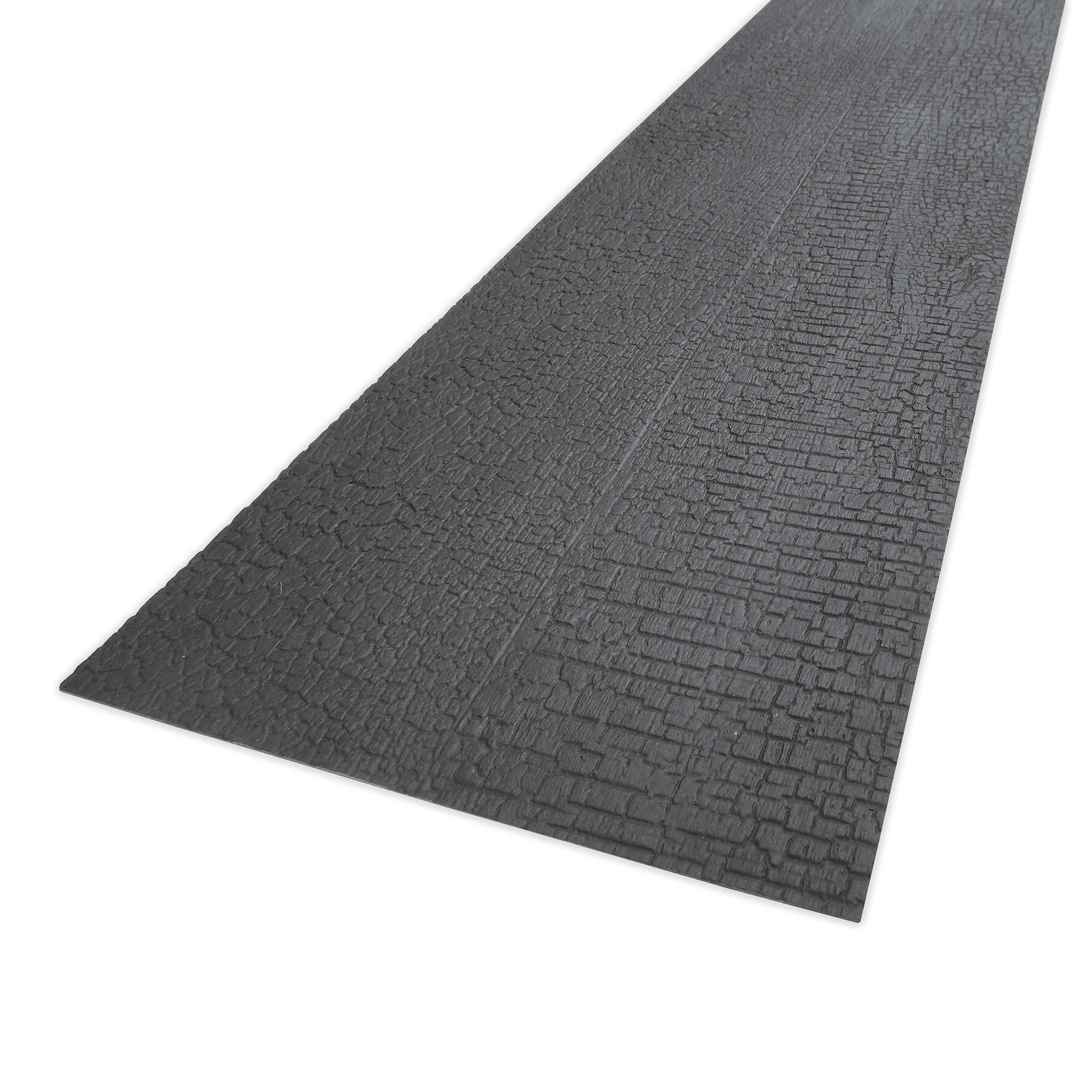
But here's where the traditional method falls short: real wood, even charred, is still wood. It's porous, it expands and contracts with moisture, and its color is vulnerable to the elements. Which brings us to MCM's take: the Charcoal Burnt Wood Board isn't solid wood at all. It's a modified composite material (MCM stands for Modified Composite Material), combining natural fibers, mineral fillers, and a high-performance resin core. The surface is treated with a controlled charring process, but unlike solid wood, the color isn't just skin-deep. It's integrated into the material itself, which changes everything for long-term retention.
To understand why MCM's version is different, let's break down the enemies of color retention for wood-look boards. Think of it like caring for a plant: you can't keep it alive if you don't know what kills it. For charcoal burnt wood, three culprits top the list:
Sunlight—even through windows—is wood's worst enemy. UV rays break down the chemical bonds in pigments, turning deep blacks into grays and rich browns into washed-out tans. I once visited a retail store in Arizona that had installed solid wood burnt panels near large skylights. In two years, the top third of the panels was almost unrecognizable—faded to a pale, ashy color—while the lower sections (shaded by shelves) still looked new. "It looks like we forgot to paint half the wall," the manager joked, though I could tell she wasn't amused.
Water doesn't just warp wood—it messes with color, too. When moisture seeps into porous surfaces, it can cause pigments to bleed, leaving streaks or blotches. In humid climates (looking at you, Florida and Seattle), mold and mildew can also take hold, discoloring the surface with green or black spots. A client in New Orleans once showed me their outdoor patio, where charcoal burnt wood boards had turned splotchy after a particularly rainy summer. "I thought burnt wood was supposed to be water-resistant," they said. "Turns out, 'resistant' doesn't mean 'invincible.'"
Life is messy. Kids scuff walls with toys, coffee spills happen, and sometimes we grab the nearest cleaner (hello, bleach wipes) to fix a stain. But harsh chemicals or rough scrubbing can strip away the top layer of color, especially if the pigment is only applied to the surface. I saw this firsthand in a restaurant kitchen where staff had used industrial degreasers on their charcoal burnt wood backsplash. The result? A patchy, "cloudy" appearance where the color had worn thin. "We were just trying to keep it clean," the chef said. "Who knew cleaning could ruin it?"
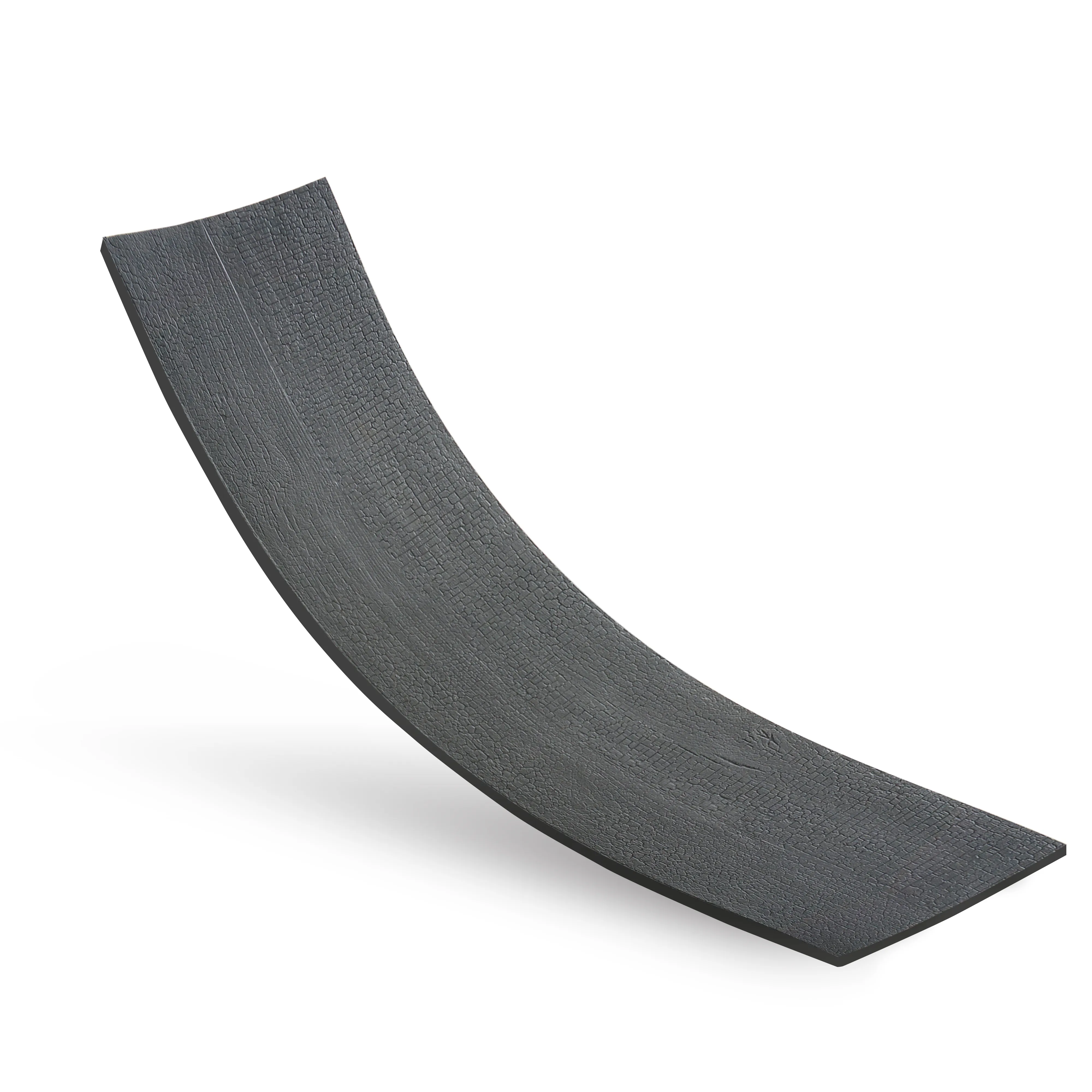
So, how does MCM's Charcoal Burnt Wood Board tackle these issues? Let's start with the basics: it's not solid wood. Instead, it's a composite material, which means MCM can engineer it from the ground up to resist the very things that fade traditional wood. Here's how they do it:
Traditional burnt wood relies on the charred surface for color. Scratch that surface, or let UV rays hit it, and the color fades because there's nothing underneath. MCM's process is different: during manufacturing, color-stable pigments are mixed into the top layer of the composite, not just applied as a coating. Think of it like a chocolate chip cookie vs. a plain cookie with chocolate drizzle—one has color throughout, the other just on top. This means even if the surface gets scuffed (kids, we're looking at you), the color underneath stays consistent.
MCM adds UV inhibitors to the top layer of the board, acting like a permanent sunscreen. These inhibitors absorb or reflect UV rays, preventing them from breaking down the pigments. I spoke with an MCM engineer who compared it to the way sunglasses protect your eyes: "It's not that the sun isn't hitting the surface—it's that the surface is designed to ignore the sun's harmful effects." In testing, MCM's Charcoal Burnt Wood Board retained over 90% of its color after 5,000 hours of accelerated UV exposure (that's roughly 6-7 years of real-world sunlight). For context, most solid wood panels start fading noticeably after 1,500-2,000 hours.
The composite core of MCM's board is moisture-resistant, meaning it won't swell, warp, or absorb water like solid wood. I visited a coastal home in Maine last year where the owners had installed MCM's Charcoal Burnt Wood Board on their outdoor porch. "We get rain, salt spray, everything," the homeowner told me. "Three years, and it still looks like the day we put it up. No mold, no warping, no color bleeding." For areas like bathrooms, kitchens, or outdoor spaces, this is a game-changer—moisture can't fade what it can't penetrate.
While we're on the topic of durability: MCM's Charcoal Burnt Wood Board is fire-retardant. Traditional burnt wood is more fire-resistant than untreated wood, but it's not immune. MCM's composite material, however, meets strict fire safety standards (think: commercial buildings, hospitals, schools). A contractor I know put it best: "You're not just getting a board that keeps its color—you're getting one that could save lives. That's peace of mind you can't put a price on."
Charcoal burnt wood boards aren't the only game in town. Let's see how MCM's version holds up against some of its closest competitors—including other MCM products like wood grain board , rammed earth board (matcha green) , and even metallic options like lunar peak silvery . I've pulled together data from MCM's durability tests to create a quick comparison—because numbers tell a story too.
| Material | Color Range | Expected Color Retention (Years)* | Key Protection Features |
|---|---|---|---|
| Charcoal Burnt Wood Board | Deep charred black, warm brown undertones | 15-20 years (indoor); 10-15 years (outdoor) | UV-inhibiting top layer, moisture-resistant core, pigment-integrated composite |
| Wood Grain Board | Natural oak, walnut, pine tones | 8-12 years (indoor); 5-8 years (outdoor) | Water-based sealant, moderate UV protection, scratch-resistant surface |
| Rammed Earth Board (Matcha Green) | Earthy matcha green, matte finish | 10-15 years (indoor); 8-10 years (outdoor) | Mineral-based pigments, breathable surface, mold-resistant core |
| Lunar Peak Silvery | Metallic silver with subtle sheen | 20+ years (indoor); 15-20 years (outdoor) | Aluminum alloy base, anti-corrosive coating, UV-stable metallic pigments |
| Fair-Faced Concrete | Raw gray, industrial matte finish | 25+ years (indoor/outdoor) | Dense composition, minimal pigment (resists fading), stain-resistant surface |
*Based on MCM's accelerated aging tests, simulating exposure to UV light, moisture, and temperature fluctuations.
Notice the trend? While lunar peak silvery (a metallic option) and fair-faced concrete offer longer color retention, they lack the warmth and organic texture of wood. Wood grain board comes close in look but falls short in longevity, especially outdoors. And rammed earth board (matcha green) is beautiful for earthy tones, but its color fades faster than MCM's charcoal burnt option. For a balance of aesthetics and durability, MCM's Charcoal Burnt Wood Board hits a sweet spot—especially if you're after that rich, moody wood look.
Numbers are great, but nothing beats hearing from people who've lived with the product. Let's meet a few folks who've installed MCM's Charcoal Burnt Wood Board and seen how it holds up over time.
Mark, a homeowner in Colorado, installed MCM's Charcoal Burnt Wood Board on his cabin's exterior siding in 2018. "We get 300+ days of sun here, plus snow, hail, and wild temperature swings—from -20°F in winter to 90°F in summer," he told me. "I was skeptical anything would survive that. But when I walked around the cabin last month, I had to check the installation date. The boards still look brand-new. No fading, no warping, no peeling. My neighbor did his cabin with real wood around the same time, and his needs to be replaced already. I'm sold."
Remember Mia, my friend with the faded café walls? She re-did her space with MCM's Charcoal Burnt Wood Board three years ago. "I was nervous—burned once, twice shy," she laughed when I visited recently. "But look at it!" The walls were still that deep, inky black, with the same rich texture I'd admired in her first renovation. "We've had coffee spills, kids scribbling with crayons, even a fire alarm that went off and soaked the walls with water. Nothing phases it. And the best part? I don't have to 'maintain' it. No sealing, no painting, no stress. It just… stays."
I know what you're thinking: "If it's so durable, do I need to do anything to keep it looking good?" The short answer: yes, but it's easier than you think. Think of it like owning a quality leather jacket—you don't need to baby it, but a little care goes a long way.
For day-to-day dirt, a soft cloth or sponge with warm, soapy water (mild dish soap works) is all you need. Avoid harsh cleaners like bleach, ammonia, or abrasive scrubs—they can strip the protective top layer. A restaurant owner I know swears by a microfiber cloth and a 50/50 mix of water and vinegar for tough stains (coffee, grease). "Spray it on, let it sit for 5 minutes, wipe it off. Done."
While MCM's board is moisture-resistant, standing water is never a good idea. Wipe up spills quickly (especially in kitchens or bathrooms) to prevent pooling. If you live in a humid climate, ensure the area is well-ventilated—think: exhaust fans in bathrooms, dehumidifiers in basements. "We installed the board in our sauna," a client told me. "I was worried the steam would ruin it, but we just make sure to wipe down the walls after use. Three years later, no issues."
If you're using the board outdoors (siding, patio walls, fences), MCM recommends applying a clear, UV-resistant sealant every 3-5 years. It's optional—remember, the board is already engineered to resist UV rays—but it's like adding a second layer of sunscreen. "I did it once, five years ago, when we installed our outdoor kitchen backsplash," Mark (the Colorado homeowner) said. "Took an hour, and it still looks perfect. Worth the peace of mind."
Not every material is for everyone. But if you answer "yes" to any of these, MCM's Charcoal Burnt Wood Board might be right for you:
When Mia re-did her café with MCM's Charcoal Burnt Wood Board, she told me something that stuck with me: "It's not just that the color stays—it's that I don't have to worry about it. I can focus on running my business, not checking if my walls are fading." That's the real power of color retention: it gives you confidence. Confidence that your space will grow with you, that your investment was worth it, and that the vision you had for your home or business won't disappear in a few years.
MCM's Charcoal Burnt Wood Board isn't just a material—it's a promise. A promise that beauty and durability don't have to be trade-offs. So whether you're designing a café, a home office, or a mountain cabin, remember: the best materials aren't the ones that look good on day one. They're the ones that still look good on day 1,000.
*All durability claims based on MCM's internal testing and third-party certifications. Actual results may vary based on installation, climate, and maintenance.
Recommend Products












