
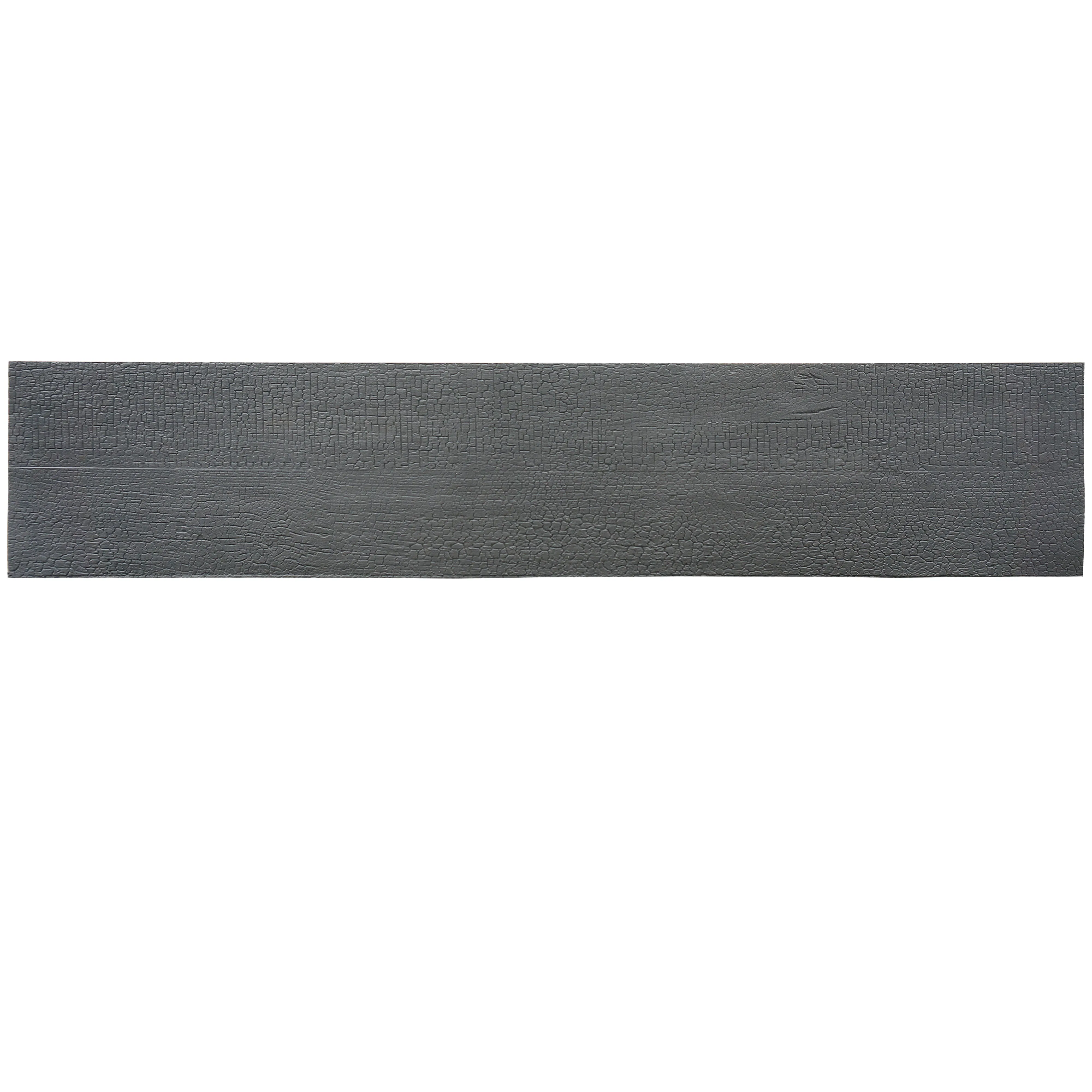
Walk down the cobblestone streets of a historic district, and you'll likely feel it—the weight of time in the weathered bricks, the stories in the creaking wooden beams, the quiet pride of buildings that have stood for centuries. Heritage structures aren't just bricks and mortar; they're living testaments to our past. But preserving them? That's a delicate dance. Renovators and architects often grapple with a tough question: How do you update a historic building to meet modern standards without erasing its soul? Enter charcoal burnt wood board —a material that's quietly revolutionizing heritage renovations by blending old-world charm with cutting-edge durability. In this article, we'll explore how this innovative material is becoming a go-to choice for preserving history, why it outperforms traditional options, and how it pairs seamlessly with complementary materials like rammed earth board and wood grain board to honor the past while safeguarding the future.
Imagine stepping into a 18th-century townhouse in Prague. The original wooden facade, once rich and warm, is now faded, its planks warped by decades of rain and snow. Inside, the floorboards creak underfoot, and the walls show signs of rot—lovely for ambiance, but a nightmare for structural integrity. This is the reality of heritage renovation: balancing preservation with practicality. Traditional materials, while authentic, often fall short in modern contexts. Solid wood, for example, is prone to pests, moisture damage, and warping. Stone, though durable, is heavy and can strain aging foundations. And many modern synthetic materials? They look out of place, like a neon sign in a Gothic cathedral.
Enter charcoal burnt wood board. At first glance, it's easy to mistake it for the real thing—the deep, smoky hues, the textured grain, the subtle charring that speaks of craftsmanship. But unlike traditional burnt wood (think of Japan's centuries-old yakisugi technique, where wood is charred to resist fire and decay), this modern material is engineered for the demands of today's renovations. It's lightweight, resistant to the elements, and designed to mimic the look of aged, burnt wood without the maintenance headaches. For architects and preservationists, it's a game-changer: a material that honors history while solving the very problems that once threatened it.
To understand charcoal burnt wood board, let's start with its roots. The practice of burning wood to enhance its durability isn't new. For centuries, cultures worldwide—from the Japanese yakisugi masters to European peasants protecting their barns—have used fire to harden wood. The charring process creates a layer of carbon that repels insects, resists rot, and even slows down fire (counterintuitive, but true: the char acts as a barrier). But traditional burnt wood has limitations. It's labor-intensive to produce, heavy to install, and over time, the charred layer can wear away, leaving the wood vulnerable again.
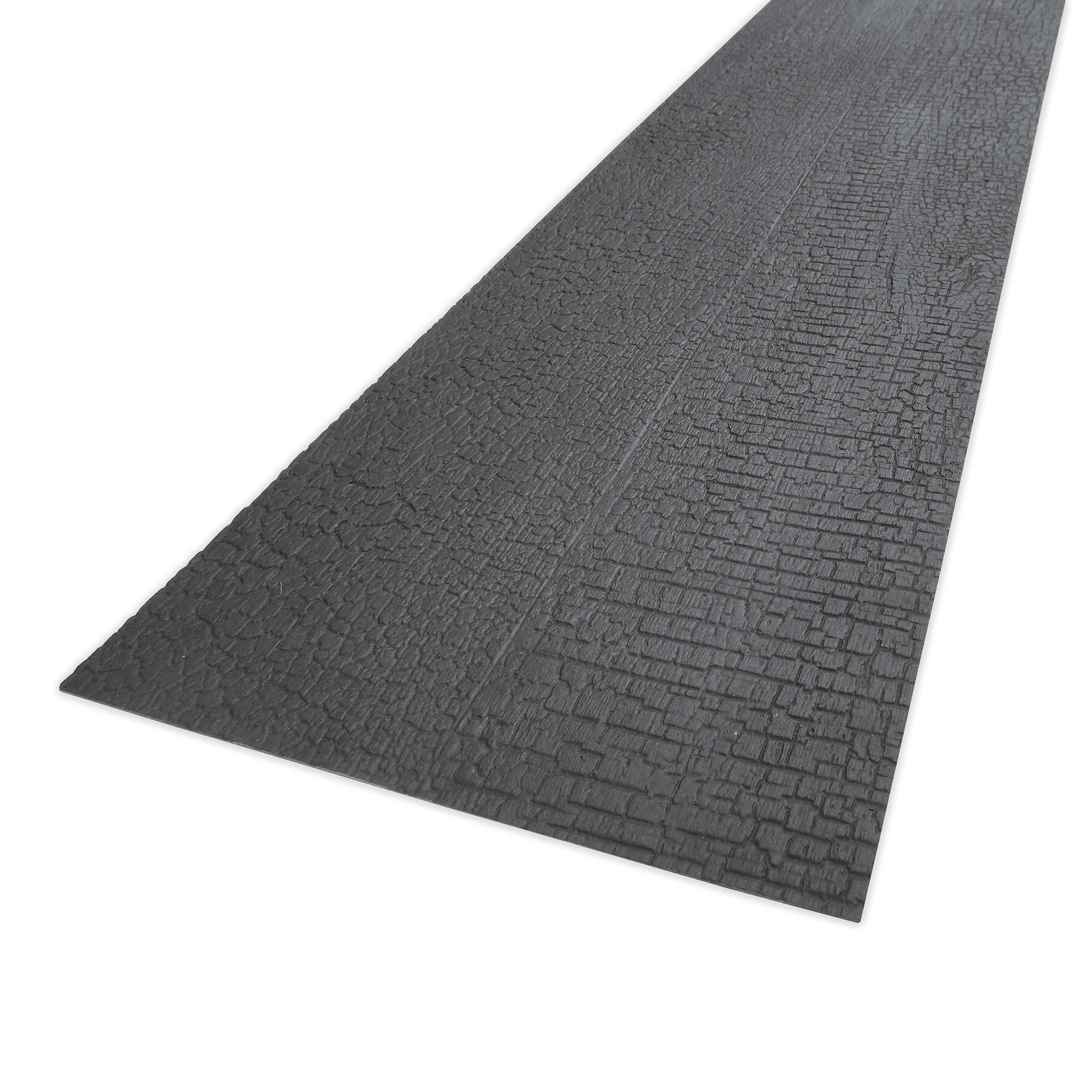
Charcoal burnt wood board reimagines this ancient technique using modern technology. It starts with a base of high-density fiberboard or modified composite material (MCM), which is then coated with a specialized resin infused with wood fibers and pigments. The surface is treated with a controlled charring process—think of it as a precision burn, not a wildfire—to create that authentic, weathered look. Finally, a protective sealant is applied to lock in the color and texture, ensuring the board stands up to rain, snow, UV rays, and even the occasional bump from a wayward ladder during maintenance.
But what truly sets it apart for heritage projects? Let's break it down:
Walk up to a wall clad in charcoal burnt wood board, and you'll want to reach out and touch it. The texture is rich—deep grooves where the "grain" runs, subtle variations in color that mimic natural wood's imperfections, and that telltale charred edge that looks like it was kissed by a blacksmith's forge. Unlike some synthetic wood-look products, which can feel flat or plastic-y, this board has depth. It catches the light differently throughout the day, just like real wood. For heritage buildings, this matters. A 19th-century schoolhouse converted into a community center shouldn't look like it was wrapped in vinyl; it should feel like it's been there for generations. Charcoal burnt wood board delivers that authenticity.
Heritage buildings often sit in harsh environments—coastal towns with salt-laden winds, mountain villages with freezing winters, or urban areas with pollution. Traditional wood would buckle under these conditions, but charcoal burnt wood board thrives. Its composite core resists warping and swelling, even in high humidity. The protective sealant prevents moisture from seeping in, and the charred layer (now stabilized by modern resins) won't flake off over time. In fact, most manufacturers back their boards with 20- to 30-year warranties against fading, cracking, or delamination. For a building that's already hundreds of years old, that kind of longevity is reassuring.
Heritage preservation and sustainability go hand in hand. After all, the most eco-friendly building is the one that's already been built. But when you do need to replace materials, choosing sustainable options matters. Charcoal burnt wood board checks this box, too. Many brands use recycled wood fibers in their composite cores, reducing the demand for virgin timber. The manufacturing process is also energy-efficient, with minimal waste. And because the boards are lightweight, transporting and installing them requires less fuel and labor than traditional stone or solid wood. For renovation projects aiming for LEED or BREEAM certifications, this is a significant plus.
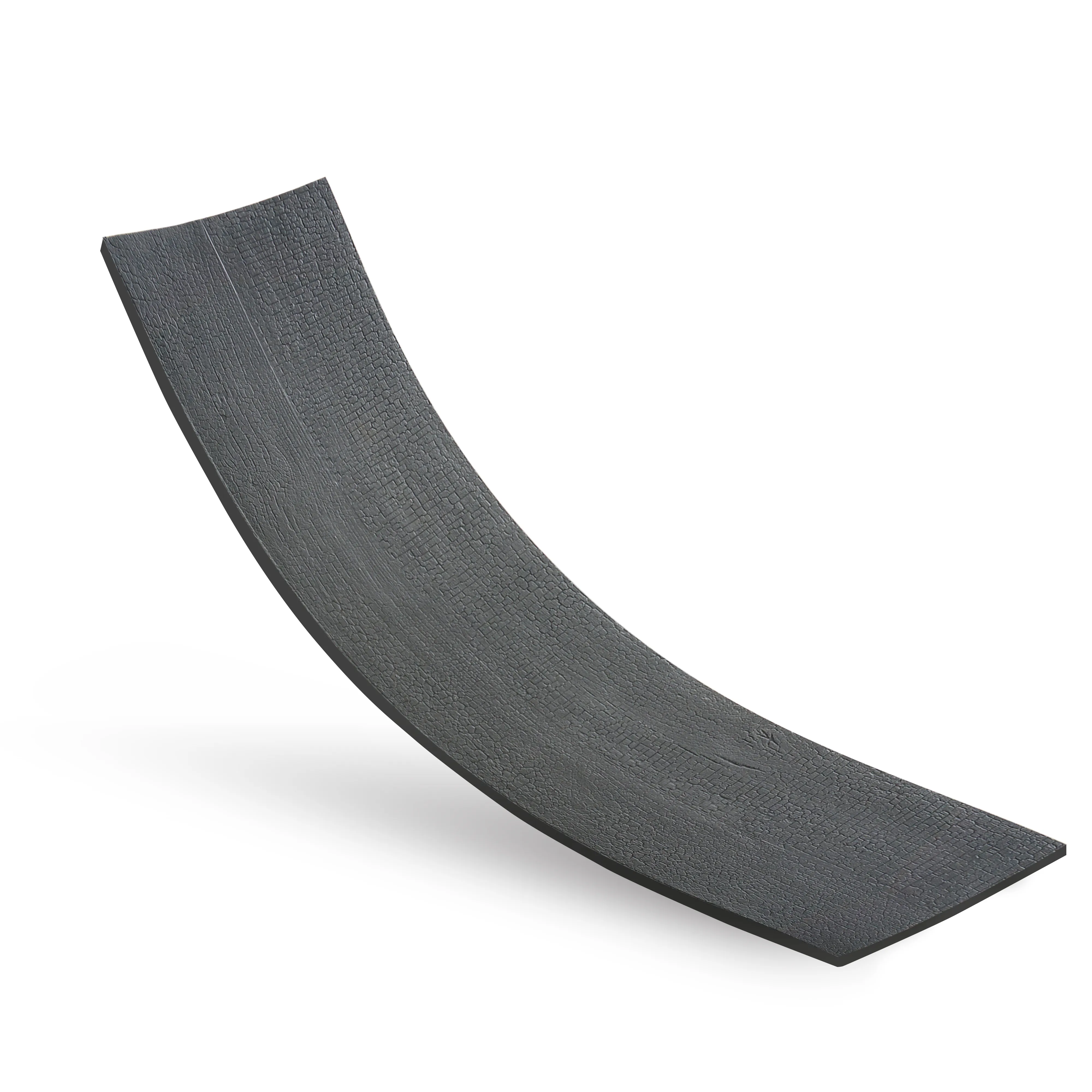
One of the biggest challenges in heritage renovation is working with fragile structures. Many old buildings have uneven walls, weak foundations, or load-bearing elements that can't handle heavy materials. Traditional stone cladding or solid wood panels can add hundreds of pounds to a wall, risking cracks or collapse. Charcoal burnt wood board, by contrast, weighs in at just 3-5 pounds per square foot—about a third the weight of solid wood. This makes it ideal for retrofitting onto aging structures. Installers can mount it using lightweight brackets or adhesive, minimizing damage to the original masonry or framing. For a 200-year-old cottage with a wobbly chimney, that's a lifesaver.
Charcoal burnt wood board isn't the only material in the heritage renovator's toolkit. Let's see how it stacks up against two popular alternatives: wood grain board (another wood-look composite) and rammed earth board (a modern take on traditional rammed earth, known for its earthy, textured appearance). The table below compares key factors like aesthetics, durability, and sustainability to help you see why charcoal burnt wood board often comes out on top for wood-focused projects.
| Material | Aesthetic Appeal (Heritage Fit) | Durability (Resistance to Weather/Pests) | Installation Ease (Suitability for Fragile Structures) | Sustainability Features |
|---|---|---|---|---|
| Charcoal Burnt Wood Board | ★★★★★ – Mimics aged, charred wood; deep, authentic texture; available in custom hues to match historic tones. | ★★★★☆ – Resists moisture, pests, and fading; 20-30 year warranty; composite core prevents warping. | ★★★★★ – Lightweight (3-5 lbs/sq ft); can be installed with minimal structural modification; adhesive or bracket options. | ★★★★☆ – Uses recycled wood fibers; low-waste manufacturing; energy-efficient production. |
| Wood Grain Board | ★★★★☆ – Realistic wood grain, but lacks the charred, weathered look of traditional burnt wood; better for "newer" heritage (e.g., 20th-century cabins). | ★★★★☆ – Similar durability to charcoal burnt wood board; resistant to moisture but less fire-resistant due to lack of char layer. | ★★★★☆ – Lightweight (4-6 lbs/sq ft); slightly heavier than charcoal burnt wood board but still suitable for most structures. | ★★★★☆ – Recycled content options; low-VOC finishes; but may use more virgin plastic in some formulations. |
| Rammed Earth Board | ★★★★☆ – Earthy, textured appearance; ideal for adobe or earthen heritage structures (e.g., Southwestern pueblos, Mediterranean villas). | ★★★☆☆ – Durable but porous; requires regular sealing to prevent moisture damage; prone to cracking in freeze-thaw climates. | ★★★☆☆ – Heavier (8-10 lbs/sq ft); may require structural reinforcement for older buildings. | ★★★★★ – Made from natural clay, sand, and straw; minimal embodied energy; fully biodegradable at end of life. |
As the table shows, charcoal burnt wood board excels in the areas that matter most for heritage renovation: authenticity, ease of installation, and long-term durability. But that doesn't mean it can't work alongside other materials. In fact, some of the most stunning heritage projects pair it with complementary options. For example, a 19th-century train station in France recently combined charcoal burnt wood board for the exterior cladding with mcm flexible stone for the trim—a lightweight, stone-look composite that added a touch of elegance without weighing down the structure. The result? A building that looks like it stepped out of a period photograph, but with the resilience to stand for another century.
In the English countryside, a 17th-century mill house sat abandoned for decades. Its wooden exterior was rotting, its roof caved in, and local preservationists feared it would soon collapse. The goal? Restore it as a bed-and-breakfast while keeping 80% of the original structure intact. The challenge? The mill's walls, made of hand-laid stone and wattle-and-daub, couldn't support heavy materials. Enter charcoal burnt wood board.
The architects chose the board for the gable ends and dormer exteriors, matching the color to the mill's original oak beams (now too fragile to reuse). The lightweight panels were installed using adhesive and hidden brackets, avoiding any drilling into the delicate stonework. Inside, they paired the burnt wood with wood grain board for the ceilings, creating a cohesive, warm feel. The result? A mill house that looks like it's been cared for over centuries, but with modern amenities (and a 21st-century resilience to the UK's rainy weather). Guests now rave about the "authentic charm," unaware that the exterior wood is actually a high-tech composite. As the lead architect put it: "We didn't want to build a replica—we wanted to give the mill a second life. Charcoal burnt wood board let us do that."
We've talked about the "feel" of charcoal burnt wood board, but let's dive into the nitty-gritty of why it works for heritage renovations. These practical benefits are often the deciding factor for architects and contractors.
Heritage buildings come in all shapes, sizes, and shades. A Tudor cottage might have dark, almost blackened wood beams, while a Victorian villa could feature lighter, honey-toned cladding. Charcoal burnt wood board isn't a one-size-fits-all product. Manufacturers offer a range of finishes, from deep charcoal to warm amber, and can even custom-match colors to samples taken from original woodwork. Want to replicate the look of 18th-century pine that's been bleached by the sun? Or the rich, reddish-brown of chestnut beams from a medieval barn? It's possible. This level of customization ensures the renovated building blends seamlessly with its historic neighbors.
Traditional wood requires constant upkeep—scraping off old paint, sanding down rough spots, re-staining every few years. For heritage buildings, this isn't just time-consuming; it can also damage the original structure (imagine pressure-washing a fragile wooden facade). Charcoal burnt wood board, by contrast, is virtually maintenance-free. A quick rinse with a hose once a year is usually enough to keep it looking fresh. No sanding, no staining, no painting. That's a huge relief for property owners who want to preserve history without spending weekends on upkeep.
Fire is one of the biggest threats to heritage buildings. Many historic structures lack modern fire codes, and their wooden elements can fuel fast-spreading blazes. Charcoal burnt wood board adds an extra layer of protection. The charred surface, combined with fire-retardant additives in the composite core, makes the boards highly fire-resistant (often Class A rated, the highest level for building materials). In the event of a small fire, the boards will char further but won't ignite, giving firefighters more time to contain the blaze. For a town hall or museum housing irreplaceable artifacts, that peace of mind is priceless.
Let's talk money. Heritage renovation isn't cheap, and budgets are often tight. At first glance, charcoal burnt wood board might seem pricier than traditional wood. But when you factor in long-term costs, it's actually more affordable. Traditional wood needs to be replaced every 10-15 years (sooner in harsh climates). Charcoal burnt wood board? It lasts 30+ years with minimal maintenance. Add in the savings on labor (lighter, faster installation) and upkeep (no staining or painting), and the total cost of ownership drops significantly. For nonprofits or local governments managing historic sites on a shoestring, this can make all the difference between a renovation that happens and one that gets put on hold.
We'd be remiss not to address a common concern: Does using a composite material like charcoal burnt wood board compromise a building's authenticity? It's a valid question. Heritage purists argue that only original materials should be used, even if they're less durable. But here's the thing: authenticity isn't just about materials—it's about intent . A building's value lies in its ability to tell a story, to connect us to the past. If using traditional wood means the building will decay and be lost forever, is that really "authentic"? Or is preserving the structure—even with modern materials—more important?
Most preservation boards and organizations now take a pragmatic view. Bodies like the National Trust (UK) or the National Park Service (US) allow the use of compatible modern materials if they help extend a building's life. Charcoal burnt wood board, with its ability to mimic historic wood so closely, often meets these compatibility standards. As one preservationist put it: "Our job isn't to freeze time—it's to ensure these buildings are around for future generations to appreciate. If a material helps us do that without sacrificing the building's character, we're all for it."
Plus, in many cases, the original materials are already gone. A 19th-century barn might have had its wood siding replaced three times over the years. Using charcoal burnt wood board isn't "faking" history—it's continuing the tradition of adaptation that's kept the barn standing for so long.
As technology advances, so too will the materials available for heritage renovation. Charcoal burnt wood board is just the beginning. We're already seeing innovations like 3D-printed trim that matches historic moldings, or mcm 3d printing series panels that can replicate intricate carvings without the cost of handcrafting. But even as new options emerge, charcoal burnt wood board has carved out a niche. Its blend of authenticity, durability, and sustainability makes it a timeless choice.
Looking ahead, we can expect to see more customization options—boards that mimic rare woods (like old-growth oak or chestnut) that are no longer available. We might also see integration with smart technology, like embedded sensors that monitor humidity or structural stress (all hidden within the composite core). And as demand grows, prices may drop, making the material accessible to smaller projects, like family homes or local landmarks.
Heritage buildings are more than just landmarks—they're the threads that weave our collective story together. Renovating them isn't just about fixing roofs or replacing walls; it's about honoring the people who built them, the communities that cherished them, and the lessons they can teach us. Charcoal burnt wood board, in its quiet way, helps us do that. It's a material that respects history while embracing innovation, that looks to the past while ensuring a future. Whether paired with rammed earth board for a rustic villa or mcm flexible stone for a grand town hall, it's proving that you don't have to choose between old and new. You can have both.
So the next time you walk past a renovated heritage building, take a closer look at the wood. Is it real? Or is it charcoal burnt wood board? Chances are, you won't be able to tell—and that's the point. In the end, the best materials for heritage renovation are the ones that let the building's story shine, without getting in the way. Charcoal burnt wood board does exactly that: it fades into the background, letting history take center stage.
Recommend Products












