
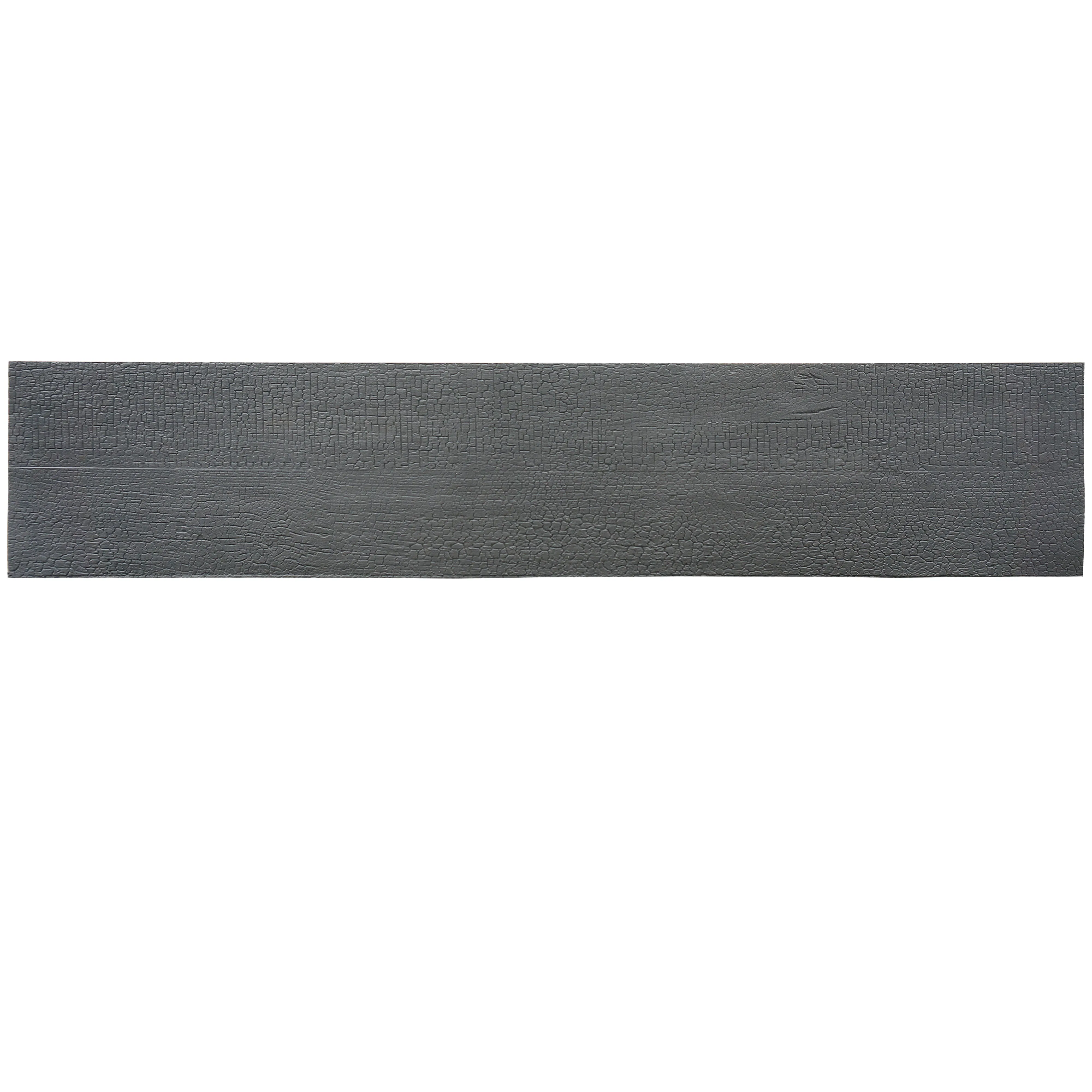
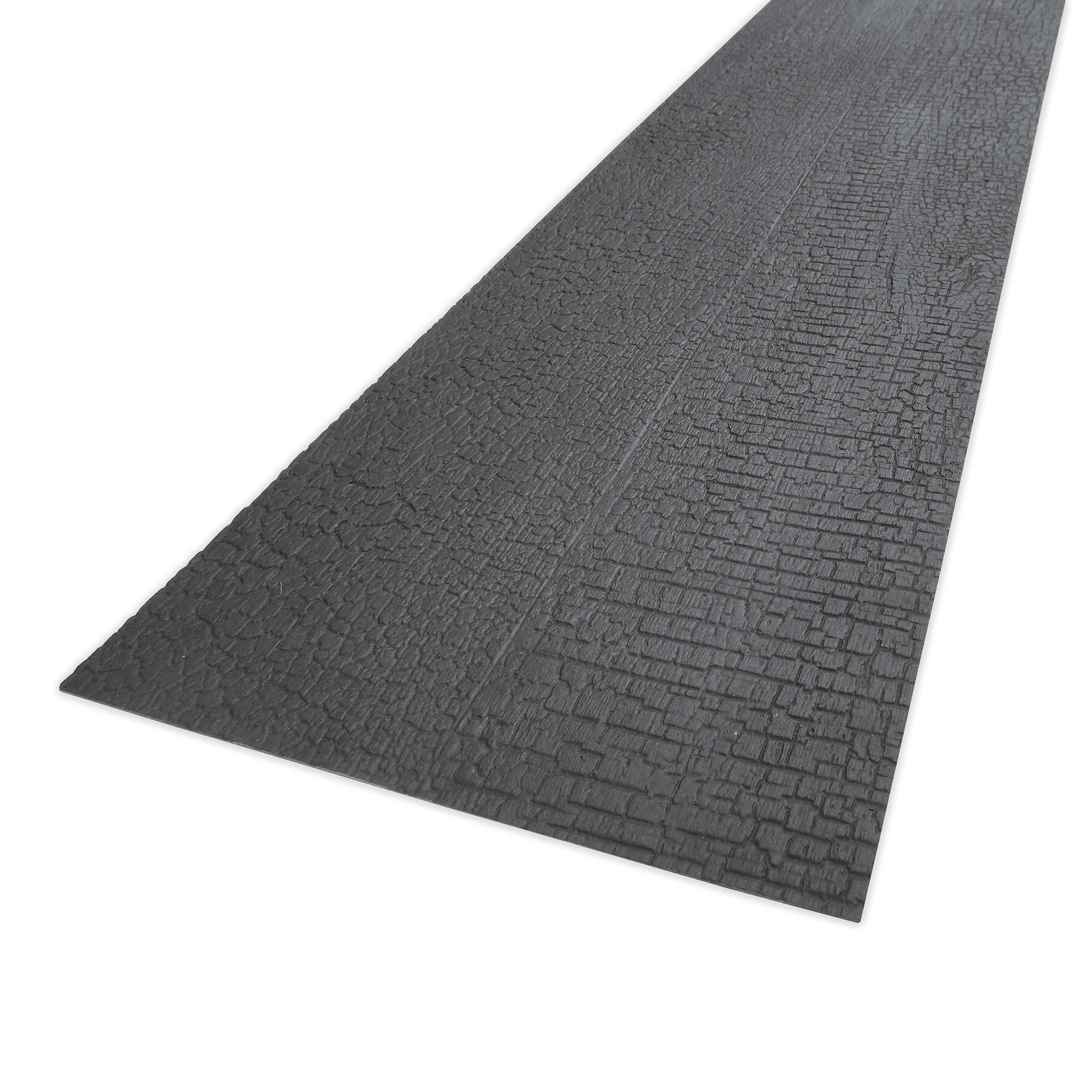
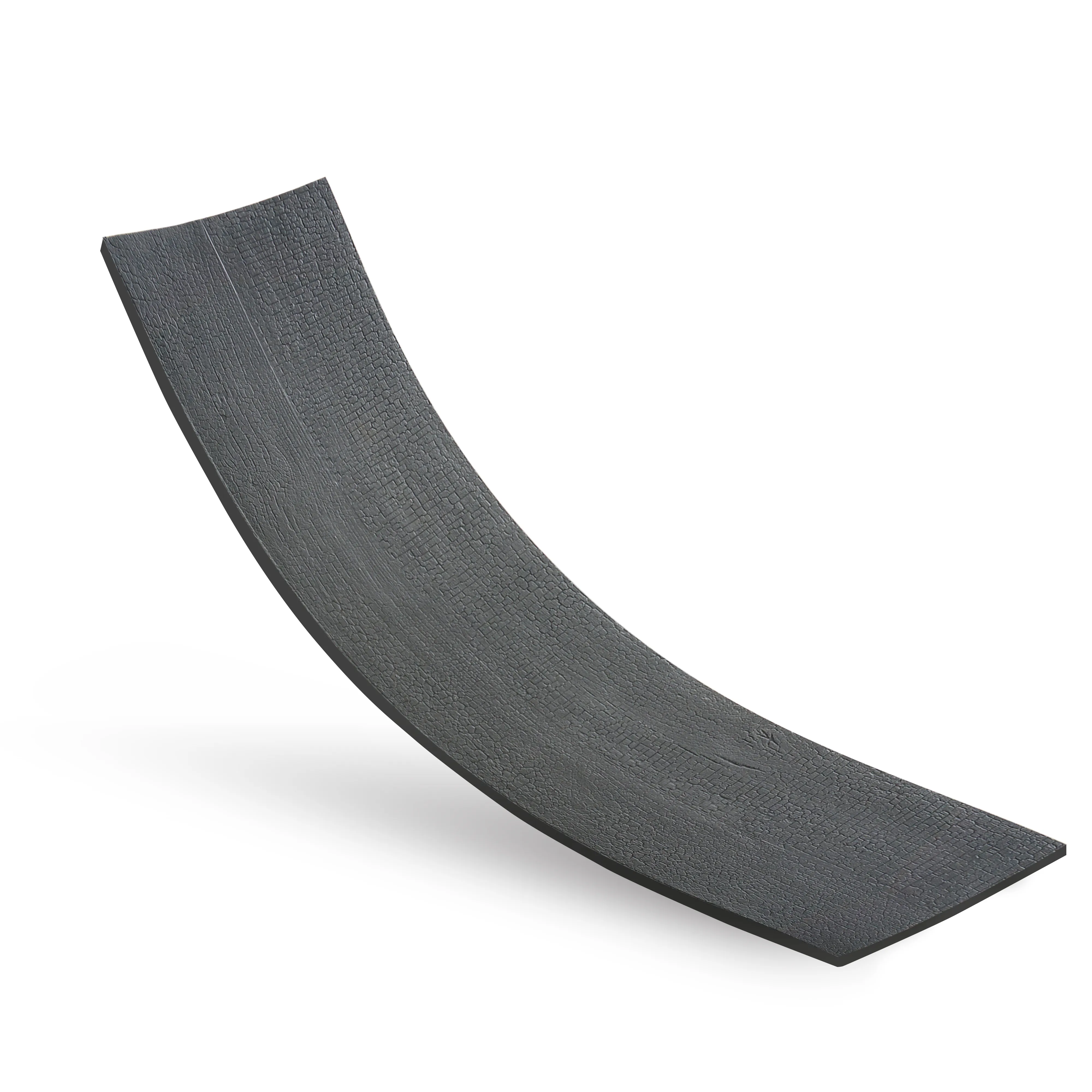
At its core, charcoal burnt wood board is a contemporary take on Shou Sugi Ban , a traditional Japanese technique dating back to the 18th century. Originally used to preserve cedar siding against rot and insects, the process involves charring wood surfaces with a torch, then brushing away loose ash to reveal a textured, carbon-rich layer. Today's iterations, however, have evolved far beyond their historical roots. Modern charcoal burnt wood boards often combine this charring method with modified composite materials—think layers of wood fiber, resins, and reinforcing agents—to enhance durability, flexibility, and resistance to the elements. The result? A material that retains the raw, organic beauty of charred wood but with the strength to withstand Saudi Arabia's extreme climate.
What makes charcoal burnt wood board so compelling for Saudi construction? Let's break it down: Fire resistance is perhaps its most critical trait. The charred outer layer acts as a natural barrier, slowing combustion and making it ideal for a region prone to high temperatures and occasional wildfires. Weather resilience is another standout feature. Unlike untreated wood, which warps or rots in humidity or rain, the carbonized surface repels moisture, while the composite core resists cracking under thermal expansion—essential in a country where daytime temperatures can soar above 45°C (113°F) and drop sharply at night. Low maintenance is a boon for developers: no need for regular painting or sealing; a simple wash with water keeps it looking fresh. And aesthetically, it's unmatched—each board bears unique charred patterns, from deep ebony streaks to honeyed undertones, adding warmth and character to both modern and traditional designs.
To appreciate its value, compare it to conventional wood cladding. Traditional timber, while beautiful, demands constant upkeep in Saudi Arabia's arid, sandy environment. Termites, wood-boring beetles, and UV radiation can degrade it within years. Charcoal burnt wood board, by contrast, is naturally pest-resistant (insects avoid charred surfaces) and UV-stable, thanks to its composite core. It's also lighter than solid wood, reducing structural load—a key advantage for high-rise buildings. For architects, this means more design freedom: use it for exterior facades, interior accent walls, or even furniture, without compromising on longevity.
To understand why charcoal burnt wood board is gaining traction, we must first grasp the broader trends driving Saudi Arabia's construction sector. Vision 2030 has set the stage for a "green revolution" in building practices, with a focus on sustainability, energy efficiency, and reducing carbon footprints. The kingdom's Green Building Code, launched in 2018, mandates that new projects meet strict environmental standards, from water conservation to low-emission materials. This shift aligns perfectly with charcoal burnt wood board's eco-friendly credentials: its production uses less energy than steel or concrete, and its longevity reduces the need for frequent replacements, cutting waste.
Culturally, there's a growing desire to blend modernity with heritage. Saudi architects are increasingly seeking materials that reflect the kingdom's Bedouin roots—textures that evoke desert landscapes, warm tones that mirror the sun's glow—while still embracing global design trends. Charcoal burnt wood board fits this bill: its charred, earthy finish resonates with the raw beauty of Saudi Arabia's deserts, while its clean lines appeal to contemporary sensibilities. This balance is evident in projects like Diriyah Gate, a regeneration initiative aiming to restore the historic heart of Riyadh, where traditional mud-brick structures are being complemented by modern materials with organic textures.
Durability, too, remains a top priority. Saudi Arabia's climate is unforgiving: intense sunlight, sandstorms, and occasional flash floods test even the toughest materials. Developers are no longer willing to sacrifice performance for aesthetics. This is where materials like MCM flexible stone —a lightweight, weather-resistant cladding option—and charcoal burnt wood board shine. Both are engineered to endure, making them staples in projects designed to last for decades, if not centuries.
In Saudi Arabia, charcoal burnt wood board is finding its way into a diverse range of projects, from luxury resorts to urban commercial buildings. Let's explore its most impactful uses:
Exterior walls are the first line of defense against Saudi Arabia's elements, and charcoal burnt wood board is proving to be a versatile choice here. In Jeddah, a new boutique hotel along the Corniche uses the material for its facade, where its dark, textured panels contrast strikingly with the city's bright skies and turquoise sea. The charred surface reflects sunlight, helping to keep interiors cool—a passive cooling strategy that reduces reliance on air conditioning. In Riyadh, a residential complex in the King Abdullah Financial District (KAFD) pairs it with fair-faced concrete , creating a bold industrial-chic aesthetic. The wood's warmth softens the concrete's starkness, resulting in a building that feels both modern and inviting.
Indoors, charcoal burnt wood board is transforming lobbies, restaurants, and homes. In NEOM's THE LINE—a 170-kilometer linear city—designers are using it for accent walls in luxury apartments, where its rich texture adds depth to minimalist interiors. The material's acoustic properties are an added bonus: its porous surface helps absorb sound, making it ideal for busy spaces like hotel lobbies or co-working areas. Even furniture is getting the charcoal burnt treatment: local craftsmen in Riyadh are creating custom dining tables and shelving units, leveraging the material's durability to withstand daily use while showcasing its unique grain patterns.
Saudi Arabia's tourism sector is booming, with projects like the Red Sea Project and Qiddiya aiming to attract millions of visitors annually. Here, charcoal burnt wood board is becoming a go-to for creating immersive, culturally resonant environments. A beachfront resort in Yanbu uses it for outdoor cabanas, where its resistance to saltwater and humidity ensures it remains pristine despite coastal exposure. Inside, the material lines the walls of a Bedouin-inspired restaurant, its charred texture evoking the warmth of desert campfires. For tourists, it's a visual storyteller—a material that feels both exotic and familiar, bridging global design trends with local heritage.
No material exists in isolation, and charcoal burnt wood board is often paired with other innovative products to create harmonious, high-performance designs. Below is a comparison of key materials shaping Saudi Arabia's construction market, highlighting how they complement one another:
| Material | Key Properties | Primary Applications | Advantages in Saudi Climate |
|---|---|---|---|
| Charcoal Burnt Wood Board | Fire-resistant, UV-stable, low maintenance, unique charred texture | Exterior cladding, interior accent walls, furniture | Withstands high temps; repels moisture and pests |
| MCM Flexible Stone | Lightweight, flexible, weather-resistant, large-format panels | Facade cladding, decorative walls, signage | Resists sandstorms; easy to install on curved surfaces |
| Fair-Faced Concrete | Durable, industrial aesthetic, thermal mass for temperature regulation | Structural elements, exterior walls, floors | Withstands extreme heat; requires minimal upkeep |
| Wood Grain Board | Authentic wood look, scratch-resistant, moisture-proof | Interior flooring, cabinetry, ceiling panels | Low expansion/contraction; ideal for dry climates |
| Rough Granite Stone (Medium Grey) | Hard, scratch-resistant, heat-resistant, natural gray texture | Outdoor paving, countertops, exterior accents | Resists sand erosion; stays cool under direct sunlight |
Take, for example, a recent project in Al Ula—a cultural heritage site being developed into a tourism hub. The visitor center combines charcoal burnt wood board for its roof overhangs, rough granite stone (medium grey) for the patio flooring, and MCM flexible stone for the main facade. The result is a structure that blends seamlessly with the desert landscape: the wood's warmth echoes the sand, the granite's gray tones mirror the surrounding mountains, and the MCM stone's flexibility allows for curved walls that mimic the region's natural rock formations. Together, these materials create a space that is both functional and deeply connected to its environment.
While charcoal burnt wood board's future in Saudi Arabia is bright, it faces hurdles that could slow its adoption. Cost remains a primary concern: compared to conventional materials like vinyl siding or standard wood, charcoal burnt wood board is pricier, with prices ranging from SAR 120 to SAR 200 per square meter (depending on thickness and finish). For budget-conscious developers, this can be a barrier, especially in large-scale projects. Awareness is another issue: many local contractors are unfamiliar with the material, leading to skepticism about its performance or installation requirements. Supply chain logistics also pose a challenge—most charcoal burnt wood boards are imported from Europe or Asia, leading to longer lead times and higher shipping costs.
Yet, these challenges are outweighed by opportunities. The Saudi government's push for sustainability is a game-changer: projects adhering to green building standards often qualify for incentives, and charcoal burnt wood board's eco-friendly credentials (low embodied carbon, long lifespan) make it an attractive choice. There's also growing demand for "experiential" design—spaces that tell a story—and this material's unique aesthetic helps developers differentiate their projects in a crowded market. Perhaps most promising is the potential for local manufacturing: with Vision 2030's focus on industrialization, there's an opportunity for international suppliers to partner with Saudi firms to produce charcoal burnt wood boards locally, reducing costs and supporting the kingdom's economic diversification goals.
Looking ahead, charcoal burnt wood board is poised to become a staple in Saudi Arabia's construction toolkit. As mega-projects like NEOM and the Red Sea Project accelerate, and as smaller developers embrace sustainable design, demand will only grow. Innovations in production—such as integrating 3D printing to create custom shapes or combining it with insulating cores for enhanced energy efficiency—could further expand its applications. There's also potential for color customization: while traditional charred wood leans toward blacks and browns, manufacturers are experimenting with tinted resins to create warmer hues, aligning with Saudi Arabia's preference for golds and terracottas in architectural design.
Moreover, as the kingdom continues to open up to tourism, there will be a greater need for materials that balance luxury with durability. Charcoal burnt wood board, with its ability to evoke both rustic charm and modern elegance, is perfectly positioned to meet this need. In the end, its success will hinge not just on its technical merits, but on its ability to tell a story—a story of tradition reimagined, of sustainability in action, and of a Saudi Arabia building a future that honors its past while embracing innovation. For architects, developers, and homeowners alike, charcoal burnt wood board isn't just a material—it's a statement.
Recommend Products












