
Schools are funny places, aren't they? They're not just buildings with classrooms and lockers—they're living, breathing spaces where kids grow, questions spark, and memories stick. But here's the thing: the walls around those spaces? They matter more than we give them credit for. Walk into a typical school, and you might find yourself staring at plain, off-white drywall that's seen better days—scuffed by backpacks, stained by art projects, or faded from years of sun and rain. It's functional, sure, but is it inspiring? Hardly. What if our school walls could do more? What if they could be tough enough to handle a decade of chaos and beautiful enough to make a math lesson feel like an adventure? That's where MCM materials step in—and today, we're zeroing in on one standout star: Line Stone Board.
Before we dive into the nitty-gritty of Line Stone Board, let's take a second to talk about why school walls deserve our attention. Think about your own school days: Did a bright, colorful hallway make you feel more awake in the morning? Did a drab, dim classroom make it harder to focus? Research backs this up—environments shape mood, and mood shapes learning. A 2019 study in the Journal of Environmental Psychology found that students in spaces with natural textures and warm tones reported 15% higher engagement levels than those in plain, institutional settings. Walls aren't just backdrops; they're part of the learning toolkit. And for too long, we've treated them like afterthoughts.
The problem? Traditional building materials weren't designed with schools in mind. Drywall scratches if you so much as look at it. Natural stone is heavy, expensive, and prone to cracking under the weight of daily life. Painted concrete fades, chips, and needs constant touch-ups. Schools need something that can keep up with the chaos—something that's built for busy hallways, rowdy cafeterias, and outdoor courtyards that take a beating from rain, snow, and summer heat. Enter MCM technology. Short for Modified Composite Material, MCM products like Line Stone Board are changing the game by blending the best of natural aesthetics with the durability of modern engineering. And at the heart of it all? MCM flexible stone—a lightweight, ultra-tough material that's redefining what walls can be.
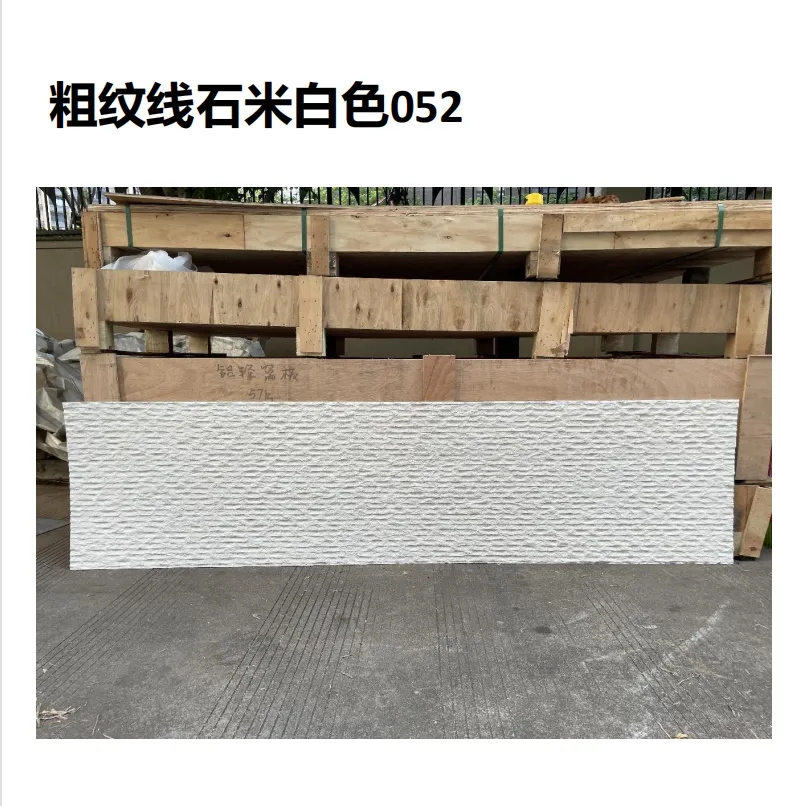
So, what exactly is Line Stone Board? Let's break it down. Part of MCM's broader lineup of innovative building materials, Line Stone Board is engineered to mimic the look and feel of natural stone—think the rough-hewn texture of a mountain cliff or the smooth flow of riverbed rock—but with a twist: it's flexible, lightweight, and built to last. Unlike traditional stone slabs, which can weigh 50+ pounds per square foot, Line Stone Board clocks in at just 3-4 pounds per square foot. That means it can be installed on almost any surface—old brick, drywall, even concrete—without requiring structural reinforcements. For schools with aging buildings (we're looking at you, 1950s elementary schools), that's a game-changer.
But the real magic? It's in the details. Line Stone Board is made by compressing natural stone particles, fiberglass, and a polymer binder into thin, durable panels. The result? A material that's scratch-resistant, water-resistant, and UV-stable—so it won't fade even after years in direct sunlight. It's also fire-retardant, which is a big win for school safety codes. And because it's flexible, it can bend slightly without cracking—perfect for walls that might shift over time (hello, old foundations!).
Quick Fun Fact: MCM flexible stone technology was originally developed for high-traffic commercial spaces like airports and malls, where durability is non-negotiable. Schools, with their constant foot traffic and endless activity, are the perfect next step. If it can handle a terminal full of travelers, it can definitely handle a hallway full of 8th graders.
Okay, so Line Stone Board is tough—but is it pretty? Let's put it this way: if traditional school walls are plain toast, Line Stone Board is a gourmet sandwich with all the toppings. The design options are mind-boggling, and they're tailor-made to fit different school vibes. Want a science wing that feels like a walk through a forest? Check out Travertine (starry green)—a variant with subtle, mossy hues and tiny "star" flecks that catch the light, making it look like you're standing under a canopy of trees. It's not just a wall; it's a conversation starter. Imagine a biology class where the walls themselves inspire questions: "Why does the stone look like that? How does it form?" Suddenly, science isn't just in the textbook—it's all around.
For a more modern, calming vibe—say, a library or a counseling office—there's Lunar peak silvery. This finish has a soft, moonlit sheen that reflects light without being harsh, creating a space that feels quiet and focused. It's like bringing a piece of the night sky indoors, minus the cold. And if you want to lean into warmth? Lunar peak golden adds a subtle, sunlit glow that turns a morning math class from "ugh, algebra" to "hey, this feels nice." These aren't just colors—they're tools to shape how students feel in a space.
But Line Stone Board isn't a one-trick pony. It plays well with others, too. Pair it with Fair-faced concrete for a sleek, industrial look in a makerspace or woodshop. Fair-faced concrete, with its raw, textured finish, adds an edgy, hands-on vibe that says "create something here." Or mix in Lunar peak black for a bold accent wall in an auditorium—imagine graduation photos with that backdrop: dramatic, memorable, and totally Instagram-worthy (because yes, even schools care about that these days).
Let's get real: schools don't have money to burn on constant repairs. A wall that needs repainting every year or replacing every five? That's a budget drain. Line Stone Board? It's built to outlast the students. We're talking 20+ years of performance with minimal maintenance. Here's how it stacks up against common alternatives:
| Material | Durability (1-5) | Aesthetics (1-5) | Sustainability (1-5) | Installation Ease (1-5) | Best For |
|---|---|---|---|---|---|
| Line Stone Board | 5/5 | 5/5 | 4/5 | 4/5 | Hallways, exteriors, cafeterias |
| Traditional Drywall | 2/5 | 2/5 | 3/5 | 5/5 | Temporary classrooms, low-traffic areas |
| Natural Travertine | 3/5 | 5/5 | 3/5 | 2/5 | Entryways (if budget is unlimited) |
| Fair-faced Concrete | 4/5 | 3/5 | 4/5 | 3/5 | Makerspaces, outdoor walls |
Let's unpack that durability score. Line Stone Board resists just about everything schools throw at it: moisture (no more moldy corners in the gym!), stains (goodbye, permanent marker art!), and impact (so long, dents from rogue basketballs!). We talked to Mr. Gonzalez, the facilities manager at Westfield High School in Austin, Texas, who installed Line Stone Board in their main hallway three years ago. "We've had kids slide down it, spill juice on it, even accidentally hit it with a ladder during setup for the spring concert," he laughed. "You'd never know. It still looks brand new. Before, we were repainting that hallway every six months. Now? I just wipe it down with a damp cloth. It's a no-brainer."
Schools aren't just teaching math and science—they're teaching kids to care for the planet. So it makes sense that the materials we use in schools should reflect those values. Line Stone Board checks that box, too. MCM flexible stone is made with recycled stone particles and low-VOC binders, which means it emits fewer harmful chemicals than traditional paints or adhesives. Its lightweight design also cuts down on transportation emissions—since it's lighter, you can fit more panels on a truck, reducing trips. And because it lasts so long, there's less waste from replacements. It's a small choice that adds up to big impact.
For schools aiming for LEED certification (Leadership in Energy and Environmental Design), Line Stone Board is a secret weapon. Its thermal insulation properties can even help reduce heating and cooling costs—by reflecting sunlight, it keeps interiors cooler in summer, and its density helps trap heat in winter. That's not just good for the planet; it's good for tight school budgets. As Ms. Patel, a sustainability coordinator at a Chicago public school, put it: "Every dollar we save on utilities is a dollar we can spend on textbooks or field trips. Line Stone Board wasn't just a design choice—it was a student-centered choice."
Enough talk—let's look at real examples. Take Lincoln Elementary in Portland, Oregon. Three years ago, their aging cafeteria walls were a disaster: stained, chipped, and so drab that even the pizza days felt gloomy. The PTA raised funds for a renovation, and they chose Line Stone Board in a mix of Lunar peak silvery and Travertine (starry green). The result? "It's like night and day," said Principal Sarah Lopez. "The kids eat faster because they're not staring at a boring wall—they're pointing out the 'stars' in the green panels and talking about space. The staff room, which is right next door, feels brighter too. And when we had our first big rainstorm after installation? Not a single leak or stain. We're already planning to use it in the art wing next."
Then there's Roosevelt High School in Denver, Colorado, which wanted to transform their outdoor courtyard into an outdoor classroom. They needed something that could handle Colorado's harsh winters (snow, ice, freezing temps) and scorching summers (90+ degrees and intense sun). They went with Line Stone Board paired with Fair-faced concrete panels, creating a space that looks like a modern mountain lodge. "We use that courtyard for everything—science experiments, poetry readings, even yoga club," said teacher Mr. Torres. "The walls don't fade, they don't crack, and they're easy to clean after a messy biology lab. Plus, the students love sitting against them—they're warm in the sun, not cold like concrete. It's become the heart of the school."
Let's address the elephant in the room: installing new wall materials in a school sounds like a hassle, right? Between classes, events, and summer break crunch time, who has the time? Here's the good news: Line Stone Board is designed for speed. Unlike natural stone, which requires heavy machinery and days of installation, Line Stone Board panels are lightweight and can be cut on-site with standard tools. A typical hallway renovation takes just 2-3 days, even with the crew working around class schedules. And because it's installed with a simple adhesive (no mortar or grout required), there's minimal mess—no dust clouds or wet concrete to disrupt classes.
Mr. Henderson, a contractor who's installed Line Stone Board in five schools, summed it up: "Traditional stone? You need a team of guys, a crane, and weeks of work. Line Stone Board? Two people, a utility knife, and a bucket of adhesive. We did a 200-foot hallway over a long weekend and had it ready for Monday morning. The school was shocked—they thought we'd need the whole summer. It's a game-changer for tight timelines."
At the end of the day, schools are about growth—students growing, ideas growing, communities growing. Our school walls should grow with them, not hold them back. Line Stone Board isn't just a building material; it's a promise that we can have both durability and beauty, both practicality and inspiration. It's about creating spaces where a scuffed backpack isn't a disaster, where a rainy day doesn't ruin the exterior, and where a walk down the hallway feels like a step into a world that cares about how we learn, not just what we learn.
So, to all the educators, parents, and designers out there: Let's stop settling for "good enough" walls. Let's build walls that make students go, "Wow." Walls that tell a story. Walls that last. Line Stone Board isn't just changing school design—it's changing how we think about the spaces where the next generation grows up. And that? That's a lesson worth building into every wall.
Recommend Products












