
Walk down any historic street or modern city block, and you'll notice something profound: buildings don't just exist —they breathe through their materials. Stone, in particular, is a silent storyteller, carrying the marks of time, weather, and human hands. Among these architectural narrators, rock cut dolomitic stone stands out—not just for its rugged, earthy beauty, but for its quiet resilience against one of nature's harshest critics: chemical wear and tear. Today, let's pull back the curtain on this unsung hero of construction, exploring how it stands up to acid rain, urban pollution, and why it's become a go-to for designers who refuse to choose between durability and aesthetics.
First things first: what is rock cut dolomitic stone, anyway? Picture a material that feels both ancient and modern—rough-hewn surfaces that hint at mountain quarries, yet with a subtle uniformity that fits sleek contemporary designs. It's born from dolomite, a mineral rich in calcium magnesium carbonate, which forms deep within the earth over millennia. When quarried and cut, it retains the raw, organic texture of natural rock, making each slab feel like a piece of the planet itself.
But here's where it gets interesting: unlike softer stones that crumble at the first sign of trouble, dolomitic stone brings a built-in defense mechanism. Its composition—calcium magnesium carbonate (CaMg(CO₃)₂)—is inherently more stable than pure calcium carbonate (found in limestone, for example). This small chemical difference is like swapping a flimsy umbrella for a stormproof jacket when it comes to fending off acidic threats. And in a world where acid rain and city smog are everyday realities, that stability isn't just a bonus—it's a necessity.
Let's talk about the villains in this story. Acid rain isn't just "rain that's a little sour"—it's a cocktail of sulfuric and nitric acids, formed when industrial emissions (think power plants, car exhaust) mix with water vapor in the atmosphere. When it falls, it's less like precipitation and more like a slow, invisible corrosive agent. For stone buildings, this means etching: tiny pits and grooves that dull surfaces, discoloration that fades vibrant hues to muted shadows, and over time, structural weakening that turns sturdy walls into fragile memories.
Then there's urban pollution: the silent accomplice. City air is thick with more than just exhaust fumes—there's sulfur dioxide, nitrogen oxides, even particulate matter from construction and traffic. These chemicals don't just float; they settle on stone surfaces, reacting with moisture to form acids right on the material itself. It's like leaving a metal tool out in the rain: over time, the slow burn of corrosion takes its toll.
So, how does rock cut dolomitic stone hold up against this one-two punch? Let's break it down.
To understand dolomitic stone's resilience, let's get a little science-y (but don't worry—we'll keep it conversational). When acid rain hits a stone surface, a chemical reaction occurs: the acid (H⁺ ions) attacks the carbonate in the stone, breaking it down into carbon dioxide, water, and dissolved minerals. For limestone (calcium carbonate), this reaction is fast and furious—like sugar dissolving in hot tea. But dolomitic stone? Its magnesium content throws a wrench in the process.
Magnesium is less reactive than calcium, so when acid tries to break down CaMg(CO₃)₂, the reaction slows way down. Instead of dissolving quickly, the stone forms a thin, protective layer of magnesium-rich compounds on its surface. Think of it as the stone's own immune system—fighting off the acid without sacrificing its structure. This is why, after years of exposure, rock cut dolomitic stone might show some staining, but it rarely develops the deep, pitted erosion you see in more vulnerable stones.
To put this in perspective, let's compare it to two close relatives: dolomitic travertine (dark grey) and dolomitic travertine (claybank). Both are dolomite-based, but their textures and densities differ. Travertine, with its porous, honeycomb-like structure, can trap moisture and pollutants, making it slightly more susceptible to long-term damage. Rock cut dolomitic stone, with its denser, more compact cut, leaves fewer nooks for chemicals to hide—giving it an edge in high-pollution areas.
| Material | Chemical Resistance (1-5, 5=Highest) | Porosity (%) | Typical Reaction to Acid Rain | Best For |
|---|---|---|---|---|
| Rock Cut Dolomitic Stone | 4.5 | 8-12% | Minor surface staining; minimal pitting | Urban facades, outdoor walkways, high-pollution areas |
| Dolomitic Travertine (Dark Grey) | 4.0 | 15-20% | Light etching in porous areas; possible discoloration | Indoor walls, low-traffic outdoor spaces |
| Dolomitic Travertine (Claybank) | 4.0 | 14-18% | Similar to dark grey; claybank hue may fade slightly faster | Accent walls, decorative panels |
| Standard Limestone (Beige) | 2.5 | 20-25% | Visible pitting, significant color fading over time | Low-exposure indoor use, heritage restoration with maintenance |
Numbers and charts are great, but nothing tells a story like real life. Let's take a trip to a bustling city—say, a neighborhood with heavy traffic, industrial zones nearby, and a climate prone to acid rain. Walk past a building clad in rock cut dolomitic stone, and you'll notice something remarkable: even after a decade, the walls still look sharp. The dark grey and claybank tones haven't turned into a dull, uniform blob; the texture remains distinct, with nary a pit in sight.
Compare that to a neighboring structure wrapped in standard limestone. After the same amount of time, you might see uneven discoloration, small craters where acid ate away at the surface, and even areas where the stone has begun to flake. It's not that limestone is a "bad" material—it just wasn't built for the modern urban battlefield. Rock cut dolomitic stone, on the other hand, thrives there.
Take, for example, a recent project in a European city known for its rainy, polluted climate. The architects chose rock cut dolomitic stone for the exterior cladding, pairing it with fair-faced concrete for a raw, industrial aesthetic. Five years later, the stone still matches the renderings—no touch-ups, no major repairs. The concrete, while durable, shows more staining, but the dolomitic stone? It's like it barely noticed the years of acid rain and exhaust fumes.
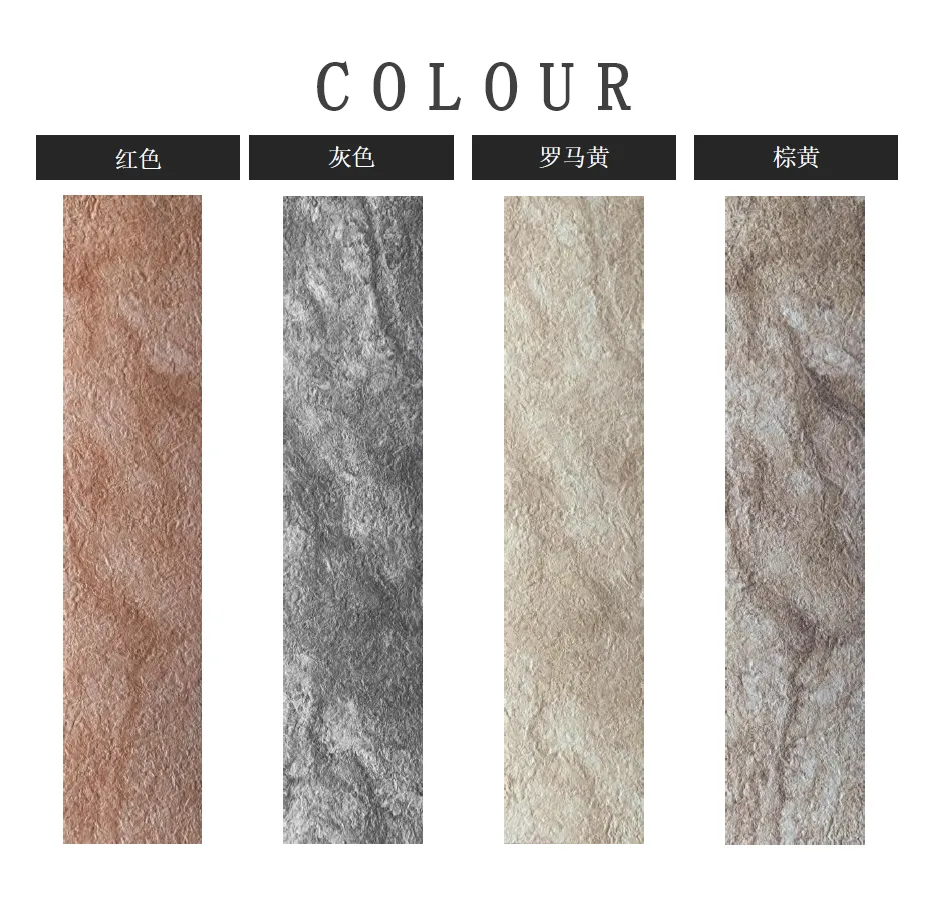
Let's be honest: durability matters, but so does beauty. What good is a tough stone if it looks like a cinder block? Rock cut dolomitic stone nails this balance. Its natural variations—swirls of dark grey, warm claybank, and even hints of gold—add depth to any space. The rock-cut texture plays with light, creating shadows that shift from morning to evening, making buildings feel alive. And because it resists chemical damage, that beauty doesn't fade. It evolves, developing a subtle patina that only enhances its character—like a well-loved leather jacket, growing more interesting with time.
Designers love this versatility. Whether they're going for a rustic, mountain-cabin vibe or a sleek, minimalist office tower, rock cut dolomitic stone fits. Pair it with wood grain board for warmth, or with foamed aluminium alloy board (vintage silver) for an industrial edge—the possibilities are endless. And because it's low-maintenance (more on that later), it's a favorite for busy commercial spaces and homeowners who want to enjoy their walls without constant upkeep.
Even the toughest materials need a little TLC. While rock cut dolomitic stone is resilient, a few simple steps will keep it looking its best for decades:
In a world where we're always chasing the next "new" material, rock cut dolomitic stone is a reminder that sometimes the best solutions are as old as the earth itself. It's a material that doesn't just survive the elements—it thrives in them. Acid rain? City smog? Bring it on. This stone has seen worse over its millions of years of existence, and it's ready to stand guard over our buildings, our stories, and our cities for millions more.
So the next time you pass a building with that rough, earthy exterior, take a closer look. Chances are, it's rock cut dolomitic stone—quietly, steadily, proving that when it comes to building for the future, some of the strongest foundations are rooted in the past.
Recommend Products












