
If you've ever stepped outside in Riyadh during July, you know the drill: the air hits you like an open oven, the sun blazes so fiercely it feels like it might melt your sunglasses, and even the asphalt seems to sigh under the heat. Now imagine that same intensity day in, day out—for months. Add to that sudden sandstorms that blast gritty particles at 60 km/h, humidity spikes along the Red Sea coast, and bone-dry winds that suck moisture from everything they touch. This is the reality of building in Saudi Arabia, where the climate doesn't just test human endurance; it wages war on construction materials.
For architects, developers, and homeowners here, choosing the right exterior cladding isn't just about aesthetics. It's about survival. A material that cracks in 50°C heat, fades under relentless UV rays, or peels off after a sandstorm isn't just a costly mistake—it's a safety hazard. That's why more and more professionals are turning to a rising star in the building world: starmoon stone . But what makes it stand out in a market flooded with options like fair-faced concrete, lunar peak silvery panels, and even traditional travertine? Let's dive in.
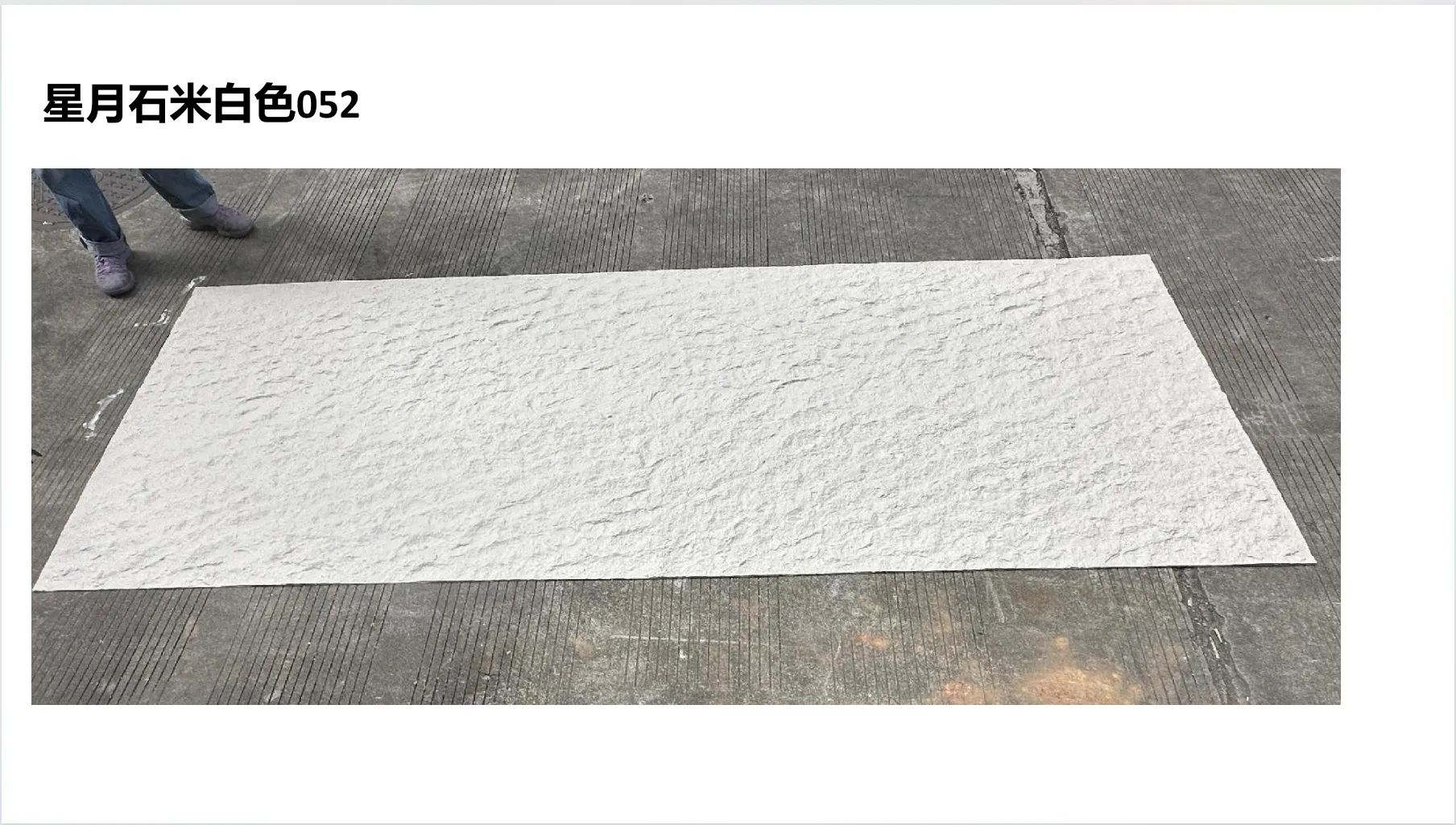
First things first: What is starmoon stone? At its core, it's a premium cladding material designed specifically for harsh environments. Think of it as the desert warrior of building materials—tough, resilient, and surprisingly good-looking. Part of the broader MCM flexible stone family (Modified Composite Material), starmoon stone blends natural minerals with advanced polymers to create a product that's both lightweight and incredibly durable. But what really sets it apart is its ability to laugh in the face of Saudi Arabia's weather extremes.
Let's break down the specs that matter most here. In a country where summer temperatures regularly climb above 45°C (and sometimes hit 52°C in places like Dammam), heat resistance is non-negotiable. Starmoon stone's composition includes heat-reflective pigments that bounce back a significant portion of the sun's rays, keeping buildings cooler on the inside and reducing AC costs. Unlike traditional materials like fair-faced concrete, which absorbs heat like a sponge and radiates it back all night, starmoon stone stays relatively cool to the touch—even at noon.
Then there's flexibility. Saudi Arabia's deserts are famous for their temperature swings: scorching days can plummet to 15°C at night, especially in winter. This constant expansion and contraction is brutal for rigid materials, which crack or warp over time. Starmoon stone, though, has a slight flex to it—thanks to the MCM technology—that allows it to move with temperature changes without breaking. It's like the difference between a stiff cotton shirt and a stretchy performance fabric; one tears under stress, the other adapts.
To really understand why starmoon stone is gaining traction, let's compare it to some other popular options in Saudi Arabia. We'll focus on four key factors: heat resistance, durability in sandstorms, UV fade resistance, and maintenance needs. Here's how they measure up:
| Material | Heat Resistance (Performance in 50°C+) | Sandstorm Durability (Abrasion Resistance) | UV Fade Resistance (5-Year Test) | Annual Maintenance Cost (Estimated) |
|---|---|---|---|---|
| Starmoon Stone | Excellent (Reflects 65% of solar heat) | High (Polymer coating resists scratching) | 95% color retention | Low (~500 SAR/100m²) |
| Fair-Faced Concrete | Poor (Absorbs 80% of solar heat; prone to cracking) | Medium (Surface erodes over time) | 70% color retention | Medium (~1,200 SAR/100m²) |
| Lunar Peak Silvery | Good (Reflects 55% of solar heat) | Medium (Metallic finish scratches easily) | 85% color retention | Medium-High (~1,800 SAR/100m²) |
| Travertine (Starry Blue) | Poor (Absorbs 75% of solar heat; porous surface traps heat) | Low (Porous stone etches with sand impact) | 60% color retention | High (~2,500 SAR/100m²) |
The numbers speak for themselves. Starmoon stone outperforms traditional options in nearly every category that matters for Saudi Arabia. Take sandstorms, for example: in Jeddah, where seasonal khamsin winds carry sand and dust for days, materials like travertine (starry blue) quickly lose their luster as the abrasive particles wear down their porous surface. Starmoon stone, with its smooth, polymer-sealed finish, shrugs off those particles like a raincoat in a drizzle. And when it comes to maintenance? Unlike fair-faced concrete, which needs regular sealing to prevent water damage (yes, even in the desert—occasional rains cause issues), starmoon stone just needs a yearly wash with mild soap and water to stay looking new.
One common concern we hear is about aesthetics. "Sure, it's durable, but does it look good?" Let's put that to rest. Starmoon stone comes in a range of finishes that mimic natural materials—think the earthy texture of travertine, the sleekness of marble, or even the rustic charm of weathered wood. Our favorite? The starry blue variant, which features tiny iridescent flecks that catch the light like desert stars at night. It's a far cry from the dull, uniform look of fair-faced concrete or the cold sheen of lunar peak silvery panels. In short, you don't have to sacrifice beauty for brawn.
Let's get practical. Where does starmoon stone work best in Saudi Arabia? The answer is: just about anywhere. But here are three scenarios where it truly excels:
Riyadh's villa owners know that keeping interiors cool in summer is a constant battle. Starmoon stone's heat-reflective properties can reduce indoor temperatures by 3-5°C compared to traditional cladding, which means smaller AC bills and a more comfortable home. Plus, its resistance to fading ensures that the villa's exterior stays vibrant even after years of sun exposure—no more repainting every 3-4 years.
Jeddah's coastal location brings humidity into the mix, which can mold growth on porous materials like travertine. Starmoon stone's non-porous surface resists mold and mildew, making it ideal for shopping malls, hotels, and office buildings where cleanliness and appearance are top priorities. We recently worked with a developer on a new waterfront complex in Obhur; they chose the starry blue finish, and visitors often comment on how the panels "sparkle like the Red Sea" on sunny days.
Al-Ula's desert climate is the ultimate test: extreme heat, swirling sand, and intense UV rays. Resorts here need materials that can handle the elements while blending into the natural landscape. Starmoon stone's earthy color options (we recommend the sandy beige or desert rose variants) complement the desert surroundings, while its durability ensures that the resort's exterior remains intact even during seasonal sandstorms. One luxury resort there reported zero maintenance issues with their starmoon stone cladding after two years—unheard of with traditional stone.
We've mentioned MCM flexible stone a few times, but what exactly is it, and how does it make starmoon stone better? MCM stands for Modified Composite Material, a technology developed to address the flaws of traditional cladding. Unlike solid stone or concrete, which are heavy and rigid, MCM panels are made by bonding a thin layer of natural minerals (like limestone or marble) to a lightweight, flexible backing. This makes them 70% lighter than natural stone, which reduces structural stress on buildings—a big plus in earthquake-prone areas like Jeddah.
But the real magic is in the flexibility. MCM panels can bend up to 30 degrees without breaking, which is crucial in Saudi Arabia's temperature swings. Imagine a wall made of rigid stone: when the sun heats it up, it expands, and when the temperature drops at night, it contracts. Over time, this cycle causes cracks. MCM panels, including starmoon stone, move with these changes, preventing damage. It's like having a cladding that "breathes" with the building.
Another MCM benefit is installation speed. Traditional stone requires heavy machinery and skilled masons, which can drag out construction timelines. Starmoon stone panels are lightweight and easy to install—contractors report covering 200m² in a day with a small crew, compared to 50m² with natural stone. This saves time and labor costs, which is a huge win for developers working on tight deadlines.
At the end of the day, the best building material depends on your specific needs. But if any of these apply to your project, starmoon stone is worth serious consideration:
We recently spoke with a homeowner in Dhahran who switched to starmoon stone after his fair-faced concrete villa developed cracks within two years. "The difference is night and day," he told us. "My AC runs less, the exterior still looks brand-new, and I don't have to worry every time a sandstorm hits." That's the peace of mind starmoon stone offers—something priceless in a climate as unforgiving as Saudi Arabia's.
Saudi Arabia's building boom shows no signs of slowing down, with mega-projects like NEOM and the Red Sea Development pushing the boundaries of architecture. But even smaller projects—villas, offices, schools—deserve materials that can stand the test of time. Starmoon stone isn't just a trend; it's a solution to the unique challenges of building in one of the world's harshest climates.
So, if you're planning a project here, ask yourself: Do I want a cladding that needs constant repairs, fades in the sun, and struggles with the heat? Or do I want one that adapts, endures, and keeps looking great year after year? For us, the answer is clear. Starmoon stone isn't just a material—it's an investment in a building that can thrive, no matter what the Saudi weather throws at it.
Here's to building smarter, stronger, and more beautifully—even under the desert sun.
Recommend Products












