
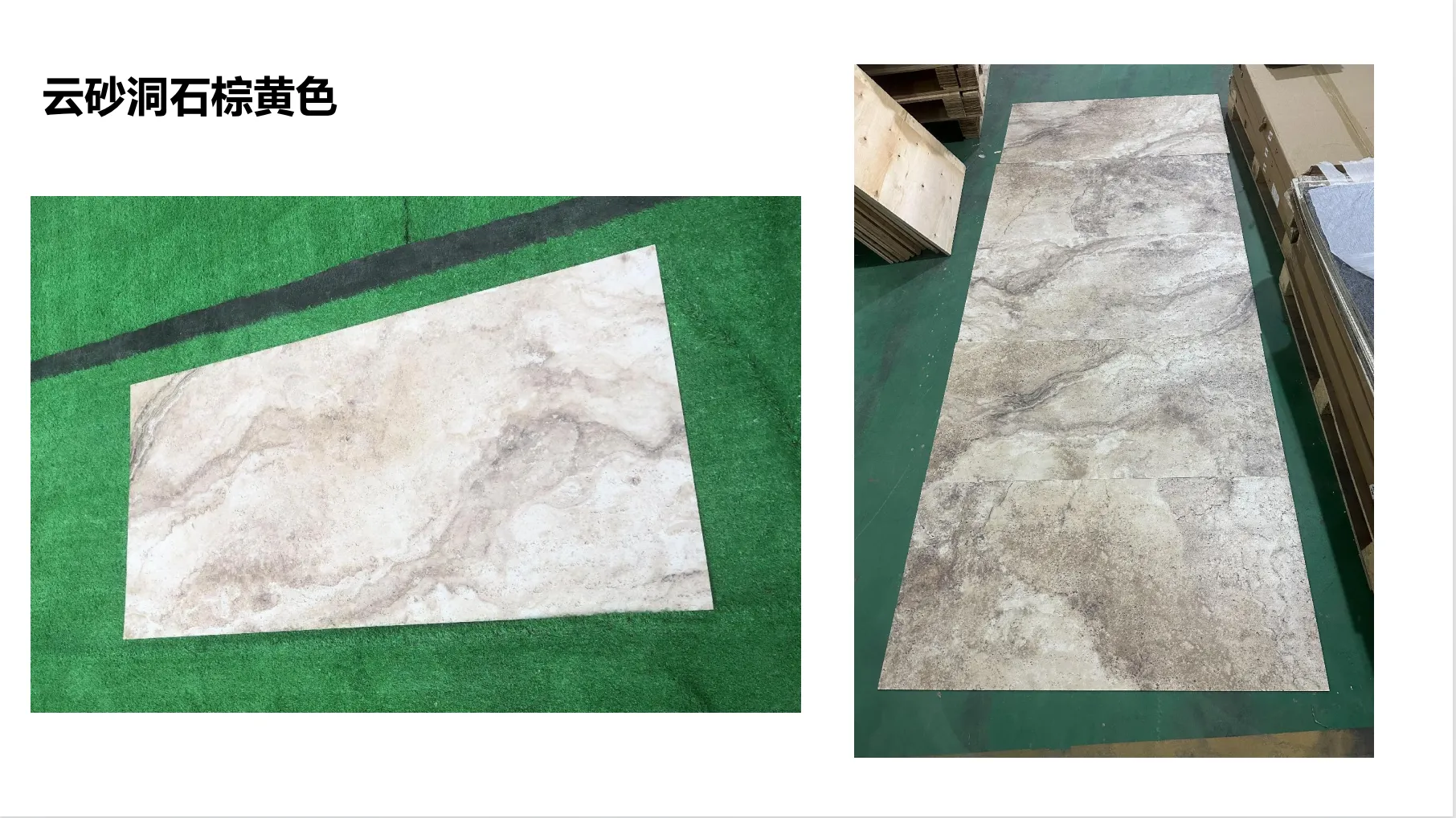
Walk through any modern city, and you'll notice the skin of buildings telling stories—of durability, of style, of the choices architects and builders make to balance function with beauty. For decades, cladding materials have been stuck in a trade-off: natural stone offers timeless elegance but weighs heavy on structures and the environment; synthetic options save on weight but lack authenticity. Enter dolomitic travertine(claybank) —a material that doesn't just cover walls, but redefines what cladding can be. Part of the innovative MCM flexible stone series, this claybank-hued wonder marries the best of nature and technology, proving that sustainability and aesthetics can coexist harmoniously.
Let's start with the basics: travertine itself is a form of limestone, born from mineral-rich hot springs and rivers, known for its unique porous texture and warm tones. But dolomitic travertine takes it a step further, infused with dolomite—a mineral that adds density and resilience. The "claybank" variant, with its soft, earthy hue reminiscent of sun-baked soil, isn't just a color choice; it's a statement. Unlike stark whites or harsh grays, this shade invites warmth, making buildings feel less like cold structures and more like integral parts of the landscape.
What truly sets it apart, though, is its partnership with MCM flexible stone technology. MCM, or Modified Composite Material, is the unsung hero here. Traditional natural stone cladding often comes in thick, heavy slabs—think 20mm or more—requiring robust structural support and increasing transportation emissions. MCM changes the game by bonding thin layers of natural dolomitic travertine aggregate to a lightweight, flexible backing. The result? Panels that are up to 80% lighter than solid stone, yet just as durable. Imagine a material that can wrap around curved walls, climb high-rises without straining the foundation, and still retain the tactile charm of quarried stone. That's the magic of MCM flexible stone.
In an era where "green building" is no longer optional, dolomitic travertine(claybank) shines as a leader in eco-conscious design. Let's break down its environmental credentials:
Reduced Quarry Impact: Traditional stone extraction often leaves scars on landscapes, with heavy machinery and large-scale mining disrupting ecosystems. MCM flexible stone panels use significantly less raw material—only a thin veneer of natural travertine—minimizing quarrying needs. For every square meter of cladding, this translates to fewer truckloads of stone extracted, and less habitat disturbance.
Lower Carbon Footprint: Weight matters when it comes to emissions. A standard solid travertine slab weighs around 50kg per square meter; MCM flexible stone versions? A mere 8-10kg. Lighter panels mean fewer trips to transport them, less fuel burned, and lower carbon emissions from start to finish. Builders in urban areas, where tight spaces and high-rise construction are the norm, have reported cutting transportation costs by up to 40% simply by switching to this material.
Longevity and Recyclability: Unlike synthetic claddings that fade or crack after a decade, dolomitic travertine(claybank) is built to last. Its dolomite infusion resists weathering, while the MCM backing prevents warping or delamination. When a building eventually undergoes renovation, these panels can be recycled—ground down and repurposed into new construction materials—unlike vinyl or fiber cement, which often end up in landfills.
| Feature | Fair-Faced Concrete | Solid Natural Stone | Dolomitic Travertine(Claybank) (MCM Flexible Stone) |
|---|---|---|---|
| Weight (kg/m²) | 220-240 | 45-60 | 8-10 |
| Installation Complexity | High (requires formwork, curing time) | High (needs structural support, heavy lifting) | Low (lightweight, flexible; can be applied to curves) |
| Aesthetic Versatility | Limited (monochrome, industrial look) | High (natural patterns, but fixed colors) | Exceptional (warm claybank hue, retains natural texture) |
| Environmental Impact | High (cement production emits CO2) | Moderate (quarrying, heavy transport) | Low (minimal raw material use, recyclable) |
| Maintenance Needs | Regular sealing (stains easily) | Occasional sealing (porous surface) | Minimal (resistant to staining, weathering) |
Take fair-faced concrete , a staple in modern architecture for its raw, industrial vibe. While it's cost-effective upfront, its weight (over 200kg per square meter) demands reinforced structures, and its gray monotony can feel cold in residential or public spaces. Solid natural stone, on the other hand, offers beauty but at a price—literally and environmentally. Dolomitic travertine(claybank) bridges this gap: it's light enough for retrofits, warm enough for community centers, and green enough for LEED-certified projects.
Let's step beyond the specs and into real projects where this material has made a difference. In Boulder, Colorado, a boutique hotel called "The Claybank" recently underwent a facade renovation. The owners wanted to honor the region's mountainous landscape without overburdening the 1920s building's foundation. Enter dolomitic travertine(claybank) panels. The result? A exterior that blends seamlessly with the surrounding red rock formations, with curved corners that softens the building's edges. Guests often remark on how the claybank hue shifts with the sun—warm gold at dawn, rich terracotta at sunset—creating a dynamic, living facade.
Across the Atlantic, in Lisbon, a community library chose the material for its children's wing. "We needed something durable enough to withstand little hands, but inviting enough to spark curiosity," says lead architect Maria Almeida. "The porous texture of the travertine is perfect—kids run their fingers over it, asking about the 'holes' and how the stone was made. It's not just cladding; it's a teaching tool." The lightweight panels also allowed the library to add a rooftop reading garden, something impossible with heavier materials.
Even commercial spaces are catching on. A tech startup in Seattle opted for dolomitic travertine(claybank) in its office lobby, pairing it with foamed aluminium alloy board (vintage silver) accents. The contrast—earthy claybank against sleek silver—creates a space that feels both grounded and forward-thinking. "Our brand is about innovation rooted in nature," says the company's facilities manager. "This cladding tells that story without saying a word."
As cities grow denser and sustainability goals tighten, materials like dolomitic travertine(claybank) are no longer niche—they're necessary. The MCM flexible stone series, of which this travertine is a star player, represents a shift in how we think about building skins: not as static barriers, but as dynamic, eco-friendly elements that enhance both the structure and its surroundings.
Imagine a skyline where every building's facade reflects its commitment to the planet—where warmth and resilience go hand in hand. That future is already taking shape, one claybank panel at a time. For architects, builders, and homeowners, the message is clear: you don't have to choose between beauty and responsibility. With dolomitic travertine(claybank), you can have both.
So the next time you pass a building with a facade that feels alive—warm, textured, and thoughtfully crafted—take a closer look. It might just be the work of dolomitic travertine(claybank), proving that the best building materials don't just cover walls; they build a better world.
Recommend Products












