
There's a moment in every architect's career when a material stops being just a "product" and becomes a storyteller. I witnessed this last spring while touring the newly completed Evergreen Innovation Campus in Seattle. The campus's central hub, a sprawling glass-and-stone structure, didn't just house offices—it invited people in. Its exterior, a warm blend of earthy clay tones and sleek, modern lines, felt both grounded and forward-thinking. When I asked the lead architect, Maria Gonzalez, about the secret to that balance, she smiled and pointed to the walls: "Claybank Dolomitic Travertine, paired with MCM Project Board Series. They don't just cover a building—they define it."
That conversation stuck with me. Large developments—campuses, commercial plazas, cultural centers—often struggle to feel human. They're built for scale, for function, for efficiency. But materials like Claybank Dolomitic Travertine and MCM's innovative panels are changing that. They're proving that big can also be beautiful, that durability doesn't have to mean sterility, and that the right pairing can turn a structure into a space that resonates on an emotional level.
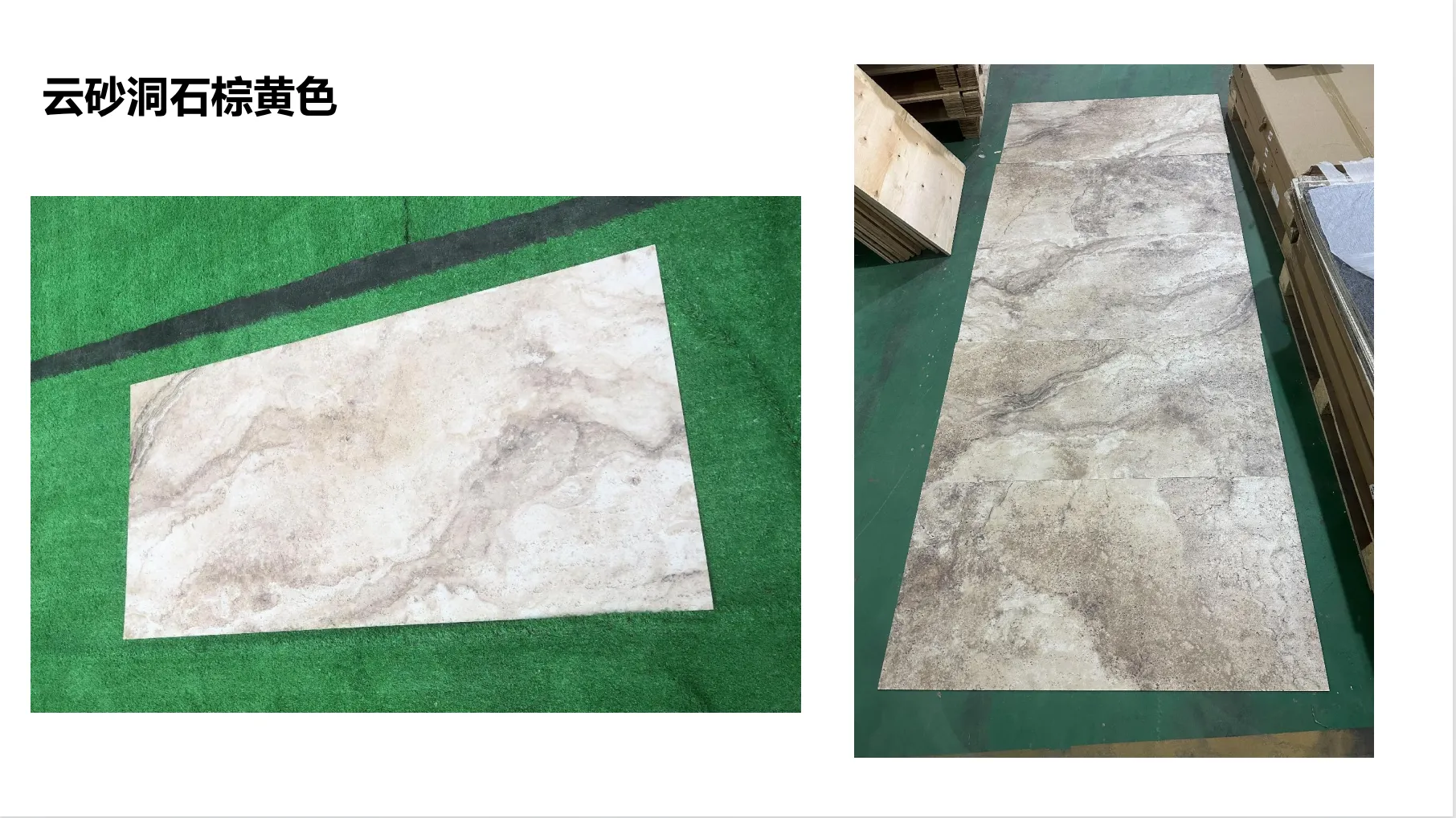
To understand why Claybank Dolomitic Travertine has become a favorite among designers, you have to start with its character. Unlike polished marbles or uniform concretes, this stone feels lived-in —like it carries the weight of time in its veins. Its base color, a soft, warm claybank (think the hue of sun-baked earth after a light rain), is punctuated by subtle veins of darker gray and cream, mimicking the patterns of ancient riverbeds. Run your hand over it, and you'll feel a texture that's neither too rough nor too smooth—just enough to invite touch, to make the wall feel less like a barrier and more like a tactile experience.
But its beauty isn't skin-deep. Dolomitic travertine, formed from mineral-rich hot springs over millennia, is inherently durable. It resists scratches, stands up to harsh weather, and ages gracefully—developing a richer patina over time rather than fading. For large developments, which need materials that can withstand heavy foot traffic, temperature fluctuations, and the test of decades, this longevity is non-negotiable. "We chose Claybank Dolomitic Travertine for the campus walkways because we wanted something that would still look stunning in 50 years," Maria told me. "So far, after two Seattle winters, it's holding up better than we dared hope."
What truly sets it apart, though, is its versatility. Unlike traditional natural stones, which often come in fixed sizes and require heavy machinery to install, Claybank Dolomitic Travertine, when paired with MCM's technology, becomes surprisingly adaptable. "We used it to clad both the exterior facade and the interior lobby walls," Maria explained. "On the outside, we left it with a rough, natural finish to blend with the Pacific Northwest landscape; inside, we honed it slightly to create a softer, more intimate feel. Same stone, completely different moods."
If Claybank Dolomitic Travertine is the "soul" of the pairing, MCM Project Board Series is the "engine." For those unfamiliar, MCM (Modified Composite Material) panels are revolutionizing how architects approach large developments. They're lightweight—up to 70% lighter than traditional stone cladding—yet incredibly strong, making them ideal for high-rise buildings or expansive facades where weight is a critical factor. "We couldn't have used solid travertine slabs on the Innovation Campus's 12-story tower," Maria laughed. "The structural load would've been impossible. MCM Project Board Series let us get that travertine look without the engineering headache."
But it's not just about weight. MCM panels are engineered for performance: fire-resistant, water-resistant, and designed to withstand extreme temperatures. For a development like the Innovation Campus, which houses labs, offices, and public spaces, safety is paramount. "We had to meet strict fire codes, especially in the research wing," Maria noted. "MCM's panels checked all those boxes, and they did it without sacrificing aesthetics."
Then there's sustainability—a growing priority in modern architecture. MCM Project Board Series is made with recycled materials and requires less energy to produce than traditional stone or concrete. When paired with Claybank Dolomitic Travertine, which is sourced from ethical quarries with minimal environmental impact, the result is a cladding solution that aligns with green building certifications like LEED. "Our client wanted the campus to be a model of sustainability," Maria said. "This pairing helped us hit our carbon footprint goals without compromising on design."
The magic happens when Claybank Dolomitic Travertine and MCM Project Board Series come together. It's a partnership of opposites: the organic, time-worn beauty of the stone and the precision, innovation of the panels. Together, they solve two of the biggest challenges in large-scale design: creating visual interest at scale and ensuring practicality.
Take the Innovation Campus's main plaza, for example. The architects used MCM Project Board Series as the "base" cladding—sleek, uniform panels in a neutral gray that provide a modern, clean backdrop. Then, they layered in Claybank Dolomitic Travertine accents: a sweeping archway at the entrance, a feature wall in the courtyard, and even a series of benches carved from the stone. The effect? The plaza feels cohesive but not monotonous. The travertine adds warmth and texture, while the MCM panels keep the design grounded and contemporary. "It's like pairing a tailored blazer with a hand-knit sweater," Maria said. "They balance each other out."
Functionally, the pairing shines, too. MCM's lightweight nature means the travertine can be applied in ways that would've been impossible with solid stone. At the campus's auditorium, for instance, the designers wanted a curved wall that wrapped around the stage, creating an intimate, cocoon-like feel. "Solid travertine would've been too heavy to curve," Maria explained. "But with MCM's flexible backing, we could adhere thin slices of Claybank Dolomitic Travertine to the panels, bending them to the exact radius we needed. The result? A wall that looks like it's carved from a single piece of stone, but weighs a fraction of the real thing."
| Feature | Claybank Dolomitic Travertine | Fair-Faced Concrete |
|---|---|---|
| Aesthetic Character | Warm, earthy claybank hue with natural veining; organic texture. | Cool, industrial gray; uniform, matte finish with subtle formwork lines. |
| Durability | Highly resistant to scratches, weathering; ages with a rich patina. | Strong and durable but prone to staining if not sealed; can develop cracks over time. |
| Installation Ease | Lightweight when paired with MCM panels; flexible for curved surfaces. | Heavy; requires precise formwork and curing time; less adaptable to complex shapes. |
| Sustainability | Sourced from ethical quarries; low embodied carbon when paired with MCM. | High carbon footprint due to cement production; limited recycled content. |
| Best For | Accent walls, feature elements, areas where warmth and texture are priorities. | Large, uniform surfaces; industrial or minimalist designs; budget-conscious projects. |
It's one thing to talk about the benefits of these materials in theory; it's another to see them in action. Across the globe, large developments are leveraging the Claybank Dolomitic Travertine-MCM Project Board Series pairing to redefine what "big architecture" can feel like.
Take the Horizon Mall in Dubai, a sprawling complex that blends high-end retail with public green spaces. The mall's facade uses MCM Project Board Series in a soft beige as the primary cladding, then incorporates Claybank Dolomitic Travertine in strategic "ribbons" that wrap around the building, mimicking the dunes of the nearby desert. "In Dubai, where everything is bold and, we wanted something that felt more connected to the landscape," said lead designer Ahmed Hassan. "The travertine's claybank color echoes the desert sand, and the MCM panels keep the design modern. Shoppers tell us they feel less 'overwhelmed' here than in other malls—it's like a breath of fresh air."
Closer to home, the Riverfront Residences in Portland, Oregon, a mixed-use development with 300 apartments and ground-floor retail, used the pairing to bridge indoor and outdoor spaces. The lobby features a two-story wall of Claybank Dolomitic Travertine, backlit to highlight its veining, while the exterior balconies are clad in MCM Project Board Series in a complementary gray. "Tenants love the lobby wall—it's become a backdrop for photos, a meeting spot," said property manager Lisa Chen. "And maintenance is a breeze. We haven't had to do anything to the travertine since move-in; it still looks brand new."
As architects and developers push for more sustainable, human-centered spaces, materials like Claybank Dolomitic Travertine and MCM Project Board Series will only grow in importance. They represent a shift away from "cold" modernism and toward design that prioritizes emotion, connection, and longevity.
"The days of buildings that exist purely to serve a function are over," Maria Gonzalez told me as we wrapped up our tour of the Innovation Campus. "People want spaces that make them feel something—that tell a story. Claybank Dolomitic Travertine and MCM Project Board Series let us tell those stories without compromising on practicality. That's the future."
Standing in the campus courtyard, I looked up at the travertine archway, bathed in afternoon light. The stone's warm hue seemed to glow, and the MCM panels beside it reflected the sky, creating a dance of earth and air. In that moment, I didn't see a building—I saw a conversation: between past and present, nature and innovation, function and feeling. And isn't that what great architecture has always been about?
Claybank Dolomitic Travertine and MCM Project Board Series aren't just materials—they're tools for building spaces that matter. And in a world that needs more meaning, that's a powerful thing.
Recommend Products












