

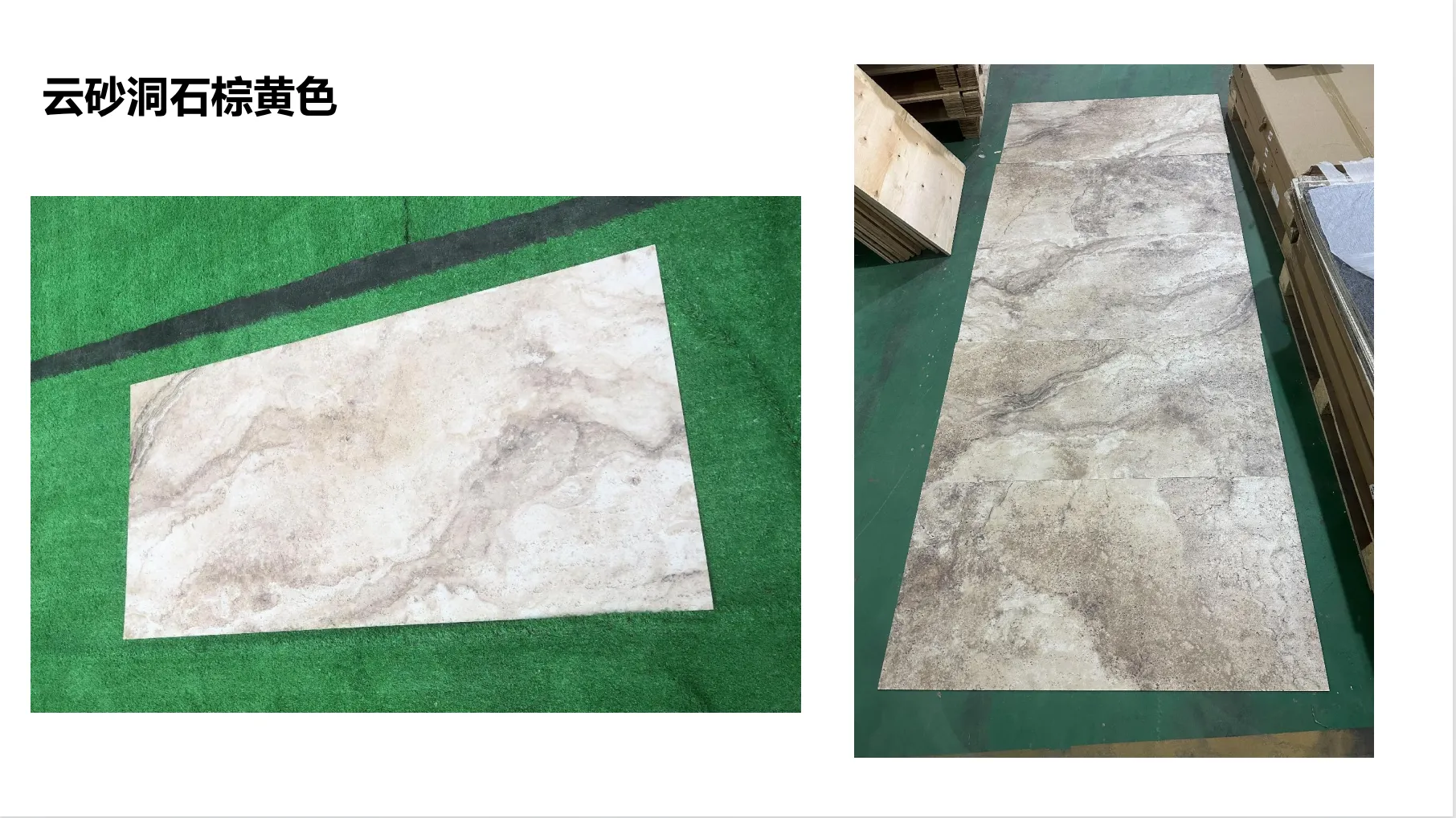
To understand why claybank dolomitic travertine has become a darling of architects and designers, you first need to run your hand over its surface. Unlike the glossy uniformity of polished marble or the stark minimalism of concrete, this stone carries the whispers of time. Its claybank hue—a soft, warm beige with subtle undertones of terracotta—evokes sun-baked landscapes and ancient villages, while its dolomitic composition (rich in magnesium carbonate) gives it a durability that belies its delicate appearance.
"It's a material that breathes," says Elena Marquez, a senior architect at Studio Vertex, who recently specified claybank dolomitic travertine for a boutique hotel in Barcelona. "Travertine's natural porosity isn't a flaw—it's a feature. It absorbs light gently, softening harsh shadows, and ages gracefully, developing a patina that tells the story of the space it inhabits."
But what truly sets it apart is its versatility. Whether left in its rough, hewn state for a rustic aesthetic or honed to a smooth finish for modern interiors, claybank dolomitic travertine adapts. It works as a flooring material, a wall cladding, or even as accent pieces like fireplace surrounds. And when paired with the right complementary materials—say, the sleek metallic sheen of
lunar peak silvery
or the raw texture of
fair-faced concrete
—it becomes part of a visual symphony that feels both grounded and aspirational.











