


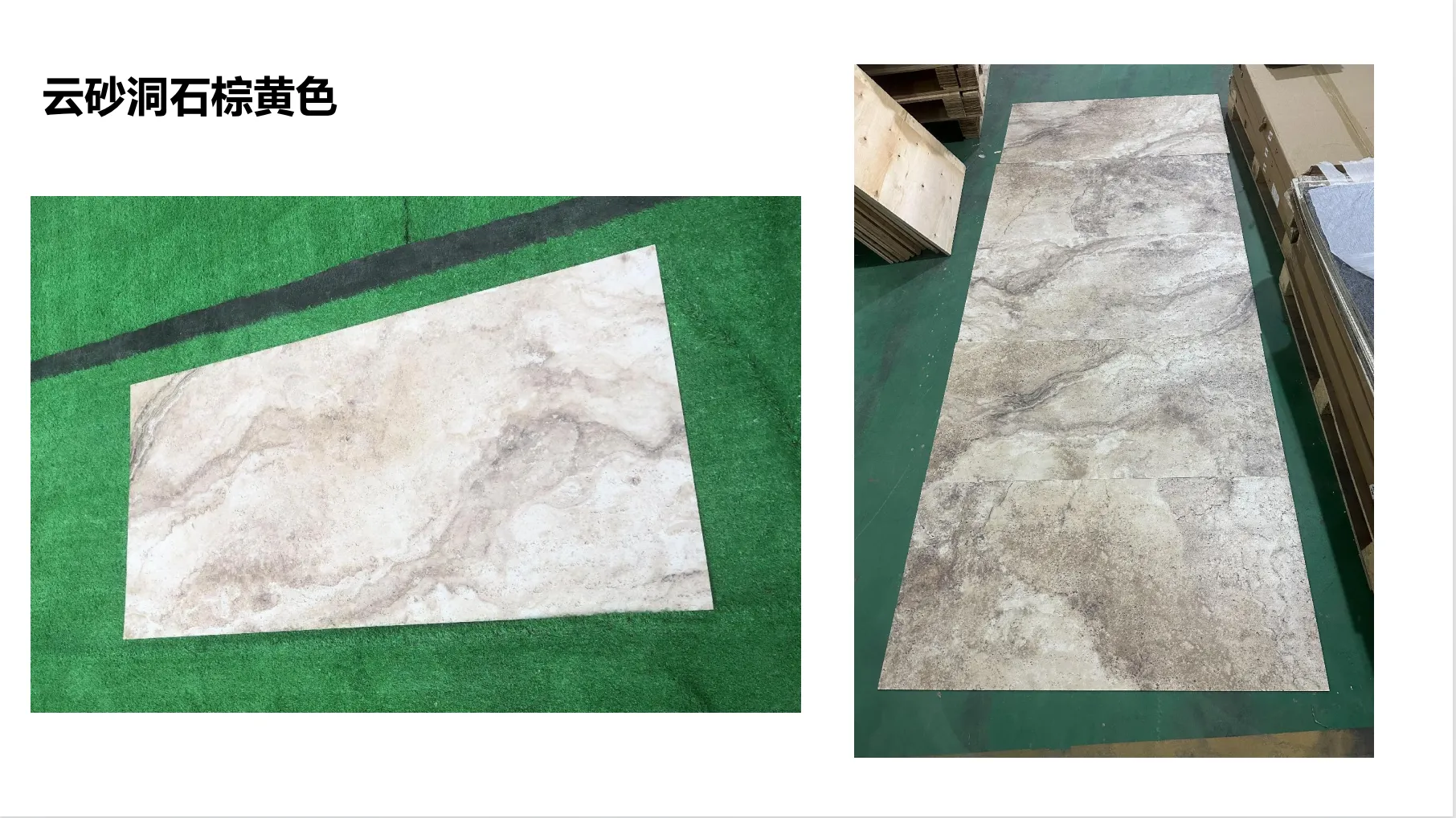
Before we talk pairings, let's get to know the star of the show: dolomitic travertine (claybank). Unlike its bolder cousins—think the deep grays of dolomitic travertine (dark grey) or the vibrant reds of travertine (starry red)—claybank dolomitic travertine is a study in subtlety. Its base color is a warm, muted beige, like the soft glow of sand at dawn, with delicate, feathery veins in tones of pale taupe and ivory. What makes it special isn't just its color, though—it's the texture. Travertine is a sedimentary stone, formed over millennia by mineral-rich hot springs, which gives it tiny, natural pits and pores that add depth and tactility. Run your hand over it, and you'll feel the history: the slow drip of water, the layering of minerals, the passage of time.
This texture is key to its versatility. It's not overly polished or glossy, so it doesn't feel cold or sterile. Instead, it has a lived-in quality, like a well-loved book or a favorite sweater. And that claybank hue? It's a chameleon. In bright, sunlit rooms, it leans warm and golden; in softer, indirect light, it takes on a cozy, earthy tone. It's the kind of stone that doesn't demand attention but elevates everything around it—a neutral with character, if you will.
So why choose claybank dolomitic travertine? For starters, it's durable. Perfect for high-traffic areas like floors, backsplashes, or fireplace surrounds. But more than that, it's emotionally resonant. In a world that often feels chaotic, spaces grounded in natural materials like this stone have a calming effect. They remind us of the outdoors, of quiet moments spent in nature, and of the beauty in simplicity. Now, let's see how to amplify that beauty by pairing it with wood and metal.










