
How MCM's Ripple Board is Transforming Facades and Spaces Across the Kingdom
When we first took on the Al-Nahda Residences project, the brief was clear: design a residential complex that felt both modern and rooted in Saudi heritage. The client wanted something that stood out from the glass-and-steel monotony of Riyadh's skyline—something with texture, warmth, and a nod to the desert's natural beauty. That's when we stumbled upon MCM's Ripple Board, and honestly, it was a game-changer.
We'd been experimenting with different facade materials for months, but nothing clicked. Then we saw the Ripple Board samples in grey and white. The wave-like texture immediately made me think of the dunes outside Riyadh—how they shift and flow with the wind. I brought the samples to the client, and they were just as obsessed as we were. "It feels alive," they said. That's the magic of it, right? Materials that don't just sit there, but tell a story.
Installation was surprisingly smooth, especially considering we were working with a 12-story building. The MCM team walked us through every step, and their flexible stone technology meant we could curve the Ripple Board around the building's rounded corners without any cracks or warping. We paired the exterior Ripple Board (grey) with MCM's Wood grain board for the lobby interiors, and the contrast is stunning—like bringing the desert indoors, but in a sophisticated way.
"The residents keep telling me how the building 'glows' at sunset. The Ripple Board catches the light in these incredible ways, making the whole facade look like it's rippling. It's not just a material—it's art."
One thing that really sold us was durability. Riyadh's summers are brutal, with temperatures hitting 50°C, but the Ripple Board hasn't faded or warped a bit. We did a follow-up inspection six months after completion, and it looked as fresh as the day it was installed. For any architect hesitant to try something new, I'd say this: Ripple Board isn't just a trend. It's a material that grows with your project, aging gracefully and adding character over time.
Jeddah's Corniche is all about bold, forward-thinking design, so when we were tasked with the Innovation Hub—a space for startups and tech companies—we needed a facade that screamed "innovation" without feeling cold. We'd seen MCM's 3D printing series at a trade show, but it was the Ripple Board that really stole the show for this project.
Our biggest challenge? The Hub is right on the coast, so saltwater corrosion and high winds were major concerns. Traditional stone would've been too heavy and porous, but Ripple Board's lightweight composition and weather-resistant coating checked all the boxes. We went with the grey Ripple Board for the main facade and accented it with Fair-faced concrete panels to add depth. The result? A building that looks like it's emerging from the sea, with waves of texture that change depending on the time of day.
What surprised me most was the customization options. We needed a specific gradient effect for the east-facing wall, and MCM's team used their 3D printing tech to tweak the Ripple Board's texture density—denser at the bottom, lighter at the top—to mimic how waves fade as they hit the shore. The client called it "genius," and honestly, I couldn't agree more. It's rare to find a manufacturer that's willing to collaborate that closely on design details.
"The Ripple Board wasn't just a material choice—it was a design partner. It let us push boundaries we couldn't have with traditional cladding. Now, every time I drive past the Hub, I smile knowing we built something that truly belongs here, by the water."
We also used MCM's flexible stone for the interior meeting rooms. It has this soft, tactile quality that balances the Ripple Board's bold exterior. Employees have told us the space feels "energizing," which is exactly what a tech hub needs. If you're working on a coastal project, do yourself a favor: check out Ripple Board. It's tough, beautiful, and designed to thrive where other materials fail.
Blending modern architecture with Saudi Arabia's rich cultural heritage is always a delicate dance. For the King Abdulaziz Cultural Center extension, we needed a material that honored the center's existing limestone facade but brought it into the 21st century. Enter MCM's Ripple Board in white—paired with their Lunar Peak Silvery, it was like adding a moonlit layer to a historical landmark.
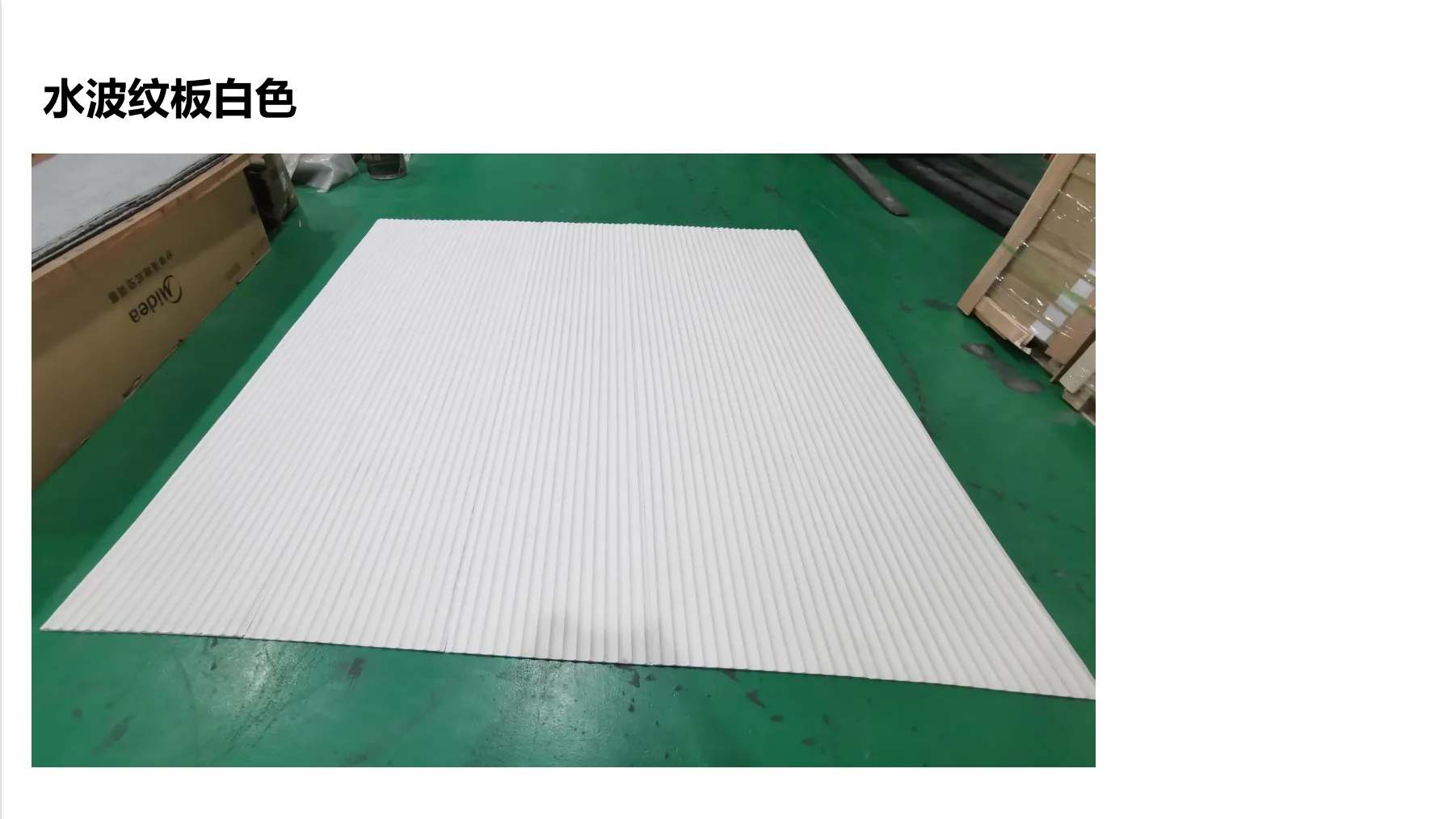
The original center, built in the 1980s, has these beautiful, rough-hewn limestone walls that feel timeless. We didn't want to clash with that, but we also didn't want the extension to feel like an afterthought. The Ripple Board's subtle wave texture was the perfect bridge—it's modern, but the matte finish and organic pattern echo the limestone's natural irregularities. When the sun hits it, the white Ripple Board shimmers, almost like the limestone is "awaking" into a new form.
Installation was tricky because we were working around a busy cultural center—no loud construction during events, strict deadlines. MCM's team was incredibly accommodating. They pre-fabricated the Ripple Board panels off-site, which cut installation time by 30%. We also used their foamed aluminium alloy board (vintage silver) for the canopy over the entrance, and the combination of Ripple Board and aluminium is striking—like stars and waves coming together.
"One of our advisors, a historian, told me the extension 'speaks the same language as the original building, but with a new accent.' That's exactly what we wanted. Ripple Board let us honor the past while building for the future."
Since opening, the extension has become a favorite spot for visitors. Kids love running their hands over the Ripple Board's texture, and photographers can't get enough of how it looks at dusk, when the Lunar Peak Silvery accents glow. It's a reminder that great architecture isn't just about function—it's about emotion. Ripple Board doesn't just cover a wall; it creates moments.
| Feature | Detail |
|---|---|
| Material Composition | Modified composite material (MCM), blend of natural stone powder and high-performance polymers |
| Thickness | 8-12mm (lightweight, ideal for high-rise and coastal projects) |
| Color Options | White, Grey, Beige (custom colors available via 3D printing series) |
| Texture | Wave-like ripples (3D-printed for precise, consistent patterning) |
| Durability | UV-resistant, heat-resistant (up to 80°C), corrosion-resistant (ideal for coastal areas) |
| Installation Time | 30% faster than traditional stone cladding (pre-fabricated panels) |
| Compatibility | Works with MCM flexible stone, foamed aluminium alloy, fair-faced concrete, and wood grain board |
At GreenBuild, we're all about sustainability, but that doesn't mean we compromise on design. The EcoVillage Community Center needed to be LEED Platinum certified, so we were on the hunt for low-impact, energy-efficient materials. MCM's Ripple Board checked both boxes—and then some.
Traditional stone cladding has a huge carbon footprint, but Ripple Board is made with recycled stone powder and requires minimal energy to produce. Plus, its lightweight nature meant we could use smaller support structures, reducing steel usage by 15%. But the real win? The thermal insulation properties. The Ripple Board acts like a barrier, keeping the center cool in summer and warm in winter. Our energy bills are 20% lower than projected, which the client is thrilled about.
Design-wise, we went with Ripple Board in beige to match the desert landscape, and paired it with MCM's Stream limestone (claybank) for the walkways. The effect is like stepping into an oasis—calm, natural, and inviting. We also used the Wood grain board for the interior ceilings, which adds warmth without cutting down trees. It's a full-circle sustainable design, and Ripple Board was the linchpin.
"Sustainability shouldn't be a sacrifice. Ripple Board proves that you can have a material that's good for the planet AND stunning to look at. It's the future of green building, and I can't wait to use it again."
The community center has become a hub for eco-workshops and events, and the Ripple Board facade is now a symbol of what's possible when design and sustainability meet. Parents tell us their kids ask to "touch the wave wall" every time they visit. That's the power of a material that connects—emotionally and environmentally.
Recommend Products












