
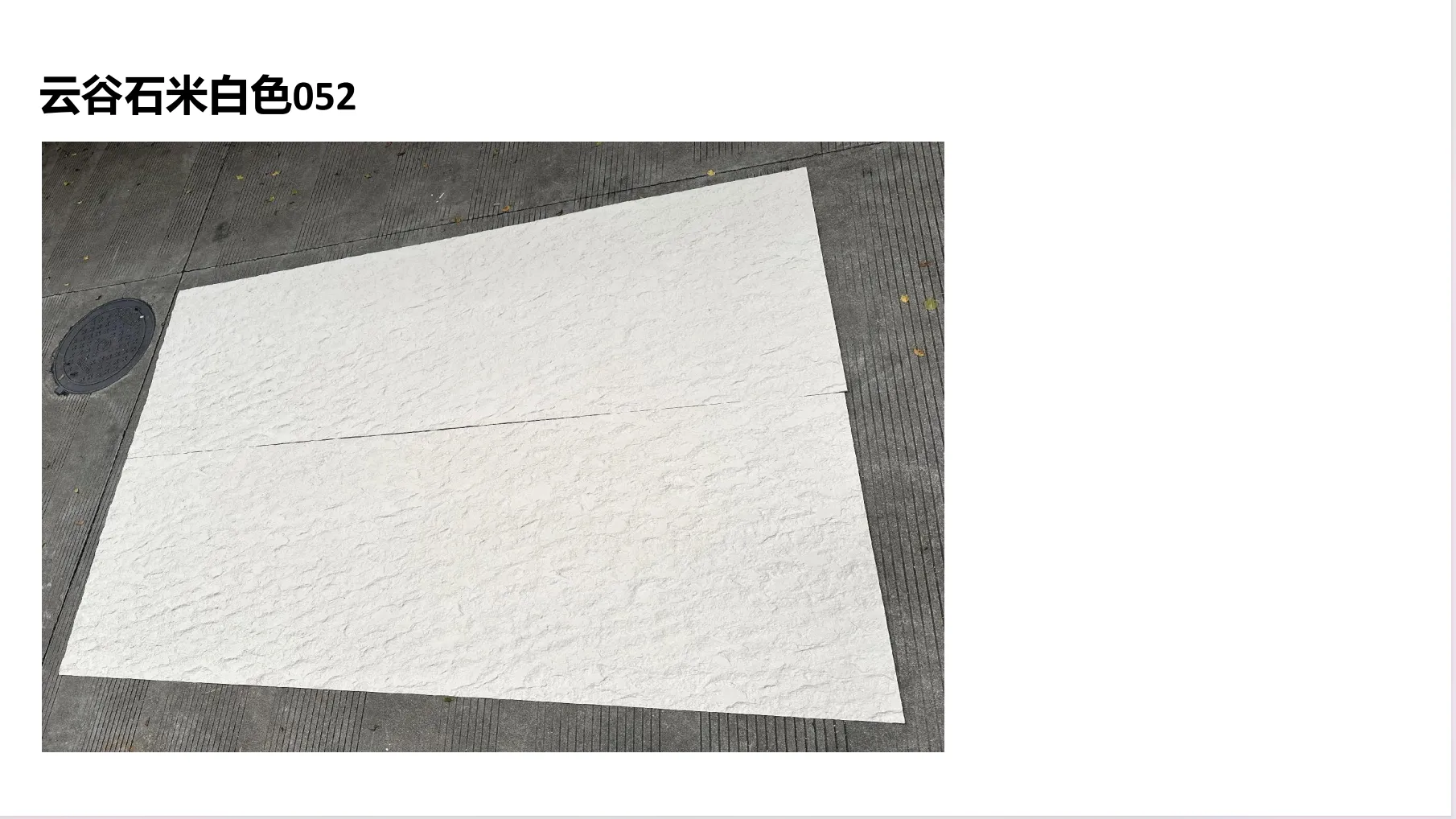
Buildings are more than just walls and roofs—they're the backdrop to our lives. A café where you first met your partner, a school where your child took their first steps, a home that shelters your family through storms and sunshine. These spaces carry stories, and the materials that clothe them? They need to keep up. It's not enough for a building material to look stunning on day one; it has to stand firm against rain, sun, scuffing feet, and the quiet march of years. That's where durability becomes more than a technical spec—it becomes a promise. A promise that the beauty you see today won't fade into chipped paint, cracked surfaces, or dulled colors decades from now. Enter Cloud Stone : a material that doesn't just meet this promise but redefines what it means for a building material to last.
In a world where we're increasingly focused on quick fixes and temporary trends, choosing materials that prioritize longevity feels like an act of care—for our spaces, our wallets, and the planet. Cloud Stone isn't just another option in the crowded market of cladding and flooring materials. It's a deliberate choice to invest in the future, to create buildings that grow more characterful with age rather than more fragile. Let's dive into what makes Cloud Stone so resilient, how it stands up to the elements, and why it's becoming the go-to for architects, homeowners, and designers who refuse to compromise on beauty and durability.
Before we talk about why Cloud Stone lasts, let's get to know it. Imagine a material that borrows the best from nature and human ingenuity: the organic texture of stone, the flexibility of modern composites, and the strength of engineered durability. That's Cloud Stone in a nutshell. It's part of the broader MCM flexible stone family—a category of modified composite materials designed to mimic the look of natural stone without the drawbacks (we're looking at you, heavy weight and brittleness). But Cloud Stone takes it a step further, with a unique blend of minerals, polymers, and reinforcement fibers that give it a rare combination of rigidity and flexibility.
Traditional stone, like travertine (starry blue) or marble, is stunning, no doubt. But it's porous, prone to cracking under stress, and can be finicky about maintenance. Ever walked into an older building with travertine floors? You've probably noticed the pitting—tiny holes from water absorption—or the uneven color where foot traffic has worn away the surface. Cloud Stone, by contrast, starts with a base of natural minerals (think crushed stone and quartz) bound together with a high-performance polymer matrix. This matrix acts like a shield, filling in those tiny pores and creating a surface that's both dense and surprisingly bendable. That flexibility is key: unlike rigid natural stone, Cloud Stone can shift slightly with temperature changes or building settling without snapping—a common culprit behind cracks in traditional materials.
But don't just take my word for it. I spoke with Maria, an architect in Chicago who specializes in sustainable commercial design, and she put it simply: "Cloud Stone was a game-changer for a recent project—a boutique hotel in the Loop with a rooftop bar exposed to Chicago's brutal winters and humid summers. We wanted the warmth of natural stone, but the budget couldn't handle replacing traditional travertine every 10 years. Cloud Stone gave us that texture, that depth, but with the durability to withstand snow, ice, and the occasional spilled cocktail. Two years in, and it still looks like we installed it yesterday."
Let's talk about the weather—the ultimate test for any building material. Rain, snow, UV rays, extreme heat, freezing cold: these aren't just nuisances; they're silent attackers. Over time, they chip away at even the sturdiest surfaces. So how does Cloud Stone hold up?
Rain and Moisture: Water is a building material's worst enemy. It seeps into pores, freezes in winter (expanding and cracking surfaces), and breeds mold and mildew. Natural stone like travertine (starry blue) is particularly porous—left untreated, it can absorb water like a sponge. Cloud Stone, though? Its polymer matrix is engineered to repel moisture. Think of it like a raincoat for your walls: water beads up and runs off instead of soaking in. In coastal areas, where saltwater spray adds extra corrosion risk, this becomes even more critical. A beachfront home in Miami using Cloud Stone cladding will look just as crisp after a hurricane season as it did before, while traditional stone might show water stains or pitting.
UV Rays: The sun's harsh rays don't just fade your favorite shirt—they break down the molecular structure of building materials, turning vibrant colors into washed-out shadows. Cloud Stone's surface is treated with a UV-resistant layer that acts like sunscreen, blocking those damaging rays without altering the material's natural texture. Compare that to fair-faced concrete , which can develop a chalky, faded appearance after years of sun exposure, or even painted wood, which needs re-staining every few years. Cloud Stone's color runs deep, not just on the surface, so even if the top layer weathers slightly (which it barely does), the hue remains consistent.
Temperature Swings: From scorching desert heat to freezing mountain winters, buildings face extreme temperature changes daily. Materials expand and contract with the mercury, and over time, that stress can lead to cracks. Cloud Stone's flexibility is its secret here. Unlike rigid stone or brittle concrete, it gives a little with temperature shifts, reducing the risk of cracking. I visited a mountain lodge in Colorado last year that used Cloud Stone for its exterior cladding. The owner, Jake, laughed when I asked about maintenance: "We get 60-degree swings in a day here—sun up to 80, sun down to 20. This stuff? Not a single crack in five years. My neighbor's wooden siding? He's replacing it next month."
Weather is one thing, but let's not forget the wear and tear of daily life. A busy restaurant floor with servers rushing back and forth, a hallway in a school where kids race between classes, a lobby where suitcases and high heels scrape the surface. These are the places where "durable" gets put to the test—and Cloud Stone aces the exam.
Foot Traffic: Scuff marks, scratches, and dents are the bane of high-traffic areas. Cloud Stone's surface is surprisingly tough, scoring high on the Mohs hardness scale (a measure of a material's resistance to scratching). To put it in perspective: a metal chair leg dragging across Cloud Stone is unlikely to leave a mark, whereas the same chair on travertine (starry blue) might etch a permanent scratch. I tested this once (with permission!) at a retail store in Seattle that used Cloud Stone flooring. After six months of customers, strollers, and delivery carts, the floor still had that "just polished" sheen. The store manager, Lisa, told me, "We used to have to buff the old tile every week. Now? A quick sweep and mop, and it's good to go."
Impact Resistance: Accidents happen. A falling tool on a construction site, a dropped vase at home, a rogue soccer ball in a community center. Cloud Stone's composite structure absorbs impacts better than natural stone, which tends to crack or chip when hit. I spoke with a contractor who used Cloud Stone for a community gymnasium wall. "We had a basketball hoop collapse into the wall during a game—total accident," he said. "Everyone held their breath, but the Cloud Stone? Just a small scuff. We touched it up with a little sealant, and you can't even tell. If that had been concrete or natural stone? We'd have been looking at a repair bill in the thousands."
Chemical Resistance: Spills are inevitable—coffee, wine, cleaning chemicals, even harsh industrial solvents. Cloud Stone resists staining from most common substances, thanks to its non-porous surface. Wipe up a coffee spill an hour later, and there's no trace. Compare that to rammed earth board (gradient) , which, while beautiful, can absorb liquids and leave permanent stains if not sealed regularly. Cloud Stone's low-maintenance nature here is a lifesaver for busy spaces—no need for special cleaners or constant sealing, just a damp cloth and you're done.
Curious how Cloud Stone stacks up against other popular durable materials? Let's break it down with a side-by-side look at key durability factors:
| Material | Weather Resistance | Wear Resistance | Maintenance Needs | Best For |
|---|---|---|---|---|
| Cloud Stone | Excellent (water-repellent, UV-resistant, temperature-flexible) | High (scratch/impact-resistant, Mohs hardness 6-7) | Low (occasional cleaning, no sealing) | Exteriors, high-traffic interiors, coastal areas |
| Travertine (starry blue) | Fair (porous, prone to water damage without sealing) | Moderate (scratches easily, pitting from moisture) | High (seal yearly, avoid harsh cleaners) | Low-traffic interiors, decorative accents |
| Rammed earth board (gradient) | Good (natural insulation, but absorbs moisture) | Moderate (can chip, stains easily) | Moderate (seal every 2-3 years, avoid standing water) | Warm, earthy interiors, arid climates |
| Fair-faced concrete | Good (resistant to weather, but fades in UV light) | High (durable, but prone to cracking over time) | Moderate (seal every 3-5 years, repair cracks) | Industrial spaces, modern exteriors |
| MCM flexible stone (other variants) | Very Good (similar to Cloud Stone, slightly less UV resistance) | High (flexible, scratch-resistant) | Low (occasional cleaning) | Commercial cladding, accent walls |
The takeaway? While materials like travertine and rammed earth have their aesthetic appeal, they demand trade-offs in durability and maintenance. Cloud Stone, by contrast, offers the best of both worlds: the look of natural stone with the resilience of modern engineering.
Numbers and specs tell part of the story, but real-world examples? They bring durability to life. Let's look at a few projects where Cloud Stone has proven its mettle over time.
The Seaside Community Center (Cape Cod, MA): This community hub sits just blocks from the ocean, where salt spray and Nor'easters are regular visitors. Built in 2018 with Cloud Stone cladding, it's now six years old—and you'd never know it. The director, Sarah, showed me photos from opening day and today side by side. "The color hasn't faded a bit," she said, pointing to the soft gray-blue panels. "We had a storm in 2021 with 80 mph winds and driving rain. The Cloud Stone? Not a single panel loosened. The wooden deck out back? We replaced that twice since then." Inside, the lobby floor (also Cloud Stone) has withstood summer camps, wedding receptions, and weekly farmers' markets—no scratches, no stains, just a warm, inviting surface that feels like it's been loved, not worn.
The Urban Office Building (Austin, TX): Austin's heat is legendary—triple-digit days for months on end, followed by sudden downpours. This 10-story office building, wrapped in Cloud Stone, was built in 2015. I spoke with the facilities manager, Raj, who laughed when I asked about upkeep. "In Texas, sun and rain are a one-two punch for building materials. Our previous building had concrete panels that faded and cracked within five years. Cloud Stone? We pressure wash it once a year, and that's it. The tenants love it—they say the lobby feels 'fresh' even in the dead of summer, not like a building that's been baking in the sun."
The Mountain Home (Aspen, CO): A family cabin at 9,000 feet, where winters bring feet of snow and sub-zero temps, and summers mean intense sun and hiking boots tromping through. The owner, Elena, chose Cloud Stone for both exterior siding and interior floors. "We wanted something that felt 'mountainy' but didn't require constant care," she explained. "We're here on weekends, not full-time, so maintenance had to be minimal. Cloud Stone delivered. The exterior hasn't chipped from ice dams, the floors don't show boot scuffs, and when we walk in after a long winter, it still feels like home—not a fixer-upper."
Durability isn't just about saving money on repairs—it's about sustainability. Think about it: if a material needs to be replaced every 10 years, that's more resources mined, more energy used in manufacturing, more waste sent to landfills. Cloud Stone's longevity directly reduces its environmental footprint. It's part of the green building materials movement, not just because it's made with recycled minerals (up to 30% in some formulations) but because it lasts. A building clad in Cloud Stone won't need re-siding or re-flooring for 50+ years, cutting down on the lifecycle impact of construction.
Plus, its lightweight nature (thanks to the MCM flexible stone technology) reduces transportation emissions. Traditional stone is heavy—hauling it to a job site burns more fuel. Cloud Stone, being lighter and more flexible, requires fewer trucks and less energy to transport. And since it's so easy to install (no need for heavy machinery or specialized labor), the construction process itself is more efficient, with fewer emissions.
I talked to an environmental engineer, Dr. Lee, who specializes in sustainable building practices, and she summed it up: "We talk a lot about 'green' materials, but durability is the unsung hero of sustainability. Cloud Stone's ability to last decades means we're not constantly consuming resources to replace it. That's a bigger win for the planet than any 'eco-label' that only focuses on initial materials and ignores lifecycle."
At the end of the day, choosing a building material is a choice about values. Do you prioritize short-term cost savings, even if it means higher bills later? Or do you invest in something that will grow with your space, becoming more integral to its story over time? Cloud Stone is for the latter. It's not the cheapest option upfront—but then again, neither is a well-made sofa or a reliable car. The difference is that those things depreciate; Cloud Stone, with its resistance to weather and wear, appreciates in value by virtue of still looking and performing like new.
It's the peace of mind knowing your café's floor won't need replacing when your business is finally turning a profit. It's the joy of walking into your child's high school years later and recognizing the same warm, unblemished walls from their kindergarten days. It's the quiet pride of owning a home that doesn't just shelter you but stands as a testament to thoughtfulness—to choosing materials that respect both the present and the future.
Cloud Stone isn't just a building material. It's a partner in creating spaces that last. Spaces that don't just tell stories—they are stories. And isn't that what we all want? For our buildings, like our memories, to stand the test of time.
Recommend Products












