
Walk into any building—old or new—and one of the first things that catches your eye is the surface. It might be the smooth marble of a hotel lobby, the rough texture of a historic brick wall, or the sleek concrete of a modern home. For centuries, construction surfaces have been more than just functional; they're storytellers, reflecting the era, culture, and vision of the people who build them. But as architecture grows bolder, as designs push the limits of what's possible, the materials we rely on are being put to the test. Enter Cloud Stone—a material that's not just keeping up with the future of construction, but redefining it. In this article, we'll dive into what makes Cloud Stone a game-changer, how it stacks up against traditional options, and why it might just be the surface material you've been waiting for.
Let's take a quick trip down memory lane. Ancient civilizations used stone and mud bricks, shaped by hand and laid with care. The Romans revolutionized architecture with concrete, giving us the Pantheon's dome. In the 20th century, steel and glass took center stage, creating the skyscrapers that define our city skylines. But here's the thing: many traditional materials come with trade-offs. Marble is stunning but heavy and prone to cracking. Concrete is durable but rigid, limiting design flexibility. Natural stone, while beautiful, often requires extensive mining, raising sustainability concerns. As architects and designers began dreaming of curved walls, floating facades, and surfaces that mimic nature without harming it, the need for something new became clear. That's where modified composite materials—like Cloud Stone—stepped in.
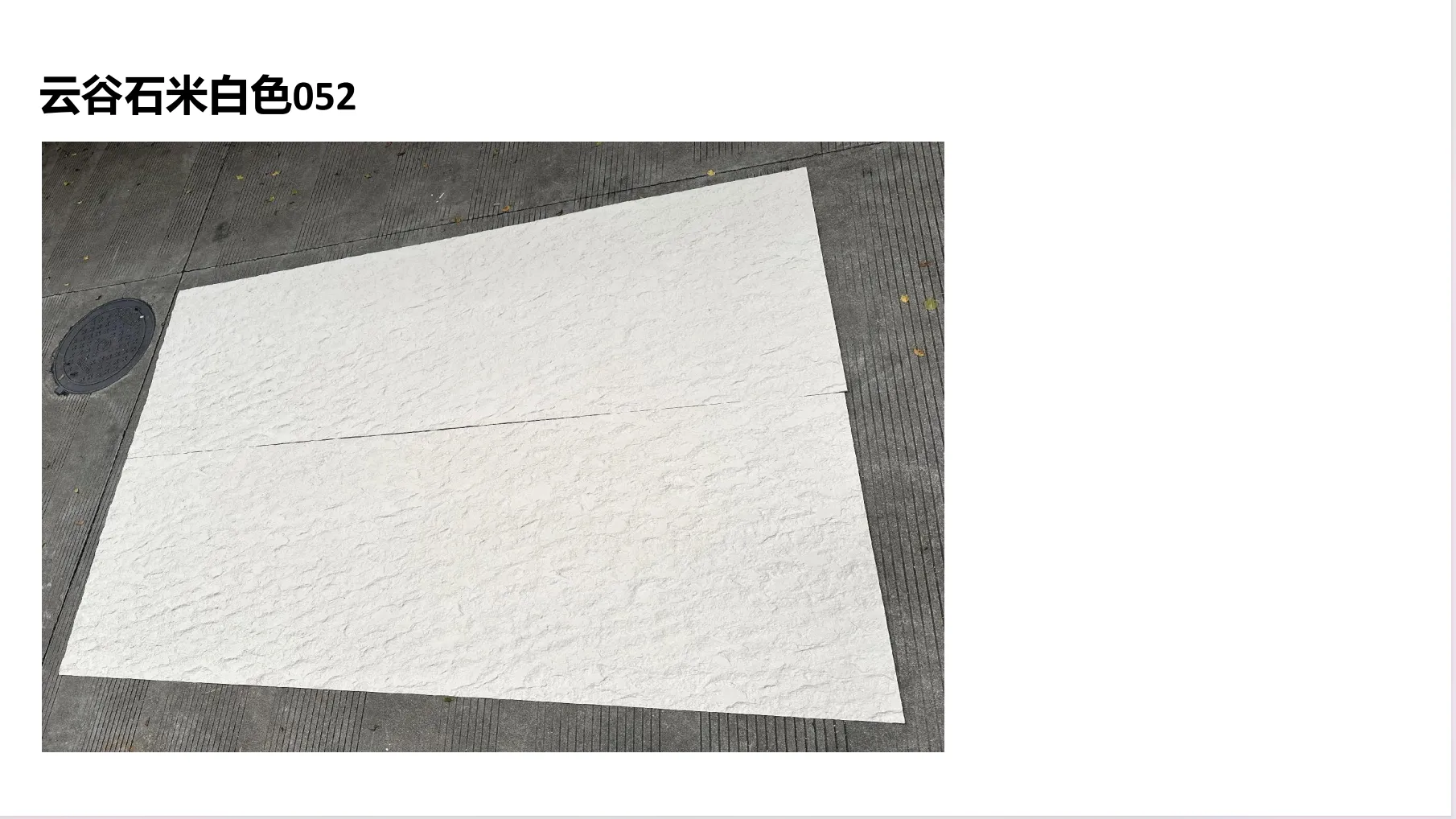
At its core, Cloud Stone is a marvel of modern material science. Think of it as a bridge between the organic beauty of natural stone and the precision of cutting-edge technology. It's classified as a modified composite material panel, which means it blends natural minerals (like crushed stone or clay) with high-performance polymers and fibers. The result? A material that's lightweight yet strong, flexible yet durable, and—most importantly—stunningly versatile in how it looks and feels.
One of the key components that sets Cloud Stone apart is its use of mcm flexible stone technology. Unlike traditional stone slabs that are heavy and brittle, mcm (modified composite material) flexible stone is engineered to bend without breaking. Imagine a sheet of material that can wrap around a curved column, follow the contour of a spiral staircase, or even be applied to uneven surfaces—all while retaining the texture and appearance of natural stone. That flexibility opens up a world of design possibilities that were once impossible with rigid materials.
But Cloud Stone isn't just about flexibility. It's also about aesthetics. Manufacturers have mastered the art of mimicking the look of rare and exotic stones, from the deep blues of travertine (starry blue) to the metallic sheen of lunar peak silvery . Want the warm glow of aged metal? There's a finish that resembles foamed aluminium alloy board (vintage silver) . Prefer the earthy charm of weathered wood? Cloud Stone can do that too. The goal isn't to replace natural materials, but to offer a sustainable, high-performance alternative that captures their essence—without the drawbacks.
Let's talk about that flexibility again, because it's a game-changer. Traditional stone slabs, even thin ones, can't bend more than a few degrees without cracking. Cloud Stone, thanks to its composite structure, can flex up to 30 degrees or more (depending on the thickness), making it ideal for curved surfaces, undulating facades, and custom shapes. This is a dream come true for architects who want to move beyond boxy, straight-line designs. Imagine a museum with a wave-like exterior, where the walls flow like water—that's possible with Cloud Stone. Or a residential home with a spiral entryway where the surface curves seamlessly from floor to ceiling. No more awkward seams or broken slabs; just smooth, continuous beauty.
You might be thinking, "If it's flexible, is it strong enough?" The answer is a resounding yes. Cloud Stone is engineered to withstand the elements, from scorching sun and heavy rain to freezing temperatures and high humidity. Its composite structure resists scratches, chips, and stains, making it suitable for high-traffic areas like (shopping malls), airports, and even outdoor patios. Unlike natural marble, which etches easily with acidic substances, Cloud Stone holds up to spills—coffee, wine, juice—without permanent damage. And because it's lightweight (about 1/5 the weight of traditional stone), it puts less stress on building structures, reducing the need for extra support and cutting down on construction costs.
Beauty is subjective, but Cloud Stone offers something for every taste. Whether you're drawn to the rustic charm of rustic red stone, the modern elegance of lunar peak golden , or the celestial vibe of travertine (starry orange) , there's a finish to match. The manufacturing process allows for incredible detail—think the subtle veining of marble, the rough texture of river rock, or the smooth sheen of polished concrete. And because it's a composite, the color and pattern are consistent throughout the material, not just on the surface. That means if it gets scratched, the damage is less noticeable, and the overall look remains intact for years.
In an era where sustainability is no longer optional, Cloud Stone shines. Traditional stone mining can be destructive, stripping landscapes and consuming vast amounts of energy. Cloud Stone, on the other hand, uses recycled materials in its production (like crushed stone waste from quarries) and requires less energy to manufacture. It's also lightweight, which reduces fuel consumption during transportation. And because it's durable, it lasts longer, meaning fewer replacements and less waste over time. For builders and homeowners aiming for green building materials certifications, Cloud Stone is a smart choice that aligns with eco-friendly goals.
| Material | Flexibility | Durability | Aesthetics | Sustainability |
|---|---|---|---|---|
| Cloud Stone | High (can bend up to 30°+) | Excellent (resistant to weather, scratches, stains) | Versatile (mimics stone, metal, wood; finishes like travertine starry blue, lunar peak silvery) | High (recycled materials, low energy use, lightweight) |
| Traditional Marble | Low (brittle, prone to cracking) | Moderate (etches easily, stains) | High (natural veining, luxurious look) | Low (extensive mining, heavy transportation) |
| Fair-Faced Concrete | Very Low (rigid, no bending) | High (durable, weather-resistant) | Industrial (smooth or textured, limited color options) | Moderate (high carbon footprint, but recyclable) |
| Foamed Aluminium Alloy Board (vintage silver) | Moderate (can flex slightly) | High (corrosion-resistant, lightweight) | Modern (metallic, industrial look) | Moderate (recyclable, but energy-intensive production) |
As the table shows, Cloud Stone isn't just better in one area—it excels across the board. It offers the flexibility of a synthetic material, the durability of concrete, the aesthetics of natural stone, and the sustainability of eco-friendly products. For designers who refuse to compromise, that's a winning combination.
The short answer? Almost anywhere. Cloud Stone's versatility makes it suitable for both interior and exterior applications, in residential, commercial, and public spaces. Let's explore a few examples to get your creative juices flowing.
Residential: A Home That Breathes
Imagine designing a modern home with a curved living room wall that serves as both a focal point and a functional space. With Cloud Stone in travertine (starry red) , that wall becomes a work of art—deep red tones with flecks of "stars" that catch the light. In the kitchen, Cloud Stone countertops in dolomitic travertine (dark grey) offer a sleek, durable surface that can handle pots, pans, and spills without showing wear. Upstairs, the master bathroom features a freestanding tub surrounded by Cloud Stone in marble veil white , creating a spa-like retreat. Even outdoor spaces, like a covered patio or pool deck, can benefit from Cloud Stone's weather resistance—no more worrying about cracked tiles or faded colors.
Commercial: Making a Statement
For businesses, first impressions matter. A boutique hotel might use Cloud Stone in lunar peak golden for its lobby facade, creating a warm, inviting glow that stands out on the street. Inside, the elevator walls could be wrapped in foamed aluminium alloy board (vintage gold) Cloud Stone, adding a touch of luxury. A tech company's office might opt for a more industrial look, with fair-faced concrete -style Cloud Stone in the common areas and thread -patterned panels in meeting rooms. Restaurants, too, can benefit—imagine a sushi bar with a curved countertop in slate portoro Cloud Stone, or a café with accent walls in weaving (khaki) texture, bringing warmth to the space.
Public Spaces: Durability Meets Design
Public buildings need materials that can handle heavy use and harsh conditions. A museum with high ceilings and curved exhibit walls could use Cloud Stone to create immersive environments—think a space dedicated to marine life, with walls in travertine (starry blue) that mimic the ocean depths. A train station might opt for rough granite stone (medium grey) Cloud Stone for its platforms, combining durability with a natural, timeless look. Even outdoor amphitheaters or park pavilions can benefit from Cloud Stone's resistance to rain, snow, and UV rays, ensuring they look great for years to come.
In today's world, sustainability isn't just a buzzword—it's a responsibility. Cloud Stone aligns with the principles of green building by reducing the environmental impact of construction. Here's how:
For builders and developers aiming to achieve green building certifications (like LEED or BREEAM), Cloud Stone can contribute points toward sustainability goals. It's a material that lets you build beautifully without compromising the planet.
As we look ahead, the demand for innovative construction materials will only grow. Architects are no longer limited by what's possible—they're limited only by their imagination. Cloud Stone, with its flexibility, durability, and aesthetic range, is poised to be at the forefront of this movement. We're already seeing it used in award-winning projects around the world, from the curved facade of a cultural center in Seoul to the floating roof of a boutique hotel in Santorini.
What's next for Cloud Stone? Manufacturers are constantly experimenting with new finishes and textures, from gradient color rammed earth board to ancient wood patterns. There's also ongoing research into making the material even more sustainable, perhaps by incorporating recycled plastic or agricultural waste into its composition. The goal is to keep pushing the boundaries of what's possible, ensuring that Cloud Stone remains a top choice for years to come.
If you're a designer, builder, or homeowner looking for a material that combines beauty, functionality, and sustainability, Cloud Stone is worth serious consideration. It's not just a surface—it's a tool for bringing your vision to life. Whether you're dreaming of a home with curved walls that flow like poetry, a commercial space that stands out from the crowd, or a public building that's both durable and beautiful, Cloud Stone delivers.
In the end, construction surfaces are more than just what we see—they're what we feel, what we interact with, and what tells our story. Cloud Stone doesn't just cover walls or floors; it creates experiences. It's a reminder that in the world of architecture, the future is flexible, sustainable, and stunningly beautiful. So why not let your next project reach for the clouds?
Recommend Products












