
Walk into any successful retail space today, and you'll notice something beyond the products on the shelves. It's the air of intention—the way light spills over textures, the hum of conversation softening against walls, the quiet nudge to pause, touch, and explore. Modern retail design has evolved from a functional afterthought to a strategic art form, where every material, color, and curve works together to tell a story. In this landscape, one material is emerging as a silent protagonist: Cloud Stone. More than just a surface, it's a medium for creating experiences that linger in customers' minds long after they've left the store. Let's dive into how Cloud Stone is redefining retail aesthetics, why it matters, and how it can turn casual browsers into loyal patrons.
Think back to the last time you wandered into a store that felt "just okay." Chances are, you grabbed what you needed and left—no photos, no lingering, no memory of the space itself. Now recall the opposite: a boutique with walls that seemed to glow, floors that invited you to slow down, or a checkout area that made you want to snap a quick pic for Instagram. That's the power of aesthetics in retail. In an era where e-commerce offers endless convenience, physical stores must compete by delivering something online can't: a sensory, emotional experience.
Aesthetics in retail aren't just about "looking pretty." They're about first impressions (customers form opinions in 7 seconds), emotional connection (warmth, curiosity, trust), and brand identity (Is your store sleek and modern? Cozy and artisanal? Bold and edgy?). When done right, good design doesn't just attract customers—it keeps them engaged. Studies show that shoppers spend 15% more time in visually appealing stores, and 60% of consumers say a store's design influences their purchase decisions. In short, aesthetics drive loyalty, word-of-mouth, and yes, sales.
This is where materials like Cloud Stone step in. Unlike generic drywall or glossy tiles, Cloud Stone brings depth, texture, and personality to a space. It's not just a backdrop—it's a character in the story your brand is telling.
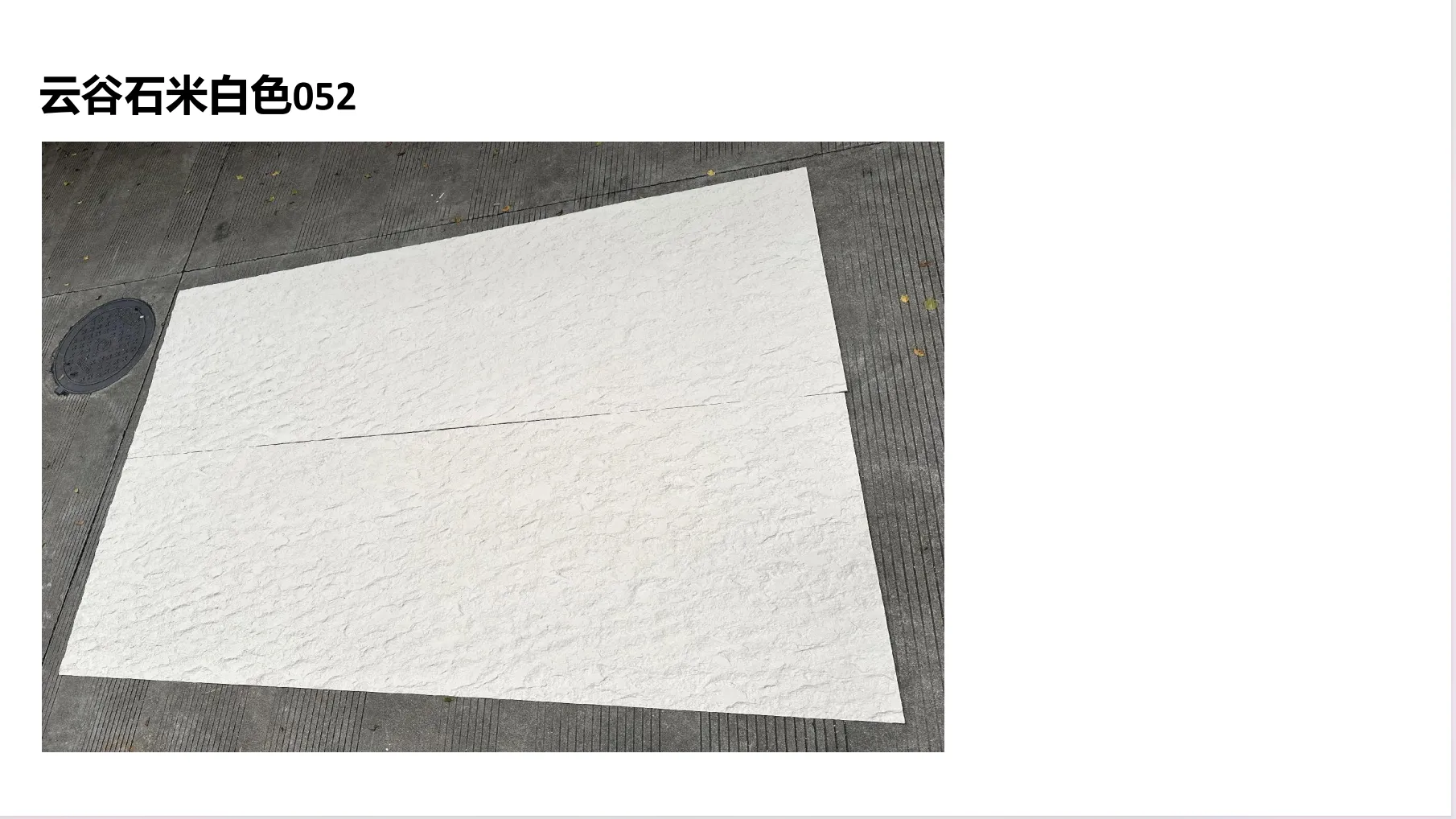
So, what exactly is Cloud Stone? Imagine a surface that feels like it was carved by wind and time, with soft, undulating textures that catch light like morning fog on a mountain. It's not smooth like marble or flat like concrete; it has a lived-in, organic quality that feels both ancient and modern. Cloud Stone gets its name from its resemblance to cumulus clouds—billowy, layered, and full of movement—yet it's surprisingly durable, making it ideal for high-traffic retail spaces.
One of Cloud Stone's greatest strengths is its versatility. It can shift from rugged to refined depending on how it's used. A wall clad in Cloud Stone might feel earthy and grounding in a bohemian clothing store, but paired with sleek lighting and metallic accents (think Lunar Peak Silvery trim), it becomes the epitome of minimalist luxury in a tech boutique. Its neutral palette—soft grays, warm beiges, and hints of silver—acts as a blank canvas, letting your products take center stage while adding subtle depth to the space.
Let's talk about light. Walk into a store with Cloud Stone walls during golden hour, and you'll see why designers rave about it. The stone's texture scatters natural light, creating a diffused, glow-like effect that makes the entire space feel warm and inviting. At night, under track lighting, those same textures cast gentle shadows, adding drama without feeling harsh. It's a material that interacts with its environment, transforming throughout the day and keeping the space feeling dynamic.
Then there's the tactile appeal. Run a hand over Cloud Stone, and you'll feel a subtle grit, like fine sandstone, that invites touch—a rare quality in a world of overly polished surfaces. This sensory detail matters: customers who engage with a space through touch are more likely to form an emotional bond with the brand. It's why luxury retailers often use materials that beg to be felt, and Cloud Stone fits that bill perfectly.
Of course, Cloud Stone isn't the only material vying for attention in retail design. There's fair-faced concrete for industrial chic, wood grain board for rustic warmth, and even foamed aluminium alloy board (vintage silver) for a futuristic edge. But Cloud Stone offers something these materials can't: a balance of softness and strength, tradition and innovation. Let's break it down:
| Material | Aesthetic Vibe | Durability | Light Interaction | Suitability for Retail |
|---|---|---|---|---|
| Cloud Stone | Organic, textured, versatile (can shift from earthy to modern) | High (resistant to scratches, easy to clean) | Diffuses light; creates warm, dynamic shadows | Excellent—engages sight and touch; timeless appeal |
| Fair-faced Concrete | Raw, industrial, minimalist | Very high (durable but prone to staining) | Absorbs light; can feel cold in large spaces | Good for edgy brands, but lacks warmth |
| Wood Grain Board | Warm, cozy, rustic | Moderate (susceptible to water damage, fading) | Softens light; adds warmth | Great for intimate spaces, but less durable for high traffic |
| Lunar Peak Silvery | Sleek, metallic, modern | High (scratch-resistant, reflective) | Reflects light; can feel harsh if overused | Best as an accent; pairs well with Cloud Stone for contrast |
The table tells the story: Cloud Stone isn't just another option—it's a material that checks multiple boxes. It's durable enough for busy stores, warm enough to make customers feel welcome, and dynamic enough to keep the space feeling fresh. When paired with complementary materials—like wood grain board for warmth or Lunar Peak Silvery for a touch of glamour—it becomes even more powerful.
Let's bring this to life with a hypothetical (but realistic) example. Meet "Ember," a small women's clothing brand specializing in sustainable, bohemian-inspired pieces. Before redesigning, Ember's store was functional but forgettable: white walls, generic carpet, and harsh overhead lighting. Sales were steady, but foot traffic was low, and customers rarely stayed longer than 10 minutes.
The owner, Clara, wanted to create a space that felt like an extension of her brand—warm, organic, and a little magical. She worked with a designer who suggested cladding the main wall in Cloud Stone, adding weaving (khaki) textiles for softness, and installing warm, dimmable lighting. The back wall, previously a blank white expanse, was transformed with Cloud Stone in a warm beige tone, its texture catching the light from new pendant lamps. Near the checkout area, a small accent wall in Lunar Peak Silvery added a subtle metallic contrast, making the register feel like a focal point without overwhelming the space.
The results were striking. Within a month, foot traffic increased by 35%. Customers lingered longer—an average of 22 minutes, up from 10—and social media mentions of the store spiked, with many posts featuring the Cloud Stone wall. Clara noted, "People walk in and immediately say, 'Wow, this feels different.' They touch the walls, take photos, and talk about the space to their friends. It's not just about selling clothes anymore; it's about creating a place they want to be in."
What made the difference? Cloud Stone didn't just look good—it created an atmosphere. It made Ember feel like a destination, not just a store. And in retail, that's everything.
Aesthetics aside, retailers need materials that can keep up with the chaos of daily life: scuff marks from strollers, spills from coffee cups, the wear and tear of hundreds of footsteps. Cloud Stone delivers here, too. Made from a blend of natural stone and MCM flexible stone (a lightweight, durable composite), it's resistant to scratches, stains, and moisture—no need to panic if a customer spills their latte. It's also easy to clean: a quick wipe with a damp cloth is usually all it takes.
Installation is another win. Unlike traditional stone, which can be heavy and time-consuming to install, Cloud Stone comes in lightweight panels that fit together seamlessly. This means less downtime for your store during renovations—a crucial factor for retailers who can't afford to close for weeks. Plus, MCM technology allows for customization: panels can be cut to size, shaped into curves, or even combined with other materials like foamed aluminium alloy board (vintage gold) for a truly unique look.
Sustainability is another bonus. Cloud Stone is often made with recycled materials, and its durability means it won't need to be replaced every few years—reducing waste. For brands that prioritize eco-friendliness, this is a selling point they can highlight to customers, aligning their values with their physical space.
Retail design is always evolving, but three trends are shaping the industry right now—and Cloud Stone fits perfectly into all of them.
Biophilic Design: This trend focuses on bringing nature indoors to reduce stress and boost well-being. Cloud Stone's organic texture mimics natural rock formations, creating a subtle connection to the outdoors without feeling kitschy. Unlike plastic plants or fake wood, it's a genuine natural material, making that connection feel authentic.
Experiential Spaces: Shoppers don't just want to buy things—they want to "collect" experiences. Cloud Stone turns a store into a photo-worthy backdrop, encouraging customers to share their visit online. It also slows people down, making them more likely to explore and discover new products.
Minimalism with Texture: Clean lines and neutral palettes are still in, but flat, boring surfaces are out. Designers are adding depth with textured materials like Cloud Stone, which keep spaces feeling calm but not sterile. Pair it with rough granite stone (medium grey) accents, and you've got a minimalist look with personality.
Let's address the elephant in the room: cost. Cloud Stone isn't the cheapest material on the market, but it's important to see it as an investment, not an expense. The ROI comes in the form of increased foot traffic, longer customer stays, higher sales, and stronger brand loyalty. Think of it this way: a well-designed store can charge a premium for products because the experience adds value. Customers are willing to pay more to shop in a space that makes them feel good.
Plus, Cloud Stone's durability means you won't be repainting or retiling every few years. It's a one-time cost that pays off for decades. And with MCM technology, installation costs are lower than traditional stone, making it more accessible than you might think.
At the end of the day, retail is about storytelling. Your products have a story—where they're made, who made them, what they stand for. Your store should tell that story, too. Cloud Stone isn't just a surface; it's a narrative device. It says, "We care about beauty. We care about how you feel. We're not just selling products—we're inviting you into our world."
So, if you're a retailer looking to stand out in a crowded market, don't underestimate the power of materials. Choose ones that speak to your brand, engage your customers, and turn your store into an experience. Cloud Stone, with its warmth, texture, and versatility, might just be the missing piece in your story.
After all, in a world of endless choices, the spaces that stick in our minds are the ones that make us feel something. And Cloud Stone? It's a material that feels like home.
Recommend Products












