
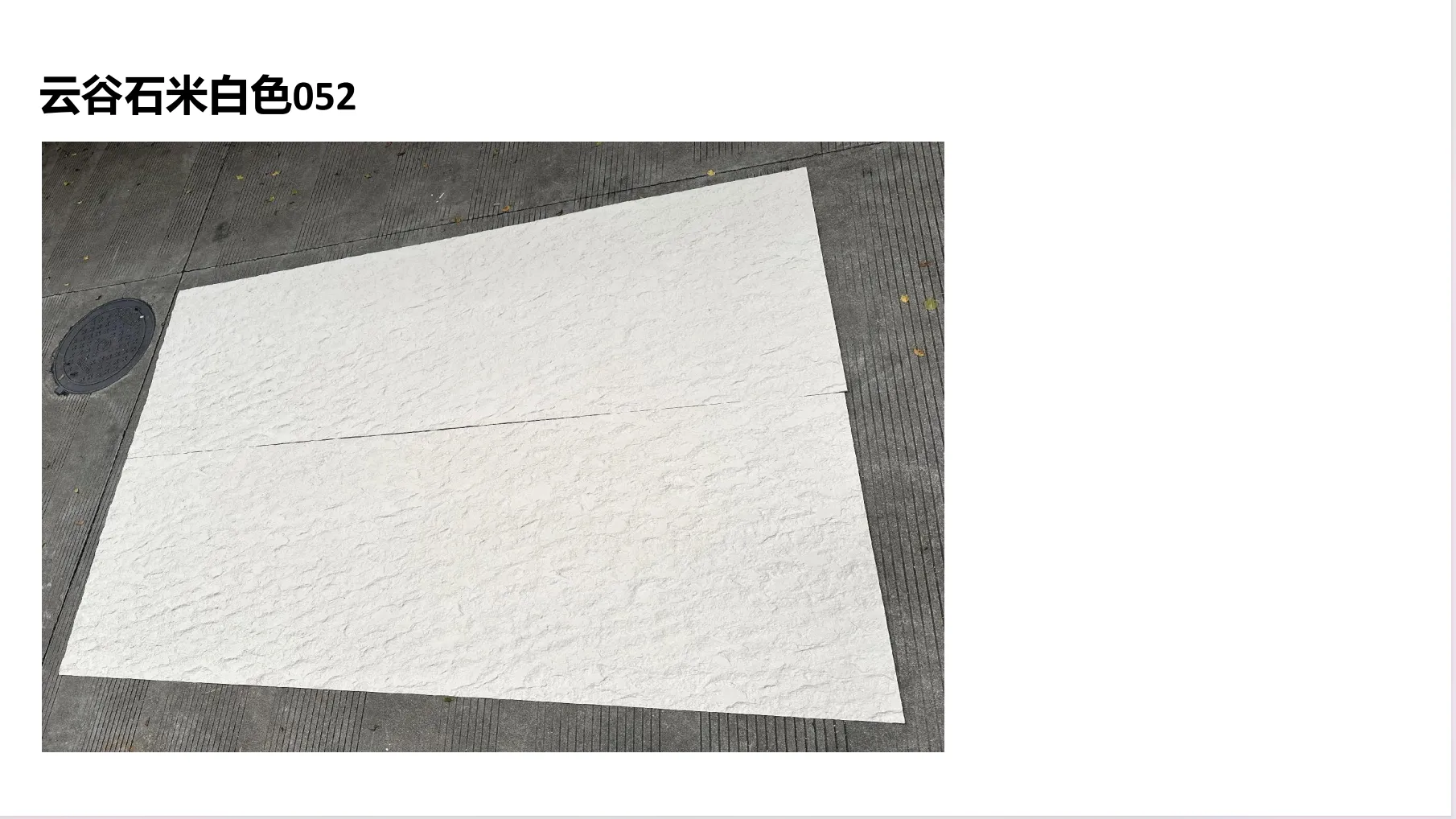
Walk into any thoughtfully designed space—a boutique hotel lobby, a community library, or even a cozy home—and you'll notice something subtle but powerful: the materials around you aren't just there to fill space. They shape how you feel, how you move, and how you connect with the environment. In a world where architecture is as much about emotion as it is about function, the search for building materials that blend beauty, practicality, and responsibility has never been more urgent. Enter Cloud Stone, a material that's redefining what's possible in construction and design. Let's dive into what makes it stand out: its featherlight versatility, surprising strength, and unwavering commitment to sustainability.
For decades, architects and builders have grappled with a trade-off: the beauty of natural stone or the durability of concrete often came with a heavy price—literally. Traditional materials like granite, marble, or even standard concrete can weigh hundreds of kilograms per square meter, limiting design possibilities, driving up transportation costs, and putting strain on building structures. Imagine a designer wanting to create a sweeping, curved accent wall or a cantilevered overhang; heavy materials would require extra structural support, adding complexity and expense. That's where Cloud Stone changes the game.
At the heart of Cloud Stone's lightness is mcm flexible stone technology—a modified composite material that marries the look and texture of natural stone with the flexibility of modern polymers. Unlike solid slabs of travertine or limestone, Cloud Stone sheets weigh in at a fraction of the weight, often as little as 8–12 kg per square meter. This isn't just a numbers game; it's about freedom. Installers no longer need cranes to hoist heavy panels; a two-person team can maneuver Cloud Stone with ease, cutting down on labor time and costs. For builders working on high-rise projects, the reduced weight means less stress on foundations and support beams, opening doors to more ambitious, gravity-defying designs.
Take, for example, the challenge of cladding a historic building with modern materials. Many older structures can't bear the load of traditional stone, but Cloud Stone's lightweight nature allows for sympathetic restoration—preserving the past while embracing the future. Or consider a retail space aiming for a minimalist, airy vibe. With Cloud Stone, walls can be thin yet textured, floors can feel solid underfoot without weighing down the space, and even ceiling panels can add visual interest without requiring reinforced joists. It's not just about making construction easier; it's about letting creativity take the lead.
"Lightweight" often gets a bad rap in construction circles, conjuring images of flimsy materials that scratch, crack, or fade over time. But Cloud Stone turns that stereotype on its head. Its strength comes from a carefully engineered blend of natural minerals, high-performance polymers, and advanced manufacturing techniques—think of it as the building material equivalent of a high-tech athletic shoe: light on its feet, but built to withstand the rigors of daily use.
To put it to the test, let's compare Cloud Stone to fair-faced concrete , a material prized for its raw, industrial aesthetic and durability. While fair-faced concrete is strong, it's also dense and prone to cracking under extreme temperature changes. Cloud Stone, by contrast, flexes slightly with thermal expansion and contraction, reducing the risk of unsightly cracks. In independent lab tests, it's shown resistance to impact (think of a stray basketball hitting a wall or heavy furniture being dragged across a floor), water absorption (critical for humid climates or outdoor use), and UV radiation (so that vibrant travertine (starry blue) finish stays vivid for years, not months).
What's most impressive is how Cloud Stone maintains its integrity in diverse environments. Whether it's installed in a coastal home buffeted by salt spray, a mountain lodge facing freezing winters, or a busy airport terminal with thousands of footsteps daily, it holds up. Part of this resilience comes from its composition: unlike natural stone, which can have hidden flaws or porous areas, Cloud Stone is manufactured to uniform standards, ensuring consistent strength across every panel. It's the kind of reliability that gives architects peace of mind—and building owners confidence that their investment will stand the test of time.
In downtown Portland, a popular café recently renovated its exterior with Cloud Stone panels in foamed aluminium alloy board (vintage silver) . The designers wanted a sleek, modern look that could handle the city's rainy winters and busy foot traffic. A year later, the panels still gleam—no rust, no peeling, and only minor scuffs that blend into the material's vintage aesthetic. "We were worried a lightweight material might not hold up to daily use," says the café owner, "but it's been tougher than we ever expected. And our customers love how it catches the light at sunset."
In an era where every industry is being called to account for its environmental impact, building materials can't just be beautiful or strong—they need to be kind to the planet, too. Cloud Stone steps up here, aligning with the global shift toward green building materials that reduce carbon footprints, minimize waste, and support a circular economy.
Let's start with manufacturing. Traditional stone quarrying is energy-intensive, often involving heavy machinery and large-scale excavation that disrupts ecosystems. Cloud Stone, by contrast, uses a closed-loop production process: excess materials from manufacturing are recycled back into the system, and water used in production is treated and reused. The result? Up to 30% less energy consumption compared to traditional stone processing, and a fraction of the waste sent to landfills.
Then there's the matter of transportation. Because Cloud Stone is lightweight, fewer trucks are needed to deliver materials to job sites, cutting down on fuel use and emissions. For a typical commercial project, this can translate to a 20–25% reduction in carbon emissions from transportation alone. And once installed, Cloud Stone contributes to energy efficiency: its insulating properties help regulate indoor temperatures, reducing the need for heating and cooling—a win for both the environment and utility bills.
Perhaps most importantly, Cloud Stone is designed to last. In a world of fast fashion and disposable goods, buildings built with durable materials reduce the need for frequent renovations and replacements, which are major sources of construction waste. When a Cloud Stone panel does reach the end of its life (decades down the line), it's recyclable, closing the loop on its environmental impact. It's sustainability that doesn't require sacrificing style—a concept that's increasingly non-negotiable for today's eco-conscious designers and clients.
| Material | Weight (kg/m²) | Impact Resistance | Carbon Footprint (kg CO₂/m²) | Design Flexibility |
|---|---|---|---|---|
| Traditional Granite | 25–30 | High | 18–22 | Low (rigid slabs) |
| Fair-Faced Concrete | 20–25 | Medium-High | 15–18 | Medium (moldable but heavy) |
| Cloud Stone (mcm flexible stone) | 8–12 | High | 6–8 | High (curves, thin panels, custom cuts) |
| Solid Wood Paneling | 10–15 | Low | 12–15 (depending on sourcing) | Medium (prone to warping) |
Cloud Stone's blend of lightness, strength, and sustainability makes it versatile enough for almost any project. In residential spaces, it's used for feature walls, backsplashes, and even fireplace surrounds—adding texture without overwhelming small rooms. Commercial designers love it for retail facades, hotel lobbies, and office partitions, where its clean lines and durability shine. Public spaces, too, benefit: parks, museums, and transit hubs are embracing Cloud Stone for benches, cladding, and outdoor art installations that can withstand heavy use and harsh weather.
One of the most exciting applications is in adaptive reuse projects—taking old, disused buildings and giving them new life. A former factory in Detroit, for example, was converted into a community center using Cloud Stone to clad the interior walls. The lightweight panels meant the original structure didn't need costly reinforcements, and the material's modern look breathed fresh energy into the space. "It's like giving the building a second chance," says the project architect. "And because Cloud Stone is sustainable, we're not just preserving history—we're protecting the future, too."
Cloud Stone isn't just a building material; it's a statement. It says that beauty doesn't have to be heavy, strength doesn't have to be rigid, and sustainability doesn't have to be an afterthought. In a world where we're all trying to do more with less—less waste, less energy, less compromise—materials like Cloud Stone are leading the way. They remind us that the spaces we build are more than just structures; they're legacies. And with Cloud Stone, those legacies can be light, strong, and kind to the planet we call home.
Recommend Products












