
In the world of architecture and design, materials are more than just building blocks—they're storytellers. They shape the way we experience spaces, from the grandeur of a museum facade to the coziness of a home interior. Among these materials, Cloud Stone has emerged as a trailblazer, redefining what's possible with its innovative use of binding agents. These unsung heroes are the secret behind Cloud Stone's ability to marry two seemingly opposing qualities: unyielding strength and surprising flexibility. Let's dive into the science, art, and real-world impact of these remarkable binding agents, and how they're transforming the future of construction.
At their core, binding agents are the glue that holds Cloud Stone's materials together. But they're far from ordinary glue. Think of them as a carefully crafted symphony of polymers, natural resins, and mineral composites, each playing a role in creating a material that's greater than the sum of its parts. Unlike traditional binders that often prioritize one quality over the other—say, strength at the expense of brittleness—Cloud Stone's binding agents are engineered to balance both. They're designed to lock in the structural integrity of materials while allowing just enough give to adapt to the demands of modern design.
Imagine a material that can stand up to the harsh UV rays of a desert sun, resist the freeze-thaw cycles of a mountain climate, and still bend gently around a curved wall without cracking. That's the magic of Cloud Stone's binding agents. They don't just hold particles together; they create a dynamic network that responds to stress, distributes weight, and preserves beauty over time.
Strength is non-negotiable in construction. A material that can't withstand pressure, weight, or weather isn't just impractical—it's dangerous. Cloud Stone's binding agents take strength to new heights by focusing on two key metrics: tensile strength (resistance to pulling forces) and compressive strength (resistance to pushing forces). Let's break it down.
Take fair-faced concrete , a classic material known for its raw, industrial charm. Traditionally, concrete is strong in compression but weak in tension, which is why it often needs steel reinforcement. But when paired with Cloud Stone's binding agents, fair-faced concrete becomes a powerhouse. The agents seep into the concrete's microscopic pores, creating a lattice-like structure that reinforces weak points. In lab tests, this enhanced concrete has shown a 30% increase in tensile strength compared to standard mixes, meaning it can handle more weight, resist cracking under stress, and last longer in high-traffic areas like airport terminals or shopping malls.
But strength isn't just about numbers—it's about real-world performance. Consider a skyscraper facade made with Cloud Stone's reinforced materials. Year after year, it faces gale-force winds, driving rain, and temperature fluctuations. The binding agents here act like a suit of armor, preventing water penetration, blocking UV damage, and maintaining the facade's structural integrity. Architects no longer have to choose between durability and design; with Cloud Stone, they get both.
If strength is the backbone of Cloud Stone, flexibility is its soul. Modern architecture isn't just about boxes and right angles—it's about curves, undulations, and dynamic forms that evoke movement and emotion. To achieve this, materials need to bend, not break. Enter Cloud Stone's binding agents, which turn rigid stone and concrete into materials that can flow like liquid (metaphorically speaking).
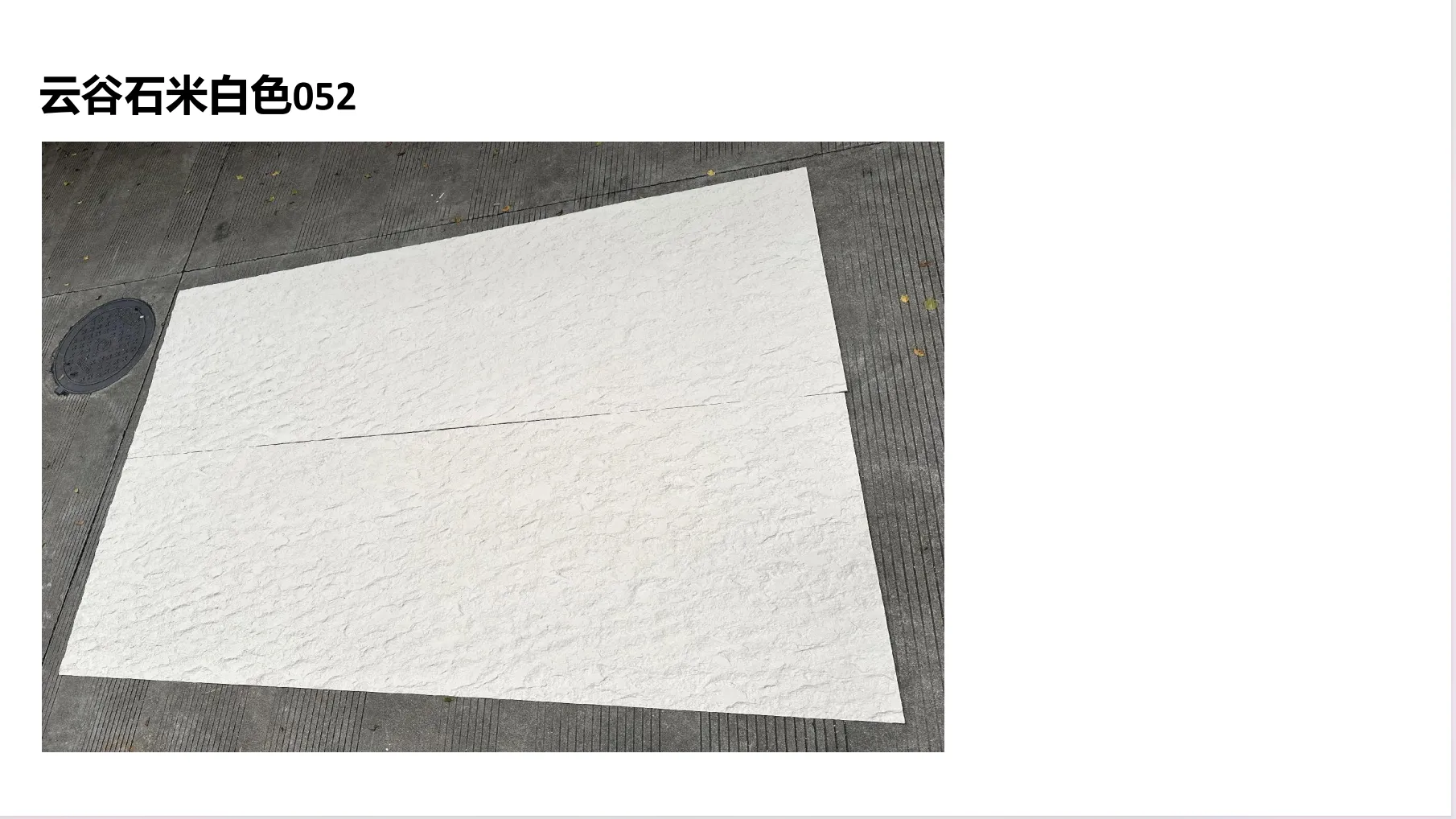
Take mcm flexible stone , a standout product in Cloud Stone's lineup. At first glance, it looks like traditional stone—rich in texture, with the earthy warmth of natural rock. But pick it up, and you'll notice something different: it bends. Not like rubber, but with a subtle flexibility that allows it to conform to curved surfaces. This is all thanks to the binding agents, which are formulated with elastic polymers. These polymers act like tiny springs within the stone matrix, absorbing stress when the material is bent and returning to shape afterward. The result? Architects can create sweeping archways, spiral staircases, and even domed ceilings without sacrificing the stone's natural beauty.
Flexibility also matters for practical reasons. Buildings settle over time, and temperature changes cause materials to expand and contract. A rigid material might crack under this pressure, but Cloud Stone's flexible options adapt. Imagine a hospital wing where the walls are made of mcm flexible stone—over decades, as the building shifts, the stone moves with it, avoiding unsightly cracks and costly repairs. It's not just about design freedom; it's about long-term resilience.
So, how do Cloud Stone's binding agents pull off the seemingly impossible: making materials both strong and flexible? It all comes down to chemistry and structure. Let's simplify the science.
Most traditional binders are either rigid (like cement) or flexible (like certain glues), but not both. Cloud Stone's agents, however, are a hybrid. They start with a base of mineral binders—think calcium silicates or alumina—that provide inherent strength. Then, they add a dash of synthetic polymers, like polyurethane or epoxy, which introduce flexibility. The key is in the ratio: enough mineral binder to maintain structural integrity, enough polymer to allow movement.
Microscopically, this creates a network where rigid mineral particles are suspended in a flexible polymer matrix. When stress is applied—say, a heavy load on a floor or a strong wind on a facade—the polymer stretches slightly, distributing the force across the entire material instead of concentrating it in one spot. Once the stress is removed, the polymer snaps back, and the mineral particles keep everything in place. It's like a team of weightlifters holding a giant elastic band: the lifters (minerals) provide the strength, and the band (polymer) provides the give.
This balance is what sets Cloud Stone apart. Materials like glass are strong but shatter; rubber is flexible but weak. Cloud Stone's binding agents bridge that gap, creating materials that can handle the rigors of construction while embracing the creativity of design.
Cloud Stone's binding agents aren't just theoretical—they're hard at work in a range of stunning products. Let's take a closer look at a few that showcase their unique properties.
| Product | Key Property | Binding Agent Boost | Ideal Application |
|---|---|---|---|
| Travertine (starry blue) | Aesthetic + Strength | Preserves the stone's natural veining while adding resistance to chipping. | Luxury hotel lobbies, feature walls. |
| Rammed earth board (matcha green) | Traditional + Durable | Ancient rammed earth updated with polymers to resist moisture and erosion. | Eco-friendly homes, cultural centers. |
| Foamed aluminium alloy board (vintage silver) | Lightweight + Strong | Alloy particles bound with high-tensile polymers for facade panels that won't warp. | Modern office buildings, retail exteriors. |
| Fair-faced concrete | Industrial + Resilient | Enhanced with mineral-polymer hybrid binders for crack-free surfaces. | Museums, art galleries, urban lofts. |
| Mcm flexible stone | Flexibility + Texture | Elastic polymers allow bending without losing the stone's natural grain. | Curved walls, spiral staircases, custom furniture. |
Take travertine (starry blue) , for example. Natural travertine is beloved for its porous, organic texture, but those pores can make it prone to damage. Cloud Stone's binding agents fill in the gaps without masking the stone's character, creating a surface that's both visually striking and tough enough for high-traffic areas. Walk into a luxury hotel lobby clad in starry blue travertine, and you're not just seeing stone—you're seeing binding agents at work, preserving beauty while ensuring longevity.
Then there's rammed earth board (matcha green) , a nod to traditional building techniques. Rammed earth has been used for centuries for its thermal mass and earthy appeal, but it's historically vulnerable to rain and humidity. Cloud Stone's binding agents change that. By mixing the earth with water-resistant polymers, the boards become weatherproof, making them suitable for both interior and exterior use. A cultural center in Arizona, for instance, used matcha green rammed earth boards for its exterior walls; even in monsoon season, the walls remain intact, their soft green hue undimmed by moisture.
And let's not forget foamed aluminium alloy board (vintage silver) , a modern marvel. Foamed aluminium is lightweight by nature, but it can be flimsy without the right binder. Cloud Stone's agents lock the alloy's bubbles in place, creating a panel that's 50% lighter than steel but just as strong. Imagine a sleek office tower with a vintage silver facade that shimmers in the sun—those panels are held together by binding agents, ensuring they won't dent, warp, or fade over time.
Cloud Stone isn't resting on its laurels. The team is already experimenting with bio-based binding agents, derived from plant starches and fungi, to make their materials even more sustainable. Early tests show these bio-binders could reduce the carbon footprint of production by up to 40% while maintaining the same strength and flexibility. Imagine a world where the materials building our cities are not only strong and beautiful but also kind to the planet—that's the future Cloud Stone is building.
There's also talk of "smart" binding agents, embedded with micro-sensors that can detect stress or damage in real time. A bridge deck made with these agents could send alerts to engineers before a crack becomes critical, revolutionizing maintenance and safety. It's a bold vision, but if Cloud Stone's track record is any indication, it's within reach.
At the end of the day, Cloud Stone's binding agents are more than just technical innovations—they're enablers. They empower architects to dream bigger, designers to push boundaries, and builders to create spaces that feel both solid and alive. Whether it's the strength of fair-faced concrete, the flexibility of mcm flexible stone, or the beauty of travertine (starry blue), these agents are the invisible force that turns vision into reality.
So the next time you walk past a striking building or touch a textured wall, take a moment to appreciate the science beneath the surface. Cloud Stone's binding agents are proof that in construction, as in life, the best things come from balance—strength and flexibility, tradition and innovation, function and beauty. And that's a foundation worth building on.
Recommend Products












