
To understand Cloud Stone's impact, we first need to acknowledge the environmental toll of conventional construction. Materials like brick, concrete, and natural stone are staples in building, but their production is energy-intensive. For example, manufacturing one ton of traditional concrete releases approximately 0.8 tons of CO2 into the atmosphere—a staggering number when multiplied by the billions of tons used globally each year. Natural stone extraction, too, often involves destructive mining practices that disrupt ecosystems, while transportation of heavy materials adds further emissions to the supply chain. Add to this the fact that many traditional materials have short lifespans, requiring frequent replacement, and it's clear: the status quo is no longer sustainable.
Waste is another critical issue. Construction and demolition waste accounts for over 30% of global waste generation, with much of it ending up in landfills. From unused marble slabs to discarded bricks, these materials decompose slowly, releasing methane—a potent greenhouse gas—over time. For architects, builders, and homeowners alike, the challenge has become clear: how to create beautiful, durable spaces without compromising the planet's health.
Cloud Stone was founded on a simple belief: building materials shouldn't harm the planet. Over the years, the brand has invested heavily in research and development to create products that prioritize sustainability without sacrificing performance or aesthetics. From foamed aluminium alloy board to fair-faced concrete , each line is engineered with the entire lifecycle in mind—from raw material sourcing to end-of-life disposal. Let's dive into some of the key innovations driving this change.
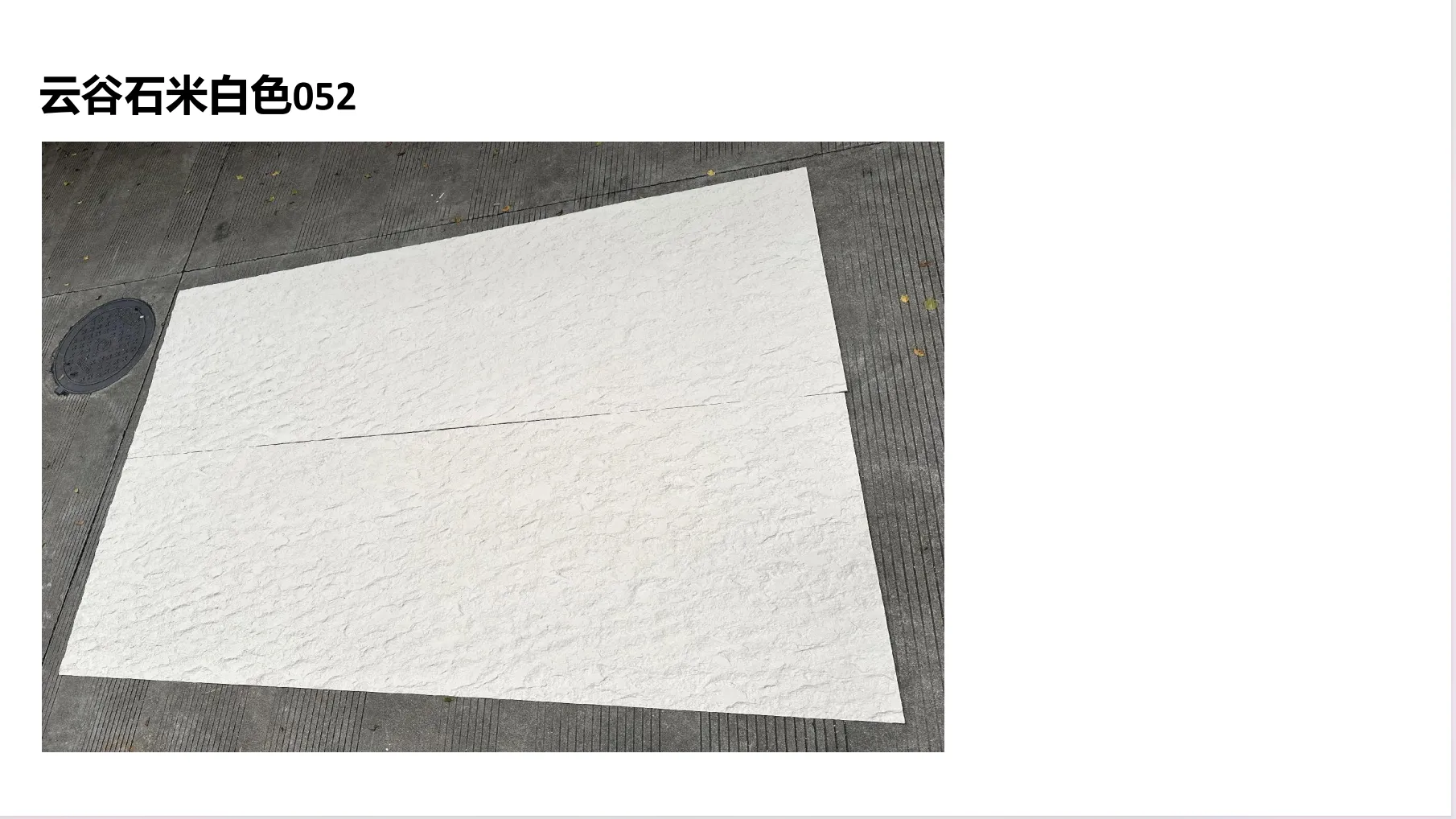
At the heart of Cloud Stone's sustainable offerings is mcm flexible stone —a revolutionary material that's changing the game for exterior and interior cladding. Unlike traditional natural stone, which is heavy, brittle, and energy-intensive to extract, MCM (Modified Composite Material) flexible stone is a lightweight alternative made from a blend of natural minerals, recycled polymers, and eco-friendly resins. Its flexibility allows it to be applied to curved surfaces with minimal waste, while its durability ensures it can withstand harsh weather conditions for decades.
The environmental benefits are clear: because MCM flexible stone is up to 80% lighter than natural stone, transportation requires fewer fossil fuels, cutting down on emissions. Its production process also uses significantly less water and energy compared to quarrying and processing natural stone. Perhaps most impressively, MCM flexible stone is fully recyclable at the end of its lifecycle, reducing the amount of construction waste sent to landfills. For projects aiming to achieve LEED or BREEAM certifications, this material is a game-changer—offering the look and feel of natural stone with a fraction of the carbon footprint.
Aluminium has long been prized in construction for its strength and corrosion resistance, but its production is traditionally energy-heavy. Cloud Stone's foamed aluminium alloy board (available in vintage silver, vintage gold, and gold finishes) addresses this issue head-on. By incorporating a foaming agent during production, the material becomes lighter—without compromising structural integrity—while using up to 60% less aluminium than solid aluminium panels. This not only reduces the amount of raw material needed but also lowers energy consumption during manufacturing.
Foamed aluminium alloy board also boasts impressive thermal and acoustic insulation properties, which can reduce a building's energy usage for heating and cooling. Over time, this translates to lower carbon emissions from the building's operation—a critical factor in lifecycle assessments. And because aluminium is 100% recyclable, with no loss of quality, these boards can be melted down and repurposed at the end of their life, closing the loop on sustainability. Whether used for facades, ceilings, or interior accents, foamed aluminium alloy board proves that strength and sustainability can go hand in hand.
Concrete is the most widely used construction material in the world, but its carbon footprint is a major concern. Traditional concrete production relies on cement, which is responsible for approximately 8% of global CO2 emissions. Cloud Stone's fair-faced concrete offers a smarter alternative. By optimizing the mix design—using supplementary cementitious materials like fly ash or slag—Cloud Stone reduces the cement content without compromising strength. The result is a material that requires no additional finishing (hence "fair-faced"), eliminating the need for paints, tiles, or other coatings that add to a project's carbon footprint.
Beyond its low-carbon production, fair-faced concrete is incredibly durable, with a lifespan of up to 100 years. This longevity means fewer replacements over time, reducing waste and emissions associated with demolition and reconstruction. Its natural texture and neutral tone also make it a versatile choice for modern architecture, blending seamlessly with other sustainable materials like MCM flexible stone and foamed aluminium alloy. For builders aiming to create timeless, eco-friendly spaces, fair-faced concrete is a testament to how simplicity can drive sustainability.
Cloud Stone's lunar peak series —available in silvery, golden, and black hues—draws inspiration from the moon's rugged, otherworldly landscape. But its beauty is more than skin deep: this line is engineered to minimize environmental impact at every stage. The series uses a blend of recycled aggregates and low-carbon binders, reducing the need for virgin materials. Its production process also incorporates renewable energy sources, further lowering its carbon footprint.
What sets the lunar peak series apart is its focus on energy efficiency in buildings. The material's unique composition provides excellent thermal insulation, helping to regulate indoor temperatures and reduce reliance on heating and cooling systems. In cold climates, this can lower energy bills by up to 30%, while in warmer regions, it reduces the strain on air conditioning units. For homeowners and businesses alike, this means long-term savings and a smaller carbon footprint—proving that sustainable materials can be both functional and visually striking.
To truly understand the environmental benefits of Cloud Stone's materials, it's essential to look beyond production and consider their entire lifecycle. The brand conducts rigorous lifecycle assessments (LCAs) for each product, measuring carbon emissions from raw material extraction, manufacturing, transportation, installation, use, and disposal. The results are clear: Cloud Stone's materials consistently outperform traditional alternatives in terms of carbon footprint, recyclability, and durability.
| Material Type | Carbon Footprint (kg CO2/m²) | Recyclability Rate (%) | Average Lifespan (Years) |
|---|---|---|---|
| Traditional Natural Stone | 45–60 | 10–15 | 20–30 |
| Traditional Aluminium Panel | 35–40 | 70–75 | 30–40 |
| Cloud Stone MCM Flexible Stone | 8–10 | 95+ | 50–60 |
| Cloud Stone Foamed Aluminium Alloy Board | 12–15 | 100 | 60–70 |
| Cloud Stone Fair-Faced Concrete | 15–18 | 85–90 | 80–100 |
As the table shows, Cloud Stone's materials have significantly lower carbon footprints than their traditional counterparts. For example, MCM flexible stone emits just 8–10 kg of CO2 per square meter, compared to 45–60 kg for natural stone. Its recyclability rate of 95%+ also means that even at the end of its life, the material continues to contribute to sustainability. When multiplied across a large-scale project—a commercial building, a housing development, or a public space—the impact is transformative.
Cloud Stone's commitment to sustainability isn't just theoretical—it's being put into practice in projects around the world. Take the Green Horizon Tower in Singapore, a 40-story mixed-use building clad in MCM flexible stone and lunar peak silvery panels. The project's architects chose these materials for their low carbon footprint and thermal insulation properties. As a result, the building has achieved LEED Platinum certification, with energy consumption 40% lower than similar structures. Its exterior, which mimics the look of natural stone, has become a landmark in the city's skyline—proving that sustainability and beauty can coexist.
Closer to home, the EcoVillage development in Portland, Oregon, used Cloud Stone's fair-faced concrete and foamed aluminium alloy board in its 50-unit residential complex. The materials' durability and recyclability were key factors in the project's goal of creating a zero-waste community. Residents report lower energy bills and a stronger sense of environmental responsibility, knowing their homes are built with the planet in mind.
Cloud Stone's focus on reducing the carbon footprint of construction materials is more than a marketing strategy—it's a commitment to the future of our planet. By prioritizing innovation, durability, and recyclability, the brand is proving that the construction industry can be a force for good. From mcm flexible stone to lunar peak series , each product is a step toward a world where buildings enhance our lives without harming the environment.
As architects, builders, and homeowners, we have the power to drive change through the materials we choose. By opting for sustainable alternatives like those offered by Cloud Stone, we can reduce emissions, minimize waste, and create spaces that stand the test of time. The future of construction is green—and Cloud Stone is leading the way.
Recommend Products












