
Let's start with a scenario we've all heard (or maybe even lived through): A construction crew arrives at a job site, ready to install new cladding for a boutique hotel's exterior. The material? Traditional natural stone slabs—gorgeous, but each weighing in at 80 pounds or more. Two workers strain to lift one, grunting as they maneuver it into place. By midday, (progress is behind), tempers are frayed, and someone mentions, "There's got to be a better way." Sound familiar? For too long, the building industry has traded ease for beauty, assuming that stunning, durable materials had to come with a heavy price—literally. But what if that trade-off no longer exists? Enter Cloud Stone, a game-changer in the world of building materials. Its biggest selling point? A lightweight design that transforms installation from a backbreaking chore into a streamlined, stress-free process. Let's dive into why this matters, how Cloud Stone achieves it, and why professionals are swapping their heavy tools for this innovative solution.
Before we sing Cloud Stone's praises, let's talk about the elephant in the room (or rather, the elephant on the construction site): weight. Traditional building materials—think natural stone like marble or granite, thick concrete slabs, or even some types of metal cladding—are notoriously heavy. A standard 2x4-foot slab of fair-faced concrete , for example, can weigh 60–70 pounds. Multiply that by hundreds of slabs for a large project, and you're looking at a logistical nightmare.
Why does weight matter so much? Let's break it down. First, labor : Heavy materials require more people. A single 80-pound travertine slab might need two or three workers to carry, position, and secure it. That means more crew members on-site, higher labor costs, and slower progress. Second, safety : Lifting heavy objects is a leading cause of workplace injuries in construction—strained backs, dropped slabs, and accidents that delay projects and cost companies in workers' compensation. Third, transportation and handling : Shipping heavy materials requires larger trucks, special equipment (like forklifts), and extra padding to prevent damage. Even on-site, moving slabs from the delivery truck to the installation area becomes a puzzle, especially in tight spaces like urban job sites or interior renovations.
And let's not forget structural limitations . Many older buildings or lightweight structures (like modern home additions) can't support the weight of traditional stone cladding. Architects often have to redesign plans, reinforce walls, or scale back on design ideas—all because the material is too heavy. It's a frustrating cycle: you fall in love with a look, only to realize it's not feasible for your project's constraints.
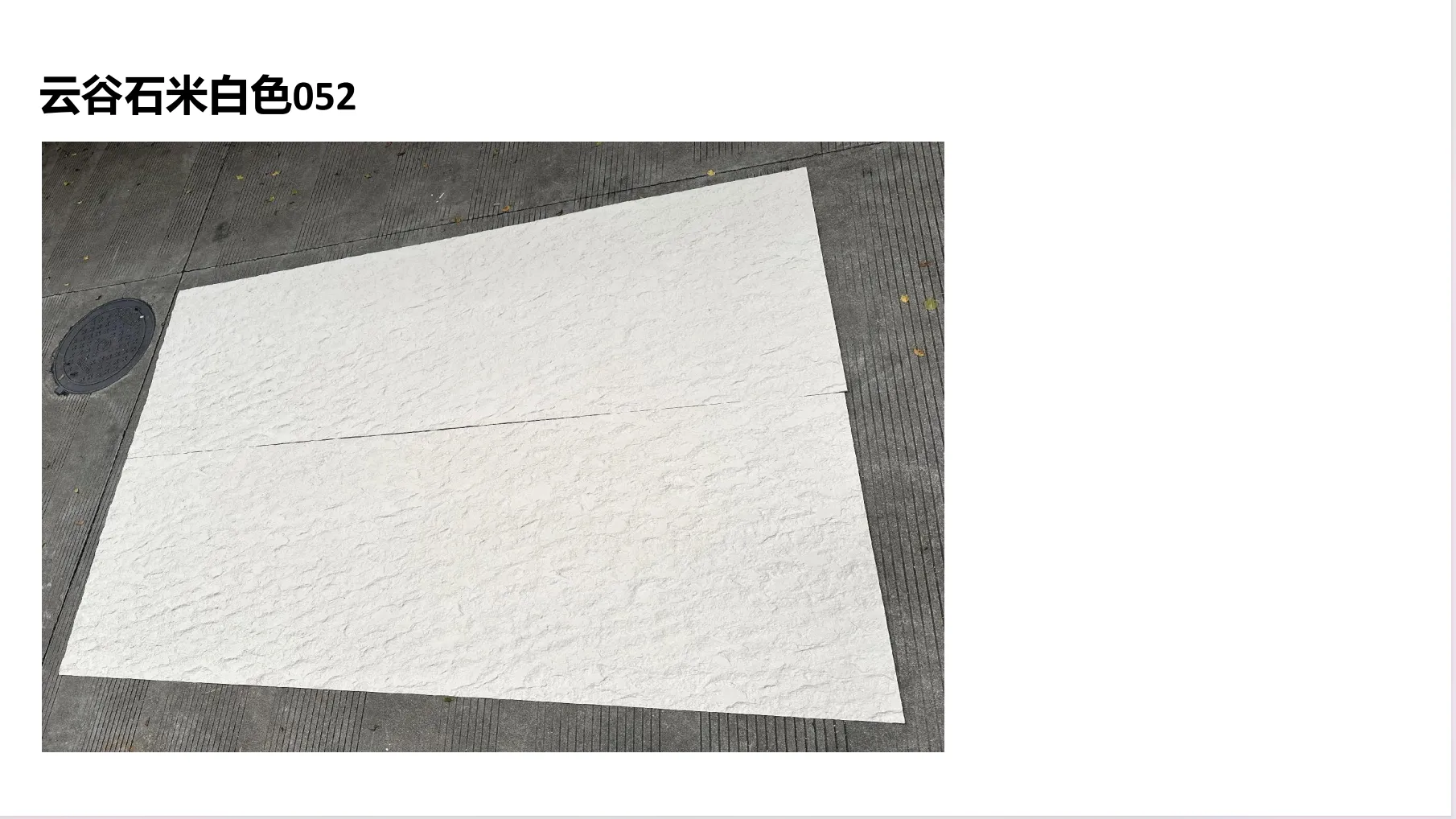
So, what makes Cloud Stone different? At its core, Cloud Stone is a line of modified composite material panels —engineered to mimic the look and feel of natural materials (think stone, wood, or metal) but with a critical upgrade: it's drastically lighter. Unlike traditional stone, which is mined and cut from quarries, Cloud Stone is crafted in a controlled environment, combining high-strength polymers, natural mineral powders, and reinforcing fibers. The result? A material that's 30–60% lighter than natural stone, but just as durable (if not more, thanks to resistance to cracks, moisture, and UV damage).
But here's the kicker: Cloud Stone isn't a one-trick pony. It comes in a dizzying array of styles, textures, and finishes, so you don't have to sacrifice aesthetics for practicality. Whether you're dreaming of the earthy warmth of wood grain board , the cosmic shimmer of travertine (starry blue) , or the industrial chic of foamed aluminium alloy board (vintage silver) , there's a Cloud Stone variant that fits. And because it's lightweight, all these designs come with an installation process that's refreshingly straightforward.
Let's get to the heart of the matter: how does Cloud Stone's lightweight nature make installation easier? Let's walk through the process step by step, comparing it to traditional materials.
Picture this: A Cloud Stone panel, say a 2x4-foot mcm flexible stone sheet designed to look like rough-hewn granite, weighs just 25 pounds. Compare that to a natural granite slab of the same size, which might hit 75 pounds. What does that mean for installers? Instead of two workers struggling to carry one panel, a single person can lift it with one arm—easily.
This might sound like a small change, but it's revolutionary. On a typical project with 100 panels, that's 50 fewer trips for workers, less fatigue, and fewer breaks. Installers can move faster, focus on precision rather than brute strength, and even work in tight spaces—like a narrow hallway or a rooftop with limited access—without needing a crane or special lifting equipment. For example, when installing bamboo mat board as a feature wall in a cozy café, a solo installer can carry panels up a narrow staircase without breaking a sweat. No more waiting for a second person to help; no more worrying about damaging walls or floors while maneuvering heavy slabs.
Traditional stone is tough to cut. It requires specialized tools (like diamond-tipped saws), generates clouds of dust, and often cracks if not handled carefully. Cloud Stone, though? It cuts like butter—well, like a high-tech composite material, but you get the idea. Because it's engineered with reinforcing fibers, it resists splintering, and most panels can be cut on-site with standard tools: a circular saw, jigsaw, or even a utility knife for thinner sheets.
Take linear travertine (claybank) , a Cloud Stone style that mimics the long, horizontal veins of natural travertine. If a installer needs to trim 2 inches off a panel to fit around a window, they can do it in minutes with a circular saw, no special training required. The result is a clean, precise cut that looks professional. With traditional travertine, that same cut might take twice as long, require a water-cooled saw to prevent overheating, and leave the installer covered in stone dust.
Installing heavy materials often means over-engineering the mounting system. Traditional stone cladding might require metal brackets, thick mortar beds, or even structural anchors to keep the weight from pulling away from the wall. Cloud Stone? Its light weight means simpler, more cost-effective mounting solutions.
Most Cloud Stone panels can be installed using a dry-lay system : adhesive, mechanical fasteners (like screws or clips), or a combination of both. For example, foamed aluminium alloy board (vintage gold) —a sleek, metallic Cloud Stone option—can be secured to a wall with lightweight aluminum clips and a strong construction adhesive. No need for heavy steel brackets or thick mortar. The panels stay in place because they're not pulling down on the wall with excessive weight. This not only speeds up installation but also reduces the risk of long-term issues like cracks in the wall or panels detaching.
Even better, Cloud Stone's light weight means it can be installed on surfaces that traditional materials can't handle. Think: drywall in a residential home, lightweight steel framing in a commercial building, or even existing brick walls that don't have extra structural support. A homeowner wanting to add travertine (starry red) panels to their kitchen backsplash doesn't need to reinforce the drywall first—Cloud Stone's weight won't strain it. That's a game-changer for renovations, where tearing down walls to add support is time-consuming and expensive.
| Feature | Traditional Natural Stone | Cloud Stone (Modified Composite Panels) |
|---|---|---|
| Weight (2x4-foot panel) | 60–80 lbs | 20–35 lbs |
| Workers needed per panel | 2–3 | 1 |
| Installation time (per 100 sq ft) | 8–10 hours | 3–5 hours |
| Mounting system required | Heavy brackets, mortar, structural anchors | Adhesive, lightweight clips, or screws |
| Transportation cost (per 100 panels) | $800–$1,200 (requires large truck) | $300–$500 (fits in standard pickup) |
| Risk of worker injury | High (back strain, dropped panels) | Low (easy handling) |
Numbers tell a story, but real projects bring it to life. Let's look at a few examples of how Cloud Stone's lightweight advantage has transformed installations.
A 50-room boutique hotel in downtown Portland wanted to update its exterior with a modern, earthy look. The design called for lunar peak golden panels—Cloud Stone's take on a warm, textured stone with subtle metallic flecks. The hotel's existing walls were made of lightweight wood framing, which couldn't support traditional stone. Enter Cloud Stone.
The installation crew arrived with 200 panels, each weighing 28 pounds. Instead of renting a crane to hoist panels to the second and third floors, two workers used a standard ladder to carry panels up one by one. They cut panels on-site with a circular saw, fitting them around windows and architectural details with ease. The entire exterior installation, which was projected to take 2 weeks with traditional stone, wrapped up in 5 days. The hotel manager noted, "We saved on labor, avoided disrupting guests with long construction timelines, and the finished look is exactly what we wanted—no one can believe it's not real stone."
A homeowner in Colorado wanted to replace their outdated tile backsplash with something more dramatic: wood grain board —a Cloud Stone style that mimics the rich texture of reclaimed wood. The challenge? The kitchen's walls are made of standard drywall, and the homeowner didn't want to reinforce them.
A local contractor recommended Cloud Stone. The wood grain board panels weighed just 22 pounds each, so the installer could carry them up the stairs and install them solo. Using a construction adhesive and a few finishing nails, he had the entire backsplash done in a day. "With real wood planks, this would've taken two days—one to reinforce the drywall, another to install the planks, plus sanding and sealing," the contractor said. "Cloud Stone let us skip the reinforcement, and the panels didn't warp or splinter like real wood can. The homeowner loves it, and it's water-resistant, so it's perfect for a kitchen."
One of the biggest myths about lightweight materials is that they skimp on style. Not Cloud Stone. Its lineup includes everything from rustic to modern, natural to metallic—and because it's lightweight, you don't have to choose between look and practicality. Let's explore a few standout options:
The best part? Mixing and matching these styles is easier than ever. Imagine a lobby wall with foamed aluminium alloy board (vintage silver) as the base, accented with travertine (starry orange) panels for a pop of color. Because both are lightweight, the installer can switch between materials without adjusting their tools or mounting system. No more struggling to balance heavy metal and stone panels—just seamless, creative design.
Contractors, architects, and designers aren't just choosing Cloud Stone for its looks—they're choosing it for the bottom line. Here's why:
Installation time is one of the biggest costs in construction. With Cloud Stone, projects finish faster. A crew that would take a week to install traditional stone cladding can finish the same job in 3–4 days with Cloud Stone. Faster projects mean happier clients, more jobs booked, and less overhead spent on labor and equipment rentals.
Since one person can handle Cloud Stone panels, crews can be smaller. A project that would need 4–5 workers with traditional materials might only need 2–3 with Cloud Stone. That cuts labor costs significantly—money that can be passed on to the client or boost the contractor's profit margin.
Heavy lifting is a leading cause of workplace injuries, and construction companies pay the price in workers' compensation claims, lost productivity, and damaged reputations. Cloud Stone reduces that risk. Fewer injuries mean fewer delays, lower insurance costs, and a happier, healthier crew.
Architects love Cloud Stone because it lets them dream bigger. Want to clad a curved wall with wave panel (a Cloud Stone style with undulating, ocean-like texture)? No problem—Cloud Stone's flexibility (especially in mcm flexible stone variants) and light weight make curved installations feasible. Traditional stone would require custom-cutting, heavy supports, and a lot of extra time. With Cloud Stone, it's just another day on the job.
We can't talk about Cloud Stone without addressing the elephant in the room: Is it durable? After all, if it's light, does that mean it's weak? The short answer: No. Cloud Stone is engineered to stand up to the elements, daily wear and tear, and even the test of time.
Take fair-faced concrete —a traditional material known for its strength but also its weight. Cloud Stone's polish concrete variant mimics the look of fair-faced concrete but weighs half as much. And lab tests show it's just as resistant to impact, moisture, and UV rays. In fact, Cloud Stone panels are often backed by 15–20 year warranties, depending on the style. Homeowners and business owners can rest easy knowing their investment will last.
One contractor put it best: "I've installed Cloud Stone on exterior walls that face harsh winter winds and summer heat. After five years, they still look brand new. No cracks, no fading—just as good as the day we put them up. And since they're light, there's no risk of them pulling away from the wall over time like heavier materials can."
At the end of the day, building materials should make our lives easier, not harder. Traditional materials have their place, but they often come with trade-offs: beauty vs. weight, durability vs. installation time, design freedom vs. structural constraints. Cloud Stone erases those trade-offs. Its lightweight nature transforms installation from a grueling, time-consuming process into something efficient, safe, and even enjoyable.
Whether you're a contractor looking to finish projects faster, a homeowner wanting to upgrade your space without the hassle, or an architect dreaming up bold designs, Cloud Stone offers a solution that checks all the boxes: easy to install, cost-effective, durable, and stunningly beautiful. So the next time you're planning a project, ask yourself: Why lift heavy when you can go light?
Cloud Stone isn't just a material—it's a smarter way to build. And that's a weight off everyone's shoulders.
Recommend Products












