
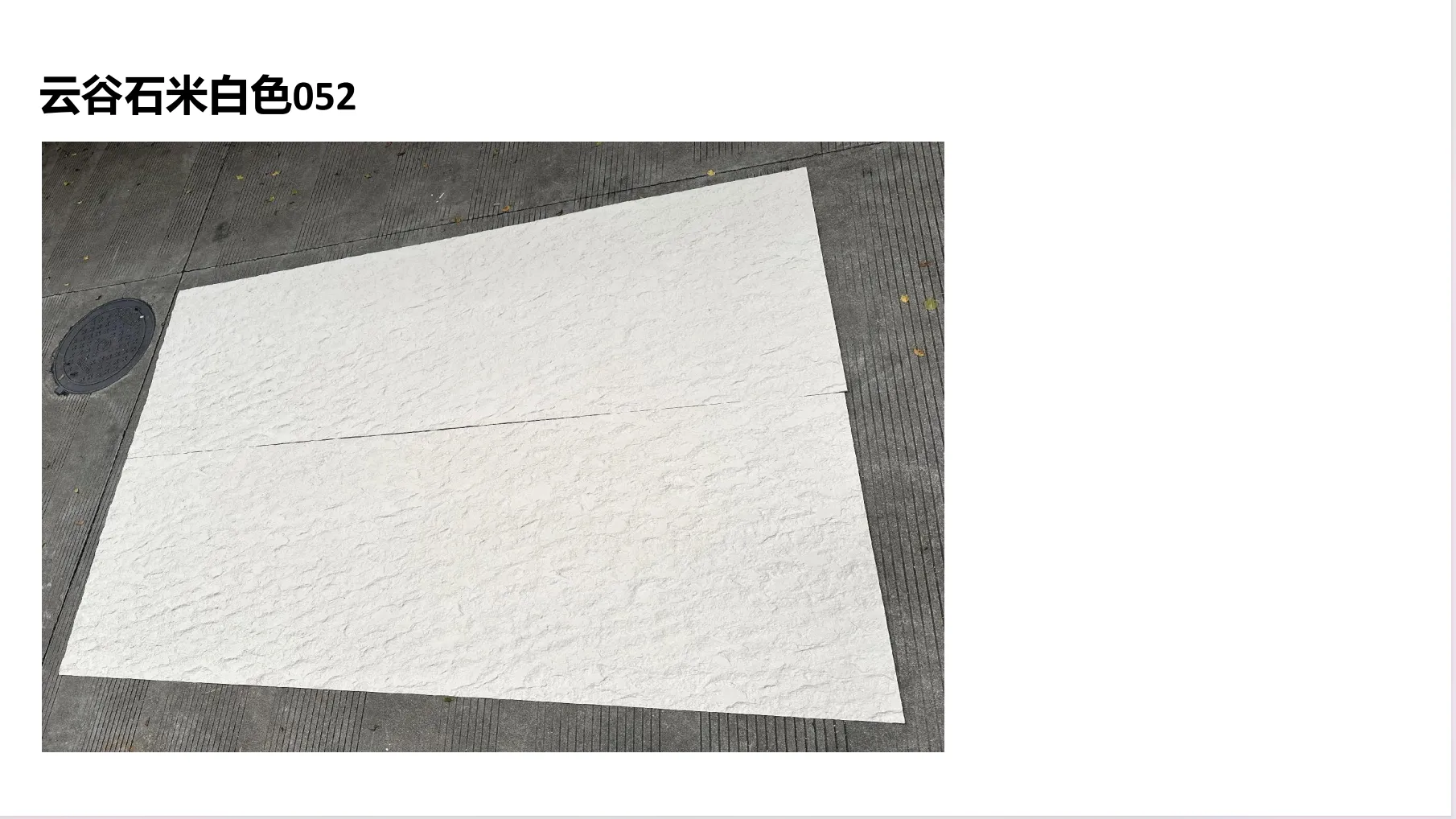
There's something deeply personal about outdoor spaces. They're where we sip morning coffee as the sun rises, host weekend barbecues with friends, or simply sit and watch the kids chase fireflies at dusk. These spaces aren't just built—they're lived in, and the materials that shape them need to keep up with the stories we create there. But there's a silent challenger lurking in the sky: the sun. Its ultraviolet (UV) rays, while essential for life, can turn vibrant surfaces into washed-out shadows over time, leaving homeowners and designers frustrated. That's where Cloud Stone comes in, not just as a pretty finish, but as a reliable partner in preserving the beauty of outdoor spaces. Let's dive into how Cloud Stone stands up to the sun, keeping its color and character intact for years on end.
Most of us don't think twice about UV rays beyond slathering on sunscreen. But for building materials, UV radiation is a relentless adversary. Here's the science, simplified: UV light breaks down the chemical bonds in pigments and surface coatings, causing colors to dull, patterns to blur, and even textures to degrade. Imagine a wooden deck that starts as rich chestnut brown but fades to a pale gray after a few summers, or a painted wall that loses its bold hue, leaving behind a patchy, lackluster mess. It's not just about looks—faded materials can also become brittle, cracking or peeling over time, which means costly repairs or replacements.
Traditional stones like marble or limestone are particularly vulnerable. Their porous surfaces absorb UV rays, leading to discoloration, while concrete can develop a chalky film as its top layer erodes. Even some modern composites struggle, with cheaply made options losing their vibrancy in as little as a year. For anyone investing in outdoor design—whether a homeowner upgrading their patio or a business owner sprucing up a restaurant terrace—this fade factor is a major concern. You want materials that don't just look good on day one, but that stay true to their original beauty, season after season.
Cloud Stone wasn't designed in a vacuum—it was crafted with real-world challenges in mind, and UV resistance is at its core. What makes it different? Let's start with the basics: Cloud Stone is part of the MCM flexible stone family, a category of modified composite materials known for their durability and adaptability. Unlike traditional stone, which relies on natural minerals that can fade, Cloud Stone's color is integrated at the molecular level during manufacturing. Pigments are mixed into the composite matrix, not just applied as a surface coat, ensuring that even if the top layer is exposed to UV rays, the color runs deep.
But it doesn't stop there. The engineering team behind Cloud Stone adds UV inhibitors—special compounds that act like a shield, absorbing or reflecting harmful UV radiation before it can break down the material's structure. Think of it as a built-in sunscreen for your walls and surfaces. These inhibitors are tested rigorously in accelerated weathering chambers, where materials are exposed to intense UV light, heat, and humidity for thousands of hours to simulate years of outdoor exposure. Cloud Stone consistently scores high in these tests, retaining over 95% of its original color even after simulated decades of sun exposure.
Numbers on a lab report are one thing, but real-life results tell the true story. Take the Lunar Peak Silvery collection, a popular Cloud Stone variant with a sleek, metallic finish that mimics the moon's glow. A boutique hotel in coastal California installed Lunar Peak Silvery panels on its exterior in 2018. Five years later, the panels still shine with the same silvery luster, despite facing daily sun, salt air, and occasional rain. The hotel manager, Maria, recalls, "We were worried the silver might tarnish or fade, but guests still comment on how 'fresh' the building looks. It's become a signature part of our brand."
Then there's the Travertine (Starry Blue) line, which features a deep blue base dotted with iridescent flecks, evoking a night sky. A community center in Arizona—a state known for blistering sun and high UV index—used Starry Blue panels for its outdoor amphitheater in 2019. Today, the blue is as vivid as the day it was installed, and the flecks still catch the light, creating that "starry" effect that kids and adults alike love. The center's facilities director, James, notes, "We've had other materials fade here within two years, but the Starry Blue? It's like time forgot it."
To truly appreciate Cloud Stone's UV resistance, it helps to see how it compares to other common outdoor materials. Below is a breakdown of key factors like UV resistance, color retention, and durability, based on industry testing and real-world feedback:
| Material | UV Resistance | Color Retention (After 5 Years) | Durability |
|---|---|---|---|
| Cloud Stone (e.g., Lunar Peak Silvery) | Excellent (UV inhibitors + deep pigmentation) | 95%+ | High (resistant to cracking, peeling) |
| Fair-faced Concrete | Moderate (prone to chalkiness) | 60-70% | High (but surface degradation over time) |
| Traditional Travertine | Low (porous, natural pigments fade) | 50-60% | Moderate (may etch or stain) |
| MCM Flexible Stone (non-Cloud Stone brands) | Good (but varies by manufacturer) | 75-85% | Moderate-High (depends on composite quality) |
*Data based on industry standards (ASTM G154 accelerated weathering tests) and user reports.
Cloud Stone's UV resistance makes it ideal for any outdoor space where color and appearance matter. Here are just a few ways designers and homeowners are using it:
While UV resistance is a standout feature, Cloud Stone offers more than just color retention. Its MCM flexible stone base makes it lightweight and easy to install, reducing labor costs compared to heavy natural stone. It's also resistant to moisture, mold, and mildew—common issues in humid climates—and won't crack under freeze-thaw conditions, making it suitable for diverse weather zones. Plus, with a wide range of styles, from the earthy warmth of Fair-faced Concrete to the cosmic allure of Travertine (Starry Blue), there's a Cloud Stone variant to match any design vision.
At the end of the day, outdoor spaces are about more than bricks and panels—they're about the moments we create there: a child's first birthday party under a sunlit patio, a couple's anniversary dinner on a deck with a view, a community coming together in a park. When we choose materials that fade, we're not just replacing surfaces—we're erasing a little bit of those memories, too. Cloud Stone's UV resistance is more than a technical feature; it's a promise that the spaces we love will stay as vibrant as the moments we share in them.
So, whether you're building a new home, renovating a business, or simply upgrading your backyard, consider Cloud Stone. It's not just a material—it's a commitment to preserving the beauty of your outdoor story, one sunlit day at a time.
Recommend Products












