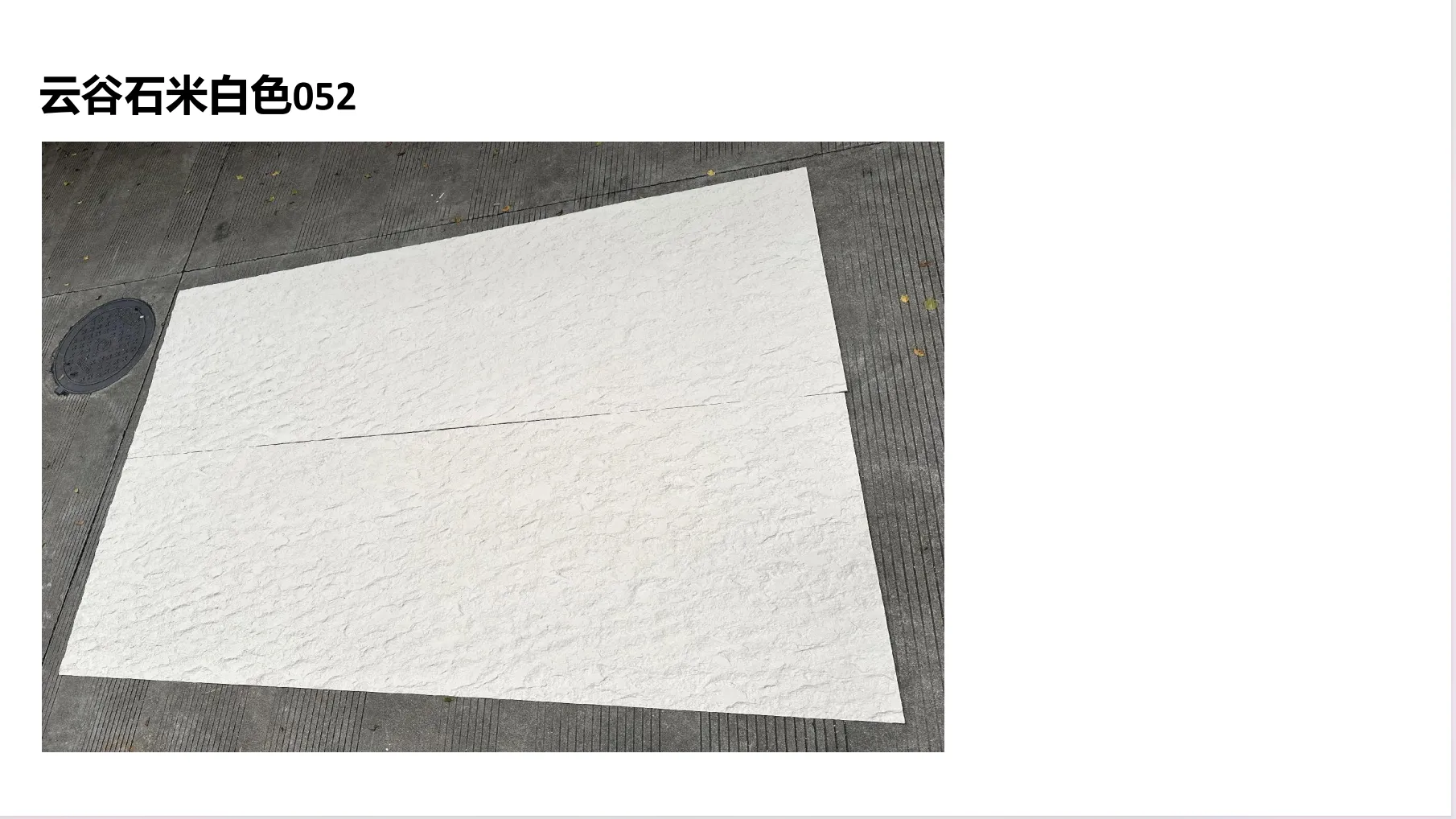
Modern architecture isn't just about creating buildings—it's about reimagining what's possible. As cities grow taller and design ambitions soar, the materials we build with are evolving too. Gone are the days when heavy stone and concrete were the only options; today, lightweight cladding solutions are stealing the spotlight. Why? They make construction faster, reduce structural stress, and open up a world of design flexibility. Two names you'll hear often in this space are
Cloud Stone
and
Fibre Cement
. Both promise to lighten the load, but how do they really stack up? Let's dive in.
First Things First: What Even Are These Materials?
Before we start comparing, let's get clear on what we're actually talking about. Both
Cloud Stone and Fibre Cement fall under the "lightweight cladding" umbrella, but their origins and compositions are worlds apart.
Cloud Stone
is the new kid on the block—think of it as architecture's answer to "having your cake and eating it too." It's part of the
MCM (Modified Composite Material)
family, which explains why you might hear it called
mcm flexible stone
in industry circles. At its core,
Cloud Stone blends natural minerals (like crushed stone or sand) with high-performance polymers and lightweight aggregates. The result? A thin, flexible panel that mimics the look of traditional materials—think
travertine (beige)
,
wood grain board
, or even
boulder slab
—but weighs a fraction of the real thing. Most panels are just 3–5mm thick and tip the scales at 8–12 kg per square meter. That's lighter than a bag of potatoes, making installation a breeze.
Fibre Cement
, on the other hand, is the seasoned veteran. You've probably seen it on older homes or commercial buildings without even realizing it. It's a mix of cement, sand, and cellulose fibers (think wood pulp), which gives it strength without the brittleness of pure cement. It's been around for over a century, but modern versions are lighter and more durable than their ancestors. Today's Fibre Cement panels are typically 6–12mm thick and weigh 15–25 kg per square meter—still lighter than
fair-faced concrete
but noticeably heavier than
Cloud Stone.
Breaking Down the Basics: Composition & Core Traits
Let's get granular. The real differences between
Cloud Stone and Fibre Cement start with what's in them. Here's a side-by-side look at their core traits:
|
Feature
|
Cloud Stone (MCM Flexible Stone)
|
Fibre Cement
|
|
Primary Ingredients
|
Natural minerals, polymers, lightweight aggregates
|
Cement, sand, cellulose fibers
|
|
Thickness Range
|
3–5mm
|
6–12mm
|
|
Weight (per sqm)
|
8–12 kg
|
15–25 kg
|
|
Flexibility
|
High—can bend slightly without cracking
|
Low—rigid, prone to snapping if bent
|
|
Key Appeal
|
Lightweight, design versatility, natural aesthetics
|
Durability, fire resistance, affordability
|
Cloud Stone's secret sauce is its composite makeup. By combining natural minerals with polymers, manufacturers have created a material that's both strong and flexible. Imagine bending a thin sheet of plastic—
Cloud Stone can flex similarly, making it ideal for curved surfaces or tricky installations. Fibre Cement, while tough, is more like a rigid tile; it doesn't bend, so it needs precise cutting and fitting.
Durability: Can They Stand the Test of Time?
A pretty facade is great, but if it cracks after a year of rain or fades in the sun, what's the point? Both materials hold their own, but they shine in different areas.
Cloud Stone
might be lightweight, but it's no pushover. Thanks to its polymer binders, it's highly resistant to UV rays (so colors stay vibrant), moisture (no mold or mildew), and freeze-thaw cycles (perfect for cold climates). I once spoke to a contractor who installed
Cloud Stone on a coastal home in Maine—after five winters of salt spray and sub-zero temps, the panels still looked brand new. It's also impact-resistant; a stray baseball or hailstorm is unlikely to leave a mark.
Fibre Cement
has a reputation for being a workhorse. It's fire-resistant (most panels have a Class A rating), which is a big plus for commercial buildings. It also holds up well to rot and pests—no termites here. But there's a catch: its rigidity can be a weakness. If the building shifts slightly (which all structures do over time), Fibre Cement panels can crack. And because they're heavier, they put more stress on the wall behind them, which means installers have to be extra careful with structural support.
Aesthetics: More Than Just a Pretty Face
Let's talk design—because in architecture, how something looks matters almost as much as how it performs. Here's where
Cloud Stone really starts to pull ahead.
Cloud Stone
is like a chameleon. Want the warm, earthy look of
travertine (beige)
? Done. Prefer the rustic charm of
wood grain board
? No problem. Or maybe you're after the rugged texture of
boulder slab
?
Cloud Stone can mimic all of these, and more. Manufacturers use advanced printing and texturing techniques to replicate the look and feel of natural materials, right down to the subtle veining in marble or the rough-hewn edges of stone. It's so realistic that visitors to a building might not realize it's not real stone until they touch it (it's surprisingly light!).
Fibre Cement
is more limited in the style department. Traditional panels are smooth or have a simple texture, like a fine sandpaper finish. You can paint them any color, which is a plus, but they lack the depth and realism of
Cloud Stone's natural mimics. Some brands offer "wood-look" or "stone-look" options, but they often feel flat compared to the real deal. If your design calls for a clean, modern look—think a sleek office building with a monochromatic facade—Fibre Cement works. But if you want to evoke the warmth of a Tuscan villa or the drama of a mountain lodge,
Cloud Stone has more to offer.
Installation: Easy as Pie or a Headache?
Any contractor will tell you: installation can make or break a project. Time is money, and heavy materials mean more labor, more tools, and more hassle. Let's see how these two stack up.
Cloud Stone
is a dream for installers. Since it's lightweight and flexible, you don't need a team of to haul it up ladders. A single worker can carry a stack of panels under one arm. Cutting it is simple too—just use a standard circular saw with a diamond blade. And because it's thin, you can install it directly over existing walls (like old brick or concrete) without adding much weight. One contractor I talked to described it as "installing giant stickers, but way more durable." It's also great for renovations; if you want to update an old facade without tearing everything down,
Cloud Stone is a quick, non-invasive option.
Fibre Cement
is a bit more of a workout. Those 15–25 kg panels add up—you'll need at least two people to carry them, and maybe a crane for high-rise installs. Cutting it requires special tools (a dust mask is a must, too, since it creates fine cement dust). And because it's rigid, you have to be precise with measurements—there's no room for error. It also needs a solid substrate; you can't just slap it over a flimsy wall. All of this adds up to longer installation times and higher labor costs.
Sustainability: Green Credentials
These days, every building project needs to consider its environmental footprint. So how do
Cloud Stone and Fibre Cement measure up?
Cloud Stone
gets points for sustainability. Since it uses recycled minerals and polymers, it reduces the need for quarrying natural stone (which is good for the planet). Its lightweight nature also cuts down on transportation emissions—you can fit more panels on a truck, so fewer trips to the site. Plus, because it's easy to install, there's less waste from botched cuts or broken panels. Some manufacturers even offer panels made with 30%+ recycled content, which is a nice bonus for eco-conscious projects.
Fibre Cement
has a more complicated story. On the plus side, it's long-lasting—so a building clad in Fibre Cement might not need a new facade for 50+ years, which reduces replacement waste. But cement production is notoriously carbon-intensive (it's responsible for about 8% of global CO2 emissions). While modern Fibre Cement uses less cement than traditional concrete, it's still not as green as
Cloud Stone's composite formula. Also, those heavier panels mean more fuel burned during transport, which adds to its carbon footprint.
Cost: Penny Wise or Pound Foolish?
Let's talk numbers. At first glance, Fibre Cement often looks cheaper—material costs are typically lower per square meter. But here's the thing: you have to factor in installation and long-term costs.
Cloud Stone
has a higher upfront material cost—sometimes 30–50% more than Fibre Cement. But because it's so easy to install, labor costs are lower. A crew might finish a
Cloud Stone facade in half the time it takes to install Fibre Cement, which can offset the material price difference. Plus, its durability means fewer repairs over time. And if you ever want to update the look, it's easier (and cheaper) to replace than heavy stone or Fibre Cement.
Fibre Cement
is cheaper to buy, but the savings can disappear when you add in labor, tools, and structural support. If you're building a small shed or a low-rise home, the difference might not matter much. But for a large commercial project, those extra labor hours and transportation costs can add up fast. And if a panel cracks a few years down the line, replacing it means more time and money.
Real-World Applications: When to Choose Which
So, which one should you pick? It depends on your project. Let's break down some common scenarios:
Choose Cloud Stone if…
-
You want a lightweight solution for a high-rise building (less structural stress = safer, cheaper construction).
-
Design flexibility is key—you need custom colors, textures, or curved surfaces.
-
You're renovating an older building and don't want to add weight to the existing structure.
-
Sustainability and low maintenance are priorities.
Example: A boutique hotel in the mountains that wants the look of
travertine (beige)
but can't afford the weight of real stone.
Cloud Stone mimics the aesthetic perfectly and cuts installation time by weeks.
Choose Fibre Cement if…
-
You're on a tight budget and don't need fancy aesthetics.
-
Fire resistance is a top priority (like in a school or hospital).
-
You're building in an area with extreme weather (it holds up well to high winds).
Example: A warehouse in a hurricane zone. Fibre Cement's rigidity and fire resistance make it a practical choice, even if it's not the most visually striking.
Final Thoughts: The Future of Lightweight Cladding
At the end of the day, both
Cloud Stone and Fibre Cement have their place. Fibre Cement is a reliable workhorse with a proven track record, while
Cloud Stone is the innovative upstart pushing the boundaries of what lightweight materials can do.
If I had to bet, I'd say
Cloud Stone (and other
mcm flexible stone
products) will only grow in popularity. As architects and builders demand more design freedom and sustainability, lightweight composites that mimic natural materials are the way forward. Why haul heavy stone when you can have the same look with something that's easier to install, better for the planet, and just as durable?
Whether you're building a home, a store, or a skyscraper, the key is to match the material to your project's needs. But one thing's for sure: lightweight cladding isn't just a trend—it's the future of architecture. And
Cloud Stone and Fibre Cement are leading the charge.