
Let's start with a relatable moment: You're scrolling through home design reels, and suddenly, a wall catches your eye. It's not just a wall—it's a statement. The texture is rich, the color feels organic, and it makes the entire room feel warm and lived-in. You pause, screenshot it, and think, "I need that." But when you dig deeper, you realize there are two materials popping up everywhere: Cloud Stone and Stone Veneer. Both claim to deliver that "natural stone look," but what's the real difference? And more importantly, which one will actually work for your project—whether it's a kitchen backsplash, a fireplace surround, or an outdoor patio wall?
If you've ever felt overwhelmed by the jargon of building materials, you're not alone. Terms like "composite," "veneer," and "flexible stone" can sound like a foreign language. But here's the truth: the best choices aren't about picking the "fanciest" option—they're about balancing what looks good, what's easy to install, and what fits your lifestyle (and budget). So today, we're breaking down Cloud Stone and Stone Veneer side by side, focusing on two critical factors: installation (because no one wants a renovation that drags on for weeks) and authenticity (because if it looks fake, what's the point?). We'll even throw in real-world scenarios to help you visualize which one might be right for you. Let's dive in.
Before we compare them, let's make sure we're on the same page about what each material actually is. Think of it like choosing between two types of pizza: both are "pizza," but one's a classic margherita (simple, traditional) and the other's a loaded gourmet pie (innovative, with unexpected toppings). They serve different tastes—and different needs.
Stone Veneer is the "classic margherita" of the bunch. It's essentially thin slices of real natural stone, cut from quarried stone like limestone, travertine, or granite. These slices are usually 1-3 inches thick, making them lighter than full stone slabs but still heavy enough to require some structural planning. Veneer has been around for decades because it offers the authentic look and feel of natural stone without the weight (or cost) of solid stone walls. Think of old European cottages with stone exteriors—many of those are actually veneer, not solid stone blocks.
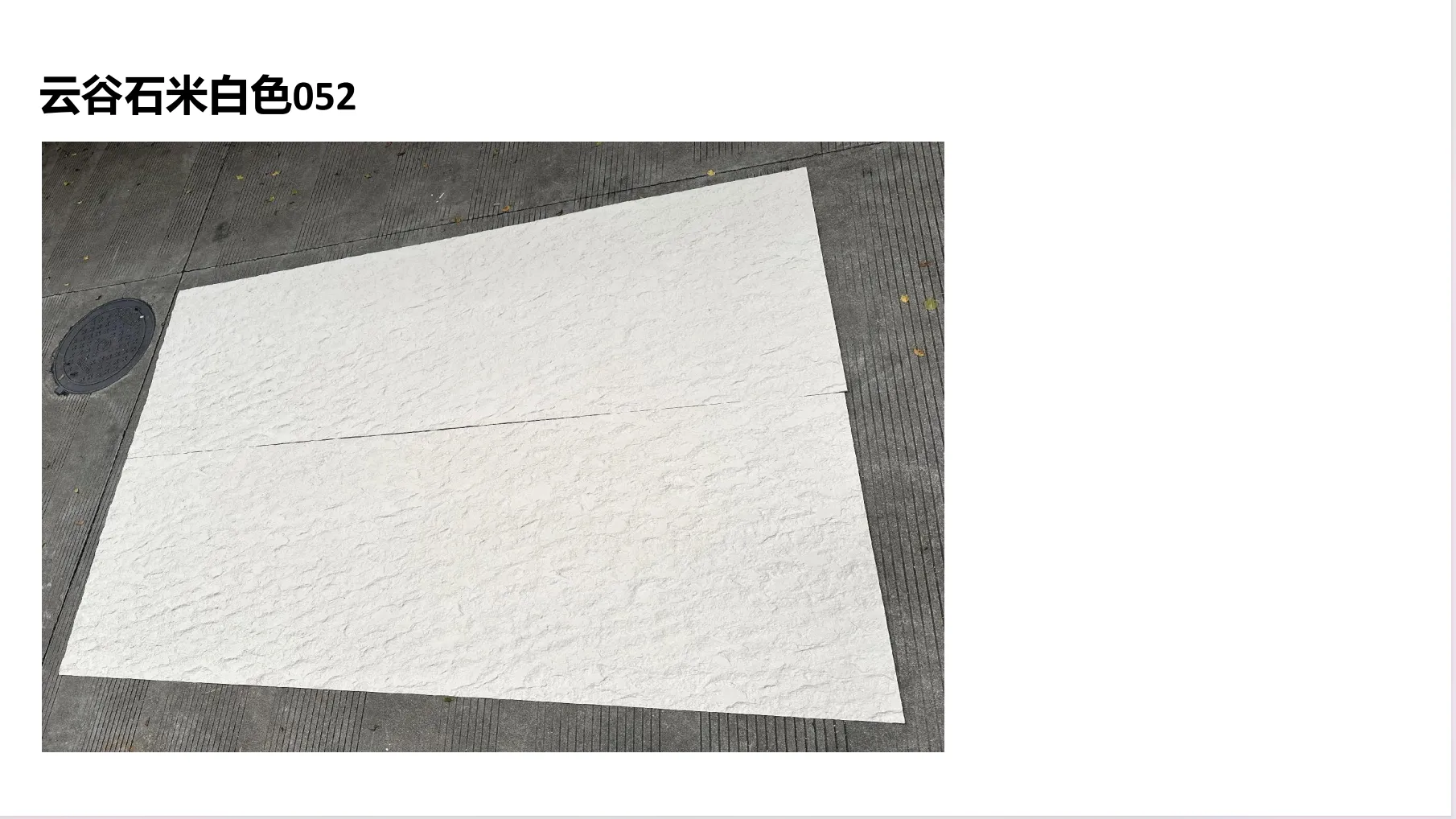
Cloud Stone , on the other hand, is the "gourmet pie." It's a modern composite material, often made with a blend of natural stone aggregates, resins, and sometimes even recycled materials. What makes it unique? It's designed to mimic the texture and appearance of natural stone but with added benefits like flexibility, lighter weight, and easier installation. Some Cloud Stone products, like those using mcm flexible stone technology, are so bendable they can be curved around corners or used on uneven surfaces—something traditional stone veneer can't do without cracking.
So, in short: Stone Veneer is real stone, just thinner. Cloud Stone is a man-made composite designed to look and feel like stone, with extra perks for modern projects. Now, let's get into the details that matter most.
Here's a secret contractors won't always tell you: half the battle of any renovation is the installation process. A material might look stunning in a showroom, but if it takes a team of pros 3 days to install (and costs you an arm and a leg), it might not be worth the hassle. Let's break down how Cloud Stone and Stone Veneer stack up when it comes to getting them from the box to your wall.
First, let's talk about weight—because it affects everything from tools to structural support. Traditional Stone Veneer, even though it's thin, is still real stone. A 10-square-foot panel can weigh 50-75 pounds. That might not sound like much, but when you're installing it on a second-story wall or a fireplace that wasn't built to hold heavy materials, you run into problems. Many homeowners don't realize they might need to reinforce the wall first (hello, extra costs and time) or hire a structural engineer to sign off on it.
Cloud Stone, thanks to its composite makeup, is a game-changer here. Most Cloud Stone panels weigh in at 15-25 pounds per 10 square feet—less than half the weight of veneer. That means you can install it on drywall, plywood, or even existing tile without worrying about the wall caving in. I once helped a friend install Cloud Stone on her bathroom accent wall, and we carried the panels up a narrow staircase by ourselves—something we never could've done with stone veneer.
Let's say you're a hands-on homeowner who loves a weekend project. Would you be able to install either material yourself? Let's see.
Stone Veneer installation is not for the faint of heart. You'll need a wet saw to cut the stone (since it's real rock, regular saws won't work), a trowel for mortar, a level, and a bucket for mixing adhesive. Oh, and did I mention mortar is messy? It drips, it hardens quickly, and if you don't apply it evenly, the stones can shift or fall off later. I've seen DIYers spend hours trying to get the mortar thickness right, only to have a stone slide out of place because they didn't press it hard enough. And if you make a mistake? Removing a misaligned stone veneer piece can damage the wall underneath—yikes.
Cloud Stone, on the other hand, is designed with DIYers in mind. Most panels come with a peel-and-stick backing or a simple adhesive that you can apply with a roller. Cutting it? A standard utility knife or a jigsaw works just fine—no wet saw required. My neighbor, who's more of a "duct tape and glue" kind of DIYer, installed Cloud Stone on his fireplace in a single afternoon. He told me, "I thought I'd need to call a pro, but the instructions were so simple I finished before lunch."
That said, there are exceptions. If you're installing Stone Veneer on an exterior wall (where weather resistance matters) or Cloud Stone on a curved surface (yes, it can bend!), you might still want to hire a pro. But for most indoor projects, Cloud Stone leans heavily toward "doable at home."
Time is money, and no one wants their living room to look like a construction site for weeks. Stone Veneer installation is a multi-step process: first, you prep the wall (clean it, apply a moisture barrier if needed), then mix and apply mortar, set each stone, grout the gaps, and wait for everything to dry. That can take 2-3 days for a small project (like a fireplace) and up to a week for larger walls. And if it rains during an outdoor installation? You're looking at delays—mortar doesn't dry well in wet weather.
Cloud Stone cuts that timeline dramatically. Since there's no mortar, no grout, and no waiting for layers to dry, most projects can be done in a day. A 12x8-foot accent wall? Start at 9 AM, take a lunch break, and be done by 3 PM. One contractor I spoke to said he switched to Cloud Stone for his client's restaurant renovation because "we could install it overnight, and the restaurant didn't have to close for days." For busy families or business owners, that's a huge win.
Let's talk numbers—because at the end of the day, budget often makes the final call. Stone Veneer material costs range from $8-$15 per square foot, which might seem affordable at first. But then you add in the extras: mortar ($20-$30 per bag), tools (wet saw rental is $50-$100 a day), and labor (if you hire a pro, that's $50-$80 per hour). For a 50-square-foot fireplace, you're looking at $800-$1,500 total.
Cloud Stone material costs a bit more upfront—usually $12-$20 per square foot. But here's the kicker: you skip the mortar, the wet saw, and often the labor. If you DIY, the total cost for that same 50-square-foot fireplace drops to $600-$1,000. And if you do hire a pro, since installation is faster, labor costs are cut by half. One homeowner I interviewed said, "I thought Cloud Stone was pricier, but when I added up all the extras with veneer, it was actually cheaper. And I didn't have to take a day off work to supervise the install."
Okay, so Cloud Stone might be easier to install and cheaper. But here's the big question: Does it actually look like real stone? Or will your guests squint and say, "Is that… fake?"
Authenticity isn't just about appearance—it's about texture, feel, and how the material ages over time. Let's break it down.
Stone Veneer has a built-in advantage here: it is real stone. That means each piece has unique veining, color variations, and imperfections that make it one-of-a-kind. Run your hand over it, and you'll feel the rough, porous surface of natural rock. It's the kind of material that photographs beautifully because there's no "pattern repeat"—every inch is different.
But here's the thing about Cloud Stone: modern manufacturing has come a long way. Many Cloud Stone products, especially those using mcm flexible stone technology, are molded from real stone slabs. That means they capture every ridge, pit, and vein of the original rock. I once put a Cloud Stone sample next to a real stone veneer sample and asked my family to guess which was which. No one could tell—until they picked them up (Cloud Stone was lighter). The color depth is rich, and the surface texture is so convincing that when I ran my finger over it, I expected to get a little dust on my hand (spoiler: I didn't, which is actually a plus for clean freaks).
That said, not all Cloud Stone is created equal. Cheaper versions can look "plasticky" or have a repetitive pattern (you'll notice the same vein design repeating every few panels). So if authenticity is your top priority, splurge on a high-quality Cloud Stone with 3D scanning or mold technology—you'll pay a bit more, but it's worth it.
There's something visceral about touching natural stone. It's cool to the touch, slightly rough, and has a "living" quality—like it's been around for centuries. Stone Veneer, being real stone, delivers that feeling perfectly. Cloud Stone, while it mimics the visual texture, can feel a bit smoother or more uniform. Some brands add a "grit" to the surface to replicate that natural feel, but it's not quite the same as the real thing.
Is this a dealbreaker? It depends on where you're using it. For a fireplace surround that you'll rarely touch, the difference is negligible. But for a kitchen backsplash that you'll brush against daily, you might prefer the texture of stone veneer. I have a friend who chose stone veneer for her kitchen because "I love the way it feels when I lean against the counter to chat with my kids while they cook." To each their own!
Let's talk longevity. Stone Veneer is tough—it's real stone, after all. It can handle heat (great for fireplaces), moisture (good for bathrooms), and even outdoor weather (think freezing rain or scorching sun). With proper sealing (every 2-3 years), it can last 50+ years. I've seen stone veneer on 100-year-old homes that still looks amazing.
Cloud Stone is durable too, but it has limits. Most high-quality Cloud Stone is water-resistant (so it works in bathrooms or kitchens), but it's not heat-resistant enough for direct contact with fire (so don't install it right next to a wood-burning stove). Outdoor installation is possible, but you'll need to check the manufacturer's specs—some Cloud Stone can fade in intense sunlight over time. That said, for indoor use, it should last 20-30 years with normal wear and tear. And since it's lighter, it's less likely to crack if the house settles (a common issue with stone veneer in older homes).
Natural stone ages like fine wine—it develops a patina over time. Scratches, slight discoloration, and even water spots add character. Some homeowners love this "lived-in" look; others hate it (hence the need for sealing). Stone Veneer will age with your home, which can be a pro or a con depending on your style.
Cloud Stone, being a composite, doesn't develop a patina—it either stays the same or fades slightly. That means your accent wall will look the same 10 years from now as it did on day one. For people who love consistency (or renters who might want to take it down later), that's a plus. But if you're going for a "rustic, timeworn" vibe, stone veneer might feel more authentic.
Let's put this all into context with a story. Last year, a local café owner named Maria wanted to update her space on a tight budget. She wanted an accent wall behind the counter that looked "industrial but warm," and she had two weeks to get it done (since she couldn't close during peak season).
First, she considered stone veneer. The material cost was low, but her contractor quoted her $2,000 for labor (since it would take 3 days) and warned that the wall might need reinforcement (another $500). Plus, the wet saw would be loud—so she'd have to close during installation. Total cost: $3,000+, and a week of lost revenue.
Then she found Cloud Stone. The material cost was $1,200 for 80 square feet, but installation was DIY-friendly. She and her brother installed it over a weekend (no noise, no closure), using just a utility knife and adhesive. Total cost: $1,200, and the wall looked so good that customers kept asking, "Is that real stone?" Maria now jokes, "I tell them it's 'magic stone'—magic that didn't break the bank."
On the flip side, my cousin Jake owns a 1920s bungalow with a fireplace that was in rough shape. He wanted to restore it to its original glory, and authenticity was his top priority. "I didn't want some fake material—this house has history, and the fireplace should too," he told me.
He chose stone veneer, even though it was more work. He hired a pro to install it, reinforced the chimney (since the original mortar was crumbling), and sealed it with a natural stone sealer. The process took 4 days and cost $1,800, but when he lights a fire now, the stone veneer glows, and you can feel the heat radiating through it—something Cloud Stone couldn't replicate. "It was worth every penny," he said. "This fireplace will be here long after I'm gone."
At the end of the day, there's no "perfect" material—only the perfect material for you . Here's a quick cheat sheet to help you decide:
Choose Cloud Stone if:
Choose Stone Veneer if:
And remember: There's no rule that says you have to choose one or the other. Some homeowners mix Cloud Stone for large, flat walls (to save time and money) and stone veneer for focal points (like a fireplace) to add that extra touch of authenticity. It's your space—get creative with it!
Materials like Cloud Stone and Stone Veneer aren't just about walls—they're about creating spaces that tell your story. Maybe you want a kitchen that feels like a cozy cabin (stone veneer) or a home office that feels modern and sleek (Cloud Stone). The best choice is the one that makes you smile every time you walk into the room.
So, grab a sample of each (most home improvement stores have them), hold them, touch them, and imagine them in your space. If you're still stuck, ask yourself: "What will matter more in 5 years—how easy it was to install, or how real it feels?" The answer will guide you.
And hey, whatever you choose, I'd love to see it. Tag me in your renovation posts—I can't wait to see the story your walls tell.
Recommend Products












