Picture this: You're standing in front of a home improvement store, leafing through brochures for exterior siding. The sales rep is talking about "affordable options" and "easy installation," but your mind keeps drifting to the weather reports. Last summer, temperatures hit 115°F for weeks on end; winter brought ice storms that left your neighbor's old siding cracked and peeling. And let's not forget the coastal winds that whip salt spray against your house for half the year. What you need isn't just "affordable"—it's armor.
For homeowners in extreme climates, choosing the right siding is more than a design choice; it's a long-term investment in protecting your home. Two options often top the list: the tried-and-true vinyl siding, and the newer, buzzworthy contender:
Cloud Stone. But how do they really stack up when the going gets tough? Let's dive in.
What Are We Actually Comparing? Breaking Down the Basics
Before we pit them against Mother Nature, let's get clear on what these materials are made of. Vinyl siding, around since the 1950s, is a household name for a reason: it's cheap, lightweight, and comes in a rainbow of colors. At its core, though, it's plastic—specifically polyvinyl chloride (PVC)—mixed with additives to boost flexibility and color retention. Think of it as the plastic lawn chair of home exteriors: functional, but not built for the harshest conditions.
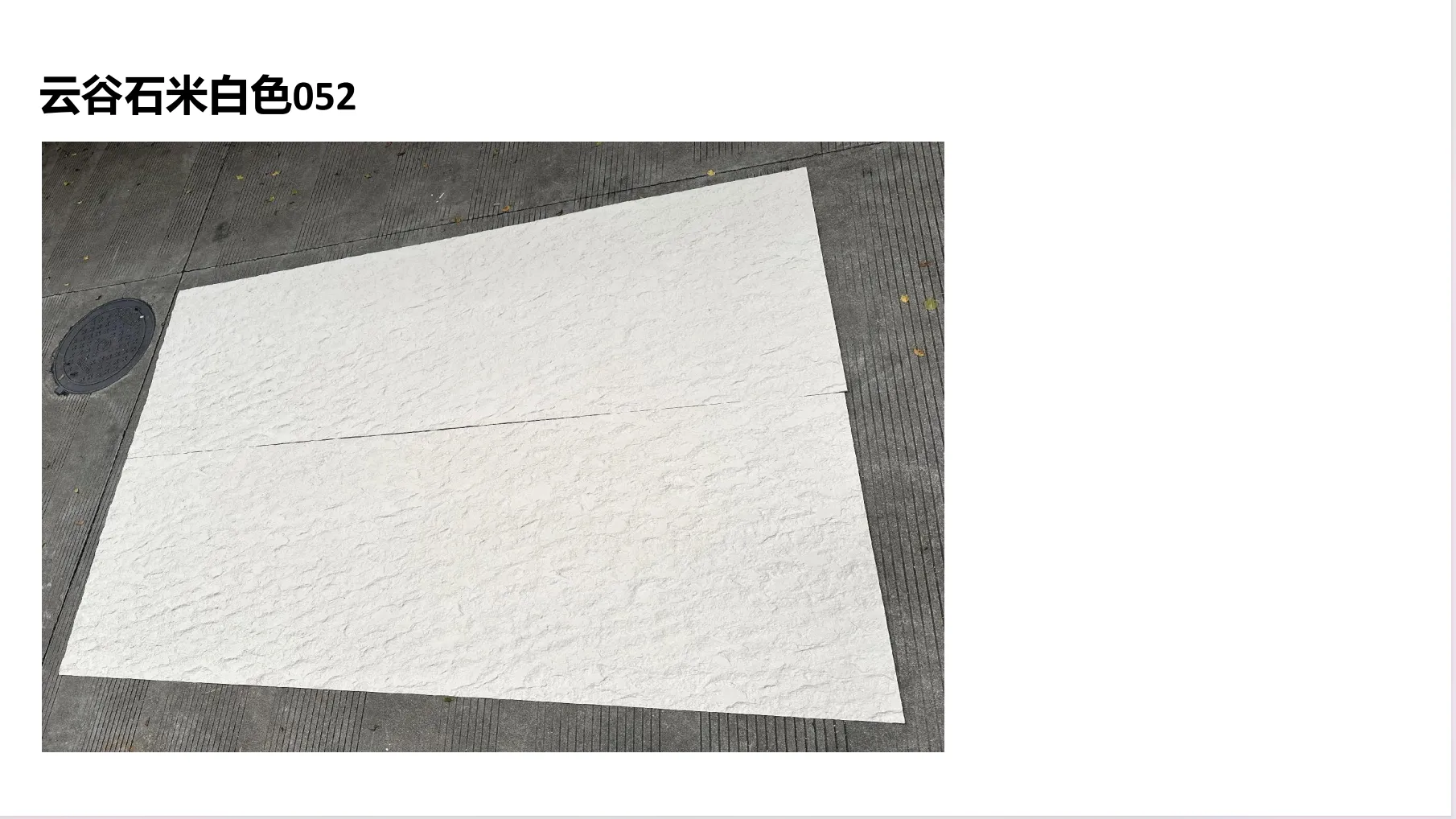
Cloud Stone, on the other hand, is part of a newer generation of building materials. If vinyl is a plastic chair,
Cloud Stone is more like a high-performance composite hiking boot—engineered for resilience. It falls under the category of
MCM flexible stone, a technology that blends natural stone aggregates (like marble or granite dust) with advanced polymers to create a material that's thin, lightweight, and surprisingly tough. "It's stone, but better," says Raj Patel, a construction engineer with 15 years of experience in desert and coastal regions. "The polymers add flexibility, while the stone gives it the durability and aesthetic of natural rock."
The Science of Durability: What Makes a Material Weatherproof?
To survive extreme climates, siding needs to check a few boxes: it must resist UV radiation, handle wild temperature swings without warping or cracking, repel water, and stand up to physical impact (we're looking at you, hailstorms and flying debris). Let's break down how each material approaches these challenges.
Vinyl siding relies on PVC's inherent water resistance and color additives to fight fading. But PVC has a low melting point—around 160°F—and expands significantly when heated, which can lead to warping in hot climates. In cold weather, it becomes brittle, making it prone to cracking if hit by hail or a wayward baseball.
Cloud Stone, thanks to its
MCM flexible stone base, takes a different approach. The natural stone aggregates give it a high heat tolerance (some formulations can withstand temperatures up to 250°F), while the polymer binders act like a shock absorber, allowing the material to flex slightly with temperature changes instead of cracking. Its non-porous surface also means water beads off instead of seeping in, and the stone particles are naturally UV-resistant, so colors stay vibrant for decades.
Battle of the Elements: How Each Material Handles Extreme Climates
Desert Heat: When the Sun Turns Up the Dial
In places like Phoenix or Dubai, where summer days regularly top 100°F and UV radiation is intense, vinyl siding can struggle. The PVC in vinyl softens in high heat, causing panels to warp or buckle—especially on south-facing walls that soak up sunlight all day. Fading is another issue: even "UV-resistant" vinyl often dulls after 5–7 years, leaving homes looking tired and worn.
"I installed vinyl siding on my Las Vegas home in 2018, and by 2023, the panels on the west side were so warped they looked like waves," says Mark, a homeowner. "The worst part? The color faded so badly, the manufacturer couldn't even match the original shade when I needed to replace a panel. I ended up repainting the entire house, which cost almost as much as the initial installation."
Cloud Stone, by contrast, thrives in the heat. Its stone aggregates don't absorb heat like plastic, so it stays cool to the touch even on the hottest days. The polymer binders are formulated to resist UV degradation, meaning colors remain true for 20+ years. "We installed
Cloud Stone on a resort in Palm Springs back in 2010," says Patel. "Last year, we did an inspection, and the siding still looked brand-new. No warping, no fading—just a quick hose-down to remove dust, and it was good as gold."
Freezing Winters: When Ice and Cold Attack
In places like Minnesota or Siberia, where temperatures can plummet to -30°F and ice storms are common, vinyl siding's brittleness becomes a liability. When PVC gets cold, it loses flexibility, so a heavy snowfall or ice buildup can crack panels. Even minor impacts—like a falling icicle—can leave permanent damage. And when ice melts, water can seep into tiny cracks, refreeze, and expand, making the problem worse over time.
Cloud Stone's flexibility is its secret weapon here. The
MCM flexible stone technology allows it to contract slightly in cold weather without becoming brittle. "We tested
Cloud Stone in our lab at -40°F, hitting it with a hammer," says Dr. Lisa Chen, a materials scientist who specializes in building products. "It didn't crack—it just dented slightly, and the dent popped back when it warmed up. Vinyl, on the other hand, shattered into pieces at the same temperature."
Homeowners in cold climates are taking notice. Sarah, who lives in Winnipeg, Manitoba, replaced her vinyl siding with
Cloud Stone after a particularly harsh winter in 2022. "The old vinyl had cracks all over from ice and hail," she says. "Now, even after two winters with -25°F wind chills, the
Cloud Stone looks perfect. I don't worry about ice dams or falling branches anymore."
Coastal Humidity and Salt Air: The Silent Degraders
Coastal homes face a double whammy: high humidity that breeds mold and mildew, and salt air that can corrode metal fixtures. Vinyl siding is technically water-resistant, but its seams and undersides can trap moisture, creating a perfect environment for mold. Over time, salt can also break down the vinyl's surface, making it porous and prone to staining.
Cloud Stone's non-porous surface is a game-changer here. Water and salt simply roll off, and there's no space for mold to grow. "We live three blocks from the ocean in Miami, and salt air ruins everything—except our
Cloud Stone siding," says Juan, a homeowner. "We've had it for 12 years, and it still looks like the day it was installed. No mold, no stains, no rust (since the fasteners are stainless steel). Our neighbors with vinyl have to power-wash every few months to keep mildew at bay, but we just spray it with a hose once a year."
Storm-Prone Regions: High Winds and Flying Debris
In tornado or hurricane zones, siding needs to stay attached—and intact—during high winds. Vinyl siding is lightweight, which helps in wind, but it's often installed with clips that can loosen over time. In winds over 80 mph, panels can peel off entirely. Hail or flying debris can also punch holes in vinyl, since it's relatively soft.
Cloud Stone is heavier than vinyl (about 2–3 lbs per square foot vs. vinyl's 0.5–1 lb), but its installation system is designed for high winds. Most manufacturers recommend it for areas with wind speeds up to 150 mph, thanks to strong adhesive and mechanical fasteners that lock panels in place. Its stone-like density also makes it resistant to hail damage. In a 2022 hailstorm in Texas that dented cars and shattered windows, homes with
Cloud Stone siding reported zero damage, while many vinyl-sided homes needed full panel replacements.
Maintenance: The Long-Term Cost of Upkeep
Durability isn't just about surviving the elements—it's about how much work you have to put in to keep your siding looking good. Vinyl siding is often marketed as "low-maintenance," but that's only partially true. Here's the reality:
-
Cleaning:
Vinyl needs regular power-washing to remove mold, mildew, and dirt—especially in humid or dusty climates. Harsh detergents can damage the surface, so you're limited to mild soaps.
-
Repainting/Fading:
Even "colorfast" vinyl fades, and repainting is tricky (paint doesn't adhere well to PVC). Most homeowners end up replacing panels or the entire siding after 15–20 years.
-
Repairs:
Cracked or warped panels need to be replaced, and matching colors can be impossible if the siding is more than a few years old.
Cloud Stone, by comparison, is almost maintenance-free:
-
Cleaning:
A quick rinse with a hose and mild soap once or twice a year is usually enough. No power-washing needed.
-
Fading:
The stone aggregates are naturally UV-resistant, so colors stay true for 50+ years. No repainting required.
-
Repairs:
Thanks to its durability, Cloud Stone rarely needs repairs. If a panel is damaged (say, by a falling tree branch), it can be replaced individually without affecting the rest of the siding, and color matching is easy since the material doesn't fade.
"With vinyl, I was always fixing something," says Linda, who switched to
Cloud Stone after 10 years of vinyl ownership. "A panel would crack, then fade, then another would warp. I spent at least $500 a year on maintenance. Now? I spend $20 on a hose nozzle and call it a day. It's been 8 years, and I haven't touched a tool."
The Verdict: A Side-by-Side Comparison
|
Feature
|
Cloud Stone (MCM Flexible Stone)
|
Vinyl Siding
|
|
Composition
|
Natural stone aggregates + polymer binders (MCM flexible stone technology)
|
Polyvinyl chloride (PVC) + color additives
|
|
Heat Resistance
|
Withstands up to 250°F; no warping or fading
|
Warping risk above 160°F; fades in intense UV
|
|
Cold Resistance
|
Flexible down to -40°F; resists cracking
|
Brittle in cold; prone to cracking
|
|
Water/Salt Resistance
|
Non-porous; repels water and salt air
|
Seams trap moisture; salt can degrade surface
|
|
Impact Resistance
|
Resists hail, debris, and physical impact
|
Soft; prone to dents, cracks, and holes
|
|
Maintenance
|
Hose down once/year; no repainting or repairs
|
Power-wash 2–3x/year; repaint/replace panels every 15–20 years
|
|
Lifespan
|
50+ years (some manufacturers offer 50-year warranties)
|
20–30 years (often needs replacement after 15–20 years in extreme climates)
|
Long-Term Value: The Cost of "Affordable" Siding
Let's talk numbers. Vinyl siding is cheaper upfront—about $3–$7 per square foot installed, vs.
Cloud Stone's $8–$12 per square foot. But when you factor in maintenance, repairs, and replacement costs, the tables turn quickly.
For a 2,000-square-foot home, vinyl siding might cost $6,000–$14,000 initially. But over 20 years, you'll spend an estimated $5,000–$10,000 on repainting, repairs, and panel replacements. After 20 years, you'll likely need to replace the entire siding, adding another $6,000–$14,000. Total cost over 40 years? $17,000–$38,000.
Cloud Stone, at $8–$12 per square foot, would cost $16,000–$24,000 upfront. Maintenance costs are minimal—maybe $200 total over 40 years for cleaning supplies. And since it lasts 50+ years, you won't need to replace it. Total cost over 40 years? $16,200–$24,200. That's less than vinyl over the long haul, even with the higher initial price tag.
Conclusion: Choosing Siding That Fights Back
Vinyl siding has its place—it's affordable and easy to install, making it a good choice for mild climates or temporary homes. But in extreme climates—where heat, cold, salt, or storms are a fact of life—
Cloud Stone is the clear winner. Its
MCM flexible stone technology, natural durability, and minimal maintenance make it a siding that doesn't just survive the elements; it thrives.
As Mark, the Las Vegas homeowner, puts it: "I learned the hard way that 'cheap' siding can cost you more in the long run. If you live somewhere the weather doesn't play nice, invest in something that can keep up.
Cloud Stone isn't just siding—it's peace of mind."
So, when the next storm rolls in or the sun blazes down, which siding would you rather have protecting your home? The choice, we think, is clear.