
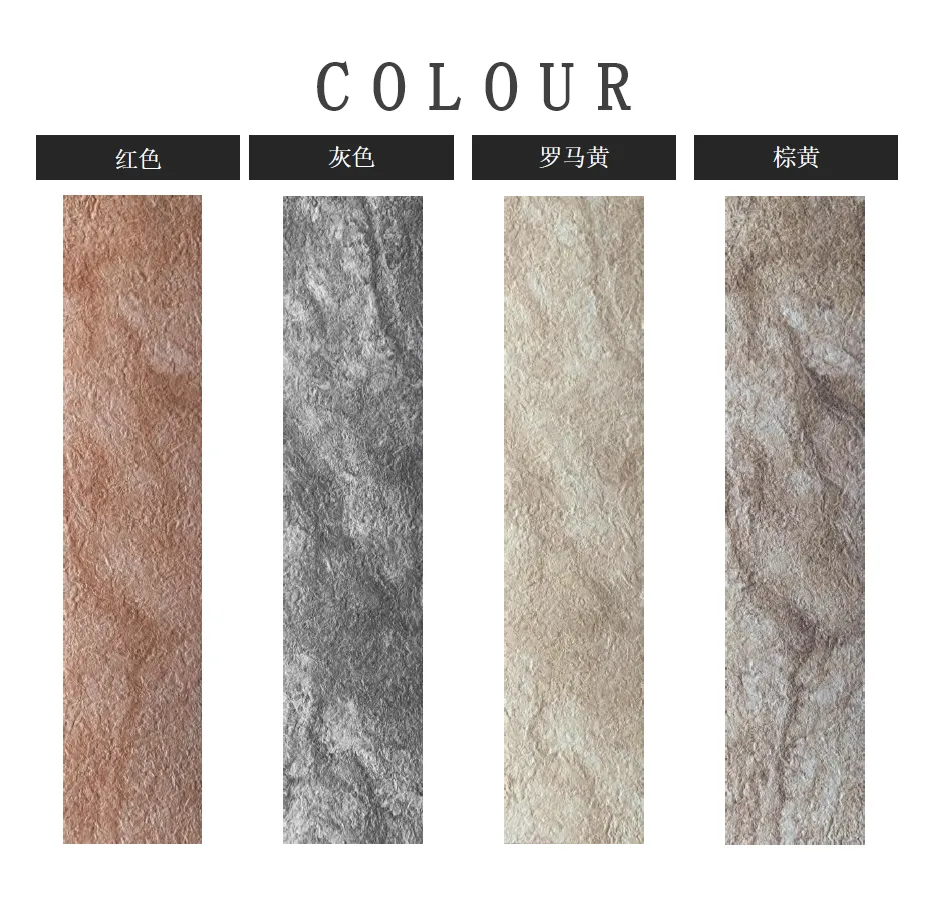
Walk into any thoughtfully designed space, and you'll likely feel it before you see it—the quiet hum of a room shaped by materials that tell a story. Stone, in particular, has a way of grounding us, of linking the present to the earth's ancient past while anchoring our daily lives in texture and warmth. Among the many stones that grace our walls, floors, and facades, dolomitic travertine stands out as a chameleon of character, especially when shaped by the rock cut technique. Its color spectrum, spanning soft beiges to deep grays, isn't just a matter of aesthetics; it's a language of mood, memory, and meaning. Let's explore how these tones—from the sunlit warmth of claybank to the stormy elegance of dark gray—transform spaces into experiences.
Before diving into color, let's pause to appreciate the "rock cut" in rock cut dolomitic stone. Unlike polished or honed surfaces that prioritize sheen, rock cut stone retains the raw, unfiltered marks of its formation. Imagine a craftsman's chisel meeting the stone, leaving behind uneven ridges, subtle pits, and a texture that feels like running your hand over a mountain's weathered face. This isn't just a finish—it's authenticity. Dolomitic travertine, a cousin to classic travertine, carries the added depth of dolomite mineral deposits, which lend it greater durability and a unique interplay of light and shadow. When cut from the rock, it becomes more than a building material; it becomes a piece of the earth, invited indoors to breathe life into our spaces.
Dolomitic travertine forms in mineral-rich hot springs, where layers of calcium and magnesium carbonate build up over centuries. The result? A stone with natural voids, veins, and color variations that make every slab one-of-a-kind. And when we talk about color here, we're not talking about uniform paint—we're talking about the earth's own palette, mixed over millennia. From the soft blush of claybank to the moody depth of dark gray, each tone tells a story of the minerals, water, and time that shaped it.
Let's start with beige—the color that feels like coming home. Dolomitic travertine in claybank (a term that evokes the rich, earthy hue of riverbank soil) is the kind of stone that wraps a room in comfort. Picture a kitchen with walls clad in this tone: sunlight streams through the window, hitting the rock cut surface, and suddenly the space glows with the warmth of a sunlit meadow. The beige here isn't flat; it's alive with subtle undertones—hints of sand, honey, and even a whisper of terracotta—that shift with the time of day. In the morning, it's soft and golden; in the evening, it deepens into a cozy amber, as if the stone itself is sighing into the night.
This warmth makes claybank dolomitic travertine a favorite for spaces where connection matters. Think family rooms where kids sprawl on the floor, or bedrooms where you unwind after a long day. Its texture—rough yet inviting—encourages bare feet and lazy afternoons. Designers often pair it with wood accents (hello, wood line details!) or woven textiles (like the soft neutrality of weaving beige) to amplify that "lived-in" charm. It's also surprisingly versatile: in a rustic cabin, it leans into the outdoorsy vibe; in a modern home, it balances sleek furniture with organic warmth.
Take, for example, a café in a historic district. The owner wanted to honor the building's 19th-century roots but add a contemporary twist. They chose rock cut dolomitic travertine (claybank) for the accent wall behind the counter. The stone's natural pits and ridges catch the warm glow of pendant lights, while its beige base ties in with the reclaimed wood tables and vintage brass fixtures. Customers often comment on how the space feels "both old and new"—a testament to the stone's ability to bridge eras.
If beige is a summer afternoon, then dark gray dolomitic travertine is a stormy evening—sophisticated, moody, and full of quiet drama. This tone, often labeled dolomitic travertine (dark grey), isn't the cold, sterile gray of concrete. Instead, it's a complex blend of charcoal, slate, and even hints of blue or green, depending on the light. The rock cut texture here amplifies its depth: shadows settle into the crevices, making the stone look like it's been carved from a cliff face, weathered by wind and rain.
Gray dolomitic travertine thrives in spaces that demand presence without shouting. Imagine a boutique hotel lobby with floor-to-ceiling walls of this stone. As guests step in from the street, they're greeted by a surface that feels both solid and alive—like standing at the base of a mountain. Paired with polished concrete floors or foamed aluminium alloy board (vintage silver) accents, it becomes a study in contrasts: rough and smooth, organic and industrial. In offices, it exudes professionalism with a touch of warmth, avoiding the sterility of plain drywall. Even in homes, a gray dolomitic travertine fireplace becomes a focal point, its texture and color adding depth to minimalist decor.
A recent project in a tech startup's headquarters comes to mind. The design brief called for a space that felt "innovative yet grounded," and the team turned to dark gray dolomitic travertine for the feature wall in the meeting room. Paired with white oak tables and linear travertine (claybank) accents, the wall balances the room's modern lines with earthy warmth. Employees often say the space feels "focused but not rigid"—a credit to the stone's ability to set a calm, productive tone.
Of course, the world of dolomitic travertine isn't divided neatly into "beige" and "gray." In between, there's a spectrum of subtle shifts—beige with gray undertones, gray with beige veining—that blur the lines and invite creativity. Take linear travertine (claybank), for instance: its elongated, parallel grooves emphasize the stone's natural layers, making the beige feel more dynamic, almost like flowing sand. Or stream limestone (dark grey), which mimics the look of water-worn rock, its gray tone softened by lighter streaks that evoke sunlight on a shadowed stream.
Lighting plays a starring role here. A claybank dolomitic travertine wall in a room with north-facing windows might take on cooler, grayer hues, while the same stone in a south-facing space glows with golden warmth. Even time of day matters: morning light can make gray stone feel silvery, while evening lamplight might deepen it into charcoal. This variability isn't a flaw—it's the stone's way of keeping the space alive, changing with the rhythm of your life.
Designers often use this in-between territory to create harmony. For example, a bathroom with a mix of dolomitic travertine (claybank) floors and dark gray shower walls feels cohesive yet layered, like a walk through a canyon where light and shadow play across rock faces. The key is balance: too much beige can feel flat; too much gray can feel heavy. But when paired thoughtfully, they create a space that feels both grounded and dynamic.
So, how do you pick between beige and gray dolomitic travertine? It starts with asking: What mood do you want to create? A family home might lean into claybank's warmth, fostering connection and comfort. A high-end retail space might opt for dark gray, projecting sophistication and exclusivity. But don't stop there—consider the space's purpose, its lighting, and even the people who'll use it. A bedroom, for example, benefits from the calming nature of beige, while a home office might thrive with gray's focus-enhancing vibe.
To help visualize the difference, let's compare the two most popular rock cut dolomitic travertine options side by side:
| Feature | Dolomitic Travertine (Claybank) | Dolomitic Travertine (Dark Grey) |
|---|---|---|
| Color Tone | Warm, earthy beige with hints of sand and terracotta | Deep, moody gray with undertones of charcoal and slate |
| Texture | Softly pitted with warm, sunlit shadows in rock cut grooves | Dramatic ridges and crevices that deepen shadows, creating contrast |
| Best For | Residential spaces (living rooms, bedrooms, kitchens), rustic or cozy commercial spots (cafés, bed-and-breakfasts) | Modern offices, boutique hotels, high-end retail, minimalist homes |
| Mood Evoked | Nostalgic, welcoming, "lived-in" warmth | Calm, focused, sophisticated elegance |
| Complementary Materials | Wood line, weaving (beige), lime stone (beige) | Foamed aluminium alloy (vintage silver), fair-faced concrete, marble interstellar gray |
At the end of the day, choosing between beige and gray dolomitic travertine isn't just about picking a color—it's about choosing a story. Will your space whisper of summer afternoons and family gatherings, or will it speak to quiet confidence and forward-thinking innovation? Rock cut dolomitic stone, with its raw texture and earthy tones, doesn't just cover walls; it becomes part of the narrative, turning houses into homes and offices into havens.
So the next time you step into a space clad in stone, take a moment to feel it. Run your hand over its surface, notice how the light plays on its texture, and ask: What story is this stone telling? Chances are, it's one of connection—to the earth, to our past, and to the moments that make a house a home. And in that story, dolomitic travertine—whether claybank beige or dark gray—will always have a leading role.
Recommend Products












