
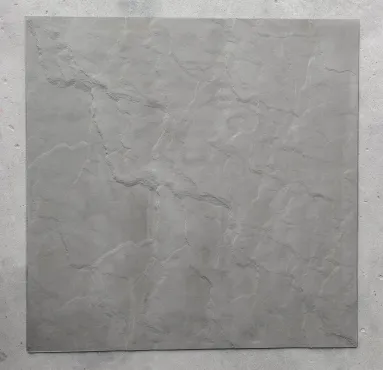
In the world of contemporary architecture, the pursuit of the ideal material is a constant, evolving challenge. Architects are tasked with a complex balancing act: realizing a bold aesthetic vision while adhering to stringent budgets, ensuring long-term durability, and meeting ever-growing demands for environmental sustainability. It's a quest for a material that doesn't force compromise, but instead opens new doors to creative expression. What if such a material already existed? A material that combines the timeless beauty of natural elements with the advanced performance of modern engineering.
This is the reality that COLORIA GROUP brings to the forefront of the building industry. With decades of global experience and a firm commitment to innovation, we position ourselves not merely as a supplier, but as a genuine one-stop solution provider for architects and designers. We understand the pressures and aspirations of your profession. It is from this understanding that our flagship material, Epoch Stone, was born. Based on a revolutionary technology, Epoch Stone represents a paradigm shift in how we think about surfaces, facades, and architectural cladding. This article is your comprehensive technical guide, designed by professionals for professionals, to unlock the full potential of this groundbreaking material in your next project.
To truly appreciate the capabilities of Epoch Stone, one must first understand the science that powers it: MCM, or Modified Cementitious Material . This isn't just another composite or synthetic panel. MCM is an innovative class of material derived from a sustainable and intelligent process. The core ingredients are surprisingly fundamental: natural mineral powders, quartz sand, and other inorganic materials. These elements are mixed with a small quantity of a water-soluble polymer and then shaped through a unique, low-temperature molding and curing process.
The absence of high-temperature firing, which is central to the production of ceramics and porcelain, is a crucial distinction. The entire MCM production cycle operates below 120°C, drastically reducing energy consumption and eliminating the emission of greenhouse gases like carbon dioxide and sulfur dioxide. This low-carbon footprint is not an afterthought; it is intrinsic to the material's DNA.
When evaluated against conventional building materials, the advantages of MCM become strikingly clear:
In essence, Epoch Stone, powered by MCM technology, captures the best attributes of these materials while engineering out their weaknesses. It offers the aesthetic richness of stone, the versatility of a render, and the performance of an advanced composite, all within a sustainable and lightweight framework.
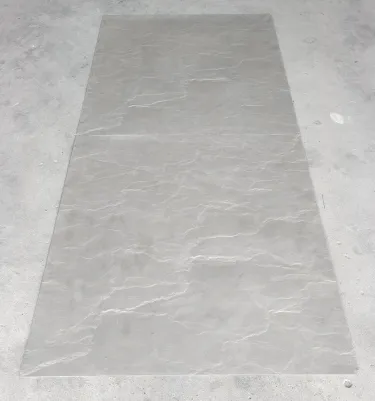
For architects aiming to create a sense of grandeur, modernity, and seamless visual flow, the MCM Big Slab Board Series is the ultimate tool. This series was specifically developed to facilitate the design of monolithic surfaces, minimizing joints to create an uninterrupted, powerful aesthetic. Whether for towering exterior facades, expansive interior lobby walls, or luxurious bathroom enclosures, these large-format panels transform surfaces into architectural statements.
The scale of these boards is their most immediate and impactful feature. With dimensions reaching up to 1200x2800mm, they allow for floor-to-ceiling coverage with minimal-to-zero horizontal seams. This not only enhances the visual purity of the design but also simplifies and accelerates the installation process, leading to significant savings in time and labor costs.
The performance of the Big Slab Board Series is as impressive as its scale. The following table provides a detailed breakdown of its key technical characteristics, offering the empirical data needed for architectural specification and planning.
| Parameter | Specification / Value | Significance for Architects |
|---|---|---|
| Standard Dimensions (W x L) | 1200mm x 600mm, 1200mm x 2400mm, up to 1200mm x 2800mm | Enables monolithic designs, reduces joint lines, and speeds up installation on large surfaces. |
| Standard Thickness | 3mm - 8mm | Extremely thin profile saves space, reduces structural load, and is ideal for overlaying existing finishes in renovations. |
| Weight per Square Meter | Approx. 4 - 8 kg/m² | Significantly reduces dead load on building structures; simplifies handling, transport, and installation. No heavy lifting machinery required. |
| Fire Resistance Rating | Class A (ASTM E84, EN 13501-1) | Highest level of fire safety, making it suitable for high-rise buildings, public spaces, and exit corridors without requiring additional fire-retardant treatments. |
| Water Absorption | < 8% (by volume) | Low absorption rate prevents moisture ingress, making it highly suitable for exterior facades, bathrooms, and wet areas. Resists mold and mildew growth. |
| Freeze-Thaw Resistance | No cracking or deterioration after 100 cycles (-20°C to +23°C) | Excellent durability in climates with significant temperature fluctuations, ensuring long-term facade integrity without spalling or delamination. |
| Flexibility | Can conform to slight curvatures (e.g., >5m radius) | While not as flexible as the dedicated flexible series, it can accommodate subtle curves on facades, unlike rigid stone or porcelain panels. |
| Color Fastness (UV Resistance) | Grade ≥ 4 (Grey Scale) | Colors remain stable and vibrant even under prolonged exposure to sunlight, ensuring the building's aesthetic appeal is maintained over its lifespan. |
Where the Big Slab series offers grandeur in scale, the MCM Flexible Stone series offers liberation from geometric constraints. This product line is the architect's ultimate problem-solver, designed specifically for applications where rigidity is a limitation. Think of undulating walls, curved reception desks, sweeping archways, and cylindrical columns. Historically, cladding these surfaces required either immensely expensive custom-milled stone or less-than-ideal solutions like plasters or segmented tiles, which disrupt the visual flow.
MCM Flexible Stone changes the equation entirely. With a thickness often as little as 2-3mm, it possesses a remarkable degree of pliability, allowing it to be bent and formed around tight radii without cracking or breaking. This flexibility is not a result of a weaker composition; it is an engineered characteristic of the MCM formula, maintaining exceptional durability while enabling unprecedented form factors. It can be shipped in rolls and cut with a simple utility knife, making it one of the most versatile and installer-friendly cladding materials on the market.
The unique properties of the Flexible Stone series are best understood through its technical data. Notice the key differences in thickness, weight, and, most importantly, the minimum bending radius compared to the Big Slab series.
| Parameter | Specification / Value | Significance for Architects |
|---|---|---|
| Standard Dimensions (W x L) | e.g., 580mm x 2880mm, 1220mm x 2440mm (can be supplied in rolls) | Large, continuous formats for seamless application on curved and straight surfaces. Roll format simplifies logistics. |
| Standard Thickness | 2mm - 4mm | Ultra-thin profile is perfect for overlays, interior detailing, and complex shapes without adding bulk. |
| Weight per Square Meter | Approx. 2.5 - 5 kg/m² | Extremely lightweight, making it suitable for almost any substrate, including lightweight partitions and ceilings. |
| Minimum Bending Radius | As low as 300mm (depending on thickness and texture) | The defining characteristic. Allows for the seamless cladding of columns, corners, and complex curved geometry. |
| Fire Resistance Rating | Class A (ASTM E84, EN 13501-1) | Ensures top-tier fire safety even in this highly flexible format, critical for interiors and public spaces. |
| Texture Options | Vast range including travertine, slate, sandstone, wood grain, leather, and woven patterns. | Provides immense aesthetic choice to match any design intent, from organic naturalism to refined industrial looks. |
| Installation Method | Adhesive application; cut with a utility knife. | Drastically simplifies installation, reducing labor costs and time. No specialized cutting equipment or dust. |
The implications of this flexibility are profound:
If the first two product lines are about perfecting and liberating form, the MCM 3D Printing Series is about inventing it. This is the pinnacle of customization, where the line between building material and digital art completely dissolves. It leverages the inherent plasticity of the MCM compound before it's cured, using advanced robotic extrusion and additive manufacturing techniques to create surfaces with intricate, three-dimensional textures and patterns.
This technology moves beyond simple imitation of existing materials. It allows architects to design and realize completely bespoke surfaces. From subtle, parametric wave patterns that flow across a facade to bas-relief murals and brand logos integrated directly into a wall, the possibilities are limited only by the architect's imagination. This is mass customization at an architectural scale.
The MCM 3D Printing Series represents a collaborative process between the architect and COLORIA GROUP's technical team. The workflow is seamless and digitally driven:
This process allows for the creation of a "signature" building skin that is entirely unique to the project. Imagine a museum facade with a texture derived from the artist's brushstrokes, a tech company's headquarters with walls that feature a subtle binary code pattern, or a seaside resort with panels that mimic the ebb and flow of sand dunes. This is not just cladding; it is storytelling through material.
A revolutionary material is only as good as its real-world performance and ease of use. At COLORIA GROUP, our role as a one-stop solution provider extends to ensuring the entire lifecycle of Epoch Stone—from installation to long-term maintenance—is simple, efficient, and sustainable.
The installation of Epoch Stone is significantly faster and safer than that of traditional masonry. The process generally involves three key stages:
Epoch Stone is designed for longevity with minimal upkeep. Its non-porous, inorganic surface is resistant to staining, mold, and algae growth. For general cleaning, a simple wash with water and a mild, neutral pH detergent is all that is required. The material is incredibly robust, but in the unlikely event of severe localized damage, individual panels or sections can be cut out and replaced seamlessly, a much simpler and more cost-effective repair than with large, monolithic stone slabs.
Sustainability is the thread that runs through the entire Epoch Stone story. By specifying this material, architects are making a conscious choice that benefits the project and the planet:
COLORIA GROUP's Epoch Stone is more than just a product; it is a comprehensive design system. It is the culmination of decades of research, driven by a desire to provide architects with a material that does not force them to choose between beauty, performance, and responsibility.
From the monolithic grandeur of the MCM Big Slab Board Series to the boundless geometric freedom of the MCM Flexible Stone , and onto the infinite possibilities of bespoke creation with the MCM 3D Printing Series , Epoch Stone offers a tailored solution for every architectural challenge. It is a material that empowers you to design with fewer constraints and greater confidence, backed by robust technical performance and a deep commitment to sustainability. As we look to the future of the built environment, a future that must be more beautiful, more resilient, and more in harmony with our planet, materials like Epoch Stone will not just be an option; they will be the standard.
Recommend Products












