
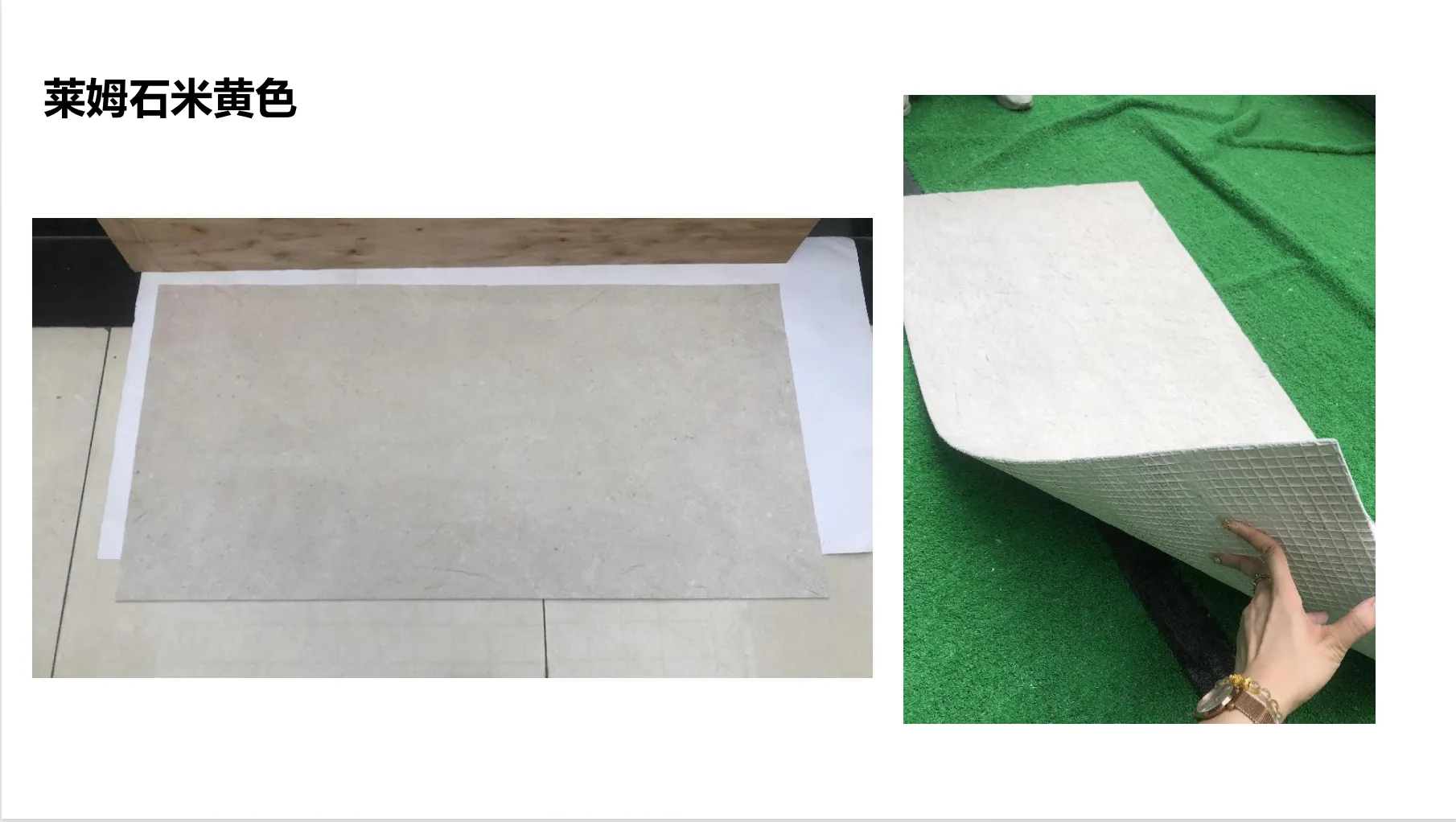
Walk into a space that feels alive—one that makes you pause, run a hand along a wall, or lean in to study a texture. Chances are, that magic isn't just about design; it's about the materials. They're the silent storytellers, carrying the weight of nature's history and the craft of human hands. At COLORIA GROUP, we've always believed that great materials don't just fill spaces—they shape experiences. And today, we're pulling back the curtain to share the journey of one such material: lime stone (beige), and the real photos that capture its unfiltered beauty. But this isn't just about stone. It's about passion, precision, and the quiet dedication to turning raw earth into something extraordinary.
For over two decades, COLORIA GROUP has been on a mission: to bridge the gap between nature's untamed elegance and the demands of modern design. We don't just "make" materials—we curate them. From the rugged charm of fair-faced concrete to the delicate veining of travertine, every product in our lineup starts with a question: How can we let nature speak, while giving designers the tools to dream bigger?
It's a balance that's led us to innovate. Take our mcm flexible stone, for example—a breakthrough that bends like leather but wears like rock. Or the mcm 3d printing series, where cutting-edge tech meets age-old craftsmanship to create textures no quarry could ever produce. But even with all that innovation, we never lose sight of the basics: authenticity. Which is why our "real photos" aren't just marketing tools. They're promises. A promise that what you see is what you get—no filters, no tricks, just the unvarnished truth of a material's soul.
Lime stone (beige) isn't just a color—it's a legacy. Our story with this material starts in the rolling hills of Tuscany, where quarries have been yielding stone for centuries. But we don't just show up with a truck and a crane. Our geologists and sustainability experts spend months studying a quarry before we ever break ground. Why? Because great stone deserves great respect. We look for deposits where the stone's natural layers are intact, where the beige hue is consistent but not uniform (those subtle variations are what make it feel alive), and where extraction can be done with minimal impact on the surrounding ecosystem.
"You can't rush a quarry," says Marco, our lead sourcing agent, who's been with us for 15 years. "Last year, we spent three weeks waiting for a rainstorm to pass before extracting a batch of lime stone (beige). The stone absorbs water, you see, and if you cut it wet, the color shifts. We wanted that dry, warm beige—the one that glows in morning light. So we waited. That's the difference between a slab and a story."
Once the raw blocks arrive at our production facility in Milan, the real work begins. Our artisans—many of whom come from generations of stoneworkers—treat each slab like a masterpiece. First, they inspect for flaws: a hairline crack here, an uneven edge there. Those that don't meet our standards? They're repurposed into smaller tiles or crushed for aggregate—nothing goes to waste. The keepers move to the cutting room, where diamond-tipped saws slice through the stone with millimetric precision. But here's the thing: we don't over-process. Lime stone (beige) gets its character from its imperfections—the tiny pits, the faint fossils, the way it catches light differently at dawn than at dusk. So we sand, but we don't polish to a mirror shine. We seal, but we leave the surface porous enough to breathe. "It's about balance," says Sofia, our master stonecutter. "You want to protect it, but you don't want to muffle its voice."
"A slab of lime stone (beige) isn't just rock. It's 200 million years of history—corals, shells, ancient oceans turned to stone. When I work on it, I'm not just shaping a material. I'm honoring that history." — Sofia, Master Stonecutter
If lime stone (beige) is our love letter to tradition, then mcm flexible stone is our bold vision for the future. Imagine trying to wrap a conventional stone slab around a curved wall or a spiral staircase—it would crack, or worse, shatter. But flexible stone? It bends. It twists. It conforms. How? We start with a base of high-strength fiberglass mesh, then layer on a thin veneer of natural stone particles (think crushed lime stone, travertine, or even marble) mixed with a proprietary polymer resin. The result? A material that's 80% lighter than solid stone, but just as durable, and flexible enough to wrap around radius corners or even ceilings.
Take our recent project with a boutique hotel in Barcelona. They wanted a feature wall in the lobby that curved like a wave—something soft, organic, but with the weight of stone. Enter our mcm flexible stone in lime stone (beige). Our installers rolled it out like a carpet, trimmed it on-site, and adhered it to the curved substrate. The result? A wall that looks like it was carved from a single block of stone, but bends like it's alive. "Clients used to have to choose between beauty and functionality," says Elena, our product development lead. "Flexible stone lets them have both."
If flexible stone bends the rules, our mcm 3d printing series smashes them. Traditional stoneworking is limited by what nature provides—quarries can only yield so many textures, so many patterns. 3D printing? It lets us dream up textures that don't exist in the wild. Want a surface that looks like wind-blown sand dunes? We can print it. A wall panel that mimics the rings of an ancient tree? Done. And the best part? We still use natural materials. Our 3D printers extrude a paste made from recycled stone dust (leftover from our lime stone and travertine production) mixed with a eco-friendly binder, building up layers to create intricate, three-dimensional textures that would take a sculptor weeks to carve by hand.
"We recently printed a custom wave panel for a restaurant in Tokyo," Elena recalls. "The client wanted the wall to feel like you're standing at the edge of the ocean—waves frozen in stone. Using 3D printing, we could adjust every crest, every trough, until it felt right . You can't do that with a quarry."
So, why do we obsess over "real photos"? Because we've all been there: you order a material online, based on a glossy, filtered image, and it arrives looking… different. The color is off, the texture is flat, and suddenly, your design vision feels like it's fallen apart. At COLORIA GROUP, we refuse to let that happen. Our real photos are taken in natural light, with minimal editing—just a touch of contrast to mimic how the material would look in a well-lit room. No Photoshop magic, no color enhancement, no tricks.
Meet Luca, our in-house photographer. He's not just good with a camera—he's a material whisperer. "Lighting is everything," he says, adjusting a softbox above a slab of lime stone (beige). "If I shoot this under harsh overhead light, the pits look like holes. If I use too much flash, the beige turns washed-out. I need to find that sweet spot—morning light, 45-degree angle—to show the texture: the way the stone catches the glow, the depth of those tiny pores, the warmth of the color. A good photo doesn't just show the material. It makes you want to reach out and touch it."
To really understand the diversity of our lineup, let's put four of our most beloved materials side by side. This isn't just a comparison—it's a celebration of texture, color, and character.
| Material | Texture Story | Ideal For | "Real Photo" Highlight |
|---|---|---|---|
| Lime Stone (Beige) | Warm, sandy beige with tiny fossil pits and a matte, earthy finish. Feels like sun-baked desert soil underfoot. | Kitchen backsplashes, outdoor patios, rustic living rooms. | Morning light raking across the surface, making the pits glow like tiny amber beads. |
| Travertine (Starry Blue) | Pale blue-gray base with "starry" veins of darker blue and gold. Smooth but porous, with a cool, celestial vibe. | Feature walls, hotel lobbies, statement fireplaces. | Soft afternoon light highlighting the veining, making it look like a night sky spilled across stone. |
| Fair-Faced Concrete | Raw, industrial gray with visible aggregate (small stones) and subtle tooling marks. Feels cool and solid, like a warehouse wall with soul. | Modern offices, minimalist bedrooms, urban lofts. | Overhead light casting shadows along the tooling marks, emphasizing the material's "handmade" edge. |
| Wood Grain Board | Deep, rich browns with authentic wood grain patterns—knots, growth rings, and all. Smooth to the touch, but with the dimensionality of real timber. | Dining room accent walls, bedroom headboards, retail displays. | Side light catching the grain, making the pattern pop like waves on a wooden plank. |
At the end of the day, materials are just materials—until people breathe life into them. At COLORIA GROUP, our team is our greatest asset. There's Maria, our sustainability director, who ensures every quarry we work with meets strict environmental standards. There's Raj, our quality control lead, who inspects every slab with a magnifying glass and a checklist (he once rejected an entire batch of travertine because a single slab had a hairline crack he spotted from 10 feet away). And there are the production line workers, the drivers, the customer service reps—each one plays a role in making sure your material arrives not just on time, but full of stories.
"I love when clients send us photos of their finished spaces," says Raj. "Last month, a designer sent over a picture of a café with our lime stone (beige) countertops. There was a barista leaning on it, laughing, and the stone looked… happy. Like it belonged there. That's why we do this. It's not about selling stone. It's about helping people build spaces that feel like home."
So, what's the takeaway? Materials matter. They shape how we feel, how we live, how we connect with the world around us. At COLORIA GROUP, we're honored to be part of that journey—from the quarries of Tuscany to the studios of Milan, from the hands of our artisans to the walls of your space. And when you look at our real photos, we hope you see more than just stone or concrete or wood. We hope you see possibility. A possibility to create spaces that are not just beautiful, but alive .
Lime stone (beige) is just the beginning. Explore our collection—from the flexibility of mcm flexible stone to the innovation of the 3d printing series—and discover the material that will tell your space's story. Because in the end, the best designs aren't just about what you see. They're about what you feel .
Recommend Products












