
Architecture is more than just walls and roofs—it's the art of crafting spaces that breathe, tell stories, and leave lasting impressions. Every material choice, from the rough texture of a stone wall to the sleek sheen of a metal panel, shapes how we experience a building. For designers and architects tackling large-scale projects, the search for materials that balance durability, beauty, and innovation can feel endless. That's where COLORIA's MCM Project Board Series steps in—a collection of surfaces that don't just cover structures, but transform them into landmarks with soul. Today, we're diving into one of its most compelling stars: the New Rock Cut Stone. But first, let's set the stage for why these materials matter.
Imagine walking into a concert hall where the walls seem to hum with history, or a corporate campus that feels both cutting-edge and grounded. These moments of connection happen when materials are chosen with intention. COLORIA's MCM (Modified Composite Material) Project Board Series was born from this belief: that building materials should be more than functional—they should be expressive . Blending advanced technology with nature-inspired design, the series spans everything from 3D-printed textures that mimic geological formations to lightweight alloys that shimmer like aged metal. What ties them all together? A commitment to flexibility (perfect for large, complex surfaces), sustainability (eco-friendly composites reduce environmental impact), and above all, personality.
At the core of the series is the understanding that large-scale projects—airports, museums, shopping centers, stadiums—demand materials that can scale without losing detail. A small sample might look stunning in a showroom, but when stretched across a 50-meter facade, will it still captivate? With COLORIA's MCM boards, the answer is a resounding yes. Take, for example, the 3D Printing Series: using precision engineering, it recreates the irregularities of natural stone or wood with mathematical accuracy, ensuring that even on a grand scale, every ridge and groove feels organic. Or the Flexible Stone line, which bends to follow curved architectures without cracking—a game-changer for designs that reject rigid geometry.
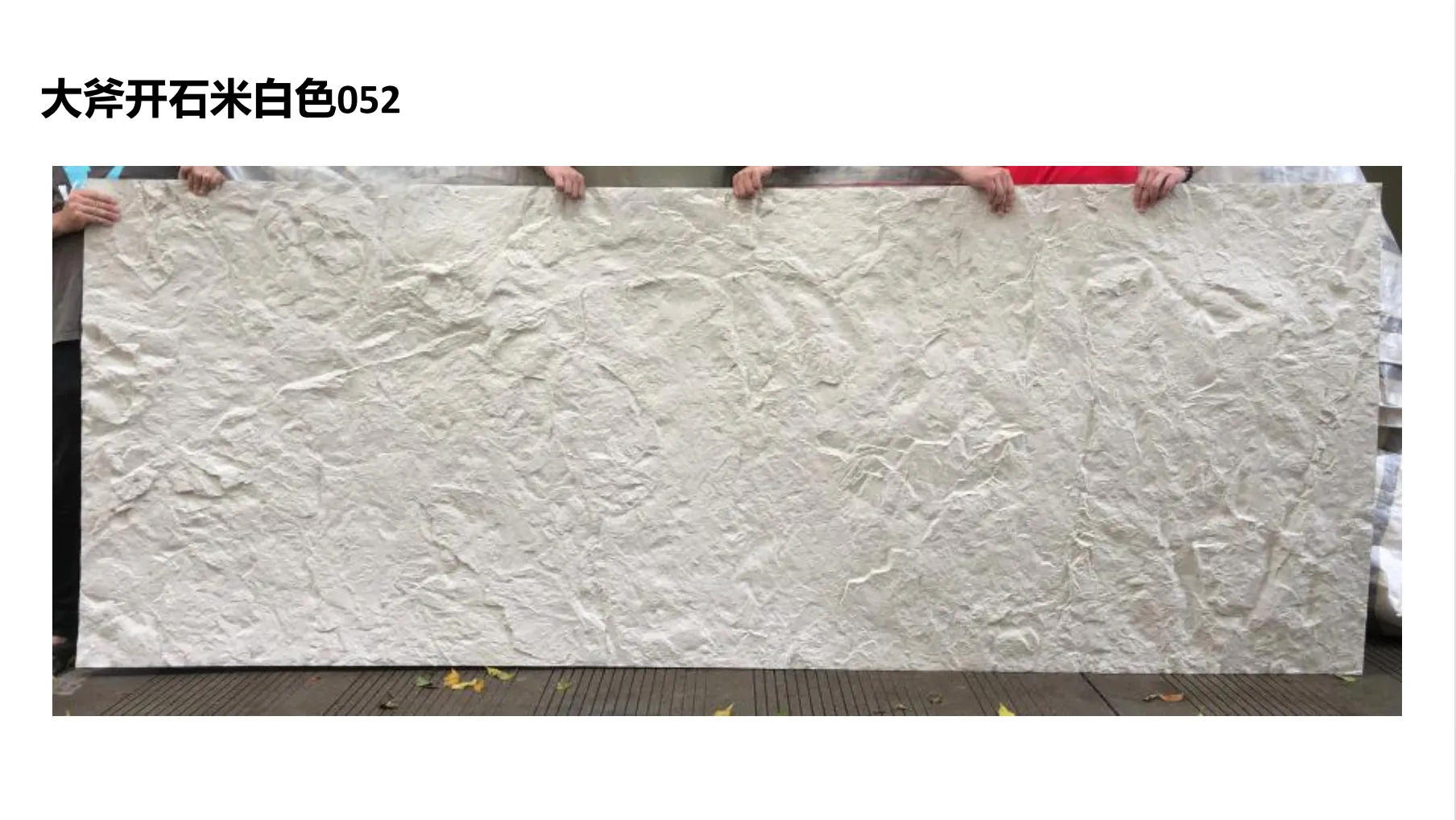
If you've ever run your hand over an ancient temple wall, you know the feeling: a texture that's equal parts rugged and refined, as if the stone itself has absorbed centuries of stories. Rock Cut Stone draws inspiration from these timeless surfaces, but with a modern twist. Unlike traditional quarried stone, which is heavy and hard to transport for large projects, COLORIA's Rock Cut Stone is crafted from a lightweight MCM composite. This means it can be applied to tall facades, sprawling lobbies, or even curved structures without compromising structural integrity.
But the magic is in the details. The "rock cut" texture isn't just a pattern—it's a sensory experience . Run your fingers across it, and you'll feel the deliberate "chisel marks," the subtle variation in depth that mimics the way ancient stonemasons hewed stone from cliffs. It's rough enough to feel authentic, yet smooth enough to be safe for high-traffic areas. And the color palette? Think earthy claybanks, deep grays, and warm beiges that echo the tones of natural rock formations, making it a versatile choice for both classical and contemporary designs.
Let's talk practicality. For architects, large-scale projects often mean balancing aesthetics with logistics. Heavy materials like natural granite or marble require reinforced structures and expensive transportation—costs that add up fast. Rock Cut Stone, being an MCM composite, weighs up to 70% less than natural stone, slashing shipping and installation time. Yet it doesn't skimp on durability: resistant to UV rays, moisture, and temperature swings, it holds up in harsh climates, from desert sun to coastal salt spray.
Then there's the design freedom. Imagine a university campus honoring its heritage with a library facade that looks like it's been carved from the earth, but without the weight of real stone. Or a museum dedicated to archaeology, where the exterior itself tells the story of human craftsmanship. Rock Cut Stone turns these visions into reality. And with COLORIA's new real photos, designers can now see exactly how the texture plays under different lights—morning sun, twilight, artificial fixtures—before making a choice. No more guessing if that "dark grey dolomitic" hue will read too flat in person; the photos capture every nuance, from the way shadows pool in the grooves to how the color shifts with the angle of light.
One recent project that showcases this? A cultural center in the heart of a historic district, where the client wanted to blend modern functionality with the area's 19th-century stone architecture. The design team chose Rock Cut Stone in "claybank" for the main facade, and the result is striking: a building that feels both rooted in the past and unapologetically contemporary. As the lead architect put it, "It's like we brought the mountain to the city—without moving a single boulder."
Rock Cut Stone is just the beginning. The MCM Project Board Series is a universe of textures and tones, each with its own personality. Let's explore a few that pair beautifully with Rock Cut Stone in large-scale projects, or shine on their own.
| Product Name | Material | Texture & Aesthetic | Best For |
|---|---|---|---|
| Lunar Peak Golden | MCM Composite with Metallic Finish | Smooth, with a warm, iridescent glow that mimics moonlight on desert sand | Luxury hotels, high-end retail facades, or accent walls in lobbies |
| Travertine (Starry Green) | Modified Travertine Composite | Porous, with tiny "star-like" flecks of green that catch light; soft, organic texture | Eco-resorts, botanical gardens, or wellness centers aiming for a nature-connected vibe |
| Foamed Aluminium Alloy Board (Vintage Silver) | Lightweight Foamed Aluminium | Matte metallic surface with a slightly weathered look; cool, industrial edge | Tech campuses, modern art museums, or urban office buildings |
| Rammed Earth Board (Gradient) | Composite Rammed Earth | Swirls of earthy tones (khaki, terracotta, sand) that blend like a watercolor; tactile, granular texture | Cultural centers, heritage sites, or residential complexes with a focus on sustainability |
For projects that demand a touch of the extraordinary, the Lunar Peak series is a showstopper. Available in silvery, golden, and black variants, these boards take inspiration from the moon's surface—cratered, luminous, and full of mystery. Lunar Peak Golden, in particular, has become a favorite for luxury spaces. Imagine a hotel lobby where the ceiling is clad in Lunar Peak Golden panels: as the sun sets, the room glows with a soft, amber light, making guests feel like they're dining under a harvest moon. It's metallic, but not cold—warm and inviting, like aged brass that's been loved for decades.
What makes Lunar Peak ideal for large-scale use? Its lightweight nature (thanks to the MCM core) means it can be installed on ceilings, curved walls, or even overhead canopies without structural strain. And unlike real gold leaf or solid metal, it won't tarnish or fade, ensuring that "moonlit" glow lasts for years.
Travertine has long been beloved for its soft, porous texture, but COLORIA's take adds a whimsical twist: the "Starry Green" variant. Picture a wall that looks like a slice of the night sky, but instead of stars, there are tiny flecks of emerald green embedded in the stone. It's subtle—you might not notice the "stars" at first glance—but as you move closer, they reveal themselves, turning a plain surface into a conversation starter.
One resort in Bali used Travertine (Starry Green) for their open-air yoga pavilions, and the result is magical. When the morning mist rolls in, the green flecks look like dewdrops on stone; at night, under string lights, they twinkle like fireflies. It's a material that doesn't just complement nature—it becomes part of it.
Not all projects call for warmth and nature—some crave edge and innovation. Enter Foamed Aluminium Alloy Boards. The Vintage Silver variant, with its slightly weathered finish, feels like a nod to old factory walls, but with a modern, lightweight upgrade. It's the perfect choice for a tech company's headquarters, where the goal is to blend industrial heritage with futuristic design. One such project, a startup campus in Berlin, used the Vintage Silver boards for their main facade, pairing them with large glass panels. The result? A building that looks like it's made of "frozen smoke"—light, strong, and utterly unique.
Numbers and specs tell part of the story, but real impact comes from seeing these materials in action. Let's dive into a few large-scale projects that have used COLORIA's MCM boards to stunning effect.
Tasked with creating a museum honoring Egypt's ancient explorers, the design team wanted a facade that felt both monumental and intimate. They chose Rock Cut Stone in "historical pathfinders stone" (a rich, sandy beige) for the main structure, pairing it with Rammed Earth Board (Gradient) for accent walls. The Rock Cut Stone's rough texture evokes the cliffs of the Nile Valley, while the gradient rammed earth adds movement, like shifting desert sands. Inside, Travertine (Starry Red) lines the exhibition halls, its "stars" echoing the constellations that guided ancient travelers. "We didn't just build a museum," said the lead designer. "We built a journey through time."
Dubai's skyline is no stranger to bold design, but the Oasis Sky Mall wanted to stand out by blending luxury with sustainability. The facade features Foamed Aluminium Alloy Board (Vintage Gold) for its sleek, reflective surface, which reduces heat absorption and lowers cooling costs. Inside, the atrium is wrapped in Lunar Peak Silvery panels, which bounce natural light deep into the mall, reducing the need for artificial lighting. The result? A space that feels both opulent and eco-conscious—proving that large-scale luxury and sustainability can go hand in hand.
Nestled in the rainforest, GreenPine wanted its buildings to disappear into the landscape—until you looked closer. The resort's bungalows are clad in Travertine (Starry Green), whose porous texture blends with the surrounding foliage, while the main lodge uses Rock Cut Stone in "gobi panel" (a muted terracotta) to mimic the local clay cliffs. Even the pool deck features Foamed Aluminium Alloy Board (Vintage Silver) with a non-slip finish, ensuring safety without sacrificing style. "Guests often tell us they forgot they were in a resort—they felt like they were staying in a treehouse carved from the earth," said the resort manager. Mission accomplished.
By now, you might be wondering: What makes COLORIA's MCM Project Board Series different from other building materials? Let's break down the benefits that have architects and designers returning to these boards for their biggest projects:
At the end of the day, buildings are more than just spaces—they're legacies. They outlive the teams that design them, the communities that use them, and the moments that unfold within their walls. Choosing materials that honor that legacy—by being durable, beautiful, and thoughtfully crafted—is one of the greatest responsibilities an architect or designer can have.
COLORIA's MCM Project Board Series, with stars like the New Rock Cut Stone, doesn't just meet that responsibility—it elevates it. These aren't just boards; they're storytellers. They carry the texture of ancient cliffs, the glow of distant stars, the warmth of sun-baked earth, and the edge of modern innovation. For large-scale projects that aim to inspire, connect, and endure, they're not just a choice—they're a statement .
So the next time you pass a building that makes you pause, take a closer look. Maybe it's wrapped in Rock Cut Stone, its chisel marks whispering of history. Or perhaps it's shimmering with Lunar Peak Gold, glowing like a promise of tomorrow. Either way, remember: behind every great space is a great material. And with COLORIA's MCM Project Board Series, that material is within reach.
Recommend Products












