
Buildings are more than just structures—they're stories. They whisper about the people who designed them, the communities they serve, and the era they belong to. And at the heart of every great building's story? The materials that shape it. For architects and designers, choosing the right material is like a writer picking the perfect words: it needs to convey beauty, durability, and purpose, all at once. But here's the catch: in a market flooded with options—from cold concrete to glossy marbles—finding that "perfect word" can feel like searching for a needle in a haystack.
Enter COLORIA MCM, a name that's been turning heads in the building materials industry for over a decade. Known for blending cutting-edge technology with artistic flair, they've built a reputation for materials that don't just perform—they inspire. And their latest star? Glacial Slate , a member of their acclaimed MCM big slab board series. But with competitors nipping at their heels—offering everything from industrial fair-faced concrete to shimmering Lunar Peak Silvery—does Glacial Slate really stand out? Let's dive in.
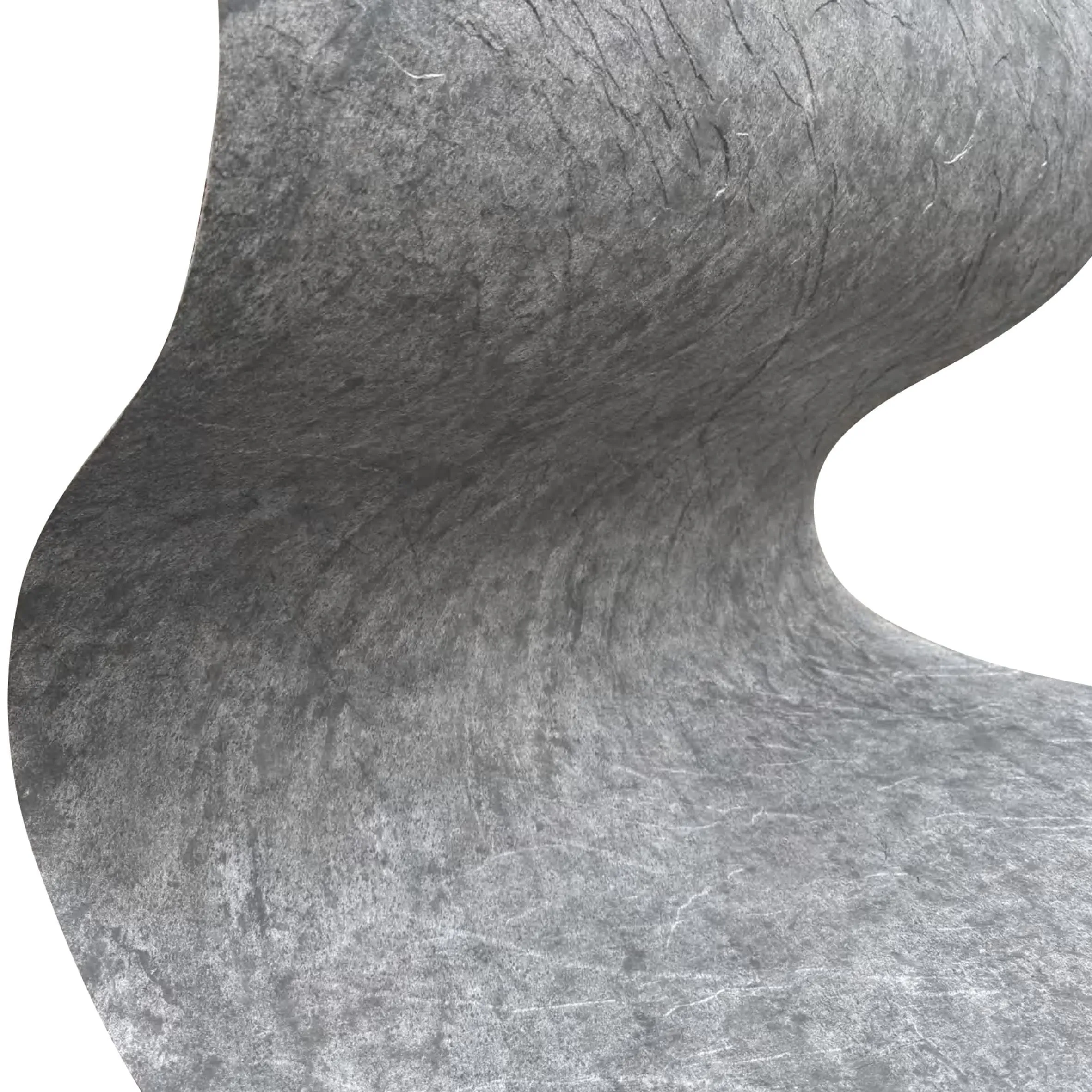
Before we get into the nitty-gritty of Glacial Slate, let's talk about the brand behind it. COLORIA MCM isn't your average building materials manufacturer. They're the kind of company that asks, "What if?" instead of "Why?" What if a stone could bend without breaking? What if a slab could mimic the look of ancient rock but weigh half as much? Their answer? Modified Composite Material (MCM), a revolutionary technology that layers natural minerals with high-performance polymers to create panels that are lightweight, flexible, and insanely durable.
From their MCM flexible stone series (think stone that can wrap around curved walls like fabric) to their 3D printing collection (custom textures that push the boundaries of design), COLORIA has always prioritized innovation. But Glacial Slate? It's their love letter to nature's raw beauty—reimagined for the modern world.
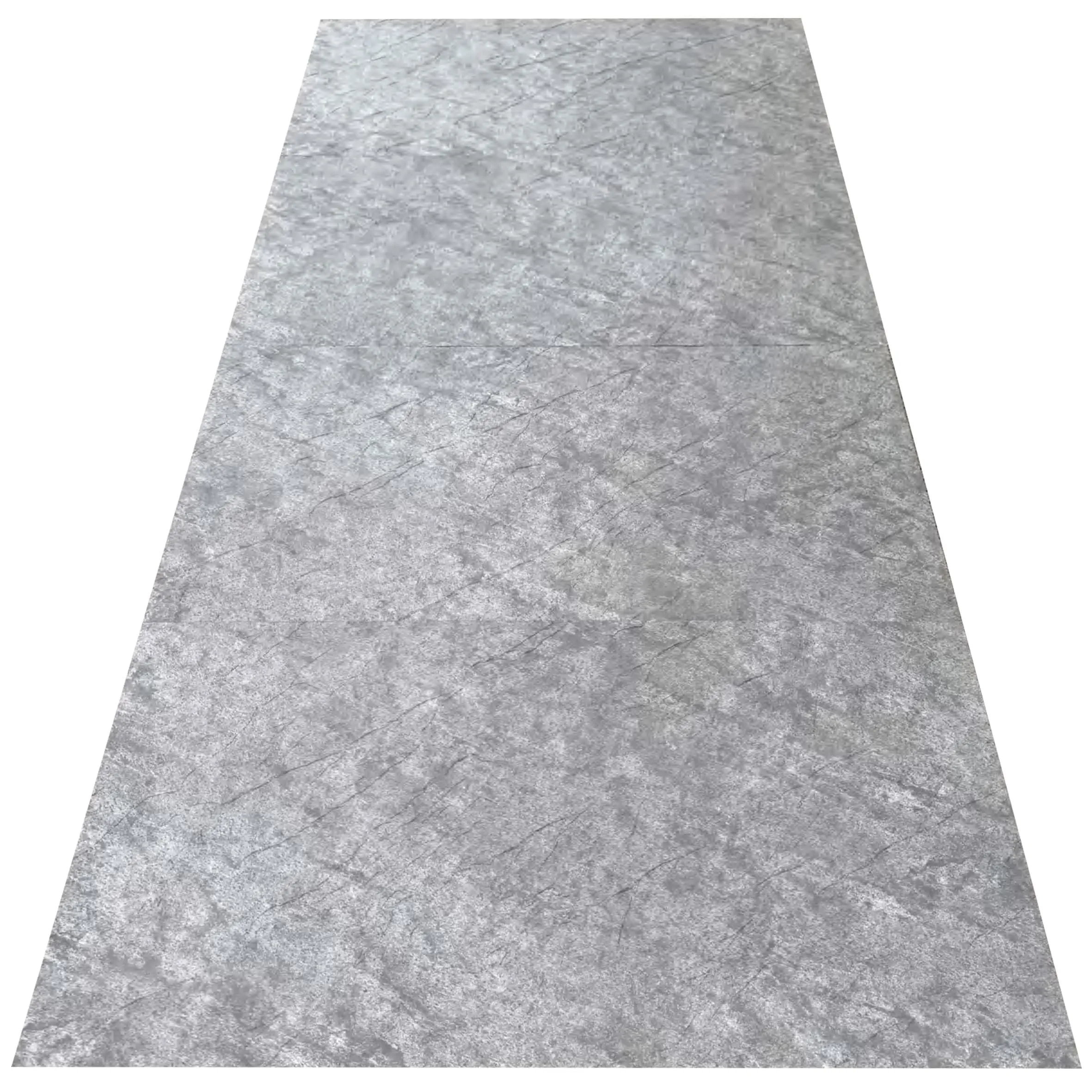
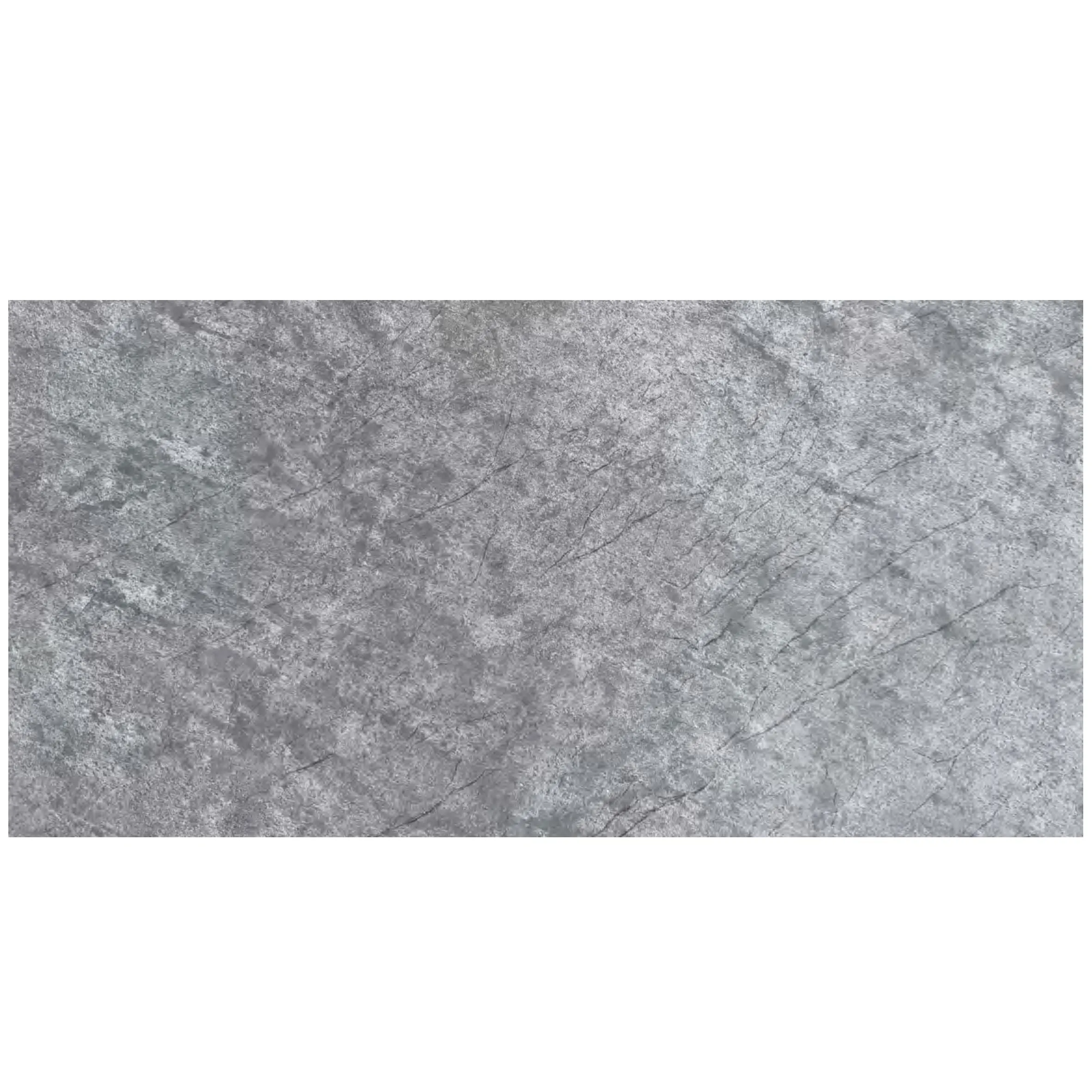
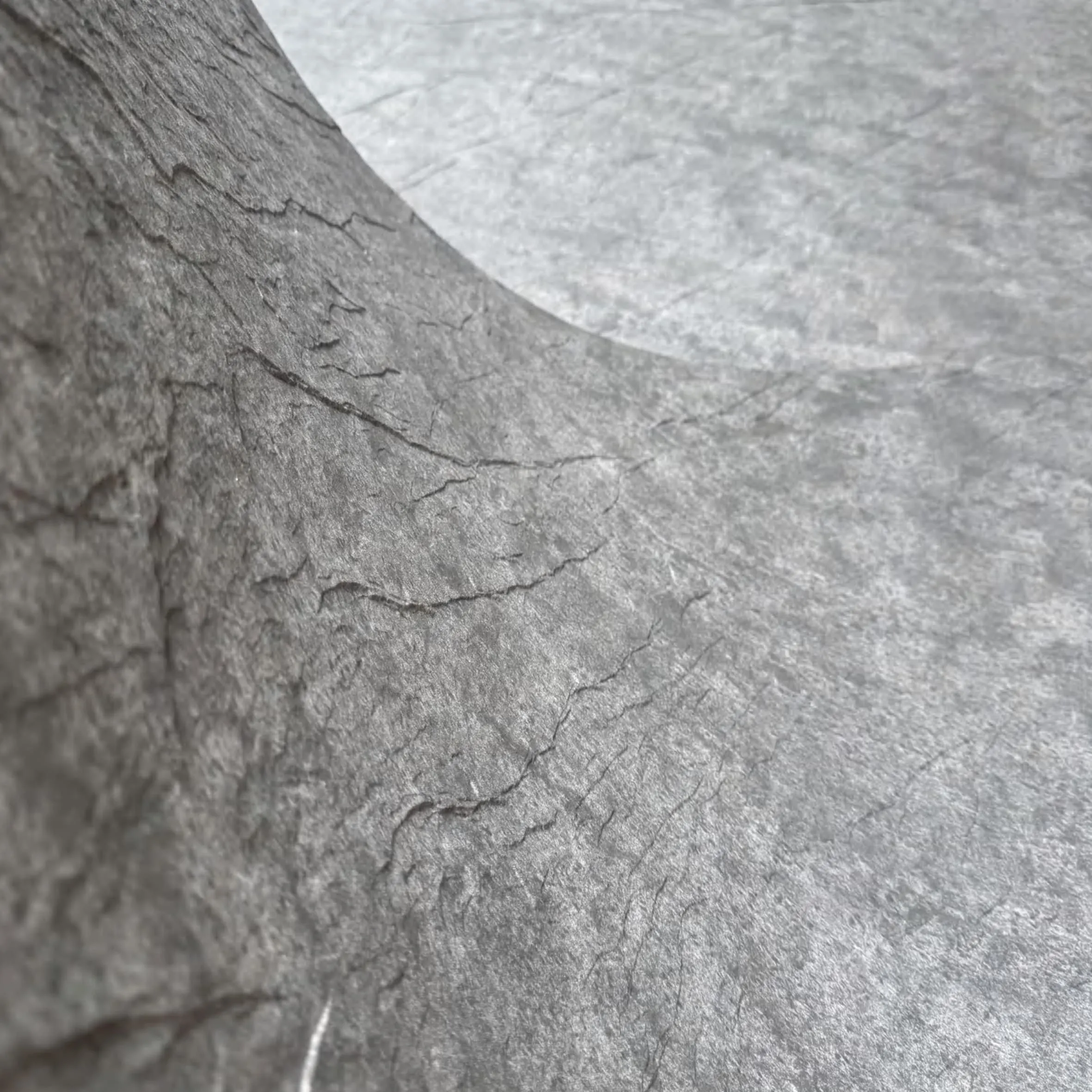
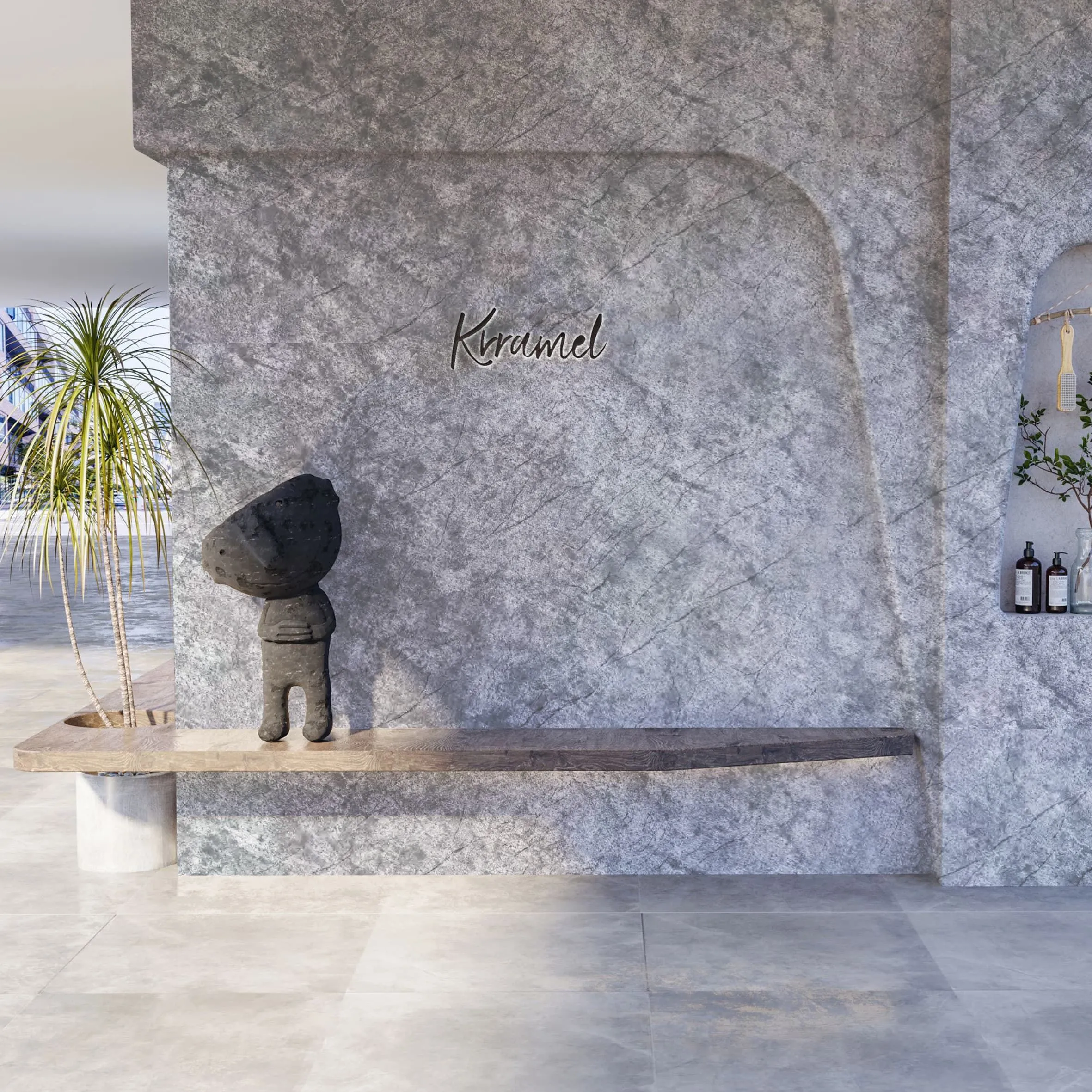
Let's start with the obvious: Glacial Slate is stunning. Picture this: a slab that looks like a slice of a glacier, with veins of soft blue and silver that twist and turn like frozen rivers. The surface has a matte finish that feels cool to the touch, but catch it in sunlight, and suddenly those veins shimmer—like ice crystals catching the light. It's not just "stone"; it's a texture that tells a story of time, of slow-moving rivers turning to ice, of nature's quiet power.
But Glacial Slate isn't just a pretty face. As part of COLORIA's MCM big slab board series, it's engineered to solve some of the biggest headaches architects face. Let's break down its standout features:
Of course, COLORIA isn't the only player in the game. Let's pit Glacial Slate against two popular alternatives: fair-faced concrete (a staple in industrial design) and Lunar Peak Silvery (a metallic-tinged competitor from rival brand StoneTech).
Fair-faced concrete has a cult following, and for good reason. It's raw, industrial, and has that "less is more" vibe that's huge in modern architecture. Think warehouses converted into lofts, minimalist offices with exposed ceilings. But here's where it falls short:
First, weight. A standard fair-faced concrete panel weighs around 45kg per square meter—almost four times heavier than Glacial Slate. That limits where you can use it (forget about upper floors or curved walls). Second, texture. Concrete is porous, so it stains easily. Spill red wine in a concrete lobby, and you're looking at a permanent reminder. Glacial Slate, with its sealed MCM surface, wipes clean with a damp cloth.
And let's talk aesthetics. Concrete is… well, gray. It's moody, but it doesn't have the depth of Glacial Slate. There's no veining, no shimmer—just a flat, uniform look. For some projects, that's perfect. But if you want a material that evolves with light (darker in the morning, brighter at noon), concrete can't compete.
StoneTech's Lunar Peak Silvery is another contender. It's marketed as "the future of stone," with a metallic finish that's supposed to mimic moonlight. It's lightweight (around 15kg per square meter) and durable—so far, so good. But here's the catch: that metallic sheen? It's a coating. Over time, it fades under UV rays, leaving the panels looking dull and patchy. Glacial Slate's color is integral to the material—no coatings, no fading. What you see on day one is what you get in 20 years.
Another issue? Flexibility. Lunar Peak Silvery can bend, but only up to 10 degrees before it cracks. Glacial Slate's 30-degree bendability gives architects way more creative freedom. And let's not forget cost: Lunar Peak Silvery is pricier than Glacial Slate, with no real performance advantage to justify the extra cash.
| Feature | COLORIA MCM Glacial Slate | Fair-Faced Concrete (Brand X) | Lunar Peak Silvery (StoneTech) |
|---|---|---|---|
| Weight (kg/m²) | 8-12 | 45 | 15 |
| Flexibility (Bend Radius) | 30° without cracking | 0° (rigid) | 10° before cracking |
| Aesthetics | Natural veining, ice-like shimmer, matte finish | Flat gray, uniform texture | Metallic coating, prone to fading |
| Durability | Scratch-resistant, water-proof, fire-rated | Porous, stains easily, prone to chipping | Durable but coating fades in UV light |
| Sustainability | 30% recycled materials, 100% recyclable | High carbon footprint (cement production) | Non-recyclable metallic coating |
| Cost (per m²) | Mid-range ($80-100) | Low ($40-60) | High ($120-150) |
These days, "sustainable" is thrown around so much it can feel like just another marketing term. But for COLORIA, it's a core value—and Glacial Slate proves it. Let's start with the production process. Traditional stone mining involves blasting mountains, which disrupts ecosystems and releases tons of CO2. COLORIA's MCM panels are made in a closed-loop factory: 30% of the raw materials are recycled (think crushed stone from construction waste), and water used in production is filtered and reused. The result? A carbon footprint 60% lower than natural stone and 40% lower than fair-faced concrete.
Then there's longevity. A building clad in Glacial Slate will last 50+ years without needing replacement. Compare that to fair-faced concrete, which often cracks or stains after 15-20 years, requiring costly repairs. And when Glacial Slate does reach the end of its life? It's fully recyclable—ground down and turned into new panels. No landfill, no waste.
Architects are starting to take notice. Maria Gonzalez, a principal at award-winning firm Studio G, put it this way: "We used to have to choose between beauty and sustainability. Glacial Slate lets us have both. Our latest project, a community center in Portland, uses Glacial Slate on the facade, and the clients were blown away by how little energy was used in production. Plus, the building looks like it's been there for centuries, but it's actually cutting-edge green."
Here's a dirty secret about building materials: even the best product can be a nightmare if it's hard to install. Glacial Slate? It's a contractor's dream. Thanks to its lightweight design and flexibility, it can be installed with basic tools—no heavy cranes or specialized equipment needed. A team of two can install up to 200 square meters in a day, compared to 50 square meters with fair-faced concrete (which requires lifting gear and extra labor).
And because it's part of the MCM big slab board series, Glacial Slate comes in large panels (up to 1.2m x 3m), which means fewer seams. Fewer seams = less time spent aligning panels, and a cleaner, more polished look. Imagine a restaurant with a Glacial Slate accent wall—no visible grout lines, just a smooth, continuous surface that looks like it was carved from a single block of stone. That's the difference.
Contrast that with Lunar Peak Silvery, which requires special adhesives and trained installers (StoneTech charges a premium for certification). One mistake, and the panel bubbles or peels. Glacial Slate? It uses standard construction adhesives, and any contractor with basic experience can handle it. No certifications, no extra fees.
Let's put this all into context with two real-world examples. First, the Alpine Hotel in Colorado, a boutique ski resort that wanted a facade that blended with the mountain landscape. They chose Glacial Slate. The result? A building that looks like it's emerged from the surrounding rock, with panels that catch the snow and sunlight, creating a dynamic, ever-changing exterior. Guests rave about how "cozy yet grand" it feels—like staying inside a glacier (but warm, of course).
Then there's the Urban Loft in Chicago, a converted warehouse that opted for fair-faced concrete. The lobby is stunning, but after just two years, there are visible stains from foot traffic, and the upper floors (where concrete was too heavy to install) have a mismatched metal facade. The owner, David Chen, admits: "If I could do it over, I'd go with Glacial Slate. The maintenance alone has been a headache, and the building doesn't feel cohesive."
At the end of the day, building materials are about balance. Glacial Slate doesn't just tip the scales—it rewrites them. It's more durable than fair-faced concrete, more flexible than Lunar Peak Silvery, and more sustainable than both. It's beautiful enough for luxury resorts and practical enough for busy commercial spaces. It's a material that works with architects, not against them—turning wild design dreams into reality.
But here's the real kicker: Glacial Slate has soul. It's not just a composite panel; it's a piece of nature, reimagined. It has the character of ancient stone but the performance of the future. And in a world where buildings are becoming more uniform, that soul is priceless.
So, does Glacial Slate stand out? Absolutely. It's not just a material—it's a story waiting to be told. And for architects and designers who want their buildings to tell great stories, that's everything.
Recommend Products












