

Walk down the cobblestone streets of a historic district, and you'll likely pause at a building that feels like a living story—its weathered walls holding echoes of laughter, whispers of commerce, and the quiet strength of generations past. But for every such building that stands proud, there are others struggling to survive: cracks spiderwebbing across facades, stonework eroding from years of rain and wind, and the weight of traditional materials slowly crushing the very structures they once protected. Renovating heritage buildings isn't just about fixing what's broken; it's about honoring history while ensuring these stories continue to be told. That's where COLORIA's Starry Red Travertine MCM steps in—a material that bridges the gap between the past's grandeur and the present's practical needs.
Anyone who's worked on a heritage renovation project knows the tension: you want to preserve the building's soul, but traditional materials often feel like a double-edged sword. Take natural travertine, for example—beautiful, yes, with its unique veining and earthy tones, but heavy. A single slab can weigh 50-80 kg per square meter, straining the aging foundations of a 200-year-old structure. Then there's installation: cutting and fitting those slabs to match irregular, centuries-old wall curves? It's time-consuming, costly, and risky—one wrong move, and you might damage a piece of history irreparably.
And let's talk about upkeep. Traditional stone absorbs moisture, leading to mold and decay. Marble, while stunning, etches easily with acid rain. Granite, though durable, lacks the soft, warm texture that makes heritage buildings feel inviting. Even "heritage-friendly" options like fair-faced concrete can feel cold and sterile, stripping away the character that makes these buildings special. What if there was a material that kept the beauty of natural stone but left behind the hassle? Enter MCM flexible stone—specifically, COLORIA's Starry Red Travertine MCM.
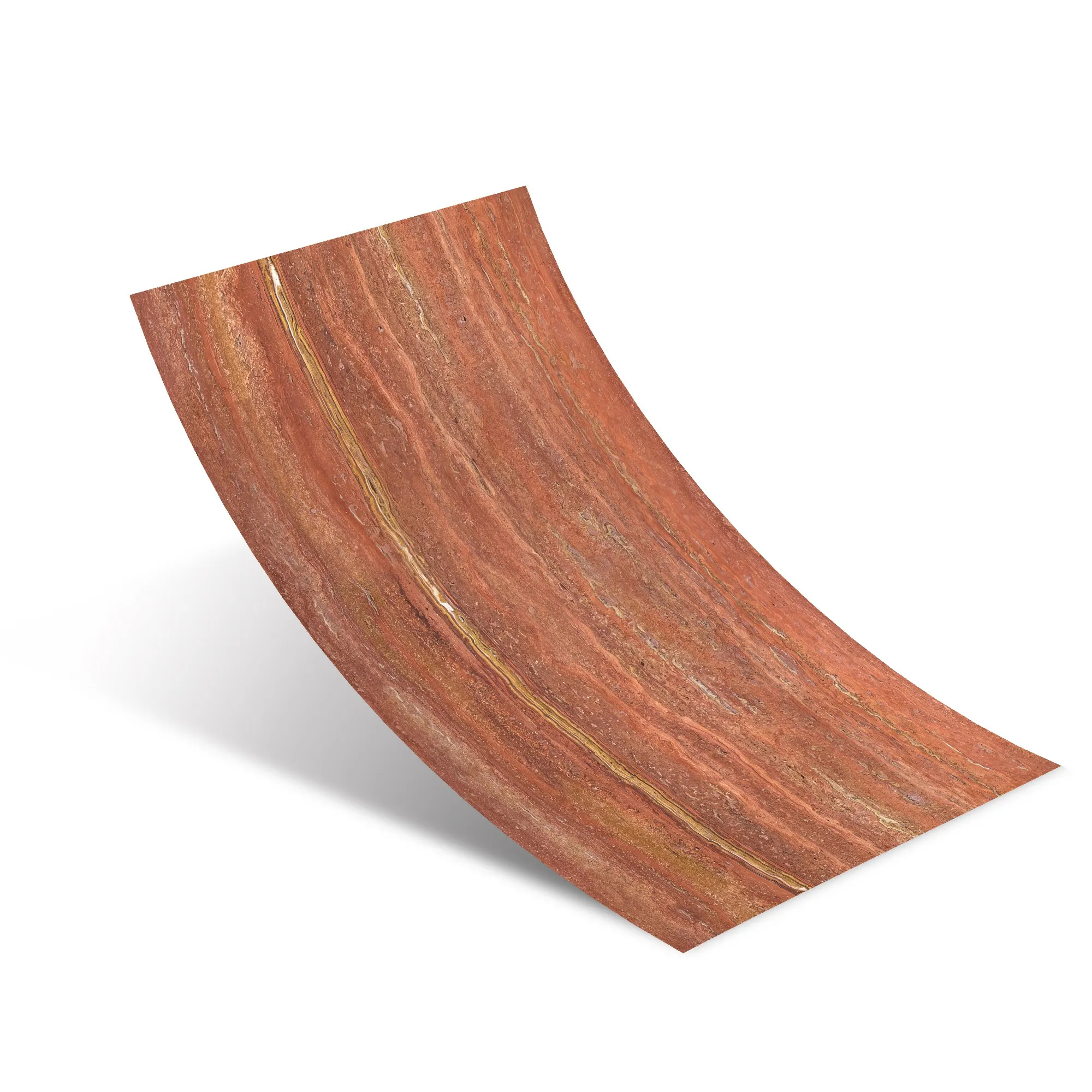
First, let's unpack what makes Starry Red Travertine MCM so special. At its core, it's a modified composite material (MCM), but not the kind that feels "fake." COLORIA starts with natural travertine aggregates, grinding them into a fine powder and blending them with a lightweight, flexible polymer matrix. The result? A sheet that looks and feels like authentic travertine but weighs a fraction of the real thing—just 8-12 kg per square meter. That's a 70-80% weight reduction compared to natural stone. Imagine lifting a material so light that two workers can carry a full sheet with ease, yet so strong it resists cracks and impacts better than many traditional options.
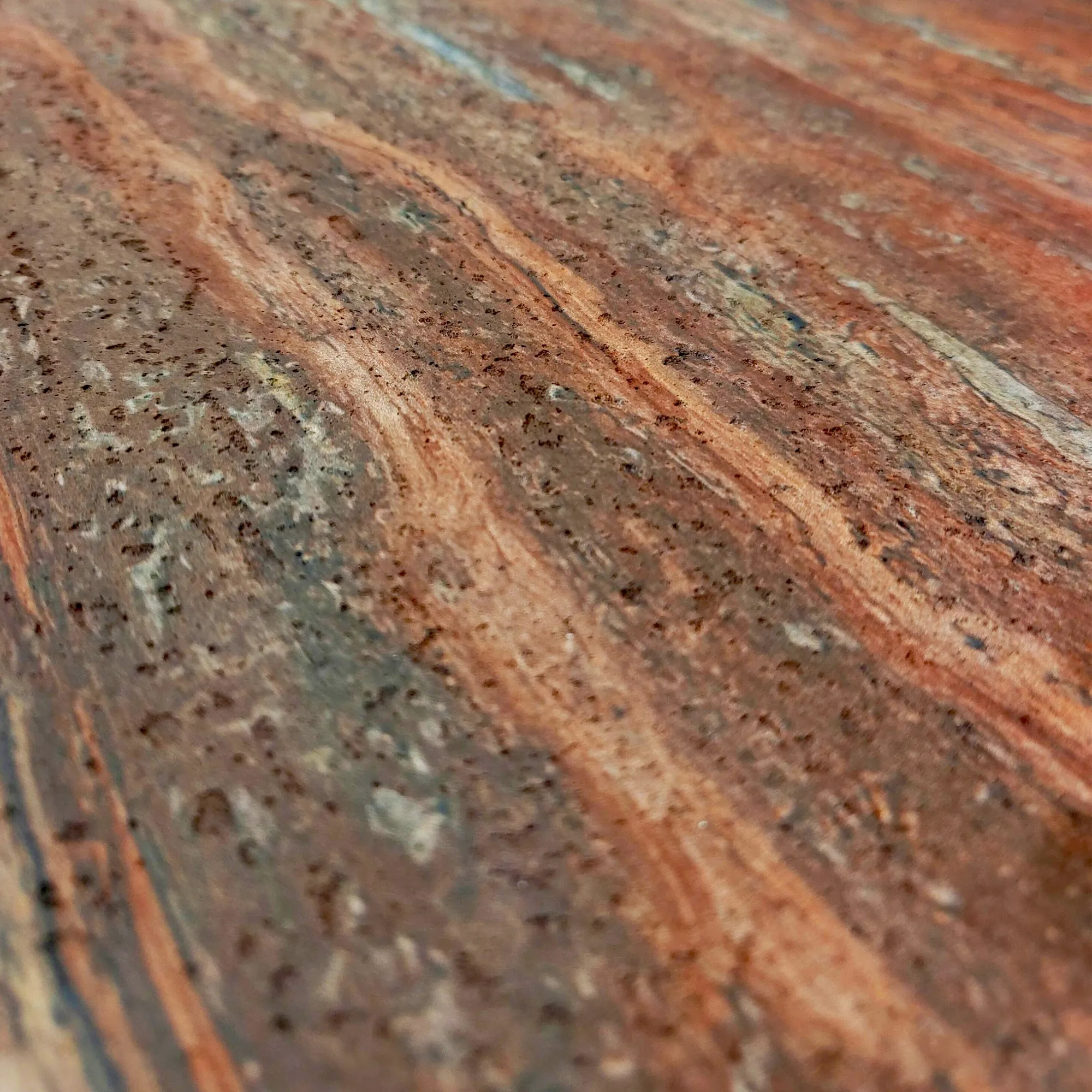
But the magic isn't just in the mechanics—it's in the details. The "starry red" hue is no accident. COLORIA's artisans spent years perfecting a shade that evokes the warmth of aged terracotta roofs and the richness of old brick, with tiny crystalline flecks that catch the light like scattered stars. Run your hand over it, and you'll feel the subtle texture of natural travertine's pitted surface, not the smooth, artificial finish of cheap imitations. It's like holding a piece of the earth, but one that's been reimagined for the demands of modern renovation.
And here's where it gets personal: heritage buildings aren't just structures—they're part of a community's identity. When you use Starry Red Travertine MCM, you're not just repairing a wall; you're preserving the way that wall makes people feel. A local café owner in a restored 19th-century townhouse once told me, "After we renovated with this material, customers started saying the place 'feels like home again.' They didn't know we'd replaced the stone—they just knew it felt right." That's the power of a material that respects history without being shackled to its limitations.
Let's get practical. What makes MCM flexible stone a game-changer for heritage projects? Let's break it down:
At 8-12 kg/m², it's easy to install on even the most delicate structures. But don't let the weight fool you—it's resistant to UV rays, frost, and salt spray, making it ideal for coastal heritage buildings. In accelerated aging tests, it held up to 50 years of simulated weathering with minimal wear.
Heritage walls are rarely straight. They curve, bulge, and dip—quirks that traditional stone can't accommodate without custom cutting (and custom costs). Starry Red Travertine MCM bends up to 30 degrees, conforming to irregular surfaces like a second skin. No more gaps, no more awkward joints—just a seamless finish that looks like it's been there for centuries.
Mining natural stone leaves scars on the planet—quarries that disrupt ecosystems and waste that ends up in landfills. MCM flexible stone uses 60% recycled travertine aggregate, and its lightweight design cuts down on transportation emissions. Plus, it's 100% recyclable at the end of its life. For heritage projects aiming for sustainability certifications, this is a huge win.
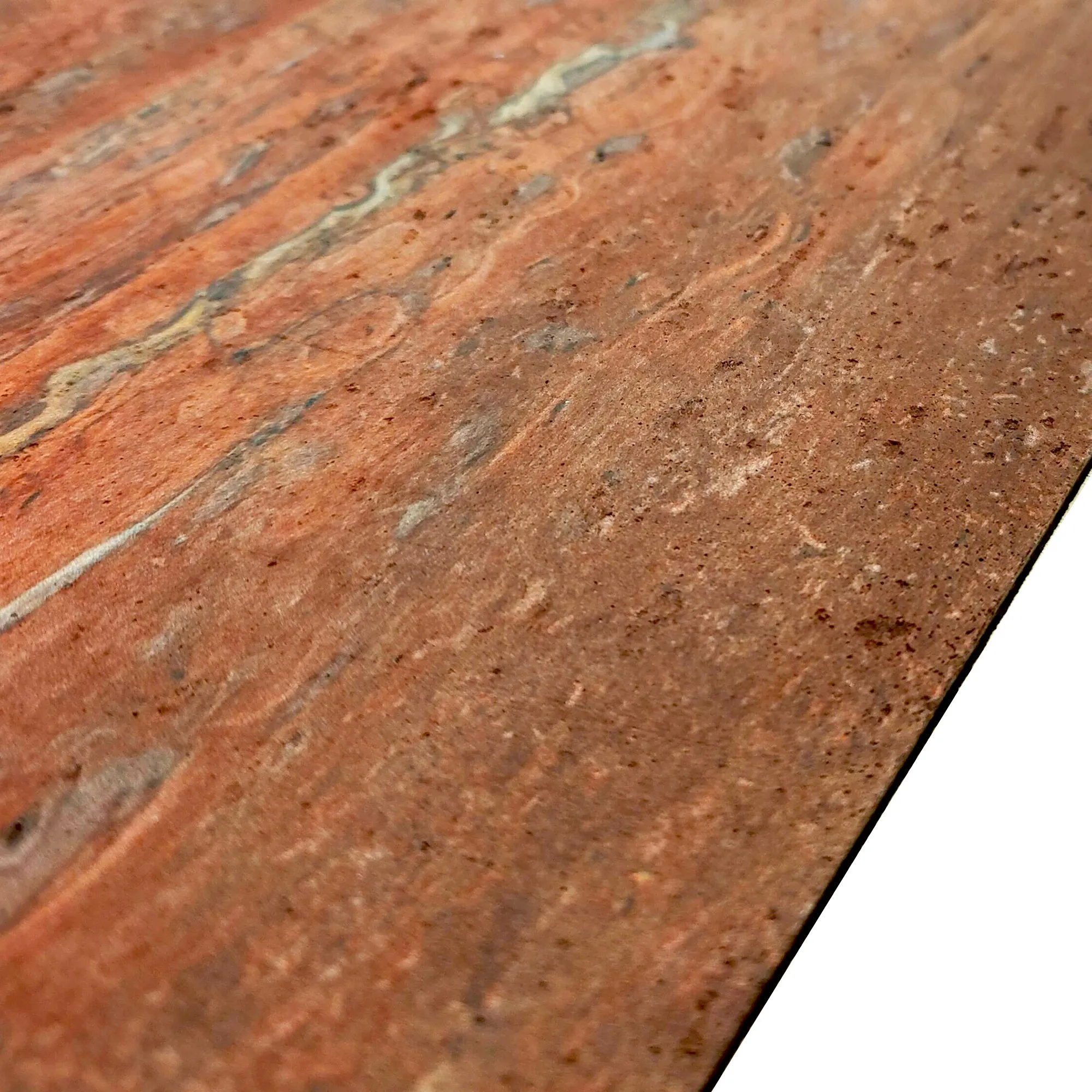
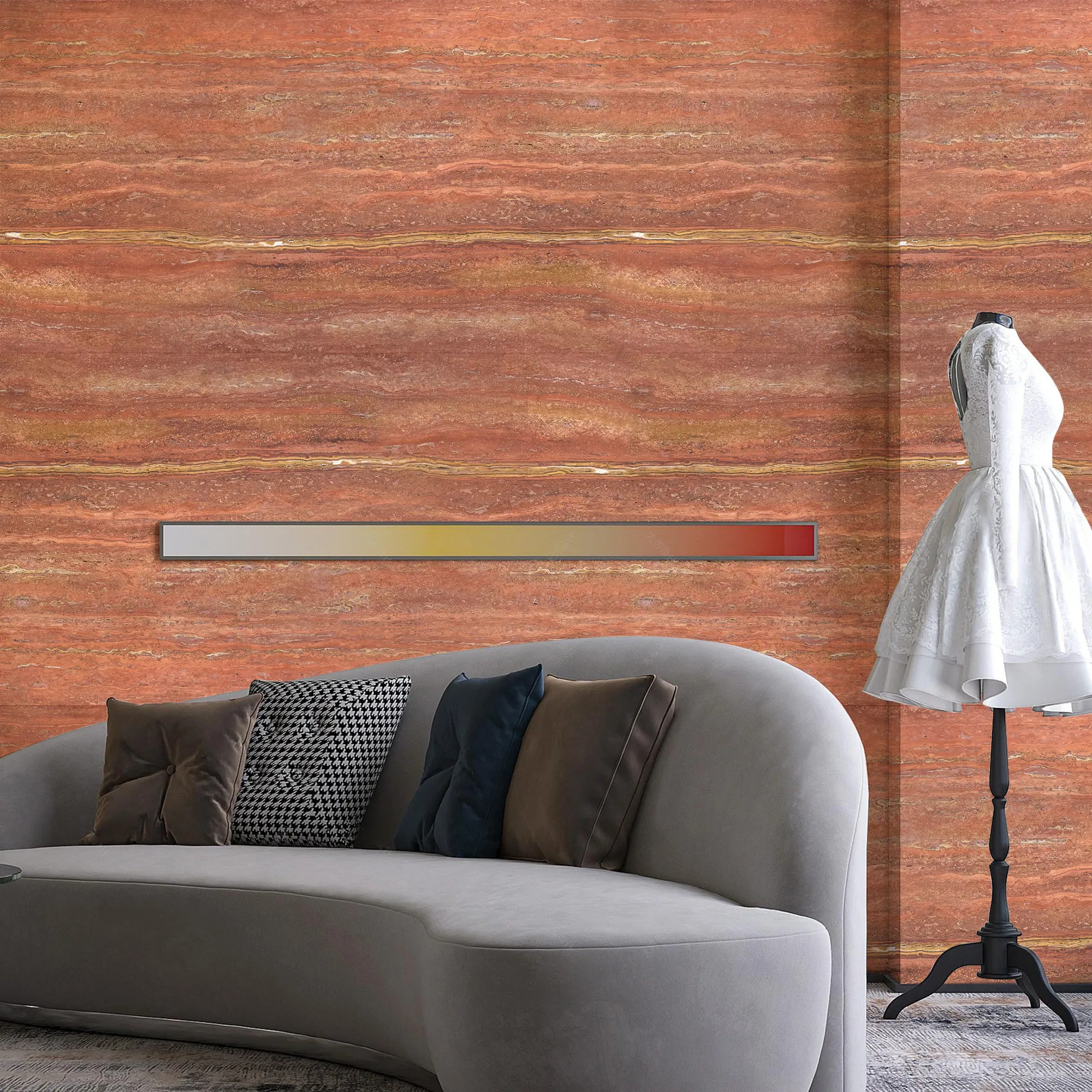
Beauty isn't just skin-deep, especially when it comes to heritage. Starry Red Travertine MCM doesn't just look like it belongs—it feels like part of the building's history. Let's compare it to another COLORIA favorite: Heritage Pathfinders Stone. While Heritage Pathfinders Stone leans into rugged, time-worn textures (think: the weathered stone of a medieval castle), Starry Red Travertine MCM offers a softer, more luminous quality. Its "starry" flecks catch the light differently throughout the day—warm gold at sunrise, deep crimson at sunset—mimicking how natural travertine changes with the sun. It's versatile, too: pair it with Lunar Peak Silvery accents for a touch of modern elegance, or use it alongside traditional brick for a cohesive, timeless look.
Take the example of a 18th-century inn in Prague, whose facade was crumbling after decades of neglect. The renovation team initially planned to use natural red travertine, but the building's foundation couldn't handle the weight. Switching to Starry Red Travertine MCM let them replicate the original's warm, inviting glow without risking structural damage. Today, the inn's facade looks so authentic that locals often mistake it for the original stone—until they run their hands over it and marvel at how smooth and well-preserved it feels.
Still on the fence? Let's compare Starry Red Travertine MCM to common renovation materials. This isn't just about numbers—it's about which material will treat your heritage building with the care it deserves.
| Material | Weight (kg/m²) | Installation Time | 50-Year Maintenance Cost | Heritage Aesthetic Match |
|---|---|---|---|---|
| Starry Red Travertine MCM | 8-12 | 3-5 days/100m² | Low (occasional cleaning) | Excellent (matches natural travertine texture/tone) |
| Natural Travertine | 50-80 | 7-10 days/100m² | High (sealing, repairs, replacement) | Excellent (but variable veining) |
| Marble | 60-75 | 8-12 days/100m² | Very High (etching, staining) | Good (but often too polished for rustic heritage) |
| Fair-Faced Concrete | 20-25 | 5-7 days/100m² | Medium (cracking, discoloration) | Poor (cold, modern feel) |
| Heritage Pathfinders Stone | 15-20 | 4-6 days/100m² | Medium (occasional sealing) | Very Good (rugged, ancient texture) |
Note: Installation time and maintenance cost estimates based on average heritage project data from COLORIA's 2024 Renovation Trends Report.
In the heart of Tuscany's San Gimignano, the 14th-century Town Hall had seen better days. Its travertine facade, once the pride of the city, was pockmarked with erosion, and the weight of the original stone was causing the east wall to bow inward. Architects initially proposed replacing the travertine with the same material, but structural engineers warned it would require reinforcing the foundation—a costly, time-consuming process that would disrupt the town's daily life.
Enter COLORIA's Starry Red Travertine MCM. The team chose it for three reasons: its lightweight nature (no foundation reinforcement needed), its ability to mimic the original travertine's warm red tones, and its flexibility to conform to the wall's subtle curves. Installation took just 10 days (half the time of natural stone), and the result? Locals and tourists alike can't tell the difference—except that now, the Town Hall stands straighter, brighter, and ready to welcome visitors for another 100 years. "It's like the building sighed a breath of relief," said the project's lead architect. "We didn't just fix it—we let it breathe again."
At the end of the day, heritage renovation isn't about materials—it's about people. It's about a grandmother pointing to a building and telling her grandchild, "That's where your grandfather proposed to me." It's about a community gathering in a restored town square, feeling connected to the generations that came before. Starry Red Travertine MCM doesn't just preserve walls; it preserves these moments.
Take COLORIA's "Heritage Pathfinders Stone" line, for example—a companion to Starry Red Travertine MCM. With its rugged, weathered texture, it's perfect for accent walls or courtyard pavements, adding depth to a renovation without overwhelming the main facade. Pair it with Starry Red Travertine, and you've got a palette that feels both cohesive and alive, like a conversation between old and new.
And let's not forget the little things: the way Starry Red Travertine MCM ages gracefully, developing a soft patina over time that only adds to its charm. Or how it can be cut into custom shapes to replicate unique historical details—like the intricate cornices of a Baroque church or the geometric patterns of a Renaissance palace. This isn't a "one-size-fits-all" material; it's a collaborator, adapting to the building's needs rather than forcing the building to adapt to it.
Heritage buildings are more than bricks and stone—they're the keepers of our stories. When we renovate them, we're not just construction workers or architects; we're storytellers. And every story deserves to be told with care, creativity, and a little bit of innovation.
COLORIA's Starry Red Travertine MCM isn't just a material. It's a promise: that we can honor the past without being trapped by it, that we can build for the future while keeping our history close. So the next time you stand in front of a heritage building in need of love, ask yourself: What would the people who built it want? Chances are, they'd want it to stand tall, to inspire, and to keep telling its story. With Starry Red Travertine MCM, that story doesn't just continue—it shines.
Recommend Products











