

Walk into any busy airport terminal, bustling shopping mall, or vibrant train station, and you'll notice something instantly: the floors, walls, and surfaces are working overtime. They're not just there to look pretty—they're absorbing the constant thud of footsteps, the scrape of luggage wheels, the occasional spill, and the relentless wear of daily life. In these high-traffic spaces, beauty and durability don't just coexist; they're non-negotiable. That's where COLORIA's Starry Red Travertine MCM steps in—a material that doesn't just survive the chaos of busy environments, but thrives in it, turning functional spaces into visually stunning experiences.
First, let's talk about the "MCM" in Starry Red Travertine MCM . MCM stands for Modified Composite Material—a game-changer in the world of building materials. Unlike traditional stone or tile, which can be heavy, brittle, or prone to cracking under stress, MCM is engineered to be lightweight, flexible, and incredibly tough. Think of it as the best of both worlds: the natural beauty of stone, combined with the resilience of modern engineering. And when it comes to flexibility, COLORIA's MCM flexible stone takes the cake—its ability to bend without breaking makes it ideal for spaces where rigidity would be a liability, like older buildings with minor structural shifts or curved surfaces that demand a seamless finish.
But MCM isn't just about durability. It's about design freedom. Traditional materials often limit creativity—heavy slabs can't be installed on walls easily, brittle tiles crack if dropped, and monotonous colors leave little room for personality. MCM flips that script. It's lightweight enough for vertical installations (hello, feature walls!), comes in a rainbow of textures and hues, and—most importantly for high-traffic areas—stands up to the kind of abuse that would leave lesser materials looking worn and tired.
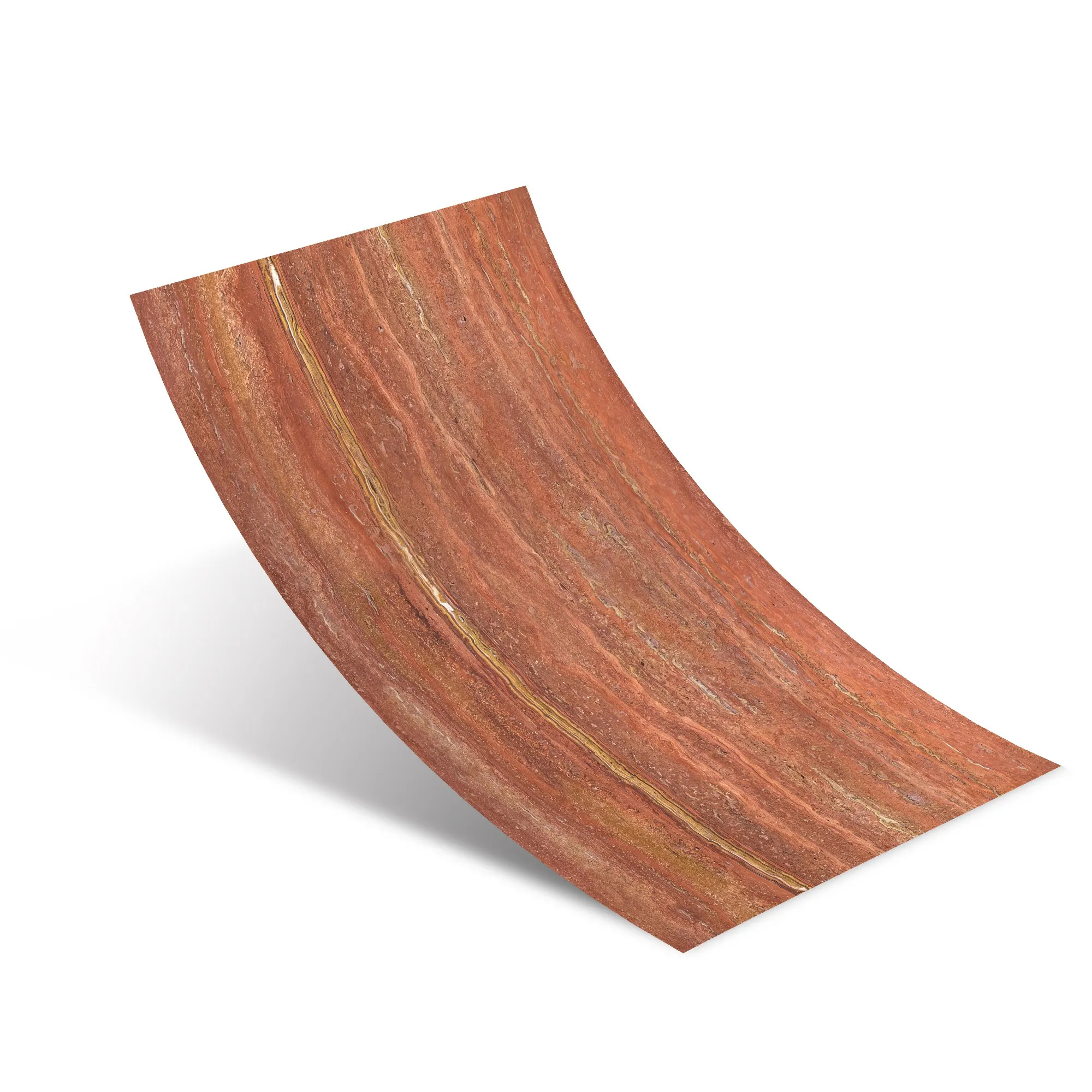
Now, let's zoom in on the star of the show: Starry Red Travertine MCM . Picture this: a deep, rich red base that mimics the warmth of aged terracotta, swirled with subtle veins of amber and gold. But here's the magic—catch it in the right light, and tiny flecks of iridescent mineral deposits sparkle like distant stars, giving the surface a dynamic, almost alive quality. It's not just a material; it's a mood. Whether you're designing a luxury hotel lobby or a bustling transit hub, that starry effect turns ordinary surfaces into conversation starters.
Compare it to COLORIA's travertine (starry blue) , for example. While the starry blue leans into cool, calming vibes—think twilight skies over the ocean—starry red is all about warmth and energy. It's the kind of color that draws people in, makes a space feel inviting, and holds its own even in the busiest settings. And because it's MCM, that beauty isn't just skin-deep. The starry effect is embedded into the material, not just painted on, so it won't fade or wear off over time—even with thousands of feet (and rolling suitcases) passing over it daily.
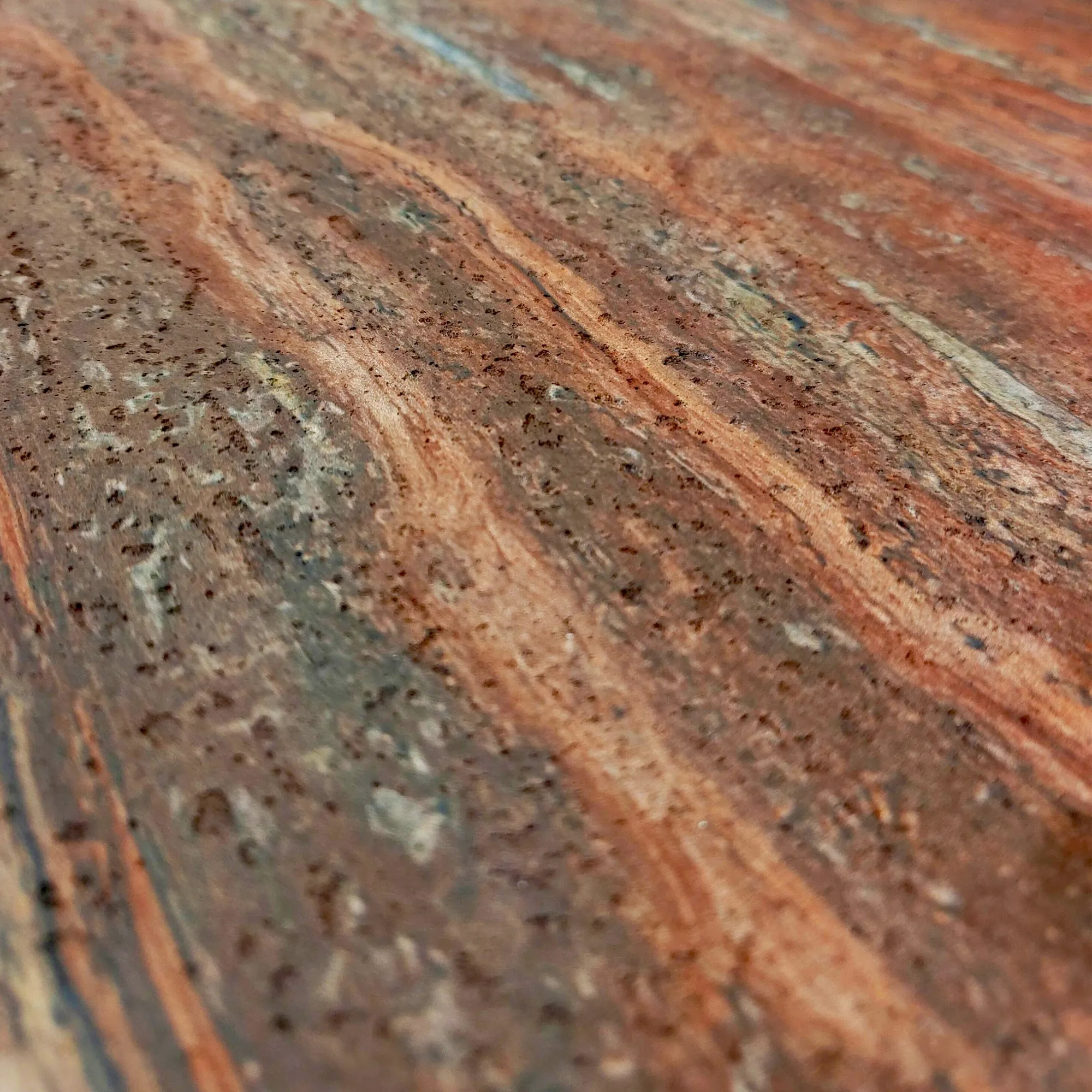
Let's get real: high-traffic areas are rough on materials. A dropped laptop, a scuff from a stroller, a rogue coffee spill—these are daily occurrences, and they add up. So what makes Starry Red Travertine MCM so tough? It starts with its core: a high-strength composite layer reinforced with fiberglass, which acts like a shield against impacts. Traditional travertine, for all its beauty, is porous and prone to chipping; drop a heavy object on it, and you'll likely end up with a permanent mark. But Starry Red Travertine MCM? It's been tested to withstand impacts that would crack or chip natural stone, thanks to that flexible, reinforced structure.
Take, for example, a busy airport gate area. In a single day, that space might see hundreds of rolling suitcases, kids running around, and even the occasional dropped carry-on. A major international airport in Asia recently renovated its gate lounges with Starry Red Travertine MCM, and three years later, the floors still look as vibrant as the day they were installed. No chips, no fading, just that same starry sparkle. That's the difference between a material that looks good and one that performs good—even when life gets messy.
Abrasion resistance is another key player here. High-traffic floors don't just take hits; they get rubbed, scraped, and scuffed thousands of times a day. Starry Red Travertine MCM's surface is treated with a protective layer that resists scratches, so even after years of foot traffic, it won't develop that dull, worn look that plagues cheaper materials. It's the kind of durability that saves building managers time, money, and headaches—no constant repairs, no expensive replacements, just a surface that keeps up with the pace of life.
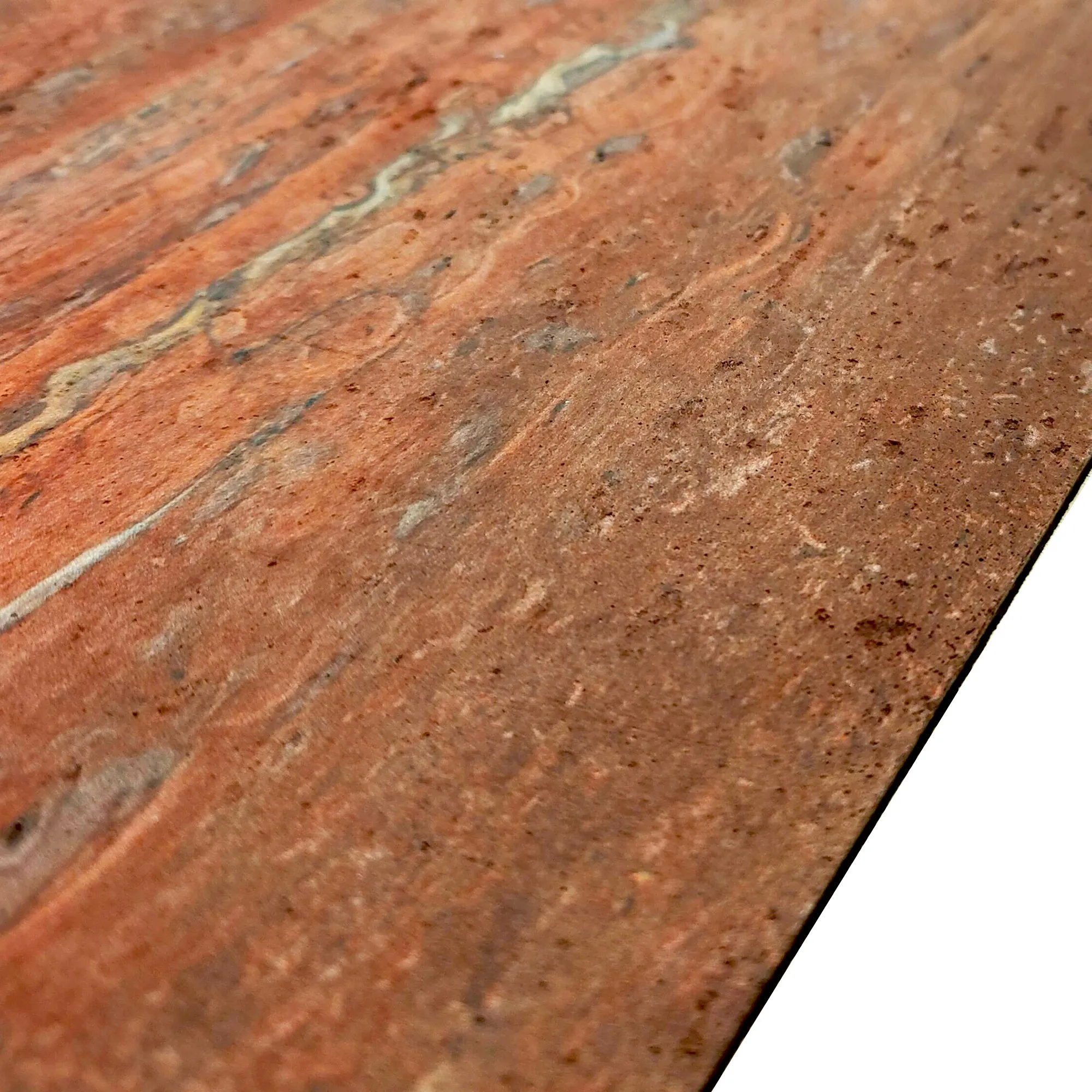
We've touched on MCM flexible stone already, but let's dig deeper into why flexibility matters in high-traffic areas. Traditional stone is rigid—great for flat, stable surfaces, but a nightmare if the substrate shifts even slightly (and in older buildings or busy areas with vibration, shifts happen). A rigid material would crack under that stress, leading to costly fixes. But Starry Red Travertine MCM bends—just enough to absorb minor movements without breaking. It's like the difference between a stiff metal ruler and a flexible plastic one; the plastic bends, the metal snaps.
This flexibility also makes installation a breeze. Traditional stone slabs require heavy machinery and specialized labor to transport and lay, which adds time and cost to projects. MCM panels, on the other hand, are lightweight—around 3-5 kg per square meter—so they're easy to handle, cut, and install. That means faster project timelines, less disruption in busy spaces (like malls that can't afford to close for weeks), and lower labor costs. Plus, because they're flexible, they can be applied to curved walls, rounded columns, or even ceiling features—opening up a world of design possibilities that rigid materials simply can't match.
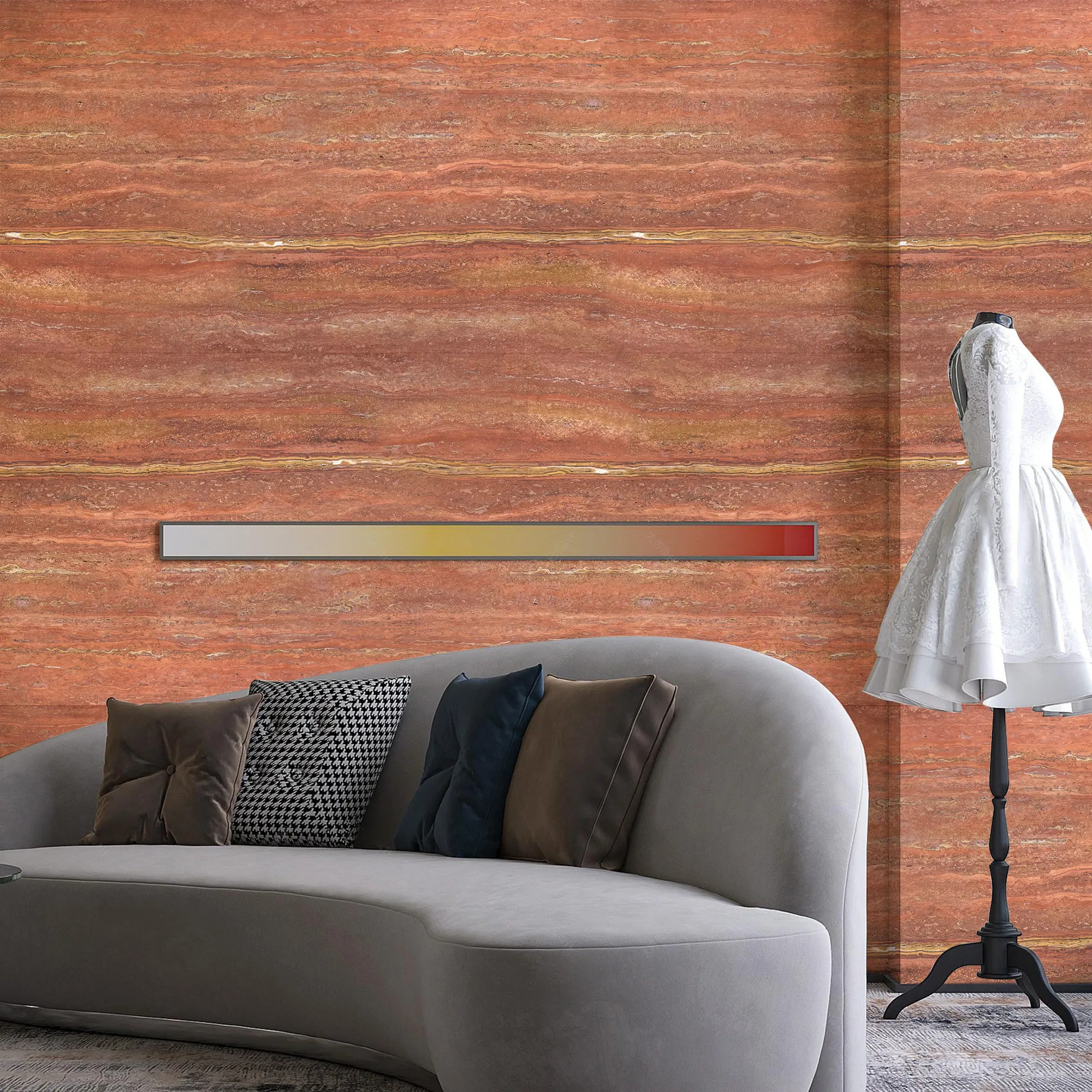
One of the best things about COLORIA's starry travertine line is the variety—and while Starry Red is a showstopper, travertine (starry blue) deserves a shoutout too. Let's break down how these two stack up, so you can choose the perfect fit for your space:
| Feature | Starry Red Travertine MCM | Travertine (Starry Blue) MCM |
|---|---|---|
| Color Palette | Warm red base with gold/amber veining and iridescent star flecks—energetic, inviting, and bold. | Cool blue base with silver/teal veining and star flecks—calming, modern, and serene. |
| Impact Resistance | High (tested to withstand 50kg impact without damage) | High (same core MCM technology—50kg impact resistance) |
| Flexibility | Excellent (bends up to 15° without cracking) | Excellent (same flexibility rating as Starry Red) |
| Best For | High-energy spaces: shopping malls, hotel lobbies, restaurant interiors. | Calm, modern spaces: corporate offices, healthcare facilities, transit stations. |
| Maintenance | Low—stain-resistant surface, easy to clean with mild soap and water. | Low—same stain-resistant properties as Starry Red. |
The takeaway? Whether you lean into the warmth of Starry Red or the cool serenity of Starry Blue, you're getting the same unbeatable combination of durability and beauty. It's all about matching the material to the mood of the space.
Starry Red Travertine MCM is a standout on its own, but it truly shines when paired with other high-performance materials from COLORIA's lineup. For example, fair-faced concrete —with its raw, industrial charm—makes a striking contrast to Starry Red's warmth. Imagine a mall food court with Starry Red floors and fair-faced concrete walls; the combination balances boldness with understated elegance, creating a space that feels both modern and inviting.
Or consider high-strength construction boards for areas that need extra structural support, like staircases or heavy-traffic walkways. These boards are engineered to handle heavy loads while maintaining a sleek, uniform look, making them the perfect partner for Starry Red Travertine in spaces where both form and function are non-negotiable. Together, they create a cohesive design that doesn't sacrifice durability for style.
And let's not forget texture. Starry Red's starry sparkle pairs beautifully with materials that add depth, like woven textures or rough-hewn stone. It's this versatility that makes COLORIA a favorite among designers—whether you're going for a rustic, earthy vibe or a sleek, contemporary look, there's a combination of materials that works.
Still wondering if Starry Red Travertine MCM is right for your project? Let's look at some real-world spaces where it's made a difference:
At the end of the day, high-traffic spaces deserve materials that don't just survive—they thrive. They deserve surfaces that are as beautiful on day 1000 as they were on day 1. That's the promise of COLORIA's Starry Red Travertine MCM . It's not just a building material; it's a solution to a problem we've all seen: spaces that start out stunning but quickly lose their luster under the demands of daily life.
With MCM flexible stone technology, unbeatable impact resistance, and a starry design that turns heads, Starry Red Travertine MCM is more than just a choice—it's an investment. An investment in beauty that lasts, in durability that saves time and money, and in spaces that feel alive, even when they're at their busiest.
So whether you're designing a transit hub, a shopping center, or a hotel lobby, remember: high-traffic doesn't have to mean high-maintenance. With COLORIA, you can have it all—durability, beauty, and the kind of design that makes people stop, look, and say, "Wow." After all, the best spaces aren't just built to be used—they're built to be remembered.
Recommend Products











