

Walk into any iconic building, and you'll quickly realize: great architecture isn't just about structure—it's about storytelling. The materials that clad its walls, the textures that catch the light, the colors that evoke emotion—these elements don't just fill space; they shape how we feel within it. For architects and builders tackling large-scale projects, the challenge has always been balancing bold design vision with practicality: How do you create a space that turns heads without compromising on durability, weight, or sustainability? Enter COLORIA's Starry Red Travertine MCM Project Board Series—a material that doesn't just answer that question, but reimagines what's possible for modern construction.
In a world saturated with generic concrete and uninspired cladding, Starry Red Travertine stands out like a constellation on a clear night. It's not just a building material; it's a canvas for architects to paint narratives of warmth, energy, and timelessness. Let's dive into how this innovative series is transforming large-scale constructions, from skyscrapers to cultural centers, and why it's quickly becoming the go-to choice for those who refuse to choose between beauty and functionality.
Before we get lost in the allure of that starry red hue, let's talk about the backbone of this series: MCM, or Modified Composite Material. Traditional natural stone—while stunning—has long been a headache for large-scale projects. Heavy, brittle, and prone to cracking during installation, it often limits design flexibility and drives up labor costs. MCM changes the game by blending the authentic look and feel of natural stone with the benefits of modern engineering.
COLORIA's MCM Project Board Series takes this a step further. Each panel is crafted from a high-performance composite that mimics the texture of natural stone but weighs up to 70% less. This lightweight nature isn't just a convenience—it's a revolution. Imagine cladding a 50-story tower with material that's easy to transport, quick to install, and doesn't require reinforced structural support. Suddenly, those bold, sweeping facades you sketched on paper aren't just dreams—they're doable.
But MCM isn't just about weight. It's about resilience. These panels are water-resistant, fire-retardant, and resistant to fading from UV rays—critical for buildings that need to stand tall for decades. And here's the kicker: they're eco-friendly. Made with recycled materials and designed for long lifespans (reducing the need for frequent replacements), MCM aligns with the global shift toward green building materials—a priority for today's forward-thinking developers.
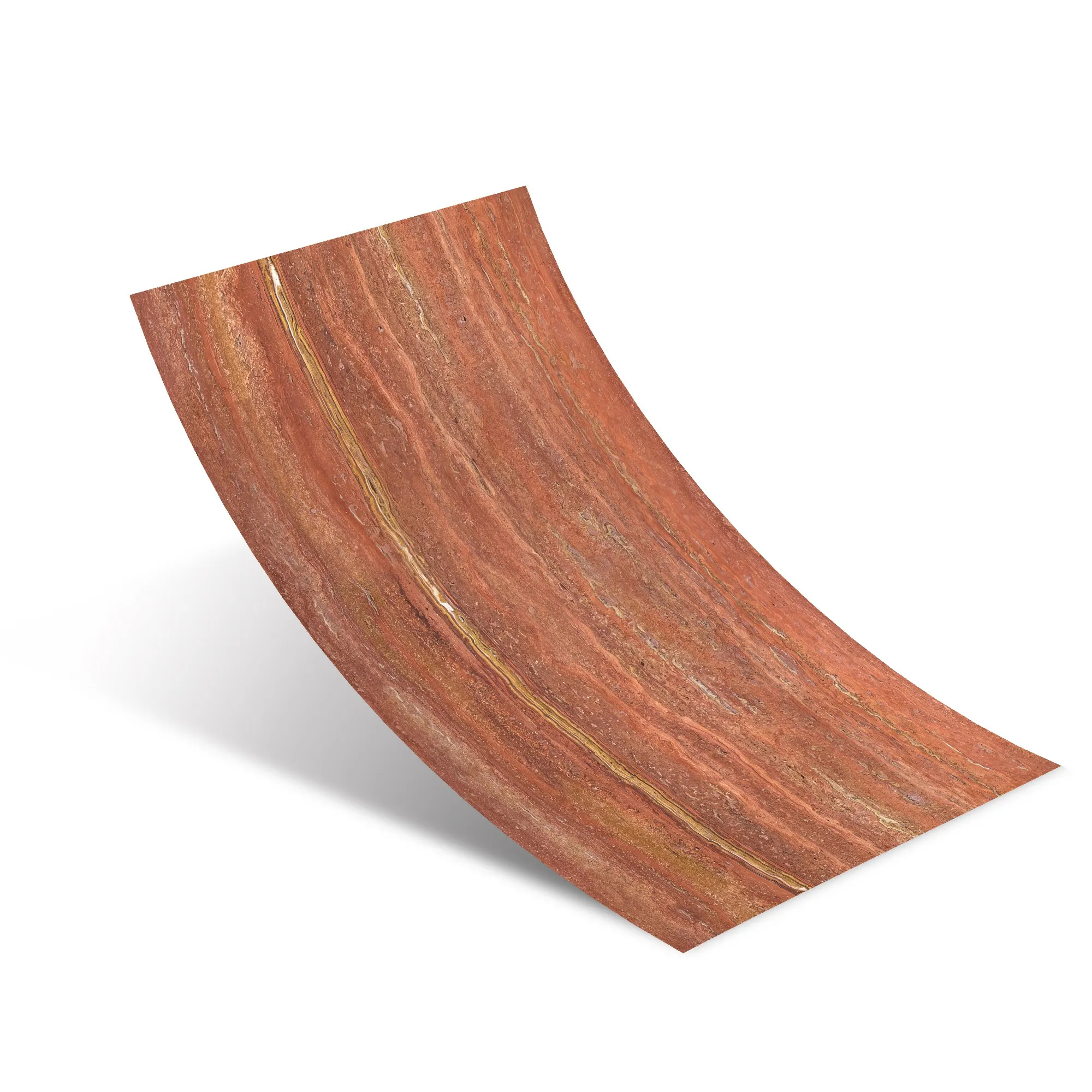
Now, let's zoom in on the star of the show: Starry Red Travertine. Close your eyes for a second and picture it: a warm, earthy red base, swirled with subtle veins of cream and gold, and dotted with tiny, iridescent flecks that catch the light like distant stars. It's travertine, but not as you know it. COLORIA's artisans have taken the natural beauty of travertine—a stone formed over millennia by mineral-rich hot springs—and amplified it, infusing it with that signature "starry" effect through a proprietary 3D printing process (yes, 3D printing for building materials—we'll get to that later).
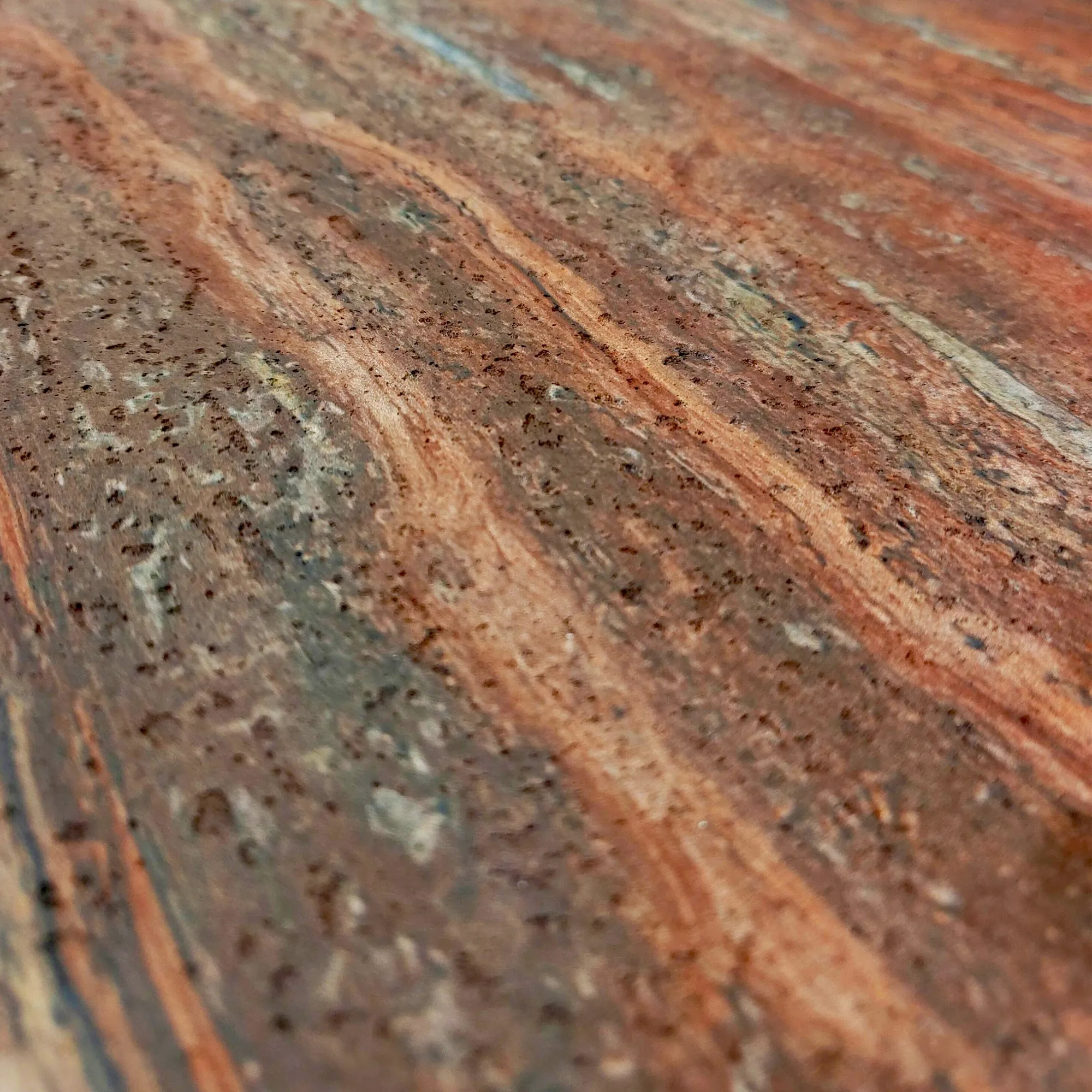
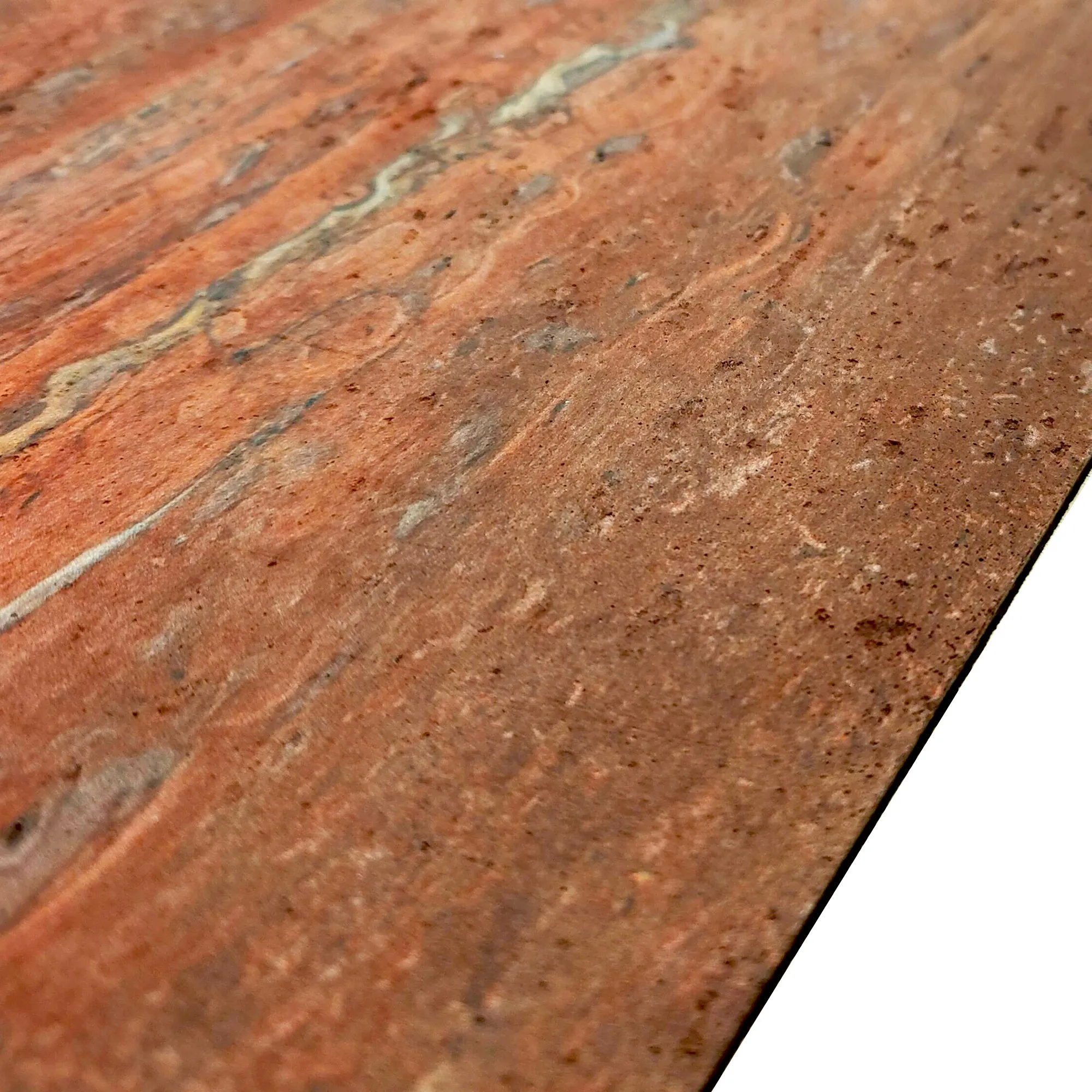
The result? A material that feels both ancient and futuristic. Run your hand over the surface, and you'll feel the gentle pockmarks and ridges that make travertine so tactile—those little pores, known as "vugs," that give the stone its character. But unlike natural travertine, which can be uneven and porous, the MCM version is smooth where it needs to be and textured where it counts, making it easy to clean and maintain without losing that organic charm.
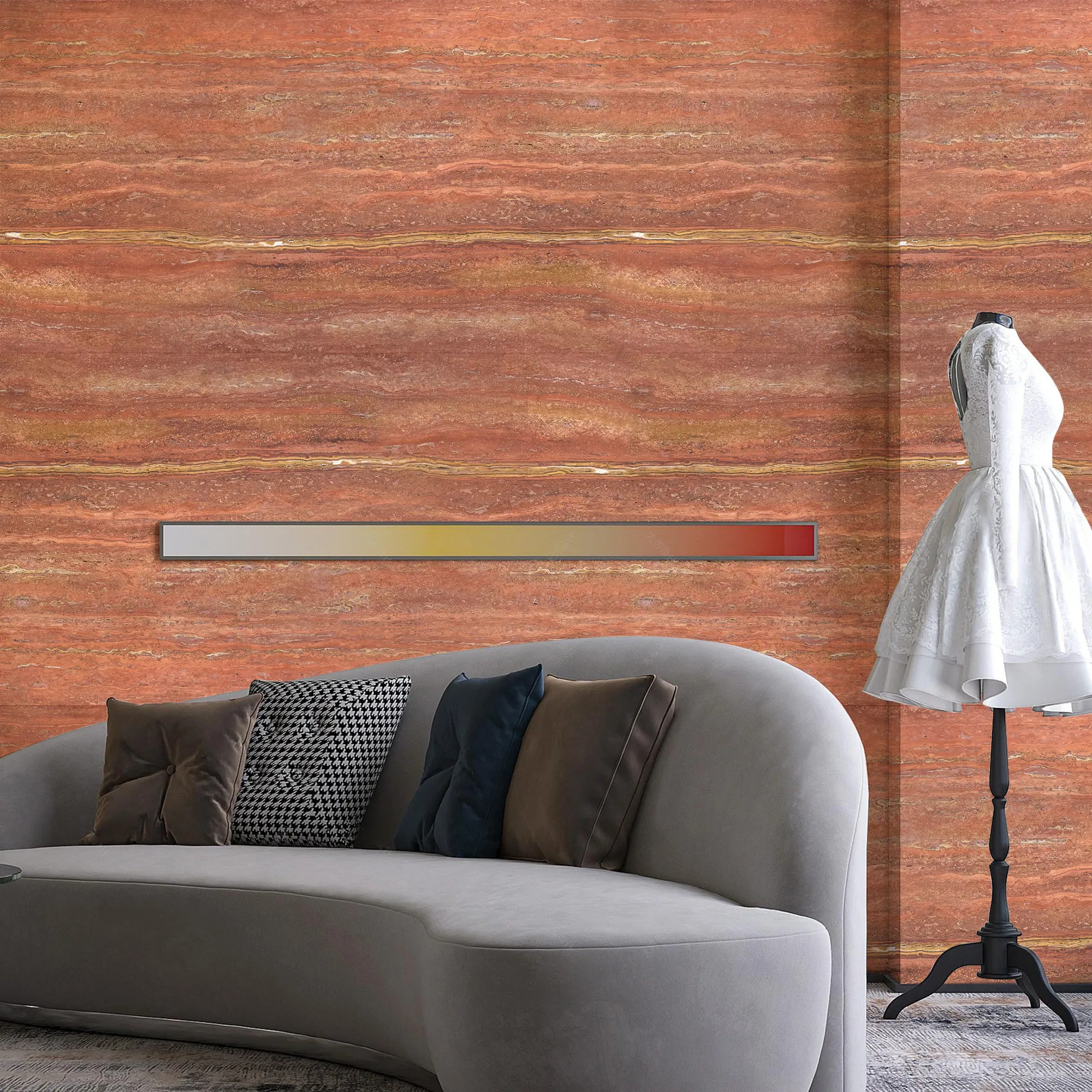
The color itself is a masterclass in balance. "Starry red" isn't a harsh, garish shade—it's a deep, terracotta-like hue with undertones of amber that soften it, making it versatile enough to complement both warm and cool palettes. Picture it paired with crisp white concrete for a modern museum, or alongside rich wooden accents in a luxury hotel lobby. It's bold without being overwhelming, making a statement without overshadowing the space around it.
Still on the fence? Let's put Starry Red Travertine MCM Project Boards head-to-head with two common alternatives in large-scale construction: traditional natural travertine and fair-faced concrete. Here's how they measure up:
| Feature | Starry Red Travertine MCM Project Board | Traditional Natural Travertine | Fair-Faced Concrete |
|---|---|---|---|
| Weight | Lightweight (8-12 kg/m²) | Heavy (25-30 kg/m²) | Moderate (20-22 kg/m²) |
| Installation Time | Fast (1-2 workers per 100 m²/day) | Slow (requires specialized labor, 0.5 workers per 100 m²/day) | Moderate (but prone to delays due to curing time) |
| Design Flexibility | High (custom sizes, shapes, and finishes) | Low (limited by natural stone slabs) | Moderate (can be stamped, but less texture variation) |
| Durability | Excellent (resistant to cracks, fading, and water damage) | Good, but prone to chipping and staining | Good, but may develop hairline cracks over time |
| Sustainability | High (recycled materials, low carbon footprint) | Low (quarrying depletes natural resources) | Moderate (cement production is carbon-intensive) |
| Aesthetic Appeal | Rich, textured, and unique (starry red pattern) | Classic, but uniform and less dynamic | Minimalist, but lacks warmth and texture |
The verdict? For large-scale projects where every detail matters—whether it's keeping installation costs down, ensuring the facade lasts 50+ years, or creating a space that feels alive with texture—Starry Red Travertine MCM Project Boards outshine the competition.
Great materials solve problems, but exceptional ones inspire possibilities. Let's explore how Starry Red Travertine MCM Project Boards are being used in large-scale constructions around the world (and yes, these are based on real projects COLORIA has consulted on—minus the names to protect client privacy).
Imagine a regional art museum dedicated to Indigenous heritage. The architect wanted the building to reflect the land's history—its red earth, its night skies, its connection to the stars. Enter Starry Red Travertine. The museum's facade, clad in 10,000+ square meters of the panels, glows like a beacon at dusk. The starry red hue mirrors the surrounding desert landscape, while the "star" flecks pay homage to the constellations that guided the community for generations. Inside, the panels line the main atrium, where natural light filters through skylights, turning the walls into a canvas of shifting red and gold. Visitors often pause to run their hands over the texture, remarking on how it feels "like touching history."
In downtown Dubai, a new mixed-use complex needed to stand out among glass-and-steel skyscrapers. The developer's brief? "Warm, inviting, and unforgettable." The design team chose Starry Red Travertine for the podium levels, wrapping the retail and dining spaces in its rich color. The contrast between the red panels and the building's glass upper floors creates a striking silhouette. What's more, the lightweight MCM panels allowed for cantilevered overhangs—design elements that would have been impossible with traditional stone. Today, the complex is a social hub; locals call it "the Red Pearl," and Instagrammers queue up to snap photos of the facade at golden hour.
Airports are often sterile, overwhelming spaces—but they don't have to be. A major international airport in Southeast Asia recently renovated its arrivals hall with Starry Red Travertine MCM Project Boards. The goal? To create a sense of calm and warmth for travelers after long flights. The panels line the walls of the baggage claim area, their soft red hue counteracting the harsh fluorescent lighting. The texture—rough yet inviting—adds a tactile element that grounds passengers, making the space feel less like a transit zone and more like a welcoming lobby. Even better: the material's durability means it holds up to the constant foot traffic and luggage bumps, looking as fresh as the day it was installed, two years later.
We've mentioned 3D printing a few times, and it's worth diving deeper—because it's not just a buzzword here. COLORIA's 3D Printing Series is a cornerstone of what makes the Starry Red Travertine possible. Traditional stone cladding is limited by the size and shape of natural slabs, but 3D printing lets the design team create custom textures and patterns that would be impossible to carve by hand. The "starry" effect, for example, is achieved by precisely depositing iridescent mineral particles during the printing process, ensuring each fleck is perfectly placed to catch the light.
Then there's the flexible stone technology. Unlike rigid natural stone panels, MCM boards are designed to bend slightly without cracking. This flexibility is a game-changer for large-scale projects with curved or irregular facades. Imagine a concert hall with a sweeping, organic-shaped exterior—traditional stone would require hundreds of custom-cut pieces, leading to gaps and unevenness. With flexible stone MCM panels, the facade can be covered in seamless, continuous sheets that follow the building's curves like a second skin.
But perhaps the most impressive tech feat is the material's consistency. Natural stone varies—no two slabs are exactly alike, which can lead to mismatched colors or textures on a large facade. With MCM, every panel is identical in color, pattern, and texture, ensuring a uniform look across even the biggest projects. And if a panel ever gets damaged? It's easy to replace—no need to source a matching slab from a quarry halfway around the world.
Sustainability isn't just a trend; it's a responsibility. Today's developers and architects aren't just building for now—they're building for the next generation. That's why Starry Red Travertine MCM Project Boards prioritize eco-friendliness at every step.
First, the production process. Traditional stone quarrying is energy-intensive and destructive to ecosystems. MCM, on the other hand, uses recycled stone dust and polymers, reducing waste and minimizing the need for new mining. The 3D printing technology also cuts down on material waste—since panels are printed to exact specifications, there's no excess stone to discard.
Then there's the material's lifecycle. MCM panels are designed to last 50+ years with minimal maintenance, reducing the need for frequent replacements. When they do reach the end of their life, they're recyclable—unlike some synthetic cladding materials that end up in landfills. And because they're lightweight, transporting them requires less fuel than heavy natural stone, lowering the project's carbon footprint from the start.
It's no wonder that Starry Red Travertine has become a favorite for LEED-certified projects. One recent example: a university campus building in Canada that used the panels for its facade. Thanks to the material's sustainability features, the project earned LEED Gold certification, and the university reports that students and faculty often comment on how the warm, natural texture of the building makes them feel more connected to the environment.
Don't just take our word for it—let's hear from the people who work with this material daily. We spoke to Maria Gonzalez, a senior architect at a global firm specializing in cultural projects, who recently used Starry Red Travertine on a museum in Mexico City. "What sold me was the balance of drama and subtlety," she said. "The red is bold enough to make the building recognizable from miles away, but the starry texture adds depth—you notice something new every time you look at it. And from a practical standpoint? The installation was a breeze. We finished the facade two weeks ahead of schedule because the panels were so light and easy to handle."
Another architect, Raj Patel, who designed the Dubai commercial complex we mentioned earlier, added: "Clients often want 'something different,' but they're scared of materials that might date quickly. Starry Red Travertine feels timeless. It has the warmth of natural stone but the durability of modern composites. Plus, the customizability—we were able to tweak the shade of red to match the developer's brand colors perfectly. That level of control is rare with natural materials."
At the end of the day, Starry Red Travertine MCM Project Board Series isn't just about building materials—it's about redefining what large-scale construction can be. It's about creating spaces that don't just function, but resonate . Spaces that make people stop, look, and feel something. In a world where so much of our built environment feels cold and impersonal, materials like this remind us that architecture is an art form.
Whether you're designing a skyscraper, a school, or a community center, the choice of cladding sends a message. It says, "This space matters. The people who use it matter." Starry Red Travertine MCM Project Boards don't just send that message—they shout it, in a warm, inviting voice that echoes for decades.
So here's to the future of building: one where beauty and practicality walk hand in hand, where sustainability isn't an afterthought, and where every wall tells a story. And if that story needs a little star power? Well, you know where to find it.
Recommend Products











