

Architecture is more than steel beams and concrete walls—it's a language. It speaks to the people who walk through its doors, to the communities that gather in its spaces, and to the stories that unfold within its walls. At COLORIA, we've always believed that the materials we choose are the words in this language, and few words are as vivid, as emotive, or as universally resonant as our Starry Red Travertine. Part of the innovative MCM Project Board Series, this material isn't just a surface; it's a narrative tool, a bridge between nature's artistry and human ingenuity. In this gallery, we invite you to explore how Starry Red Travertine has transformed spaces across the globe, turning ordinary buildings into extraordinary stories.
Every great material has a story, and Starry Red Travertine's begins with a question: What if we could capture the drama of a desert sunset, the mystery of a starry night, and the timelessness of ancient stone—all in one panel? It was this curiosity that led our design team to spend months studying geological formations, from the crystalline depths of geodes to the layered striations of canyon walls. They were particularly drawn to the way certain travertine deposits, when fractured, revealed pockets of iron oxide that glowed like embers—nature's own version of a night sky ablaze.
But inspiration alone isn't enough. To turn that vision into a material that could withstand the rigors of modern architecture, we turned to MCM—Modified Composite Material—a technology that's redefining what's possible in building design. Unlike traditional stone, which is heavy, brittle, and often limited by quarry sizes, MCM panels are crafted by fusing natural stone particles with a lightweight, flexible backing. This process doesn't just make them easier to install (a fraction of the weight of solid stone!) but also allows for intricate textures and colors that nature might take millennia to create. For Starry Red Travertine, we blended fine travertine dust with iron-rich pigments, then embedded tiny, iridescent particles that catch the light like distant stars. The result? A material that shimmers in the sun, deepens in shadow, and feels infinitely alive.
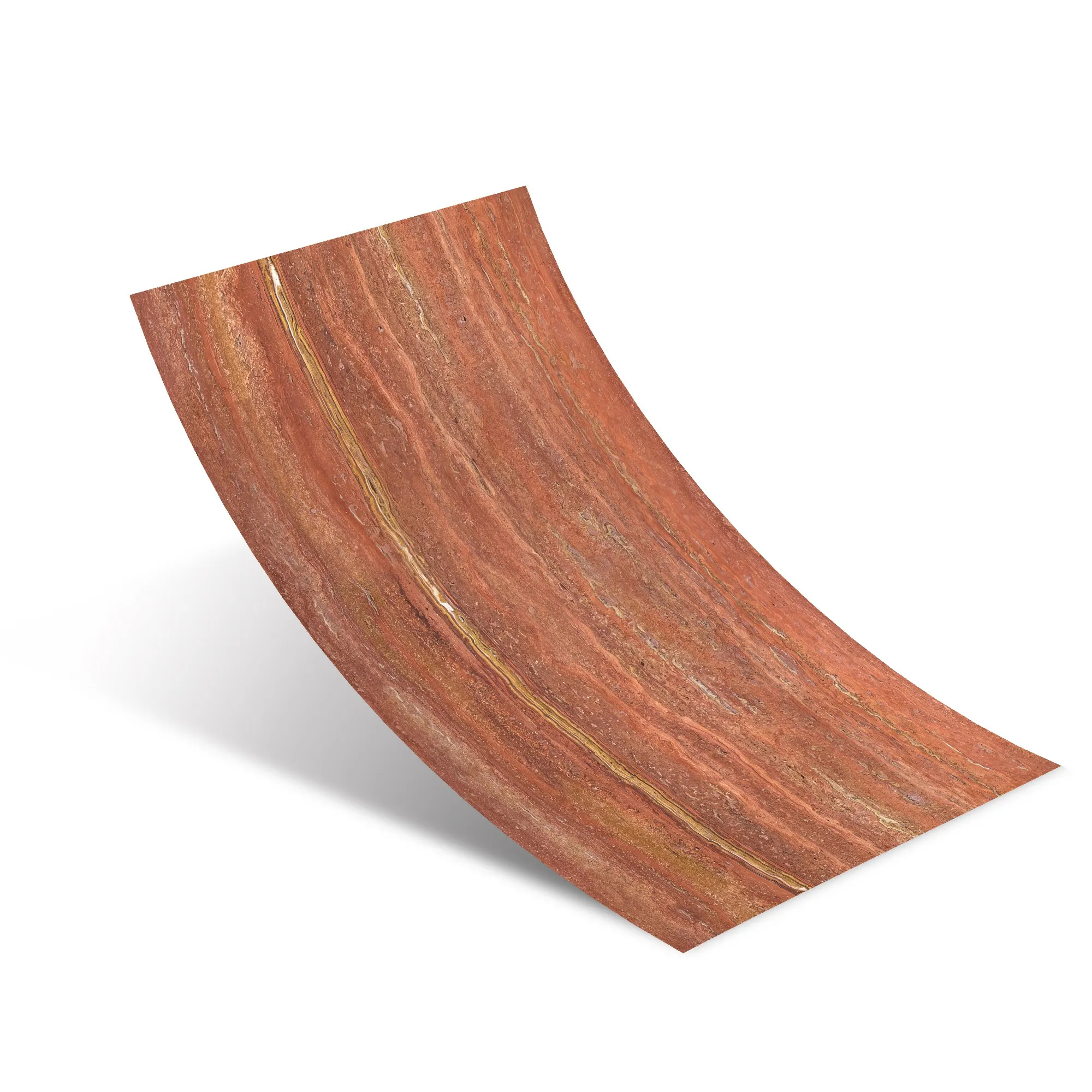
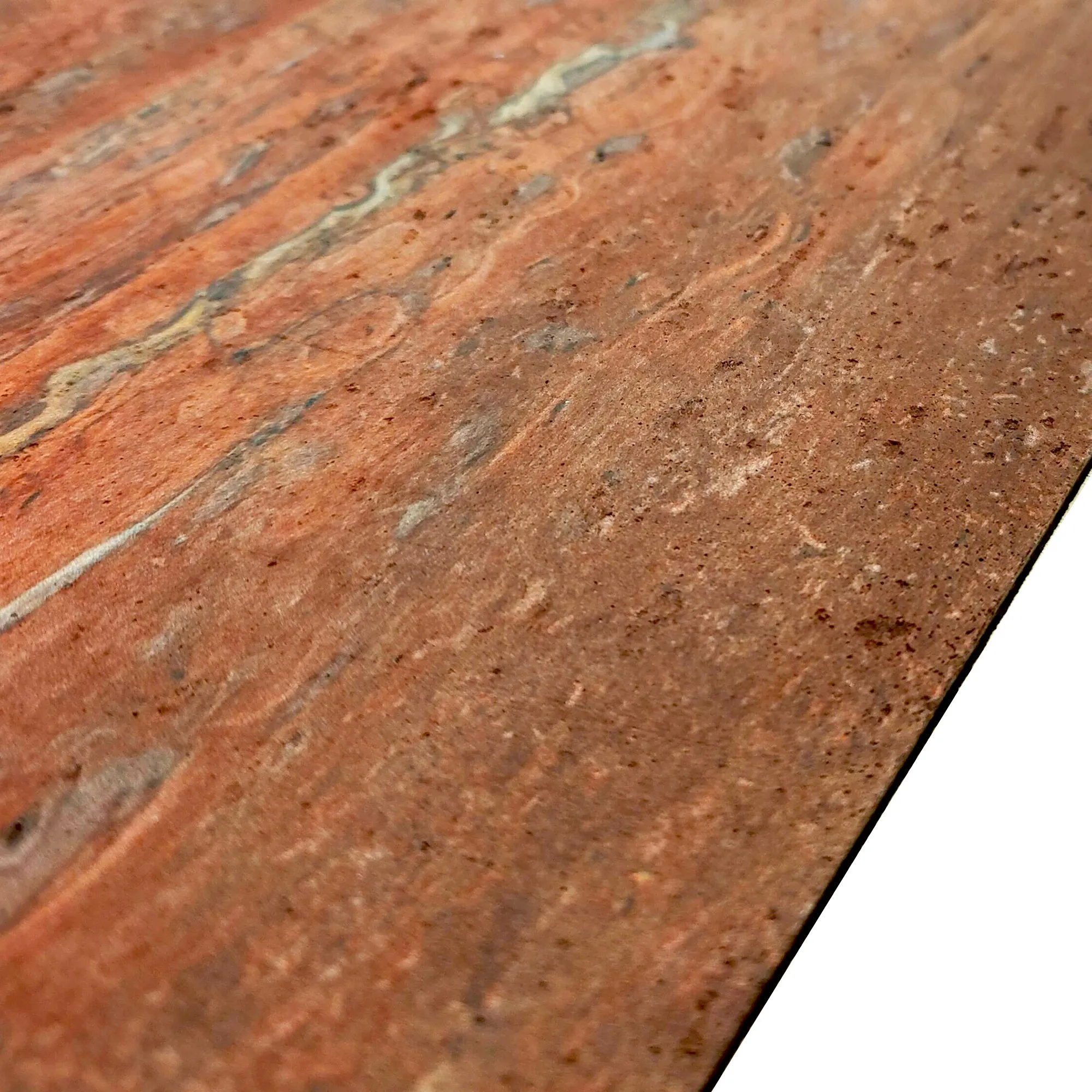
Starry Red Travertine is part of COLORIA's acclaimed MCM Project Board Series, a collection of materials designed for architects and designers who refuse to be limited by "what's possible." MCM, or Modified Composite Material, is the backbone of this series—and for good reason. Imagine a material that's 70% lighter than natural stone, yet just as durable. A material that can bend around curves, climb tall facades, or wrap around intricate architectural details without cracking. A material that's resistant to water, fire, and the harsh UV rays of the sun, yet soft to the touch, with the organic warmth of stone quarried from the earth. That's MCM. And in the Project Board Series, we've taken this technology and elevated it into an art form.
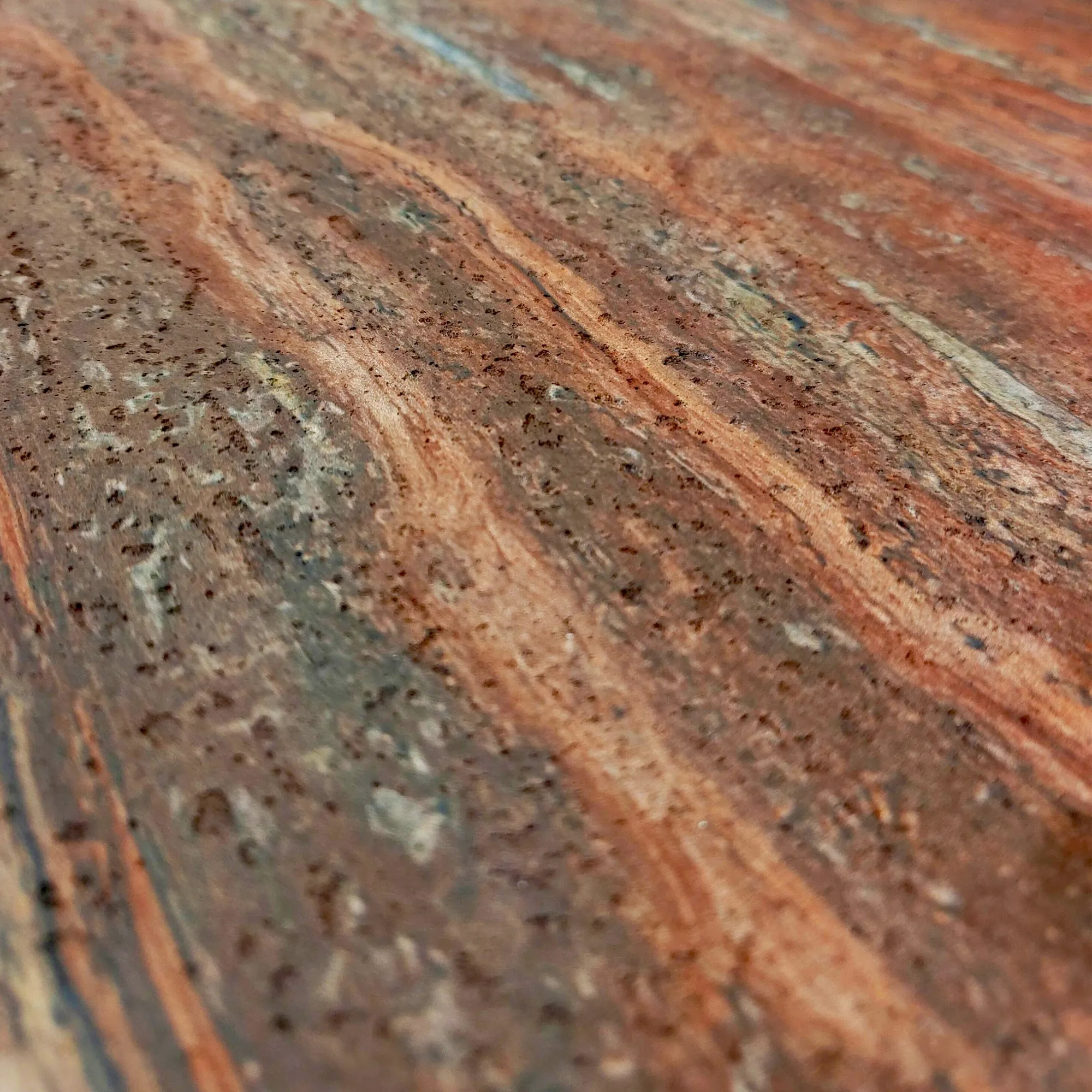
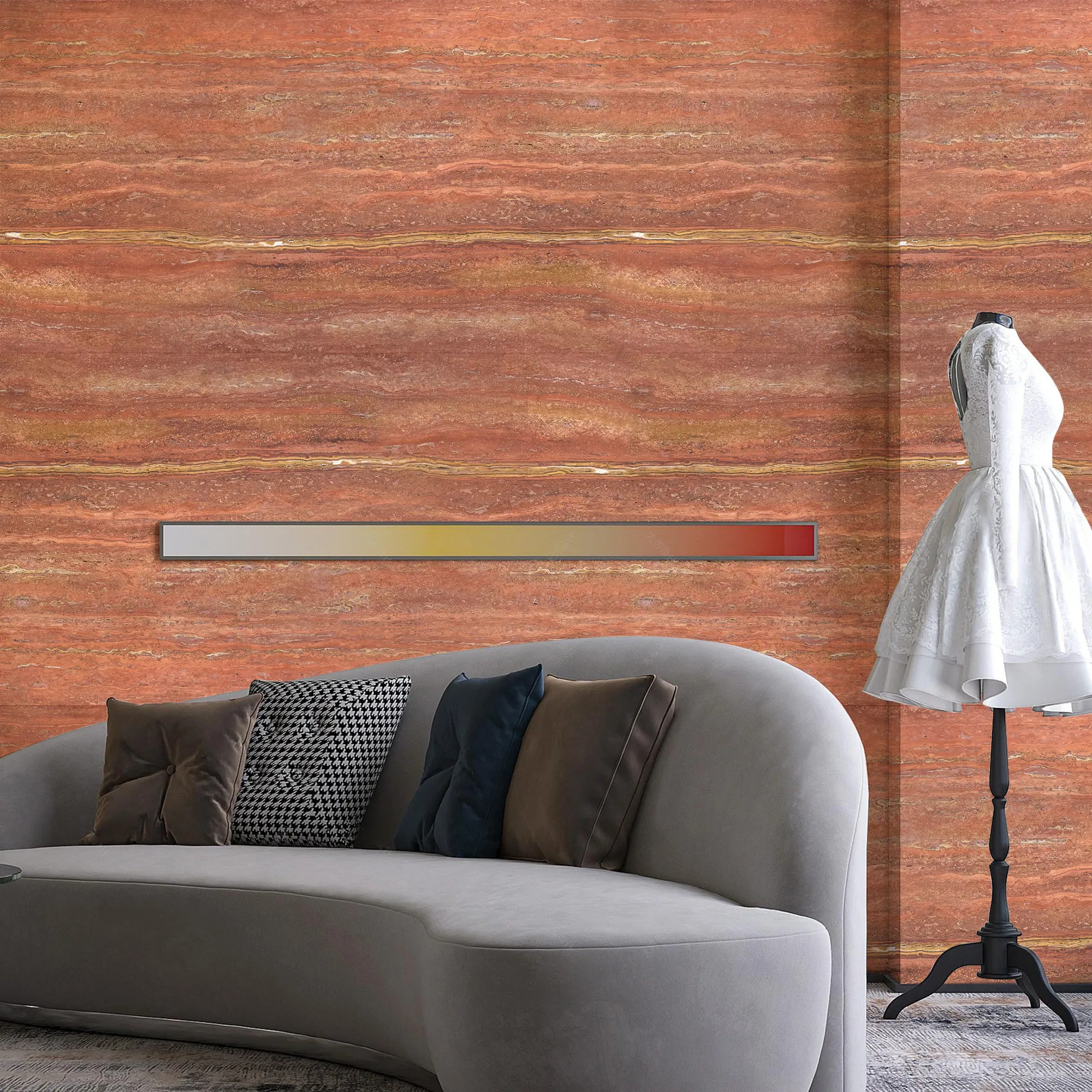
Within the MCM Project Board Series, Starry Red Travertine is a standout—not just for its striking color, but for its versatility. It's equally at home in a minimalist urban loft as it is in a rustic mountain retreat, in a bustling hotel lobby as it is in a quiet meditation space. What makes it so adaptable? Its depth. The base hue is a rich, earthy red, reminiscent of terracotta roofs in a Tuscan village, but it's the "stars" that add dimension—tiny flecks of metallic and iridescent particles that shift with the light. At noon, they glow like sunlight on dew; at dusk, they deepen to resemble distant constellations. It's a material that changes with the day, keeping spaces feeling dynamic and alive.
And let's not forget the practical side. As part of the MCM family, Starry Red Travertine inherits all the benefits that make these panels a favorite among builders and contractors. They're easy to transport (no need for heavy machinery), quick to install (saving time and labor costs), and low-maintenance (a simple wipe-down is all it takes to keep them looking new). For architects working on tight deadlines or complex sites, that's a game-changer. But more than that, it's the peace of mind—knowing that the material you've chosen for its beauty will also stand the test of time.
The true measure of a material's power lies in how it transforms spaces. Over the past decade, Starry Red Travertine has traveled the world, leaving its mark on buildings that range from boutique hotels to cultural centers, from corporate headquarters to residential complexes. Here are just a few stories of how it has turned ordinary structures into unforgettable experiences.
In the heart of Kyoto's Gion district, where traditional wooden machiya houses stand shoulder to shoulder with modern cafes, the "Hoshi no Yado" (Star Inn) hotel wanted to bridge the gap between old and new. The challenge? Creating a space that honored Kyoto's centuries-old craftsmanship while feeling fresh and inviting to contemporary travelers. Enter Starry Red Travertine.
The hotel's lobby is a study in contrast: dark, polished wooden beams crisscross the ceiling, while floor-to-ceiling Starry Red Travertine panels line the main wall. The effect is mesmerizing. In the morning, soft natural light filters through shoji screens, casting delicate shadows on the stone's surface and making the "stars" twinkle like sunlight on water. In the evening, warm pendant lights highlight the material's rich red hue, creating an atmosphere that feels both intimate and grand. Guests often pause here, coffee in hand, just to watch how the light changes the stone throughout the day.
But the real magic is in the guest rooms. Each features a small accent wall clad in Starry Red Travertine, paired with tatami mats and minimalist futon beds. "Our guests tell us it's like sleeping under a red sky full of stars," says Yuki Tanaka, the hotel's general manager. "There's something deeply calming about it. It's not just a wall—it's a window to a different world."
When the Barcelona Cultural Center decided to expand its exhibition space in 2022, the goal was clear: create a venue that would inspire artists and visitors alike. The center's architect, Carlos Mendez, had a bold vision: a building that felt like a "living canvas," where the exterior would change with the time of day and the interior would complement the art on display. For the exterior facade, he chose Starry Red Travertine.
The result is nothing short of spectacular. The center's south-facing wall is entirely clad in large-format Starry Red Travertine panels, arranged in a staggered pattern that mimics the rhythm of a heartbeat. During the day, the stone absorbs the Catalan sun, glowing like a giant ember against the city skyline. As evening falls, LED lights embedded behind the panels illuminate them from within, turning the facade into a dynamic light installation—one that shifts colors subtly, from deep crimson to soft rose, depending on the exhibition inside.
Inside, the material takes on a more understated role. The main gallery features Starry Red Travertine as a backdrop for contemporary paintings and sculptures. "Stone has been used in art for centuries, but this isn't just any stone," Mendez explains. "Starry Red Travertine has a warmth, a depth, that doesn't compete with the art—it elevates it. It's like giving the artwork a stage with the perfect lighting." Visitors agree: in a recent survey, 85% of guests mentioned the "vibrant, alive quality" of the gallery walls as one of their favorite aspects of the space.
In a city known for its bold architecture—think Burj Khalifa, Palm Jumeirah—standing out is no easy feat. But Zenith, a global tech company, wanted its new headquarters in Dubai's Business Bay to do just that: reflect its innovative spirit while feeling grounded and approachable. For the building's entrance hall, they turned to Starry Red Travertine, and the result is a space that balances corporate professionalism with human warmth.
The entrance hall is a soaring, double-height space with floor-to-ceiling glass windows that flood the area with natural light. The back wall, however, is clad in Starry Red Travertine, curved gently to create a sense of flow. "We wanted to avoid the cold, sterile feel that many corporate lobbies have," says Sarah Al-Mansoori, Zenith's facilities director. "Starry Red Travertine adds color, texture, and personality. Employees walk in here in the morning, and instead of feeling like they're entering a 'workspace,' they feel like they're entering a place that values creativity and connection."
The material's durability has also been a boon in Dubai's harsh climate. "We were worried about how the stone would hold up to the dust, the heat, and the occasional sandstorm," Al-Mansoori admits. "But after two years, it looks just as vibrant as the day it was installed. The maintenance team loves it—no special cleaners, no sealing, just a quick hose-down every few weeks. It's a material that works as hard as our employees do."
Great design is about balance—and Starry Red Travertine, for all its brilliance, shines brightest when paired with materials that complement its energy. COLORIA's range of complementary collections offers endless possibilities for creating cohesive, multi-layered spaces. Here are a few favorites among architects and designers:
Our mcm flexible stone series is a natural companion to Starry Red Travertine. Lightweight and incredibly versatile, these panels come in a range of textures—from smooth, polished finishes to rough, hewn surfaces—that add depth and contrast to any design. For example, in the Hoshi no Yado hotel, designers paired Starry Red Travertine with Flexible Stone in "Lunar Peak Silvery," a cool, silvery-gray panel with a subtle moon-like texture. The combination of warm red and cool silver creates a yin-yang effect, balancing energy and calm—a nod to the hotel's focus on mindfulness and relaxation.
For spaces that lean into the "starry" theme of Starry Red Travertine, our Lunar Peak series is a match made in heaven. Available in silvery, golden, and black hues, these panels mimic the cratered surface of the moon, with a matte finish that contrasts beautifully with the shimmer of Starry Red. In the Barcelona Cultural Center's rooftop lounge, designers used Lunar Peak Golden as a ceiling panel, paired with Starry Red Travertine walls. The effect is like sitting under a sky where the stars (red) and the moon (gold) coexist in perfect harmony—a space that feels both intimate and infinitely vast.
For projects with a more contemporary, industrial vibe, our foamed aluminium alloy board series adds a sleek, metallic edge. Available in vintage silver, vintage gold, and gold, these panels are lightweight, durable, and have a reflective quality that plays beautifully with Starry Red Travertine. At the Zenith Headquarters in Dubai, designers used Foamed Aluminium Alloy Board (Vintage Gold) for the reception desk, pairing it with Starry Red Travertine walls. The warm gold of the desk complements the red of the walls, while the metallic finish adds a touch of luxury—perfect for a company that prides itself on innovation and style.
| Product Name | Core Aesthetic | Ideal Application | Standout Feature |
|---|---|---|---|
| Starry Red Travertine | Warm, cosmic, vibrant | Feature walls, facades, accent pieces | Iridescent "star" particles that shift with light |
| Lunar Peak Golden | Ethereal, moonlit, soft | Ceilings, backsplashes, furniture accents | Matte, cratered texture mimicking lunar surface |
| Foamed Aluminium Alloy Board (Vintage Gold) | Sleek, metallic, modern | Desks, partitions, signage | Lightweight yet durable with a reflective finish |
| Fair-Faced Concrete | Raw, industrial, minimalist | Floors, walls, outdoor spaces | Natural gray tone with subtle texture; ages beautifully |
Behind every great building is a team of people—architects with a vision, contractors with a mission, and craftsmen with a passion for their work. At COLORIA, we've always believed that the best materials are born from collaboration, and Starry Red Travertine is no exception. Over the years, we've worked closely with some of the world's most talented designers to bring their ideas to life—and in the process, we've learned as much from them as they've learned from us.
Take, for example, the team behind the Zenith Headquarters in Dubai. When they first approached us, they had a clear vision: a space that felt both innovative and welcoming, but they weren't sure which materials could pull that off. "We spent weeks experimenting," recalls Raj Patel, COLORIA's Middle East Sales Director. "We brought samples of Starry Red Travertine, Lunar Peak, even some of our newer materials like Foamed Aluminium. They loved the red immediately, but they were worried it might be too bold for a corporate setting. So we suggested pairing it with Fair-Faced Concrete—a material that's raw, understated, and grounding. The contrast worked perfectly. It's a reminder that materials don't exist in a vacuum; they're part of a conversation."
And then there are the craftsmen—the people who install these materials, who spend hours ensuring every panel is aligned, every edge is smooth, every surface is perfect. For them, Starry Red Travertine is more than a job; it's a canvas. "I've installed a lot of stone in my career, but this stuff… it's different," says Juan, a master installer with over 20 years of experience. "It's lighter, so it's easier on my back, but more importantly, it feels alive. When I step back and see the finished wall, I don't just see a bunch of panels—I see a work of art. And that makes all the difference."
In a world where sustainability and durability are becoming increasingly important, MCM technology isn't just a trend—it's a necessity. Starry Red Travertine, like all materials in the MCM Project Board Series, is designed with both the planet and people in mind. The manufacturing process uses 60% less energy than traditional stone quarrying, and the panels themselves are 100% recyclable at the end of their lifespan. For architects and developers committed to green building practices, that's a significant selling point. But it's not just about being eco-friendly; it's about creating spaces that will still be beautiful, functional, and relevant decades from now.
Consider the Fair-Faced Concrete panels used in the Barcelona Cultural Center. Unlike traditional concrete, which can crack and fade over time, our MCM Fair-Faced Concrete is resistant to weathering, staining, and wear. "We expect this building to be here for 100 years," Mendez says. "And I have no doubt that the materials will look just as good then as they do now. That's the peace of mind COLORIA gives you."
But perhaps the most important aspect of MCM technology is its ability to merge technical excellence with emotional resonance. Starry Red Travertine isn't just durable—it's delightful. It's not just lightweight—it's lively. It's a material that doesn't just perform well; it makes people feel something. In a world that often feels cold and disconnected, that's a powerful thing. It's a reminder that architecture, at its core, is about people—and the materials we choose should reflect that.
As we look to the future, one thing is clear: the demand for materials that tell a story, that connect us to nature, and that stand the test of time will only grow. At COLORIA, we're already hard at work on the next generation of MCM materials—ones that push the boundaries of color, texture, and sustainability even further. But no matter how innovative our new products get, Starry Red Travertine will always hold a special place in our hearts. It's more than a material; it's a testament to what happens when nature, technology, and human creativity collide.
So whether you're an architect dreaming up your next project, a designer looking for that perfect finishing touch, or simply someone who appreciates the beauty of well-crafted spaces, we invite you to explore the world of Starry Red Travertine. Step into one of our global installations, run your hand over its surface, and let it tell you its story. We think you'll find, as so many others have, that it's a story worth telling—and worth building.
Recommend Products











