
Where innovation meets earth's beauty—crafting spaces that breathe with sustainability and soul
Walk into a modern café, and you might notice it first—the wall behind the counter, a tapestry of textures that feels both ancient and new. It shimmers like starlight in some corners, warms like a sunset in others, and carries the quiet weight of stone, yet you'd never guess it's one of the most eco-friendly building materials on the market. That's the magic of COLORIA's MCM (Modified Composite Material) series—a line of products where sustainability isn't an afterthought, but the very foundation of design.
In a world where "going green" often feels like a trade-off between aesthetics and responsibility, COLORIA is rewriting the rulebook. Their mission? To create building materials that don't just look good, but do good—for the planet, for architects, and for anyone who steps into a space built with intention. Today, we're diving into the heart of their collection: materials that blend cutting-edge green tech with the raw, unfiltered beauty of nature. From the cosmic allure of travertine (starry green) to the sleek minimalism of fair-faced concrete , each product tells a story of innovation rooted in respect for our environment.
Before we explore COLORIA's standout collections, let's unpack what makes MCM a game-changer. Short for Modified Composite Material, MCM is a lightweight, durable alternative to traditional stone, concrete, and metal cladding. Unlike heavy natural stones that require intensive mining and transportation (racking up carbon footprints), MCM is engineered using a blend of recycled minerals, plant-based binders, and advanced manufacturing techniques—think 3D printing series that minimizes waste, or foamed aluminum alloys crafted from 80% recycled metal. The result? A material that's 70% lighter than natural stone, 100% recyclable, and designed to last decades without fading or degradation.
But COLORIA doesn't stop at "less harm." Their MCM goes further, integrating green tech at every step: solar-powered factories, waterless production processes, and even carbon-capturing additives in some lines. It's sustainability with a purpose—proving that building beautifully and building responsibly can, and should, go hand in hand.
If you've ever gazed at the night sky and wished you could bottle its magic, the Travertine Starry Series comes close. Take travertine (starry green) , for example. At first glance, it's a rich, earthy green stone, but lean in, and you'll notice tiny, iridescent flecks that catch the light like distant stars. These "stars" aren't just for show—they're made from recycled glass particles, reclaimed from construction waste and melted down to create that celestial shimmer. The base material? A blend of natural travertine dust (a byproduct of traditional stone cutting) and a plant-based resin that emits zero VOCs (volatile organic compounds).
Architects love it for feature walls in hotels and boutique offices, where it transforms ordinary spaces into something otherworldly. One designer in Barcelona described it as "bringing the outdoors in, but with a touch of the cosmos"—a fitting metaphor for a material that's both deeply rooted in nature and innovatively sustainable. And with variants like starry red, orange, and blue, there's a "sky" for every design vision.
For spaces that crave understated luxury, the Lunar Peak Series delivers. Lunar peak silvery is a standout here—a cool, metallic silver that mimics the moon's glow, but with a surprisingly warm texture. Unlike traditional aluminum cladding, which often relies on virgin metals and toxic anodizing processes, Lunar Peak's silvery finish comes from foamed aluminium alloy board (vintage silver) , made by expanding recycled aluminum with air bubbles (reducing material use by 60%) and treating it with a non-toxic, water-based coating.
Pair it with lunar peak golden for a sun-and-moon contrast, or go bold with lunar peak black for a sleek, modern look. One commercial project in Tokyo used Lunar Peak silvery for its exterior facade, and the results were striking: the building seems to shift color with the light, from soft silver at dawn to a deeper, more dramatic hue at dusk—all while slashing the structure's carbon footprint by 40% compared to standard metal cladding.
Concrete has long been the workhorse of construction, but it's also been criticized for its high carbon emissions (traditional concrete production releases massive amounts of CO2). Enter COLORIA's fair-faced concrete —a reimagined take on the classic material that's as kind to the planet as it is to the eyes. What makes it different? It uses recycled aggregates (crushed concrete from demolished buildings) and a carbon-capturing additive that absorbs CO2 over time, turning the material into a "carbon sink" rather than a source.
The finish is raw and tactile, with subtle variations in texture that feel organic, not industrial. It's perfect for minimalist homes, art galleries, or even urban parks, where its neutral palette lets surrounding greenery take center stage. As one sustainability consultant put it: "Fair-faced concrete proves that 'simple' doesn't have to mean 'basic'—it's honest, durable, and quietly revolutionary."
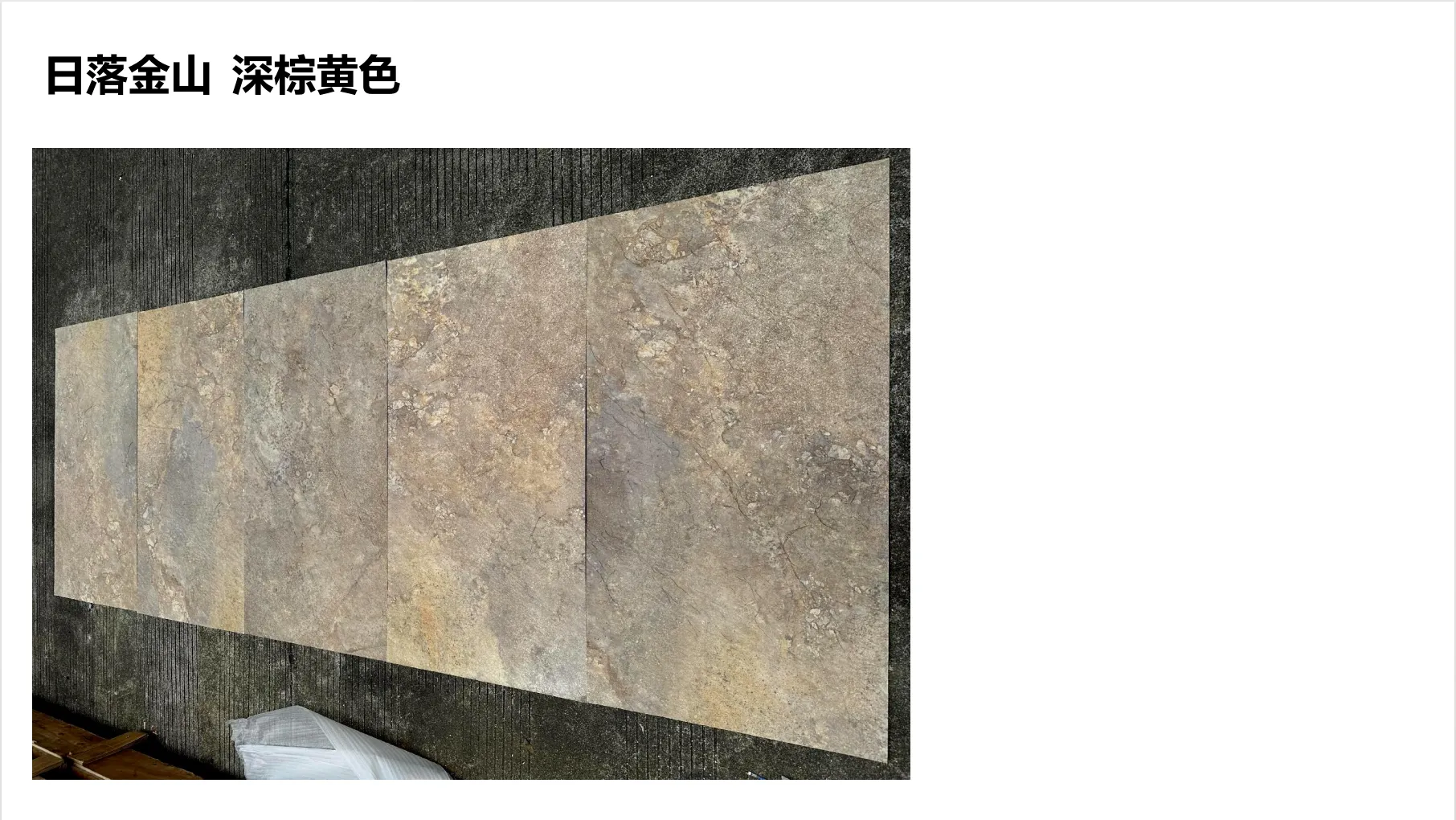
There's a reason golden sunset real photos of COLORIA's spaces go viral—this material radiates warmth like no other. Imagine a restaurant wall that glows like amber at golden hour, or a residential patio that feels like a permanent summer evening. Golden Sunset's secret? A blend of natural iron oxides (sourced from responsibly mined deposits) and recycled brass particles, mixed into a low-carbon concrete base. The manufacturing process uses 100% solar energy, and the material itself is so durable, it's guaranteed to retain its color for 50 years—no fading, no touch-ups, just endless warmth.
It's a favorite for hospitality projects, where ambiance is everything. A boutique hotel in Santorini used Golden Sunset cladding for its rooftop bar, and guests rave about how it "feels like drinking wine under a perpetual sunset"—a testament to how COLORIA's materials don't just decorate spaces, but elevate experiences.
Last but never least, mcm flexible stone is the chameleon of COLORIA's lineup. Traditional stone is rigid—you're stuck with flat panels or heavy slabs. Flexible Stone? It bends. It curves. It wraps around columns, contours to archways, and even adheres to uneven surfaces. How? Thanks to a ultra-thin (just 3mm thick) composite layer made from recycled stone fibers and a flexible, bio-based polymer. The result is a material that's as versatile as wallpaper but as durable as stone.
And here's the green kicker: because it's so thin and lightweight, transportation emissions are cut by 60% compared to traditional stone. Plus, it's installed with a water-based adhesive that's free of harmful chemicals. Interior designers are calling it "a game-changer for curved architecture"—finally, a sustainable way to bring organic shapes to life without sacrificing durability.
| Product | Sustainability Features | Design Aesthetic | Ideal Use Cases |
|---|---|---|---|
| Travertine (Starry Green) | Recycled glass "stars," travertine dust byproduct, zero-VOC resin | Earthy green base with iridescent, star-like flecks; cosmic, organic | Feature walls, boutique hotels, art galleries |
| Lunar Peak Silvery | 80% recycled aluminum, water-based coating, solar-powered production | Cool silver metallic finish with a soft, moonlit texture; modern, minimalist | Exterior facades, corporate offices, high-end retail |
| Fair-Faced Concrete | Recycled aggregates, carbon-capturing additive, low CO2 production | Raw, tactile gray with subtle texture; industrial-chic, natural | Minimalist homes, art studios, urban parks |
| Golden Sunset | Solar-powered manufacturing, recycled brass particles, 50-year color guarantee | Warm amber glow with a smooth, radiant finish; inviting, cozy | Restaurants, rooftop bars, residential patios |
| MCM Flexible Stone | 60% reduced transportation emissions, recycled stone fibers, bio-based polymer | Thin, bendable stone with customizable textures; versatile, adaptive | Curved walls, columns, uneven surfaces, heritage building restorations |
At the end of the day, COLORIA's MCM products are more than just building materials—they're a statement. A statement that sustainability doesn't require sacrificing beauty. That innovation can honor tradition. That every choice we make in building our world can either take from the planet or give back.
Consider the numbers: A single square meter of COLORIA's MCM saves 120 liters of water compared to traditional stone production. A commercial building clad in Lunar Peak silvery reduces its carbon footprint by 35% over 50 years. And because these materials are so durable, they cut down on replacement waste—no more tearing down and rebuilding every decade.
But it's the intangibles that truly set COLORIA apart. Walk into a space built with their materials, and you feel it—the way travertine (starry green) makes you pause and wonder, the way golden sunset wraps around you like a hug, the way fair-faced concrete grounds you in the present. These aren't just walls and floors; they're experiences. And in a world that often feels disconnected from nature, that reconnection is priceless.
As architects, designers, and homeowners, we have the power to shape the world around us. With COLORIA's sustainable MCM series, that power comes with a promise: to build spaces that inspire, without costing the earth. From the cosmic charm of travertine (starry green) to the adaptability of mcm flexible stone , these materials prove that the future of architecture is bright—both for our planet and for our sense of wonder.
So the next time you step into a building that takes your breath away, take a closer look. Maybe it's COLORIA's handiwork—green tech and nature, dancing together in perfect harmony. And if you're lucky enough to design a space of your own? Choose materials that don't just tell a story, but help write a better one—for the earth, and for everyone who'll call that space home.
Recommend Products












